Yes! Send me the FREE digital editions of Spa Business and Spa Business insider magazines and the FREE weekly Spa Business and Spa Business insider ezines and breaking news alerts!
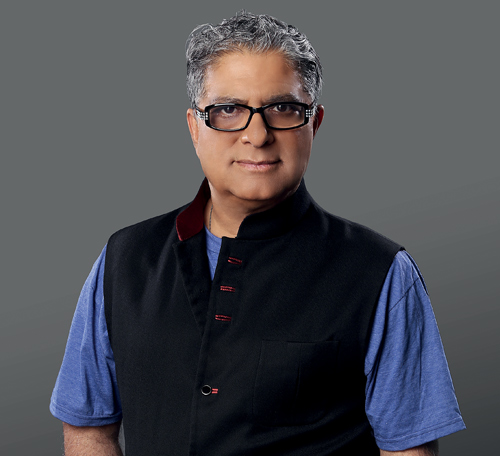
ESPA International has always been a leader in the global spa business but has never been averse to change. The CEO and son of its founder explains how the company he joined 22 years ago is adapting to meet the challenges facing the industry today
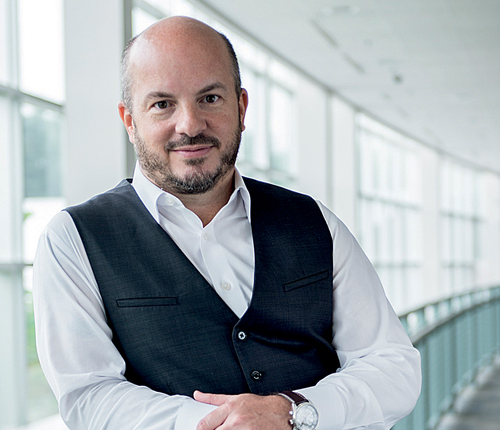
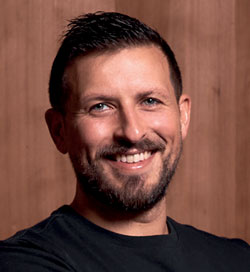
Michael Harmsworth has risen through the ranks of the family business over the past two decades to become CEO
Ever since Sue Harmsworth founded ESPA International in 1993, the company has struck a fine balance between consistency and change.
On one hand, more than two decades on, this is still a family-run business with an unwavering focus on delivering authentic, effective spa experiences for guests and strong commercial returns for clients. On the other hand, it has grown from a small spa consultancy with a modest natural product line into a world-leading spa management company and product giant, with more than 450 spas in around 60 countries, and clients including Peninsula Hotels, Four Seasons, Ritz-Carlton and Mandarin Oriental.
Part of the reason for this success has undoubtedly been ESPA’s ability and willingness to adapt its business model to the changing needs of both consumers and the industry. In 2009, the company opened its own factory to keep an even tighter control over quality standards and respond even more quickly to its customers’ needs. Over the past three years, it has also introduced a much more solutions-based approach, offering product-only partnerships and tailored business support alongside its full design, development and management services.
Someone who has been central to guiding ESPA through these evolutions is Sue’s son Michael Harmsworth, who joined the company on day one and has risen through the ranks to managing director and most recently CEO. Here, he talks about ESPA’s continuing journey, and how the company is tackling some of the industry’s biggest challenges.
You recently became CEO of the company. Has your role changed? I was appointed last December after KSL Capital Partners [the US private equity firm that bought a majority stake in Miraval last year] invested in the business in a refinancing exercise. At that point, Sue became chairman and I became CEO, but to be honest it hasn’t made a great deal of difference. I joined ESPA when I was 27, after starting my career in a management and marketing consultancy. Sue had created the first products and asked if I would help her with some teething problems, so I agreed to give her a hand for six weeks. Six weeks became six months and here we are. Since then, I’ve had every job title going. In the early days, I called myself business development director because everything I did was about trying to develop the business!
What’s the biggest change you’ve seen? The industry has gone through its infancy, through a period of discovery and is now reaching a state of maturity, where the expectations around what spas can achieve are more realistic. At the outset, the world fell in love with spa. Every hotel operator was saying: “We need one of those. We don’t know what it is, but we know we want a shiny one!” Spas now are much more commercial, and investors are looking at them in much more commercial way. Consumer knowledge has also grown dramatically, and consumers are much savvier about what they want to buy.
What does the rise of ‘wellness’ mean for spas? The question of “what is wellness?” causes the same problems as used to be caused by the question of “what is spa?” It’s one of those things the industry is hell-bent on defining, whereas I would question whether it really needs a definition. If you focus on the needs of the consumer and let them drive what you’re supplying, you don’t need a definition. If our guests are looking for healthier lifestyles, we simply need to ask ourselves how we can help them achieve that.
Whereas spas used to focus on massages and body treatments, there is now more of a focus on the whole person. But you don’t need to employ a doctor to help somebody achieve wellness. If you go down the medical route, offering functional medical testing and so on, then that might be necessary. But some people just need help with fitness, nutrition, relaxation and stress management, and you don’t need a doctor for that.
The way we approach our wellness concept, ESPA Life, is to put the guest at the centre, and then look at what our hotel or resort partners can realistically and commercially deliver. For example, we know if a resort with a small number of bedrooms isn’t 100 per cent dedicated to wellness, there is no point requiring a doctor to be on site, because commercially it doesn’t make sense. As a result, the range of what we can deliver, and have delivered, with ESPA Life is very broad, going from the truly medical to more of a mind-body-spirit offering.
But whatever form the offering might take, authenticity has to be at its heart. The danger is that everyone starts offering ‘wellness’ and consumers become disillusioned because it’s not done well. Our view is that it’s better to offer less and do it well than to over-promise and under-deliver.
What challenges does the globalisation of spa and wellness present? It’s no secret that the more people are travelling the more authentic they want their experiences to be. It’s gone beyond ‘sense of place’; the hotel, the resort, the spa has to be in that place. But the number one challenge for the spa industry is quality, as the experiences people get are so varied, and if we don’t collectively deliver to a high enough standard people will not engage with the industry in the same way. Spas are no different from restaurants; as a customer, you want to experience something truly authentic and local but you want the core to be there as well, and getting that balance right is absolutely key.
The other point about local experiences is that you can’t just pay lip service to it. It’s not enough to come up with a treatment that’s just got a different-sounding name; it has to feel more local. Doing this safely and consistently and to a high standard has obvious challenges, depending on where in the world you are. You can do it, but it takes effort. For example, when we developed our ayurvedic rituals we met with an Indian ayurvedic expert before creating our own in-depth procedures and protocols. We also developed our own oils using traditional ingredients and methods, but we did it in our own factory so we could control the quality. Because if you’re going to roll something out across the world there needs to be that degree of control.
Transient travellers are increasingly important within the hotel market. How can spas better cater for that segment? The first thing we need to do is get better at engaging people. As an industry, we’ve built a mystique around what we do which hasn’t necessarily engaged people in the right way or shown them the benefits. So we need to simplify what we’re doing.
Regarding transient travellers specifically, there is definitely an opportunity for hotels to start thinking about wellbeing in a wider sense, outside of the spa. When you look at the design of hotel rooms – the air-conditioning, the lighting – there is still huge room for improvement. I always travel with a block of post-it notes to cover all the lights that I know will keep me up! On the other hand, I’ve stayed in hotels that not only have a yoga channel on the TV but also leave a yoga mat in the room, which is a great example of keeping things simple.
When it comes to the spa itself, it never ceases to amaze me that more hotels haven’t de-gendered what they offer. You only have to look round business class to realise that a lot of transient travellers are male, and yet in so many hotel spas the spaces are still very female.
Another problem is that many hotel spas are not set up to cater for business guests, so when a guest does want a treatment – say at 9pm after a long day of meetings – the spa is usually closed. Or if it isn’t, they can’t get a treatment at short notice. So adaptability is key.
The core market for spas has traditionally been Baby Boomers. But as this generation ages and new generations come up, how should spas and product houses be responding? We have to continue to evolve and offer people what they want to buy, rather than expecting people to buy what we want to offer. The Gen-Xers and Millennials are helping to demystify the industry, because they can see spa for what it is: their expectations are more realistic, but they’re also a lot savvier. Another effect of these younger generations coming up is that spas are taking themselves a bit less seriously and becoming more social spaces. There’s a new sense that spas can be fun and don’t have to be dictatorial; you can allow guests more choice.
From the product perspective, there’s a growing emphasis on saving time and ease of use. The appetite for multi-functional products has grown massively, though there’s still a demand for more luxurious, slower-paced products – with younger people, it’s striking a balance between doing things on the hoof and occasionally taking time for themselves too.
Strangely enough, at ESPA, the piece that has remained right at the heart of what we do all along is helping people to achieve a ‘life in balance’. We’re committed to making products that are very natural, ethical and of the highest quality, and we won’t compromise on that. But we understand that consumers have changing needs and we adapt accordingly.
Read more from this issue of Spa Business magazine
View contents of Spa Business 2015 issue 4
Letters:
Concerns raised over massage-on-demand vetting systems
Interview: Michael Tompkins
What’s next for Michael Tompkins as he takes a step back at Hilton Head Health? Rhianon Howells finds out
Promotional feature: Dr Burgener Switzerland
Leading skincare brand Dr Burgener Switzerland combines natural ingredients with advanced technology to produce exceptional results – and the company sees customisation as the way forward for each of its spa clients
Trends: Workplace wellness
Neena Dhillon looks at two award-winning employee wellness programmes and asks how spas can get involved in this burgeoning market
Promotional feature: ESPA
ESPA International has always been a leader in the global spa business but has never been averse to change. The CEO and son of its founder explains how the company he joined 22 years ago is adapting to meet the challenges facing the industry today
Research: Onwards & upwards
ISPA research shows the US spa sector has reached new heights. Colin McIlheney analyses the findings
Promotional feature: Phytomer
Director of international development, Tristan Lagarde, explains how PHYTOMER has become a leader in the field of technological skincare development, and how spas can benefit from the brand’s success
Spa concept: Eforea 2.0
Hilton has refreshed its spa concept to make it more appealing to hoteliers. But what’s changed? Jane Kitchen finds out
Promotional feature: Living Earth Crafts
Brian Paris, spa designer and VP of sales for Living Earth Crafts, explains how the company is helping spa operators become more efficient with space-saving but stylish spa equipment and accessories
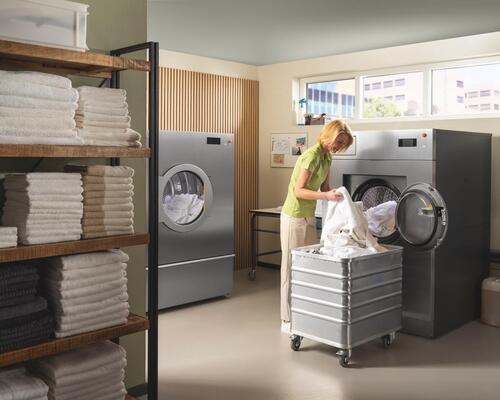
In today’s premium spa environment, every detail shapes the guest experience – right down to
the softness of towels and the freshness of linens. [more...]
ESPA International has always been a leader in the global spa business but has never been averse to change. The CEO and son of its founder explains how the company he joined 22 years ago is adapting to meet the challenges facing the industry today
Michael Harmsworth has risen through the ranks of the family business over the past two decades to become CEO
Ever since Sue Harmsworth founded ESPA International in 1993, the company has struck a fine balance between consistency and change.
On one hand, more than two decades on, this is still a family-run business with an unwavering focus on delivering authentic, effective spa experiences for guests and strong commercial returns for clients. On the other hand, it has grown from a small spa consultancy with a modest natural product line into a world-leading spa management company and product giant, with more than 450 spas in around 60 countries, and clients including Peninsula Hotels, Four Seasons, Ritz-Carlton and Mandarin Oriental.
Part of the reason for this success has undoubtedly been ESPA’s ability and willingness to adapt its business model to the changing needs of both consumers and the industry. In 2009, the company opened its own factory to keep an even tighter control over quality standards and respond even more quickly to its customers’ needs. Over the past three years, it has also introduced a much more solutions-based approach, offering product-only partnerships and tailored business support alongside its full design, development and management services.
Someone who has been central to guiding ESPA through these evolutions is Sue’s son Michael Harmsworth, who joined the company on day one and has risen through the ranks to managing director and most recently CEO. Here, he talks about ESPA’s continuing journey, and how the company is tackling some of the industry’s biggest challenges.
You recently became CEO of the company. Has your role changed? I was appointed last December after KSL Capital Partners [the US private equity firm that bought a majority stake in Miraval last year] invested in the business in a refinancing exercise. At that point, Sue became chairman and I became CEO, but to be honest it hasn’t made a great deal of difference. I joined ESPA when I was 27, after starting my career in a management and marketing consultancy. Sue had created the first products and asked if I would help her with some teething problems, so I agreed to give her a hand for six weeks. Six weeks became six months and here we are. Since then, I’ve had every job title going. In the early days, I called myself business development director because everything I did was about trying to develop the business!
What’s the biggest change you’ve seen? The industry has gone through its infancy, through a period of discovery and is now reaching a state of maturity, where the expectations around what spas can achieve are more realistic. At the outset, the world fell in love with spa. Every hotel operator was saying: “We need one of those. We don’t know what it is, but we know we want a shiny one!” Spas now are much more commercial, and investors are looking at them in much more commercial way. Consumer knowledge has also grown dramatically, and consumers are much savvier about what they want to buy.
What does the rise of ‘wellness’ mean for spas? The question of “what is wellness?” causes the same problems as used to be caused by the question of “what is spa?” It’s one of those things the industry is hell-bent on defining, whereas I would question whether it really needs a definition. If you focus on the needs of the consumer and let them drive what you’re supplying, you don’t need a definition. If our guests are looking for healthier lifestyles, we simply need to ask ourselves how we can help them achieve that.
Whereas spas used to focus on massages and body treatments, there is now more of a focus on the whole person. But you don’t need to employ a doctor to help somebody achieve wellness. If you go down the medical route, offering functional medical testing and so on, then that might be necessary. But some people just need help with fitness, nutrition, relaxation and stress management, and you don’t need a doctor for that.
The way we approach our wellness concept, ESPA Life, is to put the guest at the centre, and then look at what our hotel or resort partners can realistically and commercially deliver. For example, we know if a resort with a small number of bedrooms isn’t 100 per cent dedicated to wellness, there is no point requiring a doctor to be on site, because commercially it doesn’t make sense. As a result, the range of what we can deliver, and have delivered, with ESPA Life is very broad, going from the truly medical to more of a mind-body-spirit offering.
But whatever form the offering might take, authenticity has to be at its heart. The danger is that everyone starts offering ‘wellness’ and consumers become disillusioned because it’s not done well. Our view is that it’s better to offer less and do it well than to over-promise and under-deliver.
What challenges does the globalisation of spa and wellness present? It’s no secret that the more people are travelling the more authentic they want their experiences to be. It’s gone beyond ‘sense of place’; the hotel, the resort, the spa has to be in that place. But the number one challenge for the spa industry is quality, as the experiences people get are so varied, and if we don’t collectively deliver to a high enough standard people will not engage with the industry in the same way. Spas are no different from restaurants; as a customer, you want to experience something truly authentic and local but you want the core to be there as well, and getting that balance right is absolutely key.
The other point about local experiences is that you can’t just pay lip service to it. It’s not enough to come up with a treatment that’s just got a different-sounding name; it has to feel more local. Doing this safely and consistently and to a high standard has obvious challenges, depending on where in the world you are. You can do it, but it takes effort. For example, when we developed our ayurvedic rituals we met with an Indian ayurvedic expert before creating our own in-depth procedures and protocols. We also developed our own oils using traditional ingredients and methods, but we did it in our own factory so we could control the quality. Because if you’re going to roll something out across the world there needs to be that degree of control.
Transient travellers are increasingly important within the hotel market. How can spas better cater for that segment? The first thing we need to do is get better at engaging people. As an industry, we’ve built a mystique around what we do which hasn’t necessarily engaged people in the right way or shown them the benefits. So we need to simplify what we’re doing.
Regarding transient travellers specifically, there is definitely an opportunity for hotels to start thinking about wellbeing in a wider sense, outside of the spa. When you look at the design of hotel rooms – the air-conditioning, the lighting – there is still huge room for improvement. I always travel with a block of post-it notes to cover all the lights that I know will keep me up! On the other hand, I’ve stayed in hotels that not only have a yoga channel on the TV but also leave a yoga mat in the room, which is a great example of keeping things simple.
When it comes to the spa itself, it never ceases to amaze me that more hotels haven’t de-gendered what they offer. You only have to look round business class to realise that a lot of transient travellers are male, and yet in so many hotel spas the spaces are still very female.
Another problem is that many hotel spas are not set up to cater for business guests, so when a guest does want a treatment – say at 9pm after a long day of meetings – the spa is usually closed. Or if it isn’t, they can’t get a treatment at short notice. So adaptability is key.
The core market for spas has traditionally been Baby Boomers. But as this generation ages and new generations come up, how should spas and product houses be responding? We have to continue to evolve and offer people what they want to buy, rather than expecting people to buy what we want to offer. The Gen-Xers and Millennials are helping to demystify the industry, because they can see spa for what it is: their expectations are more realistic, but they’re also a lot savvier. Another effect of these younger generations coming up is that spas are taking themselves a bit less seriously and becoming more social spaces. There’s a new sense that spas can be fun and don’t have to be dictatorial; you can allow guests more choice.
From the product perspective, there’s a growing emphasis on saving time and ease of use. The appetite for multi-functional products has grown massively, though there’s still a demand for more luxurious, slower-paced products – with younger people, it’s striking a balance between doing things on the hoof and occasionally taking time for themselves too.
Strangely enough, at ESPA, the piece that has remained right at the heart of what we do all along is helping people to achieve a ‘life in balance’. We’re committed to making products that are very natural, ethical and of the highest quality, and we won’t compromise on that. But we understand that consumers have changing needs and we adapt accordingly.
Read more from this issue of Spa Business magazine
View contents of Spa Business 2015 issue 4
Letters:
Concerns raised over massage-on-demand vetting systems
Interview: Michael Tompkins
What’s next for Michael Tompkins as he takes a step back at Hilton Head Health? Rhianon Howells finds out
Promotional feature: Dr Burgener Switzerland
Leading skincare brand Dr Burgener Switzerland combines natural ingredients with advanced technology to produce exceptional results – and the company sees customisation as the way forward for each of its spa clients
Trends: Workplace wellness
Neena Dhillon looks at two award-winning employee wellness programmes and asks how spas can get involved in this burgeoning market
Promotional feature: ESPA
ESPA International has always been a leader in the global spa business but has never been averse to change. The CEO and son of its founder explains how the company he joined 22 years ago is adapting to meet the challenges facing the industry today
Research: Onwards & upwards
ISPA research shows the US spa sector has reached new heights. Colin McIlheney analyses the findings
Promotional feature: Phytomer
Director of international development, Tristan Lagarde, explains how PHYTOMER has become a leader in the field of technological skincare development, and how spas can benefit from the brand’s success
Spa concept: Eforea 2.0
Hilton has refreshed its spa concept to make it more appealing to hoteliers. But what’s changed? Jane Kitchen finds out
Promotional feature: Living Earth Crafts
Brian Paris, spa designer and VP of sales for Living Earth Crafts, explains how the company is helping spa operators become more efficient with space-saving but stylish spa equipment and accessories
Global Wellness Day (GWD) marked its 15th anniversary on Saturday 13 June 2026, with the
theme: #JoyMagenta – a celebration of the healing qualities of simple gestures and activities
that spark joy.
Global luxury hospitality brand, Six Senses, has partnered with longevity healthcare provider,
HUM2N, to launch a clinic at Six Senses London, at The Whiteley.
As part of its first hotel partnership, Mayrlife – the medical health resort company known for its
site in Altaussee, Austria – has launched a day clinic at the Rosewood Vienna.
Premium London health club, KX Chelsea, will imminently unveil its most significant
redevelopment since its launch in 2002 to create an integrated wellness model combining
training, recovery and relaxation.
Rosewood Le Guanahani St Barth, on the northeast coast of Saint Barthélemy in the French
West Indies, is offering a programme of ocean-inspired yoga classes between 8-14 June to
celebrate Global Wellness Day (GWD).
Hotel de France, located on the British Isle of Jersey, has created a wellness retreat package
that includes a hot yoga session that will take place in Jersey Zoo’s butterfly sanctuary.
The Ritz-Carlton, Langkawi, in Malaysia, has revealed a schedule for Global Wellness Day
(GWD) that includes guided rainforest walks, mindful movement and guided coastal meditation
experiences.
Longevitix, a clinical platform for preventive and longevity medicine, has launched its AI-
powered intelligence system to help physicians deliver continuous, personalised longevity-
focused care at scale.
Atmantan Wellness Centre, an integrative wellness destination in Mulshi, near Pune in India, is
expanding its portfolio by adding a new centre in Hyderabad that will launch between 2028 and
2029.
In today’s premium spa environment, every detail shapes the guest experience – right down to
the softness of towels and the freshness of linens. [more...]