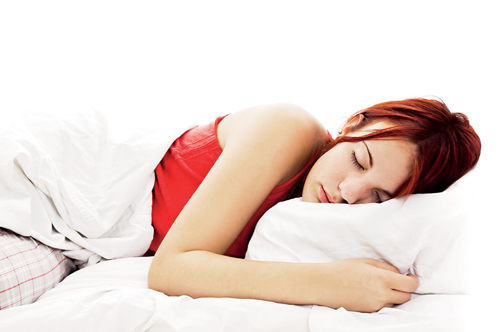
A 45- to 60-minute snooze produces a five-fold improvement in memory / Jeka/shutterstock
Operators such as YeloSpa and Spa Eastman which offer short sleep sessions to weary customers (see below) could be helping them to maintain their memories and enhance their capability to learn as well as recharge their batteries, according to a new, albeit small, study.
A group of researchers at Saarland University in Germany have discovered that a snooze lasting 45-60 minutes leads to a five-fold improvement in how the brain retrieves information.
Memory test The study involved a memory recall exam of 41 university students. The volunteers were asked to learn 90 single words and 120 word pairs and were tested on what they could remember immediately afterwards. The word pairs were essentially meaningless, using random duos such as ‘milk-taxi’, so that participants would not have heard them before and would not recall them due to familiarity.
After the initial memory test, one half of the participants was allowed a brief nap, sleeping for an average of 64 minutes. The other half (the control group), sat down to watch a DVD. All of the participants were then retested to see how many of the words they could recall again.
The results, published in the Neurobiology of Learning and Memory* journal, showed that while there was no memory improvement in those who slept, they could still remember a similar amount of words from before. Their memory was “just as good as it was before sleeping,” says research supervisor Axel Mecklinger.
In comparison, those who watched the DVD performed significantly worse when it came to remembering word pairs.
Sleep spindles The researchers also used an EEG to measure the brainwave activity of those who slept to see if there was a correlation with how they performed in the memory test. They focused on the role of the hippocampus, a part of the brain where memories are consolidated and transferred into long-term memory storage.
Sara Studte, a graduate specialising in neuropsychology, who also worked on the research says: “We examined a particular type of brain activity, known as ‘sleep spindles’, that plays an important role in memory consolidating during sleep.” A sleep spindle is shown on an EEG as a short burst of rapid oscillations. The findings confirmed that the greater the number of sleep spindles, the better a person can remember things.
Although the number of participants in the study was limited, Mecklinger still feels the overall findings are telling. He concludes: “A short nap at the office or in school is enough to significantly improve learning success.”
*Studte S et al. Nap sleep preserves associative but not item memory performance. Neurobiology of Leaning and Memory. Feb 2015.
Read more from this issue of Spa Business magazine
View contents of Spa Business 2015 issue 4
Letters:
Concerns raised over massage-on-demand vetting systems
Interview: Michael Tompkins
What’s next for Michael Tompkins as he takes a step back at Hilton Head Health? Rhianon Howells finds out
Promotional feature: Dr Burgener Switzerland
Leading skincare brand Dr Burgener Switzerland combines natural ingredients with advanced technology to produce exceptional results – and the company sees customisation as the way forward for each of its spa clients
Trends: Workplace wellness
Neena Dhillon looks at two award-winning employee wellness programmes and asks how spas can get involved in this burgeoning market
Promotional feature: ESPA
ESPA International has always been a leader in the global spa business but has never been averse to change. The CEO and son of its founder explains how the company he joined 22 years ago is adapting to meet the challenges facing the industry today
Research: Onwards & upwards
ISPA research shows the US spa sector has reached new heights. Colin McIlheney analyses the findings
Promotional feature: Phytomer
Director of international development, Tristan Lagarde, explains how PHYTOMER has become a leader in the field of technological skincare development, and how spas can benefit from the brand’s success
Spa concept: Eforea 2.0
Hilton has refreshed its spa concept to make it more appealing to hoteliers. But what’s changed? Jane Kitchen finds out
Promotional feature: Living Earth Crafts
Brian Paris, spa designer and VP of sales for Living Earth Crafts, explains how the company is helping spa operators become more efficient with space-saving but stylish spa equipment and accessories
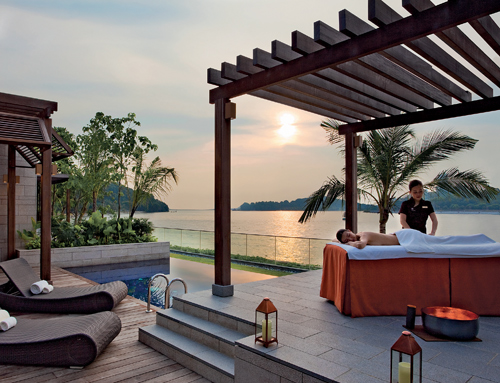
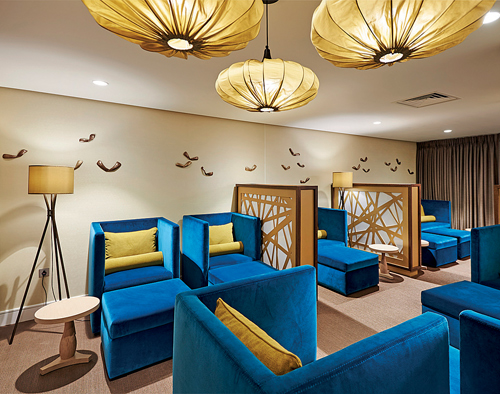
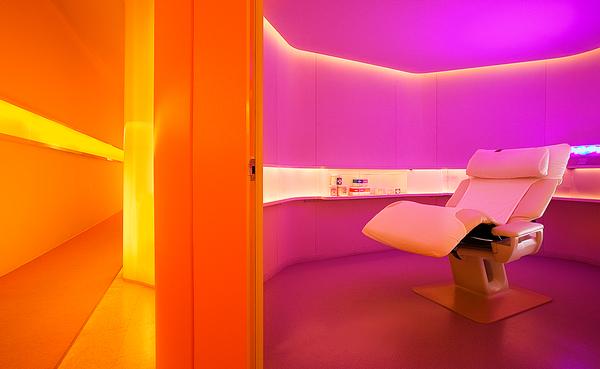
Sleep treat YeloSpa has offered power nap treatments since opening in New York in 2007. A YeloCab nap on a zero gravity bed can be customised with aromatherapy and sound settings and costs US$1 a minute for a 20- to 40-minute session. The signature menu item is also available at YeloSpa’s newer locations in São Paulo, Brazil and San Juan, Puerto Rico.
Spa Eastman in Montreal, Canada also offers a NeuroSpa treatment. A 30-minute session in its Power Nap Station with multi-frequency acoustic vibrations is priced at CA$45 (US$34, €30, £22).
A 20-minute power nap session at YeloSpa, NYC, costs US$20
The Spa Life UK Convention returns from 21–23 June 2026 at Whittlebury Park Hotel, Spa &
Golf Resort, bringing together spa managers, directors and owners for two days of focused
education, meaningful connection and commercial insight. [more...]
+ More featured suppliers
COMPANY PROFILES
Cariitti Oy
Cariitti is a Finnish family business founded by Kari Ruokonen in 1998 that offers versatile lightin [more...]
UK Spa Association
Our mission is to raise awareness of our industry within schools, colleges, society and crucially at [more...]
A 45- to 60-minute snooze produces a five-fold improvement in memory / Jeka/shutterstock
Operators such as YeloSpa and Spa Eastman which offer short sleep sessions to weary customers (see below) could be helping them to maintain their memories and enhance their capability to learn as well as recharge their batteries, according to a new, albeit small, study.
A group of researchers at Saarland University in Germany have discovered that a snooze lasting 45-60 minutes leads to a five-fold improvement in how the brain retrieves information.
Memory test The study involved a memory recall exam of 41 university students. The volunteers were asked to learn 90 single words and 120 word pairs and were tested on what they could remember immediately afterwards. The word pairs were essentially meaningless, using random duos such as ‘milk-taxi’, so that participants would not have heard them before and would not recall them due to familiarity.
After the initial memory test, one half of the participants was allowed a brief nap, sleeping for an average of 64 minutes. The other half (the control group), sat down to watch a DVD. All of the participants were then retested to see how many of the words they could recall again.
The results, published in the Neurobiology of Learning and Memory* journal, showed that while there was no memory improvement in those who slept, they could still remember a similar amount of words from before. Their memory was “just as good as it was before sleeping,” says research supervisor Axel Mecklinger.
In comparison, those who watched the DVD performed significantly worse when it came to remembering word pairs.
Sleep spindles The researchers also used an EEG to measure the brainwave activity of those who slept to see if there was a correlation with how they performed in the memory test. They focused on the role of the hippocampus, a part of the brain where memories are consolidated and transferred into long-term memory storage.
Sara Studte, a graduate specialising in neuropsychology, who also worked on the research says: “We examined a particular type of brain activity, known as ‘sleep spindles’, that plays an important role in memory consolidating during sleep.” A sleep spindle is shown on an EEG as a short burst of rapid oscillations. The findings confirmed that the greater the number of sleep spindles, the better a person can remember things.
Although the number of participants in the study was limited, Mecklinger still feels the overall findings are telling. He concludes: “A short nap at the office or in school is enough to significantly improve learning success.”
*Studte S et al. Nap sleep preserves associative but not item memory performance. Neurobiology of Leaning and Memory. Feb 2015.
Read more from this issue of Spa Business magazine
View contents of Spa Business 2015 issue 4
Letters:
Concerns raised over massage-on-demand vetting systems
Interview: Michael Tompkins
What’s next for Michael Tompkins as he takes a step back at Hilton Head Health? Rhianon Howells finds out
Promotional feature: Dr Burgener Switzerland
Leading skincare brand Dr Burgener Switzerland combines natural ingredients with advanced technology to produce exceptional results – and the company sees customisation as the way forward for each of its spa clients
Trends: Workplace wellness
Neena Dhillon looks at two award-winning employee wellness programmes and asks how spas can get involved in this burgeoning market
Promotional feature: ESPA
ESPA International has always been a leader in the global spa business but has never been averse to change. The CEO and son of its founder explains how the company he joined 22 years ago is adapting to meet the challenges facing the industry today
Research: Onwards & upwards
ISPA research shows the US spa sector has reached new heights. Colin McIlheney analyses the findings
Promotional feature: Phytomer
Director of international development, Tristan Lagarde, explains how PHYTOMER has become a leader in the field of technological skincare development, and how spas can benefit from the brand’s success
Spa concept: Eforea 2.0
Hilton has refreshed its spa concept to make it more appealing to hoteliers. But what’s changed? Jane Kitchen finds out
Promotional feature: Living Earth Crafts
Brian Paris, spa designer and VP of sales for Living Earth Crafts, explains how the company is helping spa operators become more efficient with space-saving but stylish spa equipment and accessories
Sleep treat YeloSpa has offered power nap treatments since opening in New York in 2007. A YeloCab nap on a zero gravity bed can be customised with aromatherapy and sound settings and costs US$1 a minute for a 20- to 40-minute session. The signature menu item is also available at YeloSpa’s newer locations in São Paulo, Brazil and San Juan, Puerto Rico.
Spa Eastman in Montreal, Canada also offers a NeuroSpa treatment. A 30-minute session in its Power Nap Station with multi-frequency acoustic vibrations is priced at CA$45 (US$34, €30, £22).
A 20-minute power nap session at YeloSpa, NYC, costs US$20
Global Wellness Day (GWD) marked its 15th anniversary on Saturday 13 June 2026, with the
theme: #JoyMagenta – a celebration of the healing qualities of simple gestures and activities
that spark joy.
Global luxury hospitality brand, Six Senses, has partnered with longevity healthcare provider,
HUM2N, to launch a clinic at Six Senses London, at The Whiteley.
As part of its first hotel partnership, Mayrlife – the medical health resort company known for its
site in Altaussee, Austria – has launched a day clinic at the Rosewood Vienna.
Premium London health club, KX Chelsea, will imminently unveil its most significant
redevelopment since its launch in 2002 to create an integrated wellness model combining
training, recovery and relaxation.
Rosewood Le Guanahani St Barth, on the northeast coast of Saint Barthélemy in the French
West Indies, is offering a programme of ocean-inspired yoga classes between 8-14 June to
celebrate Global Wellness Day (GWD).
Hotel de France, located on the British Isle of Jersey, has created a wellness retreat package
that includes a hot yoga session that will take place in Jersey Zoo’s butterfly sanctuary.
The Ritz-Carlton, Langkawi, in Malaysia, has revealed a schedule for Global Wellness Day
(GWD) that includes guided rainforest walks, mindful movement and guided coastal meditation
experiences.
Longevitix, a clinical platform for preventive and longevity medicine, has launched its AI-
powered intelligence system to help physicians deliver continuous, personalised longevity-
focused care at scale.
Atmantan Wellness Centre, an integrative wellness destination in Mulshi, near Pune in India, is
expanding its portfolio by adding a new centre in Hyderabad that will launch between 2028 and
2029.
The Spa Life UK Convention returns from 21–23 June 2026 at Whittlebury Park Hotel, Spa &
Golf Resort, bringing together spa managers, directors and owners for two days of focused
education, meaningful connection and commercial insight. [more...]
+ More featured suppliers
COMPANY PROFILES
Cariitti Oy Cariitti is a Finnish family business founded by Kari Ruokonen in 1998 that offers versatile lightin [more...]