Yes! Send me the FREE digital editions of Spa Business and Spa Business insider magazines and the FREE weekly Spa Business and Spa Business insider ezines and breaking news alerts!
Driven by rocketing healthcare costs, record levels of preventable disease and high absenteeism, the provision of corporate wellness services has grown into a US$8bn (€7bn, £5.1bn) plus industry.
According to the Families and Work Institute, more than 60 per cent of US employers offer some type of wellness initiative to staff.
As yet few inroads have been made into addressing the conditions of blue-collars workers as equally as their white-collar counterparts. This widens the opportunities for providers and means more companies – in the US and beyond – will be seeking to diversify both the reach and scope of their programmes.
In this article, we look at two award-winning employee programmes and ask how spas can become partners to similar schemes.
Read more from this issue of Spa Business magazine
View contents of Spa Business 2015 issue 4
Letters:
Concerns raised over massage-on-demand vetting systems
Interview: Michael Tompkins
What’s next for Michael Tompkins as he takes a step back at Hilton Head Health? Rhianon Howells finds out
Promotional feature: Dr Burgener Switzerland
Leading skincare brand Dr Burgener Switzerland combines natural ingredients with advanced technology to produce exceptional results – and the company sees customisation as the way forward for each of its spa clients
Trends: Workplace wellness
Neena Dhillon looks at two award-winning employee wellness programmes and asks how spas can get involved in this burgeoning market
Promotional feature: ESPA
ESPA International has always been a leader in the global spa business but has never been averse to change. The CEO and son of its founder explains how the company he joined 22 years ago is adapting to meet the challenges facing the industry today
Research: Onwards & upwards
ISPA research shows the US spa sector has reached new heights. Colin McIlheney analyses the findings
Promotional feature: Phytomer
Director of international development, Tristan Lagarde, explains how PHYTOMER has become a leader in the field of technological skincare development, and how spas can benefit from the brand’s success
Spa concept: Eforea 2.0
Hilton has refreshed its spa concept to make it more appealing to hoteliers. But what’s changed? Jane Kitchen finds out
Promotional feature: Living Earth Crafts
Brian Paris, spa designer and VP of sales for Living Earth Crafts, explains how the company is helping spa operators become more efficient with space-saving but stylish spa equipment and accessories
Leslie Ritter Wellness director Eileen Fisher clothing Our extensive 20-year-old programme was established because Eileen Fisher is interested in employee wellbeing and in giving them access to alternative healthcare solutions outside medical cover. Today this means our full-time employees are each given an annual US$1,000 (€883, £643) wellness benefit, which can be spent on a broad list of pre-approved activities covering anything from a spa weekend to gym membership, an air purifier or exercise equipment for the home. Then there’s also a US$1,000 personal growth benefit, which can be used on cooking classes, learning to play an instrument or a mindfulness retreat.
Initially, a lot of people weren’t taking up the benefits. So to improve awareness, we took the activities to them. In our three main locations – corporate headquarters, the design studio and warehouse – we schedule one-on-one sessions with an array of wellbeing practitioners. They can be for life coaching, yoga, massage, reflexology, acupuncture, hypnotherapy, astrology or PT, and employees exchange them for their benefits. These take place three or four days a week in a designated quiet room. We bolster this with free yoga, pilates, tai chi or fitness classes twice a week in our main locations as well as a calendar of wellbeing workshops, again free and offered four to six times a year. Finally, we also have therapists come in and give 10-minute neck and shoulder massages on the house, I send out a brief weekly newsletter and I regularly talk to employees about their changing needs.
Last year, 80 per cent of our employees used their wellness benefits and we paid out approximately US$722,000 (€645,380, £478,830) for the year. As a clothing company with 1,200 employees, our population comprises almost 85 per cent women. When we look at our annual medical insurance review – key indicators of how much we’ve used – our numbers are notably healthier than average taking into account our age/gender profile. We have high staff retention and have been regularly included as a top 20 Fortune Great Place to Work.
Lots of businesses don’t yet do the equivalent of what we do here, so there’s huge room for growth. The practitioners I work with are largely people I know from the wellbeing community and a part of my job is meeting with providers. We partner with YogaWorks and Manicube practitioners and I would do the same with spa experts in the future. My advice to spa operators is to email or call wellness programme directors and make them aware of what services you can provide
Typically, spas need to be flexible enough to send their teams to different locations and offices but if they’re able to offer scheduling of several wellbeing sessions, so much the better. As companies, we don’t have a good relationship with time – spas that can take care of scheduling for us will make great partners.
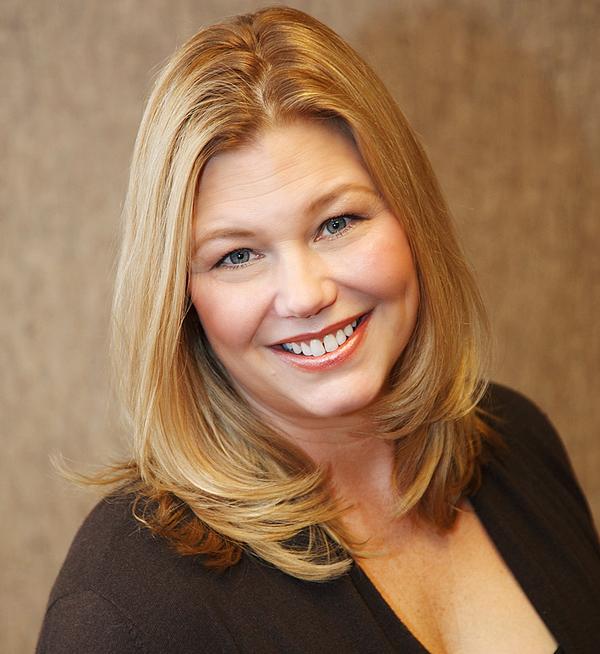
Ritter advises spas to make their services known to firms
Eileen Fisher employees are entitled to US$2,000 of wellbeing benefits for pre-approved activities
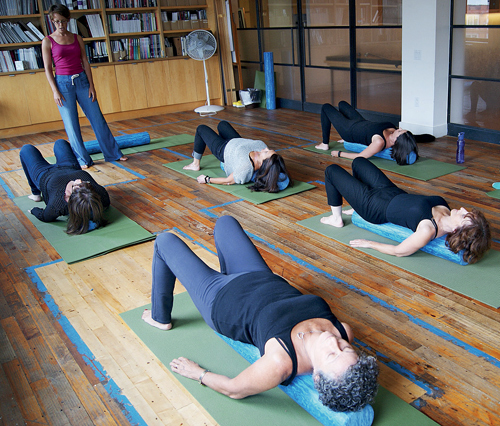
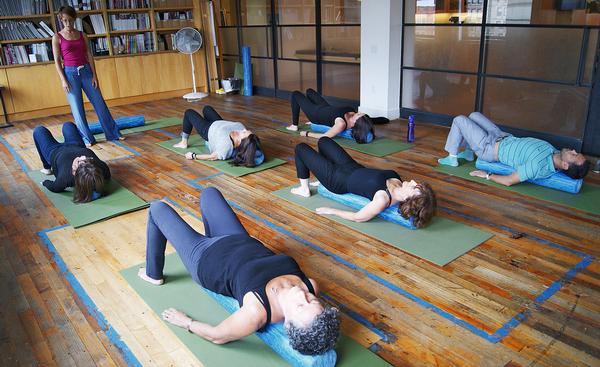
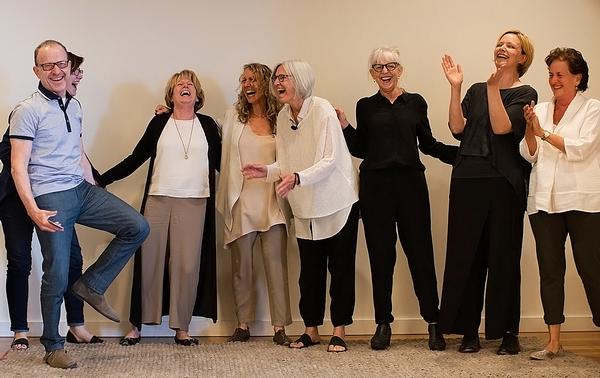
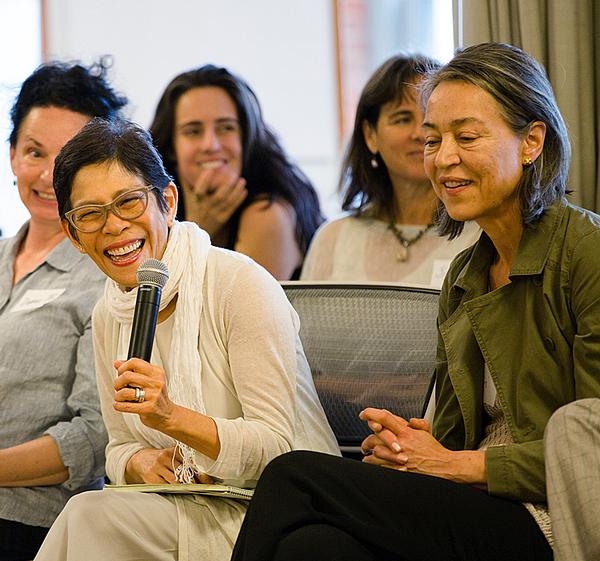
A broad list of activities are offered in the workplace to kick-start employee wellness
A broad list of activities are offered in the workplace to kick-start employee wellness
A broad list of activities are offered in the workplace to kick-start employee wellness
Jennifer Patel Director of wellness engagement, Hallmark Business Connections The programme created for our Hallmark employees is award-winning, targeted at 5,300 people across the US and includes those in field sales, manufacturing and fixed locations. We offer three main areas of support – lifestyle, clinical and preventative – which employees are encouraged to focus on through the incentive of a gift card, up to US$450 (€397, £289) annually at corporate level.
When employees are geographically diverse, you need to start with small initiatives in individual locations built over time. Linking into ‘lifestyle’, we schedule one event per month with a focus on a single issue, such as breast cancer, anxiety or men’s health. There’ll be a free related activity during the lunch hour, say mini massages during stress-reduction month or an educational workshop on anxiety. We’ll then continue to raise awareness. We’ve started filming workshops so colleagues who work shifts don’t miss out. Lifestyle champions have been appointed in the organisation to help us spread the word and motivate their peers to get involved. Then there are related challenges, such as a pedometer challenge where people who walk the most may win a gift card incentive.
When it comes to the ‘clinical’ strand, employees can earn points towards an incentive by attending biometric screening. The ‘preventative’ aspect involves taking a more in-depth health visit once a year offsite, with points being earned for appropriate exams such as a mammogram or colonoscopy. It’s about encouraging employees to take up what is available to them through their insurance.
We have an 84 per cent participation rate and although we’ve only just started gathering data, we’ve already seen a year-on-year reduction in blood pressure among participants. We’re careful to ensure that our gift cards are linked only to healthy activities, such as spa, massage, nutrition or sports equipment. We have merchant partners who offer gift cards and we’ve seen people redeem their points in exchange for yoga, a facial, even a boutique class such as learning the trapeze.
There’s a great opportunity for the spa industry to partner with programmes like ours. First, incentive-based initiatives need to work with providers and merchants who can offer rejuvenating or replenishing outlets in which employees can use gift cards. Second, companies need wellbeing experts to come onsite and share information via workshops and activities. Some employers will pay for speakers and workshops, others prefer a reciprocal approach whereby spas can offer discounts – an incentive to go and try out the spa’s facilities. Every time therapists give mini massages to our staff, they’re reaching potential new clients. As a proviso, I would point out that spa partners need to focus on the quality of the information or activity they’ve been programmed to provide. The worst thing I can do is to put off our employees from engaging in lifestyle change by compromising on the quality of the content or experience.
Spas need to focus on the quality of information and the activity they provide, says Patel
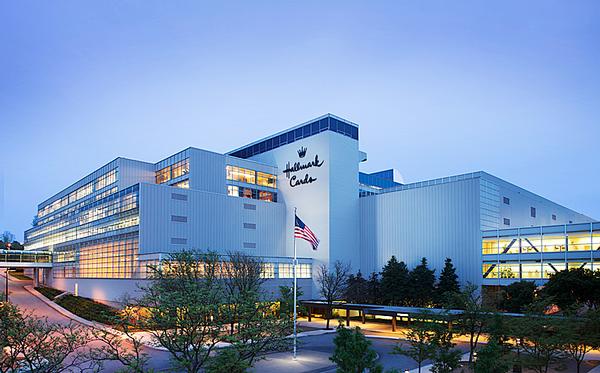
Hallmark’s wellness programme is targeted at 5,300 people across the US
wavebreakmedia/shutterstock
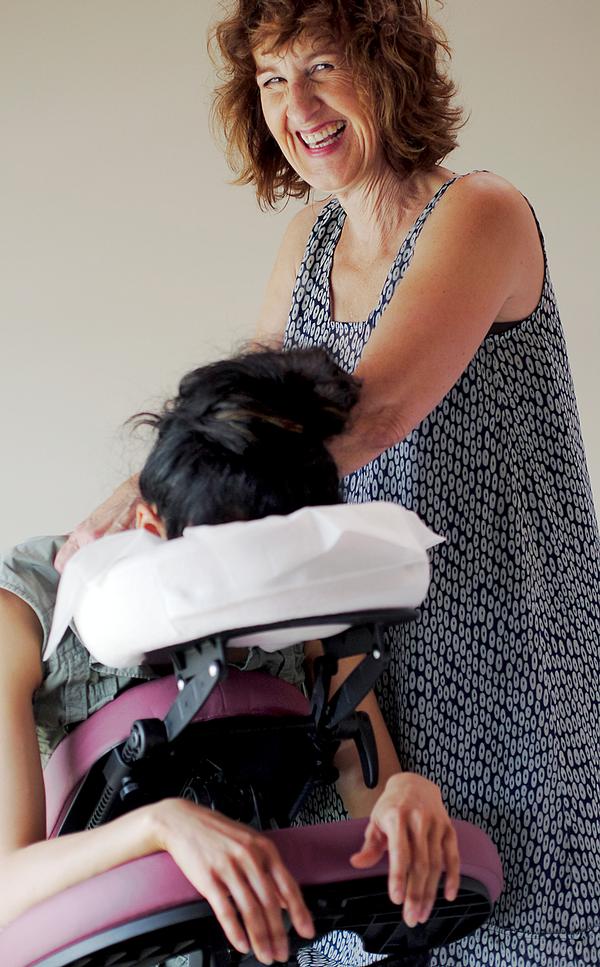
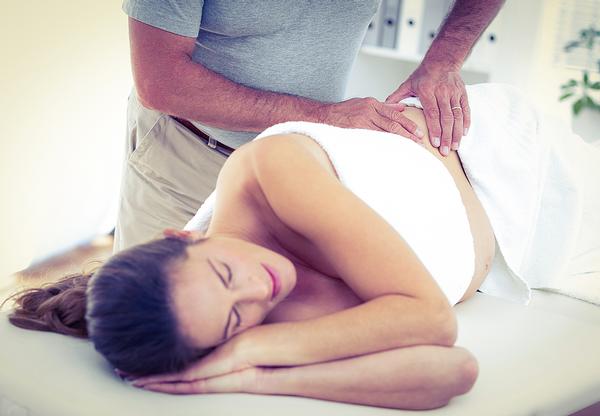
Every time therapists give a mini massage to staff, they’re reaching potential new clients
Neena Dhillon is a spa, hotel and travel journalist
Driven by rocketing healthcare costs, record levels of preventable disease and high absenteeism, the provision of corporate wellness services has grown into a US$8bn (€7bn, £5.1bn) plus industry.
According to the Families and Work Institute, more than 60 per cent of US employers offer some type of wellness initiative to staff.
As yet few inroads have been made into addressing the conditions of blue-collars workers as equally as their white-collar counterparts. This widens the opportunities for providers and means more companies – in the US and beyond – will be seeking to diversify both the reach and scope of their programmes.
In this article, we look at two award-winning employee programmes and ask how spas can become partners to similar schemes.
Read more from this issue of Spa Business magazine
View contents of Spa Business 2015 issue 4
Letters:
Concerns raised over massage-on-demand vetting systems
Interview: Michael Tompkins
What’s next for Michael Tompkins as he takes a step back at Hilton Head Health? Rhianon Howells finds out
Promotional feature: Dr Burgener Switzerland
Leading skincare brand Dr Burgener Switzerland combines natural ingredients with advanced technology to produce exceptional results – and the company sees customisation as the way forward for each of its spa clients
Trends: Workplace wellness
Neena Dhillon looks at two award-winning employee wellness programmes and asks how spas can get involved in this burgeoning market
Promotional feature: ESPA
ESPA International has always been a leader in the global spa business but has never been averse to change. The CEO and son of its founder explains how the company he joined 22 years ago is adapting to meet the challenges facing the industry today
Research: Onwards & upwards
ISPA research shows the US spa sector has reached new heights. Colin McIlheney analyses the findings
Promotional feature: Phytomer
Director of international development, Tristan Lagarde, explains how PHYTOMER has become a leader in the field of technological skincare development, and how spas can benefit from the brand’s success
Spa concept: Eforea 2.0
Hilton has refreshed its spa concept to make it more appealing to hoteliers. But what’s changed? Jane Kitchen finds out
Promotional feature: Living Earth Crafts
Brian Paris, spa designer and VP of sales for Living Earth Crafts, explains how the company is helping spa operators become more efficient with space-saving but stylish spa equipment and accessories
Leslie Ritter Wellness director Eileen Fisher clothing Our extensive 20-year-old programme was established because Eileen Fisher is interested in employee wellbeing and in giving them access to alternative healthcare solutions outside medical cover. Today this means our full-time employees are each given an annual US$1,000 (€883, £643) wellness benefit, which can be spent on a broad list of pre-approved activities covering anything from a spa weekend to gym membership, an air purifier or exercise equipment for the home. Then there’s also a US$1,000 personal growth benefit, which can be used on cooking classes, learning to play an instrument or a mindfulness retreat.
Initially, a lot of people weren’t taking up the benefits. So to improve awareness, we took the activities to them. In our three main locations – corporate headquarters, the design studio and warehouse – we schedule one-on-one sessions with an array of wellbeing practitioners. They can be for life coaching, yoga, massage, reflexology, acupuncture, hypnotherapy, astrology or PT, and employees exchange them for their benefits. These take place three or four days a week in a designated quiet room. We bolster this with free yoga, pilates, tai chi or fitness classes twice a week in our main locations as well as a calendar of wellbeing workshops, again free and offered four to six times a year. Finally, we also have therapists come in and give 10-minute neck and shoulder massages on the house, I send out a brief weekly newsletter and I regularly talk to employees about their changing needs.
Last year, 80 per cent of our employees used their wellness benefits and we paid out approximately US$722,000 (€645,380, £478,830) for the year. As a clothing company with 1,200 employees, our population comprises almost 85 per cent women. When we look at our annual medical insurance review – key indicators of how much we’ve used – our numbers are notably healthier than average taking into account our age/gender profile. We have high staff retention and have been regularly included as a top 20 Fortune Great Place to Work.
Lots of businesses don’t yet do the equivalent of what we do here, so there’s huge room for growth. The practitioners I work with are largely people I know from the wellbeing community and a part of my job is meeting with providers. We partner with YogaWorks and Manicube practitioners and I would do the same with spa experts in the future. My advice to spa operators is to email or call wellness programme directors and make them aware of what services you can provide
Typically, spas need to be flexible enough to send their teams to different locations and offices but if they’re able to offer scheduling of several wellbeing sessions, so much the better. As companies, we don’t have a good relationship with time – spas that can take care of scheduling for us will make great partners.
Ritter advises spas to make their services known to firms
Eileen Fisher employees are entitled to US$2,000 of wellbeing benefits for pre-approved activities
A broad list of activities are offered in the workplace to kick-start employee wellness
A broad list of activities are offered in the workplace to kick-start employee wellness
A broad list of activities are offered in the workplace to kick-start employee wellness
Jennifer Patel Director of wellness engagement, Hallmark Business Connections The programme created for our Hallmark employees is award-winning, targeted at 5,300 people across the US and includes those in field sales, manufacturing and fixed locations. We offer three main areas of support – lifestyle, clinical and preventative – which employees are encouraged to focus on through the incentive of a gift card, up to US$450 (€397, £289) annually at corporate level.
When employees are geographically diverse, you need to start with small initiatives in individual locations built over time. Linking into ‘lifestyle’, we schedule one event per month with a focus on a single issue, such as breast cancer, anxiety or men’s health. There’ll be a free related activity during the lunch hour, say mini massages during stress-reduction month or an educational workshop on anxiety. We’ll then continue to raise awareness. We’ve started filming workshops so colleagues who work shifts don’t miss out. Lifestyle champions have been appointed in the organisation to help us spread the word and motivate their peers to get involved. Then there are related challenges, such as a pedometer challenge where people who walk the most may win a gift card incentive.
When it comes to the ‘clinical’ strand, employees can earn points towards an incentive by attending biometric screening. The ‘preventative’ aspect involves taking a more in-depth health visit once a year offsite, with points being earned for appropriate exams such as a mammogram or colonoscopy. It’s about encouraging employees to take up what is available to them through their insurance.
We have an 84 per cent participation rate and although we’ve only just started gathering data, we’ve already seen a year-on-year reduction in blood pressure among participants. We’re careful to ensure that our gift cards are linked only to healthy activities, such as spa, massage, nutrition or sports equipment. We have merchant partners who offer gift cards and we’ve seen people redeem their points in exchange for yoga, a facial, even a boutique class such as learning the trapeze.
There’s a great opportunity for the spa industry to partner with programmes like ours. First, incentive-based initiatives need to work with providers and merchants who can offer rejuvenating or replenishing outlets in which employees can use gift cards. Second, companies need wellbeing experts to come onsite and share information via workshops and activities. Some employers will pay for speakers and workshops, others prefer a reciprocal approach whereby spas can offer discounts – an incentive to go and try out the spa’s facilities. Every time therapists give mini massages to our staff, they’re reaching potential new clients. As a proviso, I would point out that spa partners need to focus on the quality of the information or activity they’ve been programmed to provide. The worst thing I can do is to put off our employees from engaging in lifestyle change by compromising on the quality of the content or experience.
Spas need to focus on the quality of information and the activity they provide, says Patel
Hallmark’s wellness programme is targeted at 5,300 people across the US
wavebreakmedia/shutterstock
Every time therapists give a mini massage to staff, they’re reaching potential new clients
Neena Dhillon is a spa, hotel and travel journalist
People taking GLP-1 weight loss medications such as Ozempic, Wegovy, Mounjaro and Zepbound
may be losing weight, but they’re also becoming less physically active, according to new
research presented at the ENDO 2026 annual meeting of the Endocrine Society
Abu Dhabi-based investment firm Mubadala Capital has made a binding, fully financed
€1 billion
offer to acquire Pierre and Vacances SA, the European holiday resort operator behind the
continental European Center Parcs business.
Global retreat trade show, Synergy The Retreat Show, has launched a resource called The
Source, which hosts an open-access online Transformation Series programme.
The Standards Authority for Touch in Cancer Care (SATCC) charity has announced its first five-
day Living with Cancer and Beyond retreat, which will be held at Carden Park Hotel and Spa in
Cheshire, UK, between 1 and 5 September.
Patmos Aktis, a Luxury Collection Resort and Spa, has opened in Greece, with a renovated and
rebranded wellness offering called Ansana Wellness and Spa.
The Mauna Kea Beach Hotel, an Autograph Collection property in Hawaii, US, has opened its
22,000 sq ft indoor-outdoor Spa at Mauna Kea as the final step in the property’s overall
renovation, which has cost more than US$180 million (€166 million, £140 mill
The UK spa review and discovery platform for consumers, the Good Spa Guide, has announced
it will host the Good Spa Guide Awards 2026 during an event on 16 November at Sopwell House
Hotel in St Albans, UK.
Eighty-four per cent of consumers now say wellness is a top priority in their lives, with this
percentage increasing year on year, according to a preview presentation of McKinsey’s Future of
Wellness 2026 research report.
Mass protests have been taking place since Monday 1 June in Albania over the development of
a luxury resort by Donald Trump’s daughter Ivanka Trump and her husband Jared Kushner.
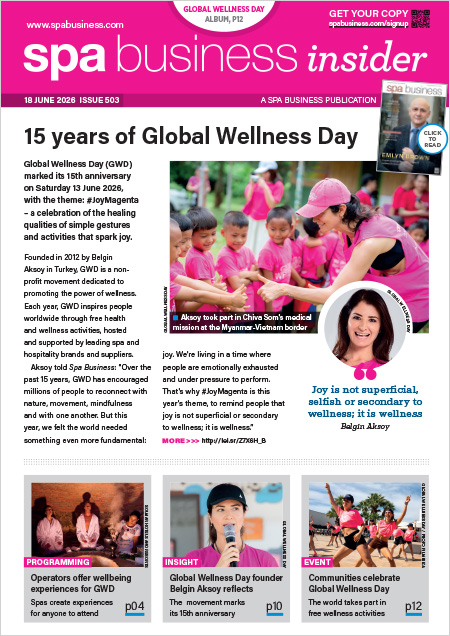
Global Wellness Day (GWD) marked its 15th anniversary on Saturday 13 June 2026, with the
theme: #JoyMagenta – a celebration of the healing qualities of simple gestures and activities
that spark joy.