Yes! Send me the FREE digital editions of Spa Business and Spa Business insider magazines and the FREE weekly Spa Business and Spa Business insider ezines and breaking news alerts!
Revenues increased by 8.3 per cent in the spa departments of US hotels in 2011, indicating the start of a strong recovery. Andrea Foster, reveals more about the latest statistics from PKF’s 2012 Trends® in the Hotel Spa Industry report
By Andrea Foster | Published in Spa Business 2013 issue 1
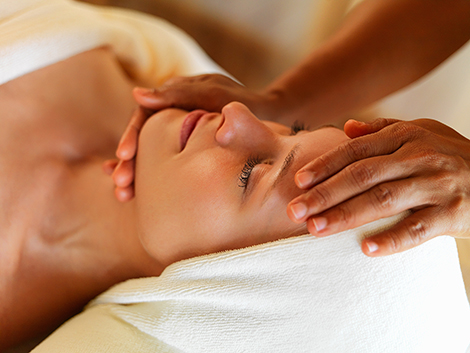
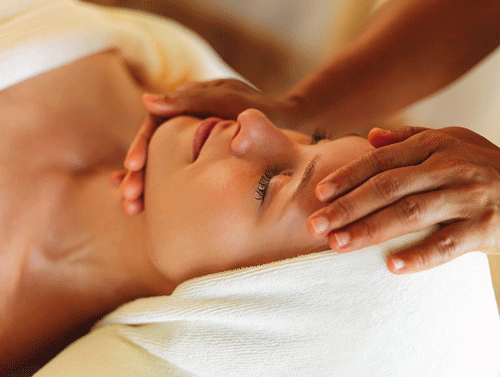
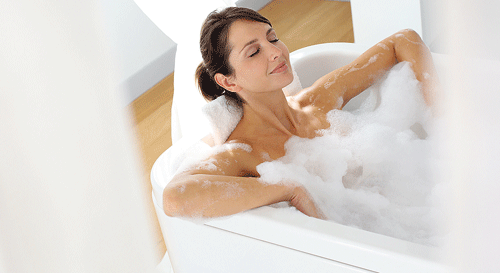
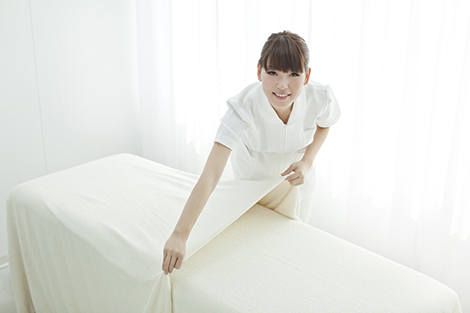
Massage is still the most popular service and revenue for it grew by 9.2 per cent from 2010 to 2011 (above); but retail increased the most by 13.4 per cent / Yuri Arcurs/shutterstock.com
The economic downturn hit the US hotel spa industry hard, affecting demand, revenues and profitability, reminding us that spas are not operated in a vacuum and that hotel spas are impacted by the economy at large and by the performance and trends of the lodging industry in particular.
Demographics, psychographics and behaviour trends also play an important part in the performance of spas. We know health-related deaths are fuelled by poor lifestyle, and increase with age and it’s well-known that the deterioration of the health of the US population and rising rates of obesity are resulting in record healthcare costs. Added to this, the US has an ageing population that includes 76 million baby boomers.
Self-care is at the core of the spa philosophy and as more attention is given to the importance of proactively maintaining good health through better lifestyle choices, we can expect to see demand for spas increase. Synergistically, spa marketing and messaging should play to this trend toward a more wellness-based lifestyle approach. The potential result? Hotel spas sustainably ‘doing well, by doing good’.
Fortunately, we began to see an uplift in hotel spas ‘doing well’ in 2011, according to findings from PKF Hospitality-Research (PKF-HR) in its 2012 Trends® in the Hotel Spa Industry report.
Led by Lodging Performance The recovery of the US lodging industry has been driven by a surprisingly strong surge in demand – an annual average growth rate of 5 per cent since 2009. And hotel managers are now beginning to leverage improved occupancy levels by raising room rates.
What has lagged, however, has been the ability of managers to increase the extra spend of guests while inside the hotel. In 2010, the first year of the recovery, PKF-HR noted increases in the volume of rooms revenue (5.3 per cent) and food and beverage sales (5.6 per cent), the two biggest sources of revenue for hotels. Yet the combined revenues from all other sources declined by 1.4 per cent that year.
One of the other revenue sources for some hotels is a spa. Unfortunately, hotel spa department revenue declined by 10.5 per cent in 2010 (see SB12/2 p44). This is not entirely surprising. If we look to Maslow and his hierarchy of needs, we understand that basic needs include food and shelter, and do not include perceived luxuries such as spa treatments. In a recession, and the initial recovery that follows, consumers are hesitant to spend on products and services that are beyond basic necessities. The latest PKF-HR research focuses on US hotel spa performance in 2011 and the good news is that as the economy slowly improved, we observed a very strong 8.3 per cent increase in spa department revenue in that year. While spa revenue is still below pre-recession peak levels, we do anticipate continued growth in the foreseeable future.
Revenues Rise For All The beginning of the recovery in 2011 was enjoyed by all types of hotel spas regardless of location, volume of revenue, or size of the facilities. In general, mid-sized hotel spas registered the greatest gains in revenue from 2010 to 2011. Based on number of hotel rooms (200-700), square feet (6,000-15,000), and number of treatment rooms (10-20), all hotel spas in the mid-categories of these measurements saw their revenue increase by double-digits (10 -11 per cent) in 2011. Analysing the data by type of hotel, we observed similar revenue increases for spas located in resort (8.4 per cent) and urban (8.2 per cent) hotels.
While total spa department revenue increased 8.3 per cent, when measured on a dollar per occupied hotel guestroom basis, the revenue increase was just 3.3 per cent. This implies that spa managers benefited more from an increase in the capture of in-house guests, as opposed to a higher spend per guest. The increased customer count could also have been influenced by a rise in the number of local clients.
Massage services continue to generate the most revenue for hotels spas. Sales from massages averaged 57 per cent of total department revenue and grew by 9.2 per cent from 2010 to 2011. Other significant spa services enjoying strong growth in revenue during 2011 were Skin Care and Body Work (8.0 per cent), Salon Services such as hair and nail services (8.1 per cent) and Retail (13.4 per cent). One thought on the higher percentage increase in retail revenue might be the spa guest taking home spa products in an effort to extend the effects of the spa treatment, before committing to more frequent spa visits.
Only two service categories suffered a decline in revenue in 2011. Daily Facility Fees dropped by 7.5 per cent, while Fitness and Personal Training revenues fell by 2.2 per cent. It should be noted that Membership Fee Revenue did increase by 6.4 per cent, therefore some of the daily facility patrons may have converted to spa members.
Expenses Under Control While revenues rose by 8.3 per cent, spa managers were also able to limit the growth in total departmental expenses to just 5.5 per cent. Please note, however, that in line with the Uniform System of Accounts for the Lodging industry, and similar other hotel revenue departments such as food and beverage, spa department expenses don’t typically include overhead costs such as administration, sales and marketing, maintenance and utilities.
Like most operating departments in a hotel, labour costs are the single largest expense item for spas. In 2011, the combined costs of salaries, wages, bonuses and payroll-related expenses equalled 55.6 per cent of spa department revenue, or 72.9 per cent of total departmental expenses. From 2010 to 2011, spa labour costs increased by 4.9 per cent.
Hotel spas that sell clothing and merchandise experienced a stout 14.7 per cent increase in the cost of the retail goods sold. Unfortunately this doesn’t compare favourably to the concurrent 13.4 per cent increase in retail sales. All other departmental operating expenses (supplies, laundry, linens etc) rose by a combined 4.7 per cent.
Profits Prevail Like revenues, all types of hotel spas enjoyed growth in profits in 2011. On average, the hotel spas in the survey sample achieved an 18.5 per cent increase in departmental profits from 2010 to 2011.
The level of profit growth was relatively consistent with the overall results when analysed by the location of the hotel, and the number of square feet within the spa. However, when segregating the sample by the total volume of spa revenue, PKF-HR observed some distinctive differences in the per cent change in profits. Hotel spas with more than US$3m in revenue saw their profits rise by 8 per cent. On the other hand, smaller spas with less than US$1m in revenue enjoyed a very strong 61.4 per cent rise in profits. Of course, it needs to be noted that the large volume spa operations average 13 times more dollars in profits than their smaller counterparts, which has a significant impact on the size of the percentage increases.
Growth By Price Based on its December 2012 Hotel Horizons® forecast report, PKF-HR estimates that RevPAR (revenue per available room) for US hotels grew by 6.8 per cent in 2012, and will continue to grow at an annual average rate of 6.4 per cent through 2016. It is important to note that going forward, the majority of RevPAR growth will be achieved through increases in room rates, not gains in occupancy. This trend is particularly true for luxury and upper-upscale properties, the two lodging categories in which most hotel spas are located.
The implication for hotel spa managers is clear. The pace of growth in hotel guest counts is going to diminish over the next few years. Therefore, in order to perpetuate the recovery that started in 2011, hotel spa managers will have to generate revenue growth by increasing the capture rate of in-house guests, sourcing additional local customers, and/or raising the amount spa customers spend per visit.
As the spa industry moves forward, there are, as mentioned earlier, catalysts in existence and sweeping changes that will begin to radically change how we think about – and make choices related to – our health and wellbeing. Spas of all types are ideally positioned to be at the forefront of this change. To be effective, leaders in the spa industry need to be adept at monitoring and evaluating the changing economy, demographics and psychographics of our population, and proactively applying such knowledge to their programming, marketing and guest interaction.
Read more from this issue of Spa Business magazine
View contents of Spa Business 2013 issue 1
Project update: Floating point
Michel Kreuger, the man behind Amsterdam’s €9m Floating Gardens spa, tells Magali Robathan how the innovative project is shaping up
Everyone's talking about...: Online reviews
Economists have revealed that just half a star difference in online consumer reviews can make or break a business. But are spa operators doing enough to boost their online reputation?
Marketing: Award winning advice
Spa judge Samantha Foster shares her top tips on how to write an award application entry with a winning edge
Interview: Deborah Szekely
The extraordinary Deborah Szekely has spent 73 years in the industry, creating Rancho La Puerta and the Golden Door. Her 90th birthday marked the dawn of a new era, with the launch of lobbying organisation Wellness Warrior. She talks to Liz Terry
Research: Recovery begins
Hotel spas in the US are starting to bounce back from the economic downturn. Andrea Foster from PKF Consulting analyses its 2012 Trends® in the Hotel Spa Industry report
Trends: Watch this space
The Brazilian middle class, millennials and gamification will have a significant impact on the spa industry moving forwards. Health and wellness experts at global foresights firm The Futures Company tell us why and suggest other trends to keep an eye out for
Promotion: company profile: Thalgo
Spa Business talks to Bernard Sirop, managing director of Thalgo, about the evolution of the company and where it is set to go in the future
Spa science: Entering the telo-age
Jay Williams explains the science behind telomere health – DNA structures linked to cellular ageing – and how it can be used in spas
Top team: Botanique Hotel & Spa
The hottest new spa in Brazil is backed by leading entrepreneurs including The Body Shop’s Gordon Roddick and AOL co-founder David Cole. We find out more
Promotional feature : Concept development
Special experiences are created when spa concepts are expressed through great design. Kate Corney talks to WTS president Gary Henkin and business partner Doug Chambers, principal of Blu Spas, about concept and branding
Product focus: Amenities - part two
Amenities, which are often overlooked by spa suppliers, can bring in 20 per cent of revenue for a product house. Spa Business get the low-down
Research: Fighting fat
A new type of ‘beige fat’ cell has been found to burn energy rather than store excess calories. Scientists say it could be key to tackling obesity
In the fast-paced world of fitness and wellness, where high-intensity workouts push us to
our limits and the sweat pours, the importance of efficient recovery cannot be overstated. [more...]
+ More featured suppliers
COMPANY PROFILES
Saskia Spa
Founded in 2014, Saskia Spa continues to evolve as a professional luxury skincare brand. It forms pa [more...]
Living Earth Crafts
For over 50 years, LEC has been manufacturing award-winning spa equipment for the world’s finest spas [more...]
Revenues increased by 8.3 per cent in the spa departments of US hotels in 2011, indicating the start of a strong recovery. Andrea Foster, reveals more about the latest statistics from PKF’s 2012 Trends® in the Hotel Spa Industry report
By Andrea Foster | Published in Spa Business 2013 issue 1
Massage is still the most popular service and revenue for it grew by 9.2 per cent from 2010 to 2011 (above); but retail increased the most by 13.4 per cent / Yuri Arcurs/shutterstock.com
The economic downturn hit the US hotel spa industry hard, affecting demand, revenues and profitability, reminding us that spas are not operated in a vacuum and that hotel spas are impacted by the economy at large and by the performance and trends of the lodging industry in particular.
Demographics, psychographics and behaviour trends also play an important part in the performance of spas. We know health-related deaths are fuelled by poor lifestyle, and increase with age and it’s well-known that the deterioration of the health of the US population and rising rates of obesity are resulting in record healthcare costs. Added to this, the US has an ageing population that includes 76 million baby boomers.
Self-care is at the core of the spa philosophy and as more attention is given to the importance of proactively maintaining good health through better lifestyle choices, we can expect to see demand for spas increase. Synergistically, spa marketing and messaging should play to this trend toward a more wellness-based lifestyle approach. The potential result? Hotel spas sustainably ‘doing well, by doing good’.
Fortunately, we began to see an uplift in hotel spas ‘doing well’ in 2011, according to findings from PKF Hospitality-Research (PKF-HR) in its 2012 Trends® in the Hotel Spa Industry report.
Led by Lodging Performance The recovery of the US lodging industry has been driven by a surprisingly strong surge in demand – an annual average growth rate of 5 per cent since 2009. And hotel managers are now beginning to leverage improved occupancy levels by raising room rates.
What has lagged, however, has been the ability of managers to increase the extra spend of guests while inside the hotel. In 2010, the first year of the recovery, PKF-HR noted increases in the volume of rooms revenue (5.3 per cent) and food and beverage sales (5.6 per cent), the two biggest sources of revenue for hotels. Yet the combined revenues from all other sources declined by 1.4 per cent that year.
One of the other revenue sources for some hotels is a spa. Unfortunately, hotel spa department revenue declined by 10.5 per cent in 2010 (see SB12/2 p44). This is not entirely surprising. If we look to Maslow and his hierarchy of needs, we understand that basic needs include food and shelter, and do not include perceived luxuries such as spa treatments. In a recession, and the initial recovery that follows, consumers are hesitant to spend on products and services that are beyond basic necessities. The latest PKF-HR research focuses on US hotel spa performance in 2011 and the good news is that as the economy slowly improved, we observed a very strong 8.3 per cent increase in spa department revenue in that year. While spa revenue is still below pre-recession peak levels, we do anticipate continued growth in the foreseeable future.
Revenues Rise For All The beginning of the recovery in 2011 was enjoyed by all types of hotel spas regardless of location, volume of revenue, or size of the facilities. In general, mid-sized hotel spas registered the greatest gains in revenue from 2010 to 2011. Based on number of hotel rooms (200-700), square feet (6,000-15,000), and number of treatment rooms (10-20), all hotel spas in the mid-categories of these measurements saw their revenue increase by double-digits (10 -11 per cent) in 2011. Analysing the data by type of hotel, we observed similar revenue increases for spas located in resort (8.4 per cent) and urban (8.2 per cent) hotels.
While total spa department revenue increased 8.3 per cent, when measured on a dollar per occupied hotel guestroom basis, the revenue increase was just 3.3 per cent. This implies that spa managers benefited more from an increase in the capture of in-house guests, as opposed to a higher spend per guest. The increased customer count could also have been influenced by a rise in the number of local clients.
Massage services continue to generate the most revenue for hotels spas. Sales from massages averaged 57 per cent of total department revenue and grew by 9.2 per cent from 2010 to 2011. Other significant spa services enjoying strong growth in revenue during 2011 were Skin Care and Body Work (8.0 per cent), Salon Services such as hair and nail services (8.1 per cent) and Retail (13.4 per cent). One thought on the higher percentage increase in retail revenue might be the spa guest taking home spa products in an effort to extend the effects of the spa treatment, before committing to more frequent spa visits.
Only two service categories suffered a decline in revenue in 2011. Daily Facility Fees dropped by 7.5 per cent, while Fitness and Personal Training revenues fell by 2.2 per cent. It should be noted that Membership Fee Revenue did increase by 6.4 per cent, therefore some of the daily facility patrons may have converted to spa members.
Expenses Under Control While revenues rose by 8.3 per cent, spa managers were also able to limit the growth in total departmental expenses to just 5.5 per cent. Please note, however, that in line with the Uniform System of Accounts for the Lodging industry, and similar other hotel revenue departments such as food and beverage, spa department expenses don’t typically include overhead costs such as administration, sales and marketing, maintenance and utilities.
Like most operating departments in a hotel, labour costs are the single largest expense item for spas. In 2011, the combined costs of salaries, wages, bonuses and payroll-related expenses equalled 55.6 per cent of spa department revenue, or 72.9 per cent of total departmental expenses. From 2010 to 2011, spa labour costs increased by 4.9 per cent.
Hotel spas that sell clothing and merchandise experienced a stout 14.7 per cent increase in the cost of the retail goods sold. Unfortunately this doesn’t compare favourably to the concurrent 13.4 per cent increase in retail sales. All other departmental operating expenses (supplies, laundry, linens etc) rose by a combined 4.7 per cent.
Profits Prevail Like revenues, all types of hotel spas enjoyed growth in profits in 2011. On average, the hotel spas in the survey sample achieved an 18.5 per cent increase in departmental profits from 2010 to 2011.
The level of profit growth was relatively consistent with the overall results when analysed by the location of the hotel, and the number of square feet within the spa. However, when segregating the sample by the total volume of spa revenue, PKF-HR observed some distinctive differences in the per cent change in profits. Hotel spas with more than US$3m in revenue saw their profits rise by 8 per cent. On the other hand, smaller spas with less than US$1m in revenue enjoyed a very strong 61.4 per cent rise in profits. Of course, it needs to be noted that the large volume spa operations average 13 times more dollars in profits than their smaller counterparts, which has a significant impact on the size of the percentage increases.
Growth By Price Based on its December 2012 Hotel Horizons® forecast report, PKF-HR estimates that RevPAR (revenue per available room) for US hotels grew by 6.8 per cent in 2012, and will continue to grow at an annual average rate of 6.4 per cent through 2016. It is important to note that going forward, the majority of RevPAR growth will be achieved through increases in room rates, not gains in occupancy. This trend is particularly true for luxury and upper-upscale properties, the two lodging categories in which most hotel spas are located.
The implication for hotel spa managers is clear. The pace of growth in hotel guest counts is going to diminish over the next few years. Therefore, in order to perpetuate the recovery that started in 2011, hotel spa managers will have to generate revenue growth by increasing the capture rate of in-house guests, sourcing additional local customers, and/or raising the amount spa customers spend per visit.
As the spa industry moves forward, there are, as mentioned earlier, catalysts in existence and sweeping changes that will begin to radically change how we think about – and make choices related to – our health and wellbeing. Spas of all types are ideally positioned to be at the forefront of this change. To be effective, leaders in the spa industry need to be adept at monitoring and evaluating the changing economy, demographics and psychographics of our population, and proactively applying such knowledge to their programming, marketing and guest interaction.
Read more from this issue of Spa Business magazine
View contents of Spa Business 2013 issue 1
Project update: Floating point
Michel Kreuger, the man behind Amsterdam’s €9m Floating Gardens spa, tells Magali Robathan how the innovative project is shaping up
Everyone's talking about...: Online reviews
Economists have revealed that just half a star difference in online consumer reviews can make or break a business. But are spa operators doing enough to boost their online reputation?
Marketing: Award winning advice
Spa judge Samantha Foster shares her top tips on how to write an award application entry with a winning edge
Interview: Deborah Szekely
The extraordinary Deborah Szekely has spent 73 years in the industry, creating Rancho La Puerta and the Golden Door. Her 90th birthday marked the dawn of a new era, with the launch of lobbying organisation Wellness Warrior. She talks to Liz Terry
Research: Recovery begins
Hotel spas in the US are starting to bounce back from the economic downturn. Andrea Foster from PKF Consulting analyses its 2012 Trends® in the Hotel Spa Industry report
Trends: Watch this space
The Brazilian middle class, millennials and gamification will have a significant impact on the spa industry moving forwards. Health and wellness experts at global foresights firm The Futures Company tell us why and suggest other trends to keep an eye out for
Promotion: company profile: Thalgo
Spa Business talks to Bernard Sirop, managing director of Thalgo, about the evolution of the company and where it is set to go in the future
Spa science: Entering the telo-age
Jay Williams explains the science behind telomere health – DNA structures linked to cellular ageing – and how it can be used in spas
Top team: Botanique Hotel & Spa
The hottest new spa in Brazil is backed by leading entrepreneurs including The Body Shop’s Gordon Roddick and AOL co-founder David Cole. We find out more
Promotional feature : Concept development
Special experiences are created when spa concepts are expressed through great design. Kate Corney talks to WTS president Gary Henkin and business partner Doug Chambers, principal of Blu Spas, about concept and branding
Product focus: Amenities - part two
Amenities, which are often overlooked by spa suppliers, can bring in 20 per cent of revenue for a product house. Spa Business get the low-down
Research: Fighting fat
A new type of ‘beige fat’ cell has been found to burn energy rather than store excess calories. Scientists say it could be key to tackling obesity
Jessica Sloyan, a wellness operations and training expert, has established an independent
private training academy to provide professional qualifications for practitioners looking to offer
immersive wellness experiences.
The International Spa Association (ISPA) has published its full 2026 US Spa Industry Study,
providing further insights into the region’s total US$1 billion (€855 million, £780 million)
industry revenue increase from 2024 to 2025.
Ameyalli, the 78-acre wellbeing resort and residential community in Midway in Utah, US, has
broken ground on phase two of the hot spring development – the Ameyalli Resort and Spa –
which is due to open in 2028.
TLee Spas and Wellness has revealed the design concept for a high-tech spa with body
mapping scanners to improve public health, for AI company Midjourney.
Gran Hotel Taoro in northern Tenerife, Spain, has completed the final phase of its three-year
renovation with the debut of its Sandára Wellness Centre.
Hand and Stone Massage and Facial Spa, the spa business with more than 650 locations across
the US and Canada, has appointed franchise expert Carrie Walsh as CEO as the company plans
to expand.
Synergy – The Retreat Show, the global trade show for retreats, has launched a global research
initiative that will provide insights into the retreat sector from both consumer and industry
perspectives.
The Wellness Tourism Association (WTA) has published a non-regulatory global industry
framework designed to ensure the retreat market offers responsible experiences.
A new survey of UK and international spa practitioners shows that stress, burnout and
wellbeing concerns have caused one in three respondents to consider leaving the industry.
In the fast-paced world of fitness and wellness, where high-intensity workouts push us to
our limits and the sweat pours, the importance of efficient recovery cannot be overstated. [more...]
+ More featured suppliers
COMPANY PROFILES
Saskia Spa Founded in 2014, Saskia Spa continues to evolve as a professional luxury skincare brand. It forms pa [more...]