Yes! Send me the FREE digital editions of Spa Business and Spa Business insider magazines and the FREE weekly Spa Business and Spa Business insider ezines and breaking news alerts!
Special experiences are created when spa concepts are expressed through great design. Kate Corney talks to WTS president Gary Henkin and business partner Doug Chambers, principal of Blu Spas, about concept and branding
By Kate Corney | Published in Spa Business 2013 issue 1
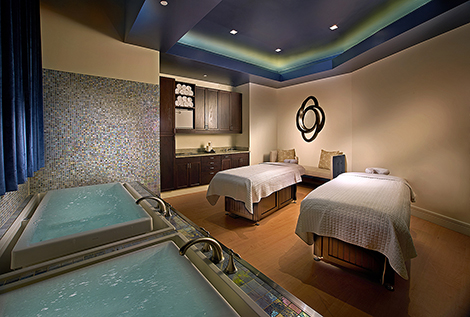
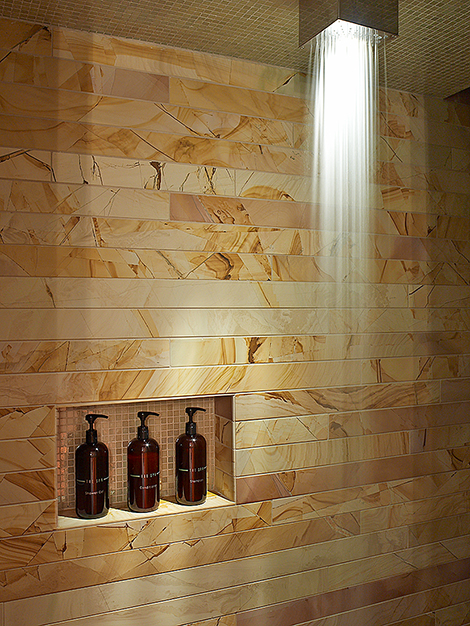
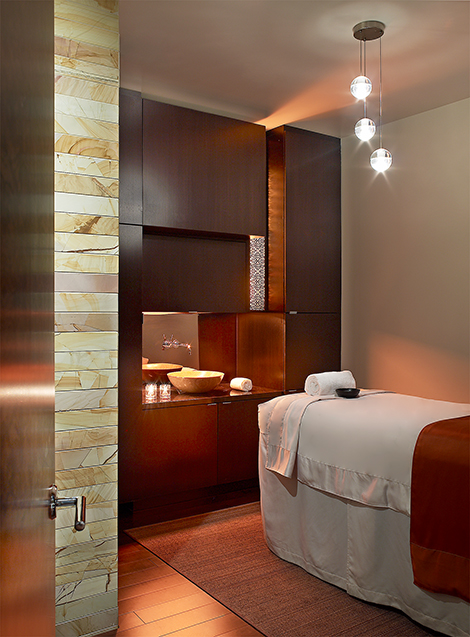
WTS created the concept for Wyndham’s Blue Harmony Spa in Orlando. One for China is next
What does the concept stage of a development encompass?
Doug: We consider a broad range of variables during the process of bringing a concept into focus – culture, location, demographics and what the competition’s offering. Our task is to create something compelling which distinguishes the project and ensures it’s financially viable from both development and operational standpoints.
We encourage collaboration with the project architects, interior designers, project managers and the client to bring the concept together. It’s a reference point for project planning and operational decisions.
Gary: Clients define the word concept in different ways. To some, it means shaping the design of a facility, to others creating a theme or a story, a signature element or treatment.
We define the word as part of the vision statement for the spa but we’re flexible and shape our involvement based on what the client needs, whether that’s in the concept, design or pre-opening phase.
Do spas need a concept? Gary: There are lots of spas that are very similar and don’t make a statement in the way an innovative concept spa can. The world is becoming more competitive and brand conscious and hotels and resorts are looking to define themselves through design features and operational and guest experience. They’re asking us to create spas that offer consumers something special.
Doug: Concepts matter – if not, why do consumers select one spa over another? While there may not be a single answer, a great concept can be a helpful component in creating a successful spa.
What does it cost to create one? Gary: Costs range from a few thousand US dollars to significantly more if a concept book and vision are needed. It takes work and time to create a concept book to include a theme, story and the signature elements of a spa vision.
Doug: Cost is related to scope. Frequently we’re approached about projects that – in addition to a traditional spa – include aspects of wellness, perhaps a medical spa, fitness facilities and often a salon. Many are mixed-use and include hospitality, residential, membership and local guest components. To deliver a concept which fully addresses these elements and which is different from what everyone else is doing costs money.
Are concepts scalable? Doug: Yes. We’ve worked with operators of single boutique sites who want something tailored to one location. We also work with developers envisioning multiple sites or hotel brands who want a concept that translates from a tropical beach resort to an urban location and everything in between.
How do concepts translate across cultures? Gary: We build a malleable concept. Around 70 per cent is transferable to anywhere in the world and 30 per cent is customised to the individual region it’s going to.
We’ve recently opened a Blue Harmony Spa for Wyndham Worldwide in Orlando, Florida and we’re working on one for China. The spas won’t be identical – the menus and service elements will be customised, but they’ll contain the thread of the concept. The quality, guest experience and some of the design will be recognisable.
At what stage do you create the brand? Doug: Ideally, you want to be aware of brand design early on, so when you’re devising the programme and layout, brand design requirements can be taken into account.
It can be awkward if branding decisions are made after the concrete’s poured and you realise the brand calls for some special design element – signature water features or thermal experiences, for example. It can be expensive to do a u-turn at this point.
However, for projects we know will delay the brand decision, we create a flexible design that can be nimbly adapted.
Will it make more money than a non-branded spa? Gary: There are branded spas that do well and others that underperform. They can carry the same brand, concept and product line in two different locations and one will do well while the other won’t. Why is this? The answer comes down to how they’re managed, marketed, promoted, and integrated into the hotel or resort.
Doug: There are advantages to having a branded spa, particularly in an independent property which doesn’t have a corporate structure from which to draw support in areas such as training and marketing. But branding isn’t a magical elixir that makes your spa successful – who’s operating it is just as important. However, when you bring together a great brand, strong operator, solid training and well-implemented marketing – that’s when it works.
What marketing and exposure might a brand give my spa? Gary: Brands will provide exposure. There are good reasons to consider them: 1. Cachet. Brands can provide unique features for your spa 2. Consumer recognition. If the brand is recognised, this is a good reason to consider it. 3. Press/media exposure. Most brands can bring added momentum from media buzz.
Your expectation should be that the brand will influence in these areas and if it can’t, then don’t consider it. The brand has a vested interest in marketing, promoting and exposing the spa to potential guests and pushing to make it happen. It can influence the exposure of the entire property.
Will the brand contribute to build costs? Doug: Brands are more reluctant to contribute than before the downturn. In most instances, they won’t contribute cash, but may make other types of contributions.
Gary: You should ask if there’s a licensing fee for bringing in a brand. This depends on the brand and the business model. Which brands would you recommend?
Gary: There are two options. Through a consultancy like ours, spa owners can create a brand, make it their own and roll it out throughout the world. Or they can ask us to identify brands for partnership working and we’ll present them for consideration. An early question we ask is do they want to develop, own and control their own brand, or do they want to work with a partner?
Doug: We try to find brand candidates most compatible for the specific project. One of the key considerations is whether the brand serves the end objective of distinguishing a spa from its competitors. We apply this same screening process on behalf of our client whether we’re recommending our own proprietary brands or third-party brands.
WTS International Contact WTS International Tel +1 301 622 7800 Fax +1 301 622 3373 www.wtsinternational.com
Read more from this issue of Spa Business magazine
View contents of Spa Business 2013 issue 1
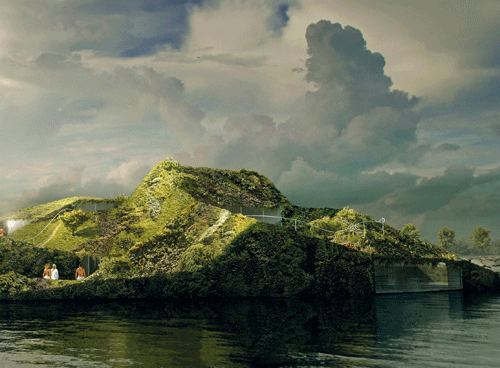
Project update: Floating point
Michel Kreuger, the man behind Amsterdam’s €9m Floating Gardens spa, tells Magali Robathan how the innovative project is shaping up
Everyone's talking about...: Online reviews
Economists have revealed that just half a star difference in online consumer reviews can make or break a business. But are spa operators doing enough to boost their online reputation?
Marketing: Award winning advice
Spa judge Samantha Foster shares her top tips on how to write an award application entry with a winning edge
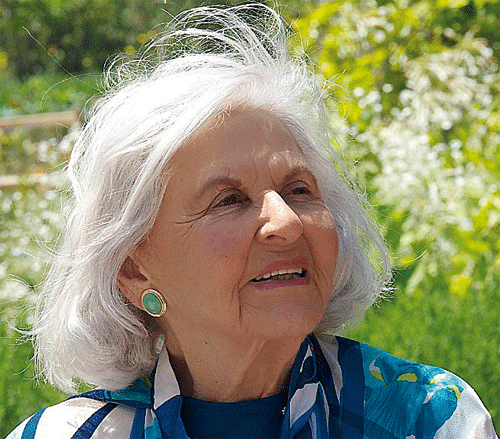
Interview: Deborah Szekely
The extraordinary Deborah Szekely has spent 73 years in the industry, creating Rancho La Puerta and the Golden Door. Her 90th birthday marked the dawn of a new era, with the launch of lobbying organisation Wellness Warrior. She talks to Liz Terry
Research: Recovery begins
Hotel spas in the US are starting to bounce back from the economic downturn. Andrea Foster from PKF Consulting analyses its 2012 Trends® in the Hotel Spa Industry report
Trends: Watch this space
The Brazilian middle class, millennials and gamification will have a significant impact on the spa industry moving forwards. Health and wellness experts at global foresights firm The Futures Company tell us why and suggest other trends to keep an eye out for
Promotion: company profile: Thalgo
Spa Business talks to Bernard Sirop, managing director of Thalgo, about the evolution of the company and where it is set to go in the future
Spa science: Entering the telo-age
Jay Williams explains the science behind telomere health – DNA structures linked to cellular ageing – and how it can be used in spas
Top team: Botanique Hotel & Spa
The hottest new spa in Brazil is backed by leading entrepreneurs including The Body Shop’s Gordon Roddick and AOL co-founder David Cole. We find out more
Promotional feature : Concept development
Special experiences are created when spa concepts are expressed through great design. Kate Corney talks to WTS president Gary Henkin and business partner Doug Chambers, principal of Blu Spas, about concept and branding
Product focus: Amenities - part two
Amenities, which are often overlooked by spa suppliers, can bring in 20 per cent of revenue for a product house. Spa Business get the low-down
Research: Fighting fat
A new type of ‘beige fat’ cell has been found to burn energy rather than store excess calories. Scientists say it could be key to tackling obesity
In the fast-paced world of fitness and wellness, where high-intensity workouts push us to
our limits and the sweat pours, the importance of efficient recovery cannot be overstated. [more...]
The MSpa Oslo series is a perennial bestseller in global markets. With innovative
engineering and premium performance, this completely portable spa line-up is expertly
designed to meet the needs of customers worldwide. [more...]
+ More featured suppliers
COMPANY PROFILES
Power Plate
Power Plate is owned, manufactured and distributed by Northbrook, Ill.-based Performance Health Syst [more...]
Aromatherapy Associates
Aromatherapy Associates is a world-leading British wellness brand, harnessing the power of essential [more...]
Special experiences are created when spa concepts are expressed through great design. Kate Corney talks to WTS president Gary Henkin and business partner Doug Chambers, principal of Blu Spas, about concept and branding
By Kate Corney | Published in Spa Business 2013 issue 1
WTS created the concept for Wyndham’s Blue Harmony Spa in Orlando. One for China is next
What does the concept stage of a development encompass?
Doug: We consider a broad range of variables during the process of bringing a concept into focus – culture, location, demographics and what the competition’s offering. Our task is to create something compelling which distinguishes the project and ensures it’s financially viable from both development and operational standpoints.
We encourage collaboration with the project architects, interior designers, project managers and the client to bring the concept together. It’s a reference point for project planning and operational decisions.
Gary: Clients define the word concept in different ways. To some, it means shaping the design of a facility, to others creating a theme or a story, a signature element or treatment.
We define the word as part of the vision statement for the spa but we’re flexible and shape our involvement based on what the client needs, whether that’s in the concept, design or pre-opening phase.
Do spas need a concept? Gary: There are lots of spas that are very similar and don’t make a statement in the way an innovative concept spa can. The world is becoming more competitive and brand conscious and hotels and resorts are looking to define themselves through design features and operational and guest experience. They’re asking us to create spas that offer consumers something special.
Doug: Concepts matter – if not, why do consumers select one spa over another? While there may not be a single answer, a great concept can be a helpful component in creating a successful spa.
What does it cost to create one? Gary: Costs range from a few thousand US dollars to significantly more if a concept book and vision are needed. It takes work and time to create a concept book to include a theme, story and the signature elements of a spa vision.
Doug: Cost is related to scope. Frequently we’re approached about projects that – in addition to a traditional spa – include aspects of wellness, perhaps a medical spa, fitness facilities and often a salon. Many are mixed-use and include hospitality, residential, membership and local guest components. To deliver a concept which fully addresses these elements and which is different from what everyone else is doing costs money.
Are concepts scalable? Doug: Yes. We’ve worked with operators of single boutique sites who want something tailored to one location. We also work with developers envisioning multiple sites or hotel brands who want a concept that translates from a tropical beach resort to an urban location and everything in between.
How do concepts translate across cultures? Gary: We build a malleable concept. Around 70 per cent is transferable to anywhere in the world and 30 per cent is customised to the individual region it’s going to.
We’ve recently opened a Blue Harmony Spa for Wyndham Worldwide in Orlando, Florida and we’re working on one for China. The spas won’t be identical – the menus and service elements will be customised, but they’ll contain the thread of the concept. The quality, guest experience and some of the design will be recognisable.
At what stage do you create the brand? Doug: Ideally, you want to be aware of brand design early on, so when you’re devising the programme and layout, brand design requirements can be taken into account.
It can be awkward if branding decisions are made after the concrete’s poured and you realise the brand calls for some special design element – signature water features or thermal experiences, for example. It can be expensive to do a u-turn at this point.
However, for projects we know will delay the brand decision, we create a flexible design that can be nimbly adapted.
Will it make more money than a non-branded spa? Gary: There are branded spas that do well and others that underperform. They can carry the same brand, concept and product line in two different locations and one will do well while the other won’t. Why is this? The answer comes down to how they’re managed, marketed, promoted, and integrated into the hotel or resort.
Doug: There are advantages to having a branded spa, particularly in an independent property which doesn’t have a corporate structure from which to draw support in areas such as training and marketing. But branding isn’t a magical elixir that makes your spa successful – who’s operating it is just as important. However, when you bring together a great brand, strong operator, solid training and well-implemented marketing – that’s when it works.
What marketing and exposure might a brand give my spa? Gary: Brands will provide exposure. There are good reasons to consider them: 1. Cachet. Brands can provide unique features for your spa 2. Consumer recognition. If the brand is recognised, this is a good reason to consider it. 3. Press/media exposure. Most brands can bring added momentum from media buzz.
Your expectation should be that the brand will influence in these areas and if it can’t, then don’t consider it. The brand has a vested interest in marketing, promoting and exposing the spa to potential guests and pushing to make it happen. It can influence the exposure of the entire property.
Will the brand contribute to build costs? Doug: Brands are more reluctant to contribute than before the downturn. In most instances, they won’t contribute cash, but may make other types of contributions.
Gary: You should ask if there’s a licensing fee for bringing in a brand. This depends on the brand and the business model. Which brands would you recommend?
Gary: There are two options. Through a consultancy like ours, spa owners can create a brand, make it their own and roll it out throughout the world. Or they can ask us to identify brands for partnership working and we’ll present them for consideration. An early question we ask is do they want to develop, own and control their own brand, or do they want to work with a partner?
Doug: We try to find brand candidates most compatible for the specific project. One of the key considerations is whether the brand serves the end objective of distinguishing a spa from its competitors. We apply this same screening process on behalf of our client whether we’re recommending our own proprietary brands or third-party brands.
WTS International Contact WTS International Tel +1 301 622 7800 Fax +1 301 622 3373 www.wtsinternational.com
Read more from this issue of Spa Business magazine
View contents of Spa Business 2013 issue 1
Project update: Floating point
Michel Kreuger, the man behind Amsterdam’s €9m Floating Gardens spa, tells Magali Robathan how the innovative project is shaping up
Everyone's talking about...: Online reviews
Economists have revealed that just half a star difference in online consumer reviews can make or break a business. But are spa operators doing enough to boost their online reputation?
Marketing: Award winning advice
Spa judge Samantha Foster shares her top tips on how to write an award application entry with a winning edge
Interview: Deborah Szekely
The extraordinary Deborah Szekely has spent 73 years in the industry, creating Rancho La Puerta and the Golden Door. Her 90th birthday marked the dawn of a new era, with the launch of lobbying organisation Wellness Warrior. She talks to Liz Terry
Research: Recovery begins
Hotel spas in the US are starting to bounce back from the economic downturn. Andrea Foster from PKF Consulting analyses its 2012 Trends® in the Hotel Spa Industry report
Trends: Watch this space
The Brazilian middle class, millennials and gamification will have a significant impact on the spa industry moving forwards. Health and wellness experts at global foresights firm The Futures Company tell us why and suggest other trends to keep an eye out for
Promotion: company profile: Thalgo
Spa Business talks to Bernard Sirop, managing director of Thalgo, about the evolution of the company and where it is set to go in the future
Spa science: Entering the telo-age
Jay Williams explains the science behind telomere health – DNA structures linked to cellular ageing – and how it can be used in spas
Top team: Botanique Hotel & Spa
The hottest new spa in Brazil is backed by leading entrepreneurs including The Body Shop’s Gordon Roddick and AOL co-founder David Cole. We find out more
Promotional feature : Concept development
Special experiences are created when spa concepts are expressed through great design. Kate Corney talks to WTS president Gary Henkin and business partner Doug Chambers, principal of Blu Spas, about concept and branding
Product focus: Amenities - part two
Amenities, which are often overlooked by spa suppliers, can bring in 20 per cent of revenue for a product house. Spa Business get the low-down
Research: Fighting fat
A new type of ‘beige fat’ cell has been found to burn energy rather than store excess calories. Scientists say it could be key to tackling obesity
Jessica Sloyan, a wellness operations and training expert, has established an independent
private training academy to provide professional qualifications for practitioners looking to offer
immersive wellness experiences.
The International Spa Association (ISPA) has published its full 2026 US Spa Industry Study,
providing further insights into the region’s total US$1 billion (€855 million, £780 million)
industry revenue increase from 2024 to 2025.
Ameyalli, the 78-acre wellbeing resort and residential community in Midway in Utah, US, has
broken ground on phase two of the hot spring development – the Ameyalli Resort and Spa –
which is due to open in 2028.
TLee Spas and Wellness has revealed the design concept for a high-tech spa with body
mapping scanners to improve public health, for AI company Midjourney.
Gran Hotel Taoro in northern Tenerife, Spain, has completed the final phase of its three-year
renovation with the debut of its Sandára Wellness Centre.
Hand and Stone Massage and Facial Spa, the spa business with more than 650 locations across
the US and Canada, has appointed franchise expert Carrie Walsh as CEO as the company plans
to expand.
Synergy – The Retreat Show, the global trade show for retreats, has launched a global research
initiative that will provide insights into the retreat sector from both consumer and industry
perspectives.
The Wellness Tourism Association (WTA) has published a non-regulatory global industry
framework designed to ensure the retreat market offers responsible experiences.
A new survey of UK and international spa practitioners shows that stress, burnout and
wellbeing concerns have caused one in three respondents to consider leaving the industry.
In the fast-paced world of fitness and wellness, where high-intensity workouts push us to
our limits and the sweat pours, the importance of efficient recovery cannot be overstated. [more...]
The MSpa Oslo series is a perennial bestseller in global markets. With innovative
engineering and premium performance, this completely portable spa line-up is expertly
designed to meet the needs of customers worldwide. [more...]
+ More featured suppliers
COMPANY PROFILES
Power Plate Power Plate is owned, manufactured and distributed by Northbrook, Ill.-based Performance Health Syst [more...]