Yes! Send me the FREE digital editions of Spa Business and Spa Business insider magazines and the FREE weekly Spa Business and Spa Business insider ezines and breaking news alerts!
The Health and Wellness Knowledge Venturing team at global foresights firm The Futures Company share their thoughts on the hottest trends impacting the spa industry worldwide
Read more from this issue of Spa Business magazine
View contents of Spa Business 2013 issue 1
Project update: Floating point
Michel Kreuger, the man behind Amsterdam’s €9m Floating Gardens spa, tells Magali Robathan how the innovative project is shaping up
Everyone's talking about...: Online reviews
Economists have revealed that just half a star difference in online consumer reviews can make or break a business. But are spa operators doing enough to boost their online reputation?
Marketing: Award winning advice
Spa judge Samantha Foster shares her top tips on how to write an award application entry with a winning edge
Interview: Deborah Szekely
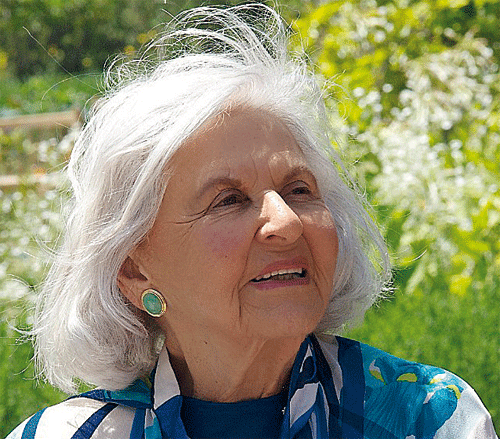
The extraordinary Deborah Szekely has spent 73 years in the industry, creating Rancho La Puerta and the Golden Door. Her 90th birthday marked the dawn of a new era, with the launch of lobbying organisation Wellness Warrior. She talks to Liz Terry
Research: Recovery begins
Hotel spas in the US are starting to bounce back from the economic downturn. Andrea Foster from PKF Consulting analyses its 2012 Trends® in the Hotel Spa Industry report
Trends: Watch this space
The Brazilian middle class, millennials and gamification will have a significant impact on the spa industry moving forwards. Health and wellness experts at global foresights firm The Futures Company tell us why and suggest other trends to keep an eye out for
Promotion: company profile: Thalgo
Spa Business talks to Bernard Sirop, managing director of Thalgo, about the evolution of the company and where it is set to go in the future
Spa science: Entering the telo-age
Jay Williams explains the science behind telomere health – DNA structures linked to cellular ageing – and how it can be used in spas
Top team: Botanique Hotel & Spa
The hottest new spa in Brazil is backed by leading entrepreneurs including The Body Shop’s Gordon Roddick and AOL co-founder David Cole. We find out more
Promotional feature : Concept development
Special experiences are created when spa concepts are expressed through great design. Kate Corney talks to WTS president Gary Henkin and business partner Doug Chambers, principal of Blu Spas, about concept and branding
Product focus: Amenities - part two
Amenities, which are often overlooked by spa suppliers, can bring in 20 per cent of revenue for a product house. Spa Business get the low-down
Research: Fighting fat
A new type of ‘beige fat’ cell has been found to burn energy rather than store excess calories. Scientists say it could be key to tackling obesity
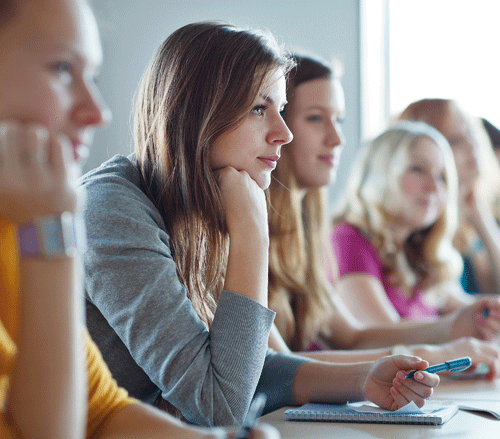
A holistic approach to wellbeing is innate to millennials and something they’re reluctant to sacrifice, despite the economic uncertainty and financial constraints that surround them.
Eighteen to 33-year-olds in western Europe have grown up accustomed to a society where it’s acceptable to focus on yourself as an individual and dedicate time to your own mental and emotional wellbeing. Yet times are tough for this group, particularly at the younger end of the age spectrum, as they attempt to establish themselves on the career ladder against a backdrop of austerity. They’re increasingly worried about their future and are having to plan for the long-term in a way that previous generations managed to avoid. Forty-three per cent of 18-25 year olds in the UK agreed in our 2012 Global Monitor study that over the next 12 months, they’ll be planning for the worst financially – a stark contrast to the optimism of previous generations at this age. Emotional wellbeing is under threat as anxiety over job security, debt and future prospects takes hold.
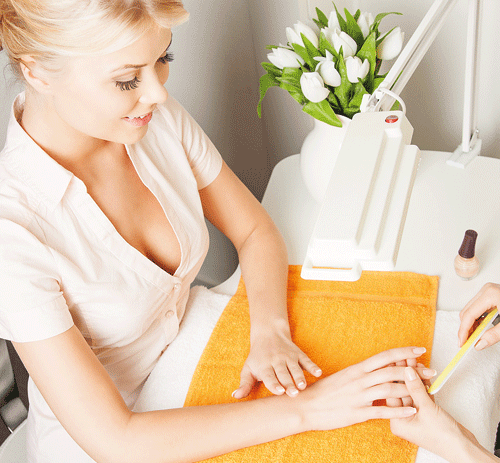
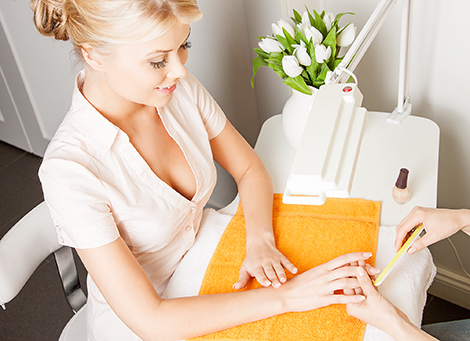
Should the spa industry be worried by a cash-strapped younger generation? Reassuringly, in this climate, little luxuries are more important than ever for this age group. Whether it’s a cup of their favourite coffee or a weekly music download, millennials are unwilling to sacrifice the boosts that help them to maintain an even keel and deal with the pressures they’re under. The spa industry should take note – luxury treatments will be out of budget, but affordable, everyday treats such as express manicures or day passes to use spa facilities, are just what this group need and crave. If the spa industry can offer a range of treatments that meet a £10-20 (US$16-32, €12-24) budget, there is an opportunity to reach out to this younger audience.
Whether it’s a cup of their favourite coffee or a weekly music download, millennials are unwilling to sacrifice the boosts that help them to maintain an even keel
lev dolgachov/shutterstock.com
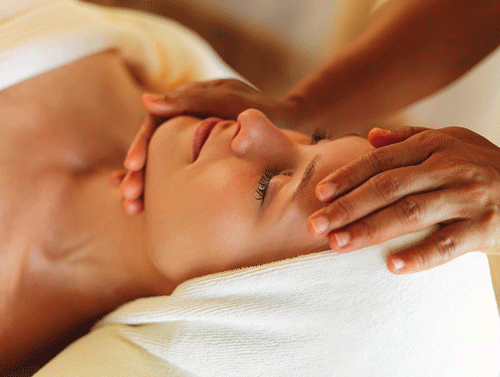
Every day treats such as an express manicure are just what this group need
Gamification and the spa industry
Eloise Keightley
Eloise KeightleyConsultant (UK)
Gamification is fast permeating every part of the health and wellness industry, including the spas.
In the future, we might expect to see spas using the carrot/stick approach that is currently prevalent in the gamification of the health and fitness industry, to improve loyalty schemes. An app especially designed for rewarding clients for purchases would replace physical loyalty cards, for example. Businesses could easily incentivise clients – especially those who do not make regular visits – to return for more treatments by offering points to trade for discounted or free treatments and trials, as well as spa-related online games. Tracking features, which are common among apps focused on more goal-oriented aspects of health such as diet and exercise could be used to help clients record and comment on treatments that they have enjoyed.
Social gaming offers an important means to enriching client relationships. Facebook, the world’s largest gaming platform, has already been used by many brands looking to better educate and engage with clients and staff through social gaming. Spa Business has already reported on Clarins’ Spa Life (see SB12/2 p80), which allows Facebook users to manage virtual spa clients in search of treatments to redeem points for Clarins products. More recently, pharmaceutical group Boehringer Ingelheim has created Syrum, a Facebook game in which players must solve global pandemics and diseases by discovering cures, creating a stable drug, and then testing it through clinical trials. It is easy to imagine how this type of immersive social gaming might be used to educate spa clients about treatments offered, especially treatments and technologies that are new to the market.
Gaming can help to deliver a much higher level of client engagement and connection which can only benefit the spa industry and its consumers.
Clarins is already using Facebook and gaming to enrich client relationships
The middle class opportunity in Brazil
Rebeca Dreicon
Rebeca DreiconDirector (Brazil)
Brazilian poet Vinicius de Moraes made an apt reflection on the country’s culture when he said “May ugly women forgive me, but beauty is fundamental”. The desire to look good has deep cultural roots and means that Brazil has long been fertile ground for the health and beauty industry. The cosmetic industry is flourishing and Brazil is the second largest plastic surgery market in the world behind the US .
Brazil has experienced rapid economic growth in the last decade, overtaking the UK in 2011 to become the sixth largest global economy in terms of GDP. This growth is amplifying this aspiration to be beautiful. Optimistic consumers are keen to stand out from the crowd and display their success in life through their appearance. Yet the spa industry appears to be missing a trick in connecting with increasingly affluent middle-class consumers who have huge purchasing power. Brazil’s middle class was expected to spend BRL1 trillion (US$490bn, €369bn, £306bn) in 2012 with 52 per cent of the country’s 1.9 million total population defined as middle class compared to 38 per cent 11 years ago.
While the industry has seen rapid growth over the last five years, with an increase from 400 to over 1,000 outlets, spa culture has not been mainstreamed. There’s still a perception that spas are places for wealthy, high-profile people rather than for normal people looking for moments of indulgence. Engagement with spas is hampered by a lack of clarity around the benefits and the services on offer. At a spa and natural products show, 10 per cent of consumers said the biggest barrier to them using spas was lack of awareness and understanding as to what spas provide.
Brazil is ripe for further growth in the spa industry, but only if spa culture becomes more accessible. Appearance-centric consumers with increasing disposable incomes are prime targets, but without clearer communication on what they stand to gain from a spa experience, a valuable opportunity could be missed.
Schmid Christophe/shutterstock.com
The number of spas in Brazil has risen from 400 to over 1,000 in five years
Body and mind
Louise Kennedy
Louise KennedyConsultant (UK)
We’re living hectic modern lives and often tensely balancing work life and leisure time. More so than ever, we’re seeing a rise in instances of stress. According to the national health service in the UK, for example, work-related stress, which can negatively affect mental wellbeing by driving down self-esteem and positivity, has soared by 40 per cent since 2005.
This rise in workplace stress is driving consumers to take greater responsibility their mental wellbeing in order to manage their mind and maintain a positive mood. Where once mental health was complex and stigmatised, it’s now emerging as a concern on a par with physical wellbeing.
We’re seeing an increase in more ‘alternative’ holistic treatments that aim to promote mental wellbeing. Examples include the growth of ‘mindfulness meditation’ to boost mental harmony and the Zen Sound Therapy programme by Vermont’s Stowe Mountain Lodge in the US which aims to reduce anxiety through music therapy. In addition are bold multi-sensory experiences such as the AlphaSphere, by Viennese artist sha, which encases the spa-goer in rich images, rhythms and vibrations to drive ultimate physical and mental relaxation.
In response, the world of the spa is now emerging as an accessible way for people to take time for themselves, invigorate the senses and improve their mental outlook on life. From massages to manicures, spa activities are proving to be a one-stop-shop to boosting self-esteem and mental wellbeing. According to the ISPA 2012 US Spa Industry Study, visits were up 4.1 per cent in 2011 (see SB12/4 p40).
Time pressures can mean that people often have less time to be able to devote to their mental wellbeing, despite people recognising it as a concern. More often than not we’re seeing people embracing simple and non-time intensive spa treatments in the home, from masks and facials to hot baths and scented candles that help to drive positive mental balance.
In the future we will see more people taking responsibility for their mental health by embracing the world of the spa, in their own time and at their own pace.
The sensory Alpha-Sphere could help with the growing need for mental wellbeing
The rise of the bio-citizen
Casey Ferrell
Casey FerrellSenior consultant (US)
When it comes to their health and wellness, many consumers find navigating the myriad of choices available confusing, intimidating and very complicated. They continue to find their own way through this complexity, whether by relying on networks of trusted advisers and professionals, or seeking advice from peers or others who have faced similar situations and choices.
People are becoming increasingly familiar and willing to share personal health information with those outside of their circle of friends and family. For example, Facebook recently included health and wellness updates to its list of Life Events, ranging from broken bones to illnesses overcome.
Some consumers are actually forming social affinities around health and biological identities. With the help of new media ‘bio-citizens’ – people who join social networks, on and offline, based on shared interest in health concerns – are generating and sharing specialised scientific and medical knowledge of their conditions. They are becoming experts in their own right and therefore increasingly influential.
Their impact is likely to be acutely felt, as user-generated content on health affinity websites and blogs will spur collective action by tapping into the collective intelligence of social networks for health. This new collective intelligence will introduce new health information authorities and will redefine healthcare solutions in the future.
As engaged and informed consumers share their private health information they will expect spa and wellness solutions to be more innovative and flexible, tailoring the services to meet their specific needs.
Africa Studio/shutterstock.com
Bio-citizens join social networks based on shared health concerns
The rising need for urban sanctuaries
Amy Smyth
Amy SmythSenior consultant (UK)
Urbanisation is an increasing threat to our activity levels. Currently, 51 per cent of the global population lives in an urban environment compared to 30 per cent in 1950, it was reported in 2012 research by the Population Reference Bureau. In Europe more than two-thirds of people live in towns and cities making it hard for them to remain active.
Our green space and outdoor places to exercise are become increasingly threatened. In addition, air pollution can make it unpleasant and even a threat to our health to exercise outdoors. In some cases, people are too afraid to exercise in built-up areas for fear of crime and gangs. For these reasons the outdoor environment is a less attractive place to exercise and people are seeking a safe and healthy space to retreat to.
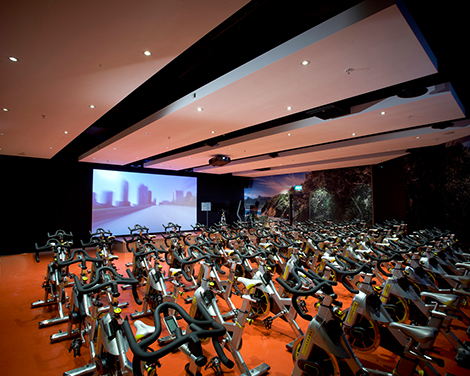
We are seeing attempts from health clubs to address this by looking at innovative ways of bringing the outside indoors with some urban gyms creating the sensations of exercising outdoors by doing things like increasing natural light and projecting images of natural scenery on the walls. The Virgin Active health club in Aldersgate, London, for example has a group cycling studio with a floor to ceiling projection screen and up to 150 different outdoor image videos (pictured). But this trend not just interesting for health clubs and gyms – it could lead to a new growth opportunity for the spa industry as people start to view spas as more of an essential part of managing their health and wellbeing rather than a luxury. As urbanisation continues to rise people will increasingly seek a sanctuary to escape to and the benefits of visiting a spa will be far more widely appreciated.
Outdoor places to exercise are under threat, so gyms are recreating them
Holistic ageing
Radha Patel
Radha PatelAssociate director (UK)
Today, there are 1.5 billion people aged over 50 and this is set to rise to 1.9 billion by 2020, say Euromonitor International and the UN. For the first time in history, the world’s older population will be the fastest growing age group.
Older consumers are not necessarily bound by life stage stereotypes. Faced with the prospect of living for longer, they are not only looking for solutions that will help them better manage the health conditions they have, but also to slow or prevent age related decline in their bodies and minds.
From beauty creams and pills to Chinese placenta medicines and even functional drinks that prevent the early onset of Alzheimer’s, the market for anti-ageing products has been rapidly expanding. At its most extreme it includes treatments such as replacing healthy joints with artificial ones to prevent joint deterioration in the first place. However, these solutions are not for everyone and many older people are looking for more holistic treatments that can be integrated into their lifestyles.
The spa industry is already responding with a growing number of anti-ageing treatments. In addition, healthy ageing spa holidays are being offered to consumers wanting to stay one step ahead of the ageing process. These holidays feature specially designed programmes that combine nutrition advice; modern optimal tests to assess functional health and metabolism; non-abrasive anti-ageing treatments, such as nourishing cranberry facials; and the ancient therapies of yoga, ayurveda and meditation to assist the cellular renewal process that naturally slows with age.
Spas in the future should focus on promoting longevity, youthfulness and vitality with treatments that not only prevent premature ageing and disease, but are simple enough to replicate at home to ensure that the benefits are ongoing.
Spas should focus on promoting longevity and vitality with treatments that can prevent premature ageing and that can be easily replicated at home
About The Futures Company
The Futures Company is a strategic insight and innovation consultancy, with particular expertise in futures and foresight work. The company has teams in the US, Mexico, Brazil, UK and Argentina and partnerships in China, India and Poland. It was formed in 2008 by the merger of two businesses – Europe’s Henley Centre HeadlightVision and US-based Yankelovich. It’s a division of Kantar, the insight arm of WPP. By exploring the future needs, motivations and behaviours of consumers, and the broader dynamics shaping the marketplace, The Futures Company unlocks new sources of growth for its clients.
In the fast-paced world of fitness and wellness, where high-intensity workouts push us to
our limits and the sweat pours, the importance of efficient recovery cannot be overstated. [more...]
Contrast therapy, based on the alternation of hot and cold rituals, has become one of the
most valued practices in the fields of wellness and recovery. [more...]
+ More featured suppliers
COMPANY PROFILES
FIBO
FIBO is the international platform for fitness, wellness and health. During four days, FIBO connects [more...]
Myndstream
The Stream, Myndstream's purpose-built streaming service enables you to personalise the music to sui [more...]
The Health and Wellness Knowledge Venturing team at global foresights firm The Futures Company share their thoughts on the hottest trends impacting the spa industry worldwide
Read more from this issue of Spa Business magazine
View contents of Spa Business 2013 issue 1
Project update: Floating point
Michel Kreuger, the man behind Amsterdam’s €9m Floating Gardens spa, tells Magali Robathan how the innovative project is shaping up
Everyone's talking about...: Online reviews
Economists have revealed that just half a star difference in online consumer reviews can make or break a business. But are spa operators doing enough to boost their online reputation?
Marketing: Award winning advice
Spa judge Samantha Foster shares her top tips on how to write an award application entry with a winning edge
Interview: Deborah Szekely
The extraordinary Deborah Szekely has spent 73 years in the industry, creating Rancho La Puerta and the Golden Door. Her 90th birthday marked the dawn of a new era, with the launch of lobbying organisation Wellness Warrior. She talks to Liz Terry
Research: Recovery begins
Hotel spas in the US are starting to bounce back from the economic downturn. Andrea Foster from PKF Consulting analyses its 2012 Trends® in the Hotel Spa Industry report
Trends: Watch this space
The Brazilian middle class, millennials and gamification will have a significant impact on the spa industry moving forwards. Health and wellness experts at global foresights firm The Futures Company tell us why and suggest other trends to keep an eye out for
Promotion: company profile: Thalgo
Spa Business talks to Bernard Sirop, managing director of Thalgo, about the evolution of the company and where it is set to go in the future
Spa science: Entering the telo-age
Jay Williams explains the science behind telomere health – DNA structures linked to cellular ageing – and how it can be used in spas
Top team: Botanique Hotel & Spa
The hottest new spa in Brazil is backed by leading entrepreneurs including The Body Shop’s Gordon Roddick and AOL co-founder David Cole. We find out more
Promotional feature : Concept development
Special experiences are created when spa concepts are expressed through great design. Kate Corney talks to WTS president Gary Henkin and business partner Doug Chambers, principal of Blu Spas, about concept and branding
Product focus: Amenities - part two
Amenities, which are often overlooked by spa suppliers, can bring in 20 per cent of revenue for a product house. Spa Business get the low-down
Research: Fighting fat
A new type of ‘beige fat’ cell has been found to burn energy rather than store excess calories. Scientists say it could be key to tackling obesity
A holistic approach to wellbeing is innate to millennials and something they’re reluctant to sacrifice, despite the economic uncertainty and financial constraints that surround them.
Eighteen to 33-year-olds in western Europe have grown up accustomed to a society where it’s acceptable to focus on yourself as an individual and dedicate time to your own mental and emotional wellbeing. Yet times are tough for this group, particularly at the younger end of the age spectrum, as they attempt to establish themselves on the career ladder against a backdrop of austerity. They’re increasingly worried about their future and are having to plan for the long-term in a way that previous generations managed to avoid. Forty-three per cent of 18-25 year olds in the UK agreed in our 2012 Global Monitor study that over the next 12 months, they’ll be planning for the worst financially – a stark contrast to the optimism of previous generations at this age. Emotional wellbeing is under threat as anxiety over job security, debt and future prospects takes hold.
Should the spa industry be worried by a cash-strapped younger generation? Reassuringly, in this climate, little luxuries are more important than ever for this age group. Whether it’s a cup of their favourite coffee or a weekly music download, millennials are unwilling to sacrifice the boosts that help them to maintain an even keel and deal with the pressures they’re under. The spa industry should take note – luxury treatments will be out of budget, but affordable, everyday treats such as express manicures or day passes to use spa facilities, are just what this group need and crave. If the spa industry can offer a range of treatments that meet a £10-20 (US$16-32, €12-24) budget, there is an opportunity to reach out to this younger audience.
Whether it’s a cup of their favourite coffee or a weekly music download, millennials are unwilling to sacrifice the boosts that help them to maintain an even keel
lev dolgachov/shutterstock.com
Every day treats such as an express manicure are just what this group need
Gamification and the spa industry
Eloise Keightley
Eloise KeightleyConsultant (UK)
Gamification is fast permeating every part of the health and wellness industry, including the spas.
In the future, we might expect to see spas using the carrot/stick approach that is currently prevalent in the gamification of the health and fitness industry, to improve loyalty schemes. An app especially designed for rewarding clients for purchases would replace physical loyalty cards, for example. Businesses could easily incentivise clients – especially those who do not make regular visits – to return for more treatments by offering points to trade for discounted or free treatments and trials, as well as spa-related online games. Tracking features, which are common among apps focused on more goal-oriented aspects of health such as diet and exercise could be used to help clients record and comment on treatments that they have enjoyed.
Social gaming offers an important means to enriching client relationships. Facebook, the world’s largest gaming platform, has already been used by many brands looking to better educate and engage with clients and staff through social gaming. Spa Business has already reported on Clarins’ Spa Life (see SB12/2 p80), which allows Facebook users to manage virtual spa clients in search of treatments to redeem points for Clarins products. More recently, pharmaceutical group Boehringer Ingelheim has created Syrum, a Facebook game in which players must solve global pandemics and diseases by discovering cures, creating a stable drug, and then testing it through clinical trials. It is easy to imagine how this type of immersive social gaming might be used to educate spa clients about treatments offered, especially treatments and technologies that are new to the market.
Gaming can help to deliver a much higher level of client engagement and connection which can only benefit the spa industry and its consumers.
Clarins is already using Facebook and gaming to enrich client relationships
The middle class opportunity in Brazil
Rebeca Dreicon
Rebeca DreiconDirector (Brazil)
Brazilian poet Vinicius de Moraes made an apt reflection on the country’s culture when he said “May ugly women forgive me, but beauty is fundamental”. The desire to look good has deep cultural roots and means that Brazil has long been fertile ground for the health and beauty industry. The cosmetic industry is flourishing and Brazil is the second largest plastic surgery market in the world behind the US .
Brazil has experienced rapid economic growth in the last decade, overtaking the UK in 2011 to become the sixth largest global economy in terms of GDP. This growth is amplifying this aspiration to be beautiful. Optimistic consumers are keen to stand out from the crowd and display their success in life through their appearance. Yet the spa industry appears to be missing a trick in connecting with increasingly affluent middle-class consumers who have huge purchasing power. Brazil’s middle class was expected to spend BRL1 trillion (US$490bn, €369bn, £306bn) in 2012 with 52 per cent of the country’s 1.9 million total population defined as middle class compared to 38 per cent 11 years ago.
While the industry has seen rapid growth over the last five years, with an increase from 400 to over 1,000 outlets, spa culture has not been mainstreamed. There’s still a perception that spas are places for wealthy, high-profile people rather than for normal people looking for moments of indulgence. Engagement with spas is hampered by a lack of clarity around the benefits and the services on offer. At a spa and natural products show, 10 per cent of consumers said the biggest barrier to them using spas was lack of awareness and understanding as to what spas provide.
Brazil is ripe for further growth in the spa industry, but only if spa culture becomes more accessible. Appearance-centric consumers with increasing disposable incomes are prime targets, but without clearer communication on what they stand to gain from a spa experience, a valuable opportunity could be missed.
Schmid Christophe/shutterstock.com
The number of spas in Brazil has risen from 400 to over 1,000 in five years
Body and mind
Louise Kennedy
Louise KennedyConsultant (UK)
We’re living hectic modern lives and often tensely balancing work life and leisure time. More so than ever, we’re seeing a rise in instances of stress. According to the national health service in the UK, for example, work-related stress, which can negatively affect mental wellbeing by driving down self-esteem and positivity, has soared by 40 per cent since 2005.
This rise in workplace stress is driving consumers to take greater responsibility their mental wellbeing in order to manage their mind and maintain a positive mood. Where once mental health was complex and stigmatised, it’s now emerging as a concern on a par with physical wellbeing.
We’re seeing an increase in more ‘alternative’ holistic treatments that aim to promote mental wellbeing. Examples include the growth of ‘mindfulness meditation’ to boost mental harmony and the Zen Sound Therapy programme by Vermont’s Stowe Mountain Lodge in the US which aims to reduce anxiety through music therapy. In addition are bold multi-sensory experiences such as the AlphaSphere, by Viennese artist sha, which encases the spa-goer in rich images, rhythms and vibrations to drive ultimate physical and mental relaxation.
In response, the world of the spa is now emerging as an accessible way for people to take time for themselves, invigorate the senses and improve their mental outlook on life. From massages to manicures, spa activities are proving to be a one-stop-shop to boosting self-esteem and mental wellbeing. According to the ISPA 2012 US Spa Industry Study, visits were up 4.1 per cent in 2011 (see SB12/4 p40).
Time pressures can mean that people often have less time to be able to devote to their mental wellbeing, despite people recognising it as a concern. More often than not we’re seeing people embracing simple and non-time intensive spa treatments in the home, from masks and facials to hot baths and scented candles that help to drive positive mental balance.
In the future we will see more people taking responsibility for their mental health by embracing the world of the spa, in their own time and at their own pace.
The sensory Alpha-Sphere could help with the growing need for mental wellbeing
The rise of the bio-citizen
Casey Ferrell
Casey FerrellSenior consultant (US)
When it comes to their health and wellness, many consumers find navigating the myriad of choices available confusing, intimidating and very complicated. They continue to find their own way through this complexity, whether by relying on networks of trusted advisers and professionals, or seeking advice from peers or others who have faced similar situations and choices.
People are becoming increasingly familiar and willing to share personal health information with those outside of their circle of friends and family. For example, Facebook recently included health and wellness updates to its list of Life Events, ranging from broken bones to illnesses overcome.
Some consumers are actually forming social affinities around health and biological identities. With the help of new media ‘bio-citizens’ – people who join social networks, on and offline, based on shared interest in health concerns – are generating and sharing specialised scientific and medical knowledge of their conditions. They are becoming experts in their own right and therefore increasingly influential.
Their impact is likely to be acutely felt, as user-generated content on health affinity websites and blogs will spur collective action by tapping into the collective intelligence of social networks for health. This new collective intelligence will introduce new health information authorities and will redefine healthcare solutions in the future.
As engaged and informed consumers share their private health information they will expect spa and wellness solutions to be more innovative and flexible, tailoring the services to meet their specific needs.
Africa Studio/shutterstock.com
Bio-citizens join social networks based on shared health concerns
The rising need for urban sanctuaries
Amy Smyth
Amy SmythSenior consultant (UK)
Urbanisation is an increasing threat to our activity levels. Currently, 51 per cent of the global population lives in an urban environment compared to 30 per cent in 1950, it was reported in 2012 research by the Population Reference Bureau. In Europe more than two-thirds of people live in towns and cities making it hard for them to remain active.
Our green space and outdoor places to exercise are become increasingly threatened. In addition, air pollution can make it unpleasant and even a threat to our health to exercise outdoors. In some cases, people are too afraid to exercise in built-up areas for fear of crime and gangs. For these reasons the outdoor environment is a less attractive place to exercise and people are seeking a safe and healthy space to retreat to.
We are seeing attempts from health clubs to address this by looking at innovative ways of bringing the outside indoors with some urban gyms creating the sensations of exercising outdoors by doing things like increasing natural light and projecting images of natural scenery on the walls. The Virgin Active health club in Aldersgate, London, for example has a group cycling studio with a floor to ceiling projection screen and up to 150 different outdoor image videos (pictured). But this trend not just interesting for health clubs and gyms – it could lead to a new growth opportunity for the spa industry as people start to view spas as more of an essential part of managing their health and wellbeing rather than a luxury. As urbanisation continues to rise people will increasingly seek a sanctuary to escape to and the benefits of visiting a spa will be far more widely appreciated.
Outdoor places to exercise are under threat, so gyms are recreating them
Holistic ageing
Radha Patel
Radha PatelAssociate director (UK)
Today, there are 1.5 billion people aged over 50 and this is set to rise to 1.9 billion by 2020, say Euromonitor International and the UN. For the first time in history, the world’s older population will be the fastest growing age group.
Older consumers are not necessarily bound by life stage stereotypes. Faced with the prospect of living for longer, they are not only looking for solutions that will help them better manage the health conditions they have, but also to slow or prevent age related decline in their bodies and minds.
From beauty creams and pills to Chinese placenta medicines and even functional drinks that prevent the early onset of Alzheimer’s, the market for anti-ageing products has been rapidly expanding. At its most extreme it includes treatments such as replacing healthy joints with artificial ones to prevent joint deterioration in the first place. However, these solutions are not for everyone and many older people are looking for more holistic treatments that can be integrated into their lifestyles.
The spa industry is already responding with a growing number of anti-ageing treatments. In addition, healthy ageing spa holidays are being offered to consumers wanting to stay one step ahead of the ageing process. These holidays feature specially designed programmes that combine nutrition advice; modern optimal tests to assess functional health and metabolism; non-abrasive anti-ageing treatments, such as nourishing cranberry facials; and the ancient therapies of yoga, ayurveda and meditation to assist the cellular renewal process that naturally slows with age.
Spas in the future should focus on promoting longevity, youthfulness and vitality with treatments that not only prevent premature ageing and disease, but are simple enough to replicate at home to ensure that the benefits are ongoing.
Spas should focus on promoting longevity and vitality with treatments that can prevent premature ageing and that can be easily replicated at home
About The Futures Company
The Futures Company is a strategic insight and innovation consultancy, with particular expertise in futures and foresight work. The company has teams in the US, Mexico, Brazil, UK and Argentina and partnerships in China, India and Poland. It was formed in 2008 by the merger of two businesses – Europe’s Henley Centre HeadlightVision and US-based Yankelovich. It’s a division of Kantar, the insight arm of WPP. By exploring the future needs, motivations and behaviours of consumers, and the broader dynamics shaping the marketplace, The Futures Company unlocks new sources of growth for its clients.
Jessica Sloyan, a wellness operations and training expert, has established an independent
private training academy to provide professional qualifications for practitioners looking to offer
immersive wellness experiences.
The International Spa Association (ISPA) has published its full 2026 US Spa Industry Study,
providing further insights into the region’s total US$1 billion (€855 million, £780 million)
industry revenue increase from 2024 to 2025.
Ameyalli, the 78-acre wellbeing resort and residential community in Midway in Utah, US, has
broken ground on phase two of the hot spring development – the Ameyalli Resort and Spa –
which is due to open in 2028.
TLee Spas and Wellness has revealed the design concept for a high-tech spa with body
mapping scanners to improve public health, for AI company Midjourney.
Gran Hotel Taoro in northern Tenerife, Spain, has completed the final phase of its three-year
renovation with the debut of its Sandára Wellness Centre.
Hand and Stone Massage and Facial Spa, the spa business with more than 650 locations across
the US and Canada, has appointed franchise expert Carrie Walsh as CEO as the company plans
to expand.
Synergy – The Retreat Show, the global trade show for retreats, has launched a global research
initiative that will provide insights into the retreat sector from both consumer and industry
perspectives.
The Wellness Tourism Association (WTA) has published a non-regulatory global industry
framework designed to ensure the retreat market offers responsible experiences.
A new survey of UK and international spa practitioners shows that stress, burnout and
wellbeing concerns have caused one in three respondents to consider leaving the industry.
In the fast-paced world of fitness and wellness, where high-intensity workouts push us to
our limits and the sweat pours, the importance of efficient recovery cannot be overstated. [more...]
Contrast therapy, based on the alternation of hot and cold rituals, has become one of the
most valued practices in the fields of wellness and recovery. [more...]
+ More featured suppliers
COMPANY PROFILES
FIBO FIBO is the international platform for fitness, wellness and health. During four days, FIBO connects [more...]