Yes! Send me the FREE digital editions of Spa Business and Spa Business insider magazines and the FREE weekly Spa Business and Spa Business insider ezines and breaking news alerts!
In the first in a series, Jane Kitchen looks at some of the biggest wellness communities being developed in Asia – and what the challenges and benefits are to a region that seems primed for growth
By Jane Kitchen | Published in Spa Business 2017 issue 1
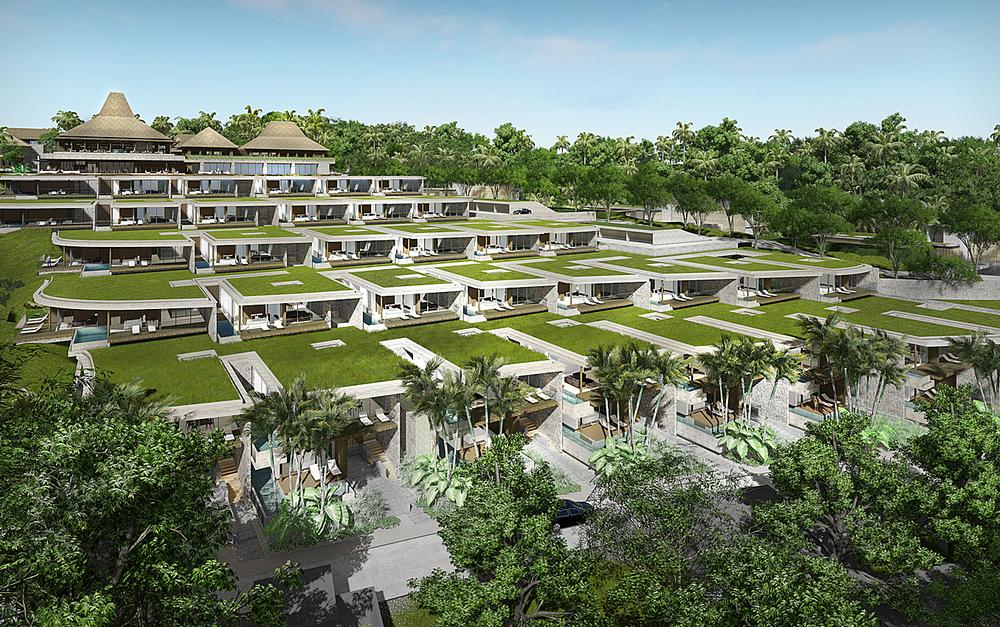
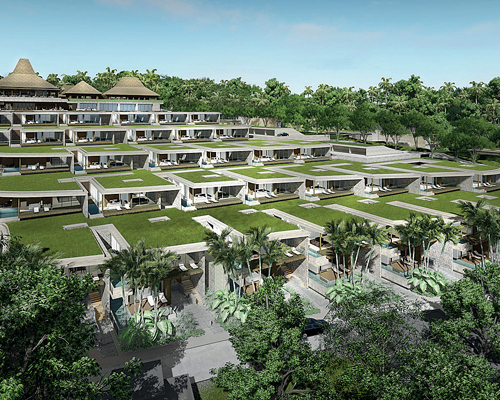
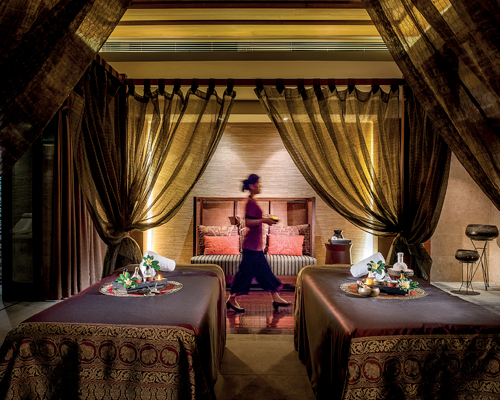
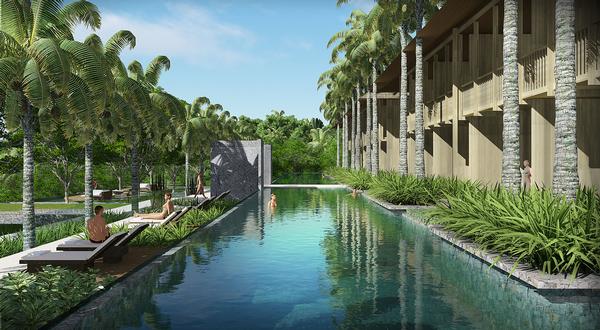
Wellness communities, such as GOCO’s Retreat in Ubud, Bali, are often designed to green building standards
Wellness communities are on the rise; real estate firms, investors and the public are starting to see the benefits – both financial and physical – of creating and living in areas dedicated health. But what are the challenges faced in this budding industry, and how successful will these communities be?
The Global Wellness Institute (GWI) estimates that wellness real estate was a US$118.6bn (€107bn, £95bn) sector in 2015 – a healthy 19 per cent increase since 2013. In response to this, the GWI launched an initiative last year focused on wellness communities – defined, in part, as those developed with proactive health and wellness, ecological sensitivity and social connectivity in mind. “Models for wellness real estate are evolving from places we’d like to visit, to places we can now work, play, heal, learn – and ultimately – places we can live,” says Mia Kyricos, who is chair of the initiative and founder of strategic advisory firm Kyricos & Associates.
Ingo Schweder, CEO of GOCO Hospitality, which is developing several wellness communities, says the movement is becoming more mainstream. “The demand for wellness communities is growing worldwide, because individuals are now seeking a combination of healthy lifestyle, sustainable environments and dedicated service at their fingertips,” he says. “We’re witnessing an increase in health and wellness consciousness throughout the world, which is creating and supporting this change of mindset.”
‘Major market opportunity’ Kyricos says she too expects to see growth in the sector, as both the health benefits and business opportunities become more apparent. “For the first time in years, there is authentic consumer demand, and there’s very little supply,” says Kyricos. “This isn’t just an under-served market for a select few; it’s a major market opportunity that spans all income levels and geographies.”
Wellness communities typically include facilities such as places to connect socially and outdoor fitness amenities, and are also usually built to environmental standards, but spa and wellness facilities still feature front-and-centre in every major development. “With the development of this market, spas and the spa lifestyle have the opportunity to serve at the heart of the community,” explains Kyricos.
The pivotal nature of spa in wellness communities also means that these communities are an untapped area of growth for spa operators and suppliers.
And importantly, this is a way for spas to move from being special-occasion pampering for the few, to being places of daily healing and preventative health for an entire community. “(Spas) will serve a critical role in wellness communities, and without them, it will be hard for the community to deliver on its overall value proposition of holistic health and wellness,” explains Kyricos.
A closer look at Asia While there’s widespread interest from around the world in wellness communities, each region has its own nuances – and challenges. We begin this multi-part series in Asia, where we take a look at some of the biggest projects in the works.
Samantha Foster, director at Bangkok-based Destination Spa Management, says in China, pollution problems and a high-stress business culture have created a strong demand for wellness communities.
“China has the same wellness drivers as the rest of the world – but on steroids,” says Foster. But despite this demand, converting wellness communities from concept to reality is a slow process. “Developers feel that adding wellness to a development will provide them a competitive advantage in the increasingly tough real estate market,” Foster says.
However, part of the problem in Asia may be that there is a lack of evidence proving the success of the concept. “Investors get cold feet when they see the greater expense and complexity relative to a normal development, and want to see proof of return on investment – which of course doesn’t exist yet,” Foster explains. “I believe that as soon as the market sees the first true wellness community in action, many will quickly follow. The region just needs one champion project, and it will be solid growth from there.”
Read more from this issue of Spa Business magazine
Interview: Jeremy McCarthy
Mandarin Oriental’s group director
of spa and wellness discusses mental
wellness, spas and technology
Promotional feature: Beautyworld Middle East
Set to take place May 14-16, 2017 in Dubai, Beautyworld Middle East is billed as “three days to rediscover wellness and shake up the industry.”
Promotional feature: ESPA
ESPA has been a leader in the field of therapeutic skincare and luxury spa design and management for 25 years. Founder Susan Harmsworth explains how the company’s recent brand evolution will make ESPA even more relevant to the future of wellness
Promotional feature: Riceforce
Rice Force is set to make further inroads into the spa market in 2017 with the
launch of its new aromatic oils and treatment protocol
Promotional feature: Oakworks
Oakworks’ new Masters’ Collection range, which will consist of over 15 models by the end of 2017, has been designed to offer spa operators the ultimate in modern styling, with solutions and functionality that address each spa’s practical needs
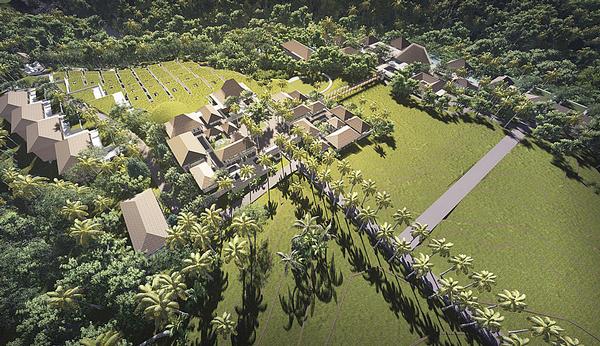
GOCO Retreat Ubud, Bali Opening: late 2017/early 2018 With the aim of being “a pioneer in Indonesia’s wellness hospitality industry,” GOCO Retreat Ubud will be set on a 180,000sq m (1.9m sq ft) site, billed as Indonesia’s first large-scale wellness community.
The retreat will have 76 wellness real estate properties ranging from single units to four-bedroom villas, as well as 83 retreat guestrooms. It will also include a substantial wellness centre with 45 treatment rooms, as well as consultation rooms, traditional Chinese medicine rooms, an ayurvedic centre, nursing facilities, a medi-spa, fitness studios, outdoor treatment areas and an extensive outdoor rainforest bathing area.
“We want to create a village with seamless integration between hotel, F&B, retail, sustainability, cultural authenticity, fitness and spa,” says Ingo Schweder, CEO of GOCO Hospitality.
All the buildings will have circadian lighting and air purification systems, and be constructed in accordance with green building standards. Masterplanning will encourage general physical activity and a wide range of facilities will be available, including F&B outlets such as a wellness restaurant, tea lounge, thermal bathing cafe, farm-to-table restaurant and food stalls.
The development will also have an aromatherapy distillery, an organic farm and gardens, artists’ studios, an amphitheatre and a cultural gallery. Rounding out the development will be a cooking school, retail outlets, a kids’ club and jogging and bike trails.
GOCO Retreat Ubud has plans to deliver integrative wellness programmes that are designed around the guest’s personal wellness journey, and use professional consultations to prescribe specialty treatments, along with focused nutrition and exercise. Treatments will combine Asian traditions and knowledge with contemporary Western medical science.
The Retreat will feature a substantial wellness centre with 45 treatment rooms
A farm-to-table restaurant, cultural gallery and organic gardens are all part of the Retreat’s wellness appeal
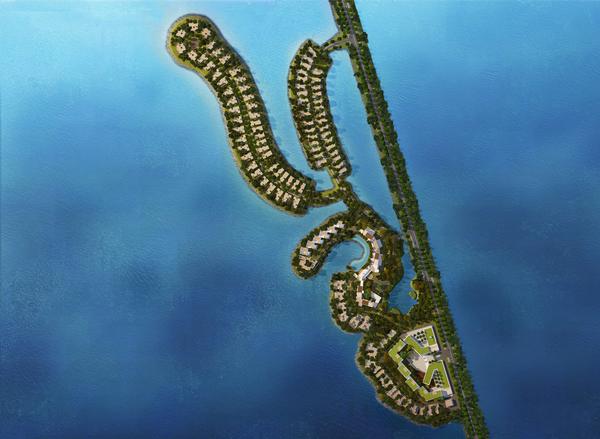
Sangha Suzhou, China Opening: Q2 2017 Architecture practice Tsao & McKown have designed Sangha, a 189,000sq m (2m sq ft) luxury wellness retreat along Yangcheng Lake outside of Suzhou, China, which includes a collection of four-bedroom residential villas and apartments as well as a 69-bedroom wellness hotel, a substantial spa and a “learning campus.”
Sangha is being built by Octave – a development company dedicated to creating wellness communities, which is owned by Calvin Tsao, co-founder of Tsao & McKown. GOCO Hospitality did the initial consultancy work on the project. Tsao says he’s interested in eventually bringing his work with Octave to other markets outside China, and has his eye on upstate New York.
Sangha’s wellness hotel offers a platform for wellbeing works, including an integrated medicine assessment and treatment centre, mind-body practice, coaching and counselling, spa, medi-spa and mindful dining. The 6,000sq m (64,583sq ft) spa will include treatments from massages to colonics, as well as a hammam, wet spa, steam room, saunas and night walks.
“Because the spa space is all about the environment and relocation and introspection, it’s rather fantastical,” says Tsao. “It’s a subterranean space pierced with skylights – and the ceiling undulates.”
Adjacent to the wellbeing hotel will be a village quarter that houses an executive education and learning complex, designed for deep group learning experiences. “In the design, the way we’ve organised spaces is meant to encourage congregation as well as individual contemplation, so there are quiet places, areas where people can retire for meditation and introspection,” says Tsao.
The wellness retreat will offer a series of six wellness programmes, focused on everything from nutrition awareness to mindfulness to family harmony.
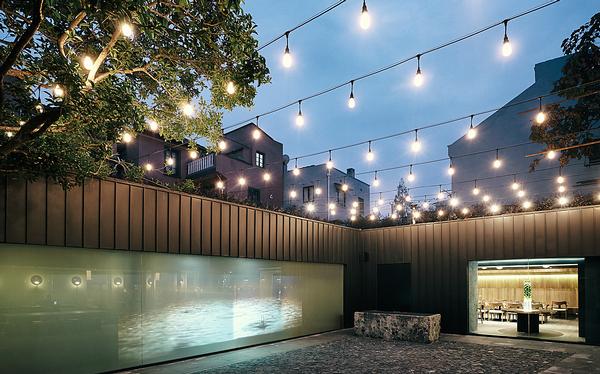
Octave has already built the Shanghai Living Room
A prototype and incubator for Sangha
Unnamed project Hoa Thang, Vietnam Opening: 2019 Destination Spa Management is working on an unnamed project in Vietnam with a focus on both education and health. Owned by Sonia Nguyen, who grew up in the area, the project is set on 17 hectares (42 acres) over five beaches in Hoa Thang, and will include a detox retreat, an 80-room family resort, a school for village children (which will teach both English and hospitality skills) and 60 houses.
Central to the project is a town square where residents and guests can interact with the local community for retail, arts and crafts, dining, and workshops that provide a hands-on experience of traditional Vietnamese life. Other features include an on-site organic farm and a distillery for aromatherapy based on Vietnamese traditional medicine. The housing will use WELL building standards, and wellness facilities have been designed so that they can be accessed by residents but retain an element of privacy for the resort guests. “It’s a magic, magic project,” says Foster. “It’s literally all about creating something for the good of the local people as well as the guest.”
Set on 42 acres, the project will focus on education and health
The DSM team, from left: Sharon Menzies, Joy Menzies, Samantha Foster
Q’in Wellness Hainan, China Opening: late 2018 Q’in Wellness will include 1,000 homes, a residents’ club and a 110-bedroom destination spa resort, including 10,000sq m (108,000sq ft) of wellness facilities. Destination Spa Management (DSM) provided concept planning for the project, and will manage the destination spa.
Services at the spa will include diagnostics, holistic health, physiotherapy, fitness, spa, beauty, and non-invasive cosmetic procedures.
Samantha Foster, director at DSM, says that the wellness facilities will be available to residents and resort guests, and the next step is to work on the integration of wellness into the masterplan, with plans to add allotment gardens, running tracks, cycling paths and an organic cafe.
Q’in will include 1,000 homes
Avira Living in Wellness Malaysia Opening: unknown Avira – ancient Aramaic for ‘air, atmosphere and spirit’ – is billed as a 207-acre wellness community located within Medini, a fast-maturing enclave with easy access to Singapore.
Developed in part by Malaysian-based lifestyle property development group E&O, The community has “Living in Wellness” as its theme, and will feature homes, bungalows, condominiums, and serviced apartments peppered with green pockets, pedestrian-friendly walkways, and communal gardens. The wellness facility is currently being redesigned, and further details are not yet available.
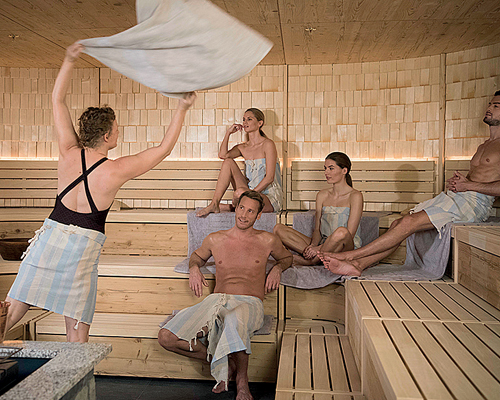
Contrast therapy, based on the alternation of hot and cold rituals, has become one of the
most valued practices in the fields of wellness and recovery. [more...]
In the first in a series, Jane Kitchen looks at some of the biggest wellness communities being developed in Asia – and what the challenges and benefits are to a region that seems primed for growth
By Jane Kitchen | Published in Spa Business 2017 issue 1
Wellness communities, such as GOCO’s Retreat in Ubud, Bali, are often designed to green building standards
Wellness communities are on the rise; real estate firms, investors and the public are starting to see the benefits – both financial and physical – of creating and living in areas dedicated health. But what are the challenges faced in this budding industry, and how successful will these communities be?
The Global Wellness Institute (GWI) estimates that wellness real estate was a US$118.6bn (€107bn, £95bn) sector in 2015 – a healthy 19 per cent increase since 2013. In response to this, the GWI launched an initiative last year focused on wellness communities – defined, in part, as those developed with proactive health and wellness, ecological sensitivity and social connectivity in mind. “Models for wellness real estate are evolving from places we’d like to visit, to places we can now work, play, heal, learn – and ultimately – places we can live,” says Mia Kyricos, who is chair of the initiative and founder of strategic advisory firm Kyricos & Associates.
Ingo Schweder, CEO of GOCO Hospitality, which is developing several wellness communities, says the movement is becoming more mainstream. “The demand for wellness communities is growing worldwide, because individuals are now seeking a combination of healthy lifestyle, sustainable environments and dedicated service at their fingertips,” he says. “We’re witnessing an increase in health and wellness consciousness throughout the world, which is creating and supporting this change of mindset.”
‘Major market opportunity’ Kyricos says she too expects to see growth in the sector, as both the health benefits and business opportunities become more apparent. “For the first time in years, there is authentic consumer demand, and there’s very little supply,” says Kyricos. “This isn’t just an under-served market for a select few; it’s a major market opportunity that spans all income levels and geographies.”
Wellness communities typically include facilities such as places to connect socially and outdoor fitness amenities, and are also usually built to environmental standards, but spa and wellness facilities still feature front-and-centre in every major development. “With the development of this market, spas and the spa lifestyle have the opportunity to serve at the heart of the community,” explains Kyricos.
The pivotal nature of spa in wellness communities also means that these communities are an untapped area of growth for spa operators and suppliers.
And importantly, this is a way for spas to move from being special-occasion pampering for the few, to being places of daily healing and preventative health for an entire community. “(Spas) will serve a critical role in wellness communities, and without them, it will be hard for the community to deliver on its overall value proposition of holistic health and wellness,” explains Kyricos.
A closer look at Asia While there’s widespread interest from around the world in wellness communities, each region has its own nuances – and challenges. We begin this multi-part series in Asia, where we take a look at some of the biggest projects in the works.
Samantha Foster, director at Bangkok-based Destination Spa Management, says in China, pollution problems and a high-stress business culture have created a strong demand for wellness communities.
“China has the same wellness drivers as the rest of the world – but on steroids,” says Foster. But despite this demand, converting wellness communities from concept to reality is a slow process. “Developers feel that adding wellness to a development will provide them a competitive advantage in the increasingly tough real estate market,” Foster says.
However, part of the problem in Asia may be that there is a lack of evidence proving the success of the concept. “Investors get cold feet when they see the greater expense and complexity relative to a normal development, and want to see proof of return on investment – which of course doesn’t exist yet,” Foster explains. “I believe that as soon as the market sees the first true wellness community in action, many will quickly follow. The region just needs one champion project, and it will be solid growth from there.”
Read more from this issue of Spa Business magazine
Interview: Jeremy McCarthy
Mandarin Oriental’s group director
of spa and wellness discusses mental
wellness, spas and technology
Promotional feature: Beautyworld Middle East
Set to take place May 14-16, 2017 in Dubai, Beautyworld Middle East is billed as “three days to rediscover wellness and shake up the industry.”
Promotional feature: ESPA
ESPA has been a leader in the field of therapeutic skincare and luxury spa design and management for 25 years. Founder Susan Harmsworth explains how the company’s recent brand evolution will make ESPA even more relevant to the future of wellness
Promotional feature: Riceforce
Rice Force is set to make further inroads into the spa market in 2017 with the
launch of its new aromatic oils and treatment protocol
Promotional feature: Oakworks
Oakworks’ new Masters’ Collection range, which will consist of over 15 models by the end of 2017, has been designed to offer spa operators the ultimate in modern styling, with solutions and functionality that address each spa’s practical needs
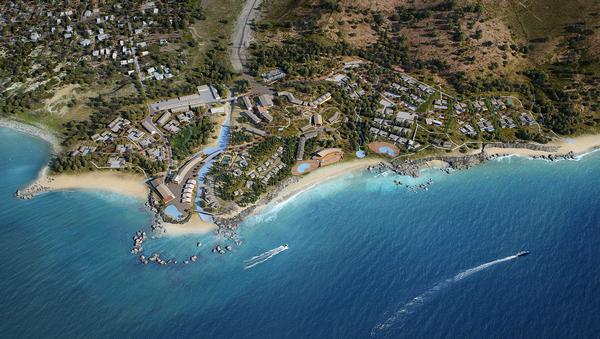
GOCO Retreat Ubud, Bali Opening: late 2017/early 2018 With the aim of being “a pioneer in Indonesia’s wellness hospitality industry,” GOCO Retreat Ubud will be set on a 180,000sq m (1.9m sq ft) site, billed as Indonesia’s first large-scale wellness community.
The retreat will have 76 wellness real estate properties ranging from single units to four-bedroom villas, as well as 83 retreat guestrooms. It will also include a substantial wellness centre with 45 treatment rooms, as well as consultation rooms, traditional Chinese medicine rooms, an ayurvedic centre, nursing facilities, a medi-spa, fitness studios, outdoor treatment areas and an extensive outdoor rainforest bathing area.
“We want to create a village with seamless integration between hotel, F&B, retail, sustainability, cultural authenticity, fitness and spa,” says Ingo Schweder, CEO of GOCO Hospitality.
All the buildings will have circadian lighting and air purification systems, and be constructed in accordance with green building standards. Masterplanning will encourage general physical activity and a wide range of facilities will be available, including F&B outlets such as a wellness restaurant, tea lounge, thermal bathing cafe, farm-to-table restaurant and food stalls.
The development will also have an aromatherapy distillery, an organic farm and gardens, artists’ studios, an amphitheatre and a cultural gallery. Rounding out the development will be a cooking school, retail outlets, a kids’ club and jogging and bike trails.
GOCO Retreat Ubud has plans to deliver integrative wellness programmes that are designed around the guest’s personal wellness journey, and use professional consultations to prescribe specialty treatments, along with focused nutrition and exercise. Treatments will combine Asian traditions and knowledge with contemporary Western medical science.
The Retreat will feature a substantial wellness centre with 45 treatment rooms
A farm-to-table restaurant, cultural gallery and organic gardens are all part of the Retreat’s wellness appeal
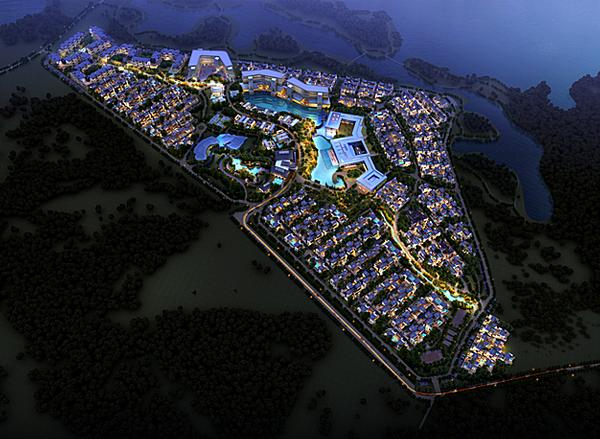
Sangha Suzhou, China Opening: Q2 2017 Architecture practice Tsao & McKown have designed Sangha, a 189,000sq m (2m sq ft) luxury wellness retreat along Yangcheng Lake outside of Suzhou, China, which includes a collection of four-bedroom residential villas and apartments as well as a 69-bedroom wellness hotel, a substantial spa and a “learning campus.”
Sangha is being built by Octave – a development company dedicated to creating wellness communities, which is owned by Calvin Tsao, co-founder of Tsao & McKown. GOCO Hospitality did the initial consultancy work on the project. Tsao says he’s interested in eventually bringing his work with Octave to other markets outside China, and has his eye on upstate New York.
Sangha’s wellness hotel offers a platform for wellbeing works, including an integrated medicine assessment and treatment centre, mind-body practice, coaching and counselling, spa, medi-spa and mindful dining. The 6,000sq m (64,583sq ft) spa will include treatments from massages to colonics, as well as a hammam, wet spa, steam room, saunas and night walks.
“Because the spa space is all about the environment and relocation and introspection, it’s rather fantastical,” says Tsao. “It’s a subterranean space pierced with skylights – and the ceiling undulates.”
Adjacent to the wellbeing hotel will be a village quarter that houses an executive education and learning complex, designed for deep group learning experiences. “In the design, the way we’ve organised spaces is meant to encourage congregation as well as individual contemplation, so there are quiet places, areas where people can retire for meditation and introspection,” says Tsao.
The wellness retreat will offer a series of six wellness programmes, focused on everything from nutrition awareness to mindfulness to family harmony.
Octave has already built the Shanghai Living Room
A prototype and incubator for Sangha
Unnamed project Hoa Thang, Vietnam Opening: 2019 Destination Spa Management is working on an unnamed project in Vietnam with a focus on both education and health. Owned by Sonia Nguyen, who grew up in the area, the project is set on 17 hectares (42 acres) over five beaches in Hoa Thang, and will include a detox retreat, an 80-room family resort, a school for village children (which will teach both English and hospitality skills) and 60 houses.
Central to the project is a town square where residents and guests can interact with the local community for retail, arts and crafts, dining, and workshops that provide a hands-on experience of traditional Vietnamese life. Other features include an on-site organic farm and a distillery for aromatherapy based on Vietnamese traditional medicine. The housing will use WELL building standards, and wellness facilities have been designed so that they can be accessed by residents but retain an element of privacy for the resort guests. “It’s a magic, magic project,” says Foster. “It’s literally all about creating something for the good of the local people as well as the guest.”
Set on 42 acres, the project will focus on education and health
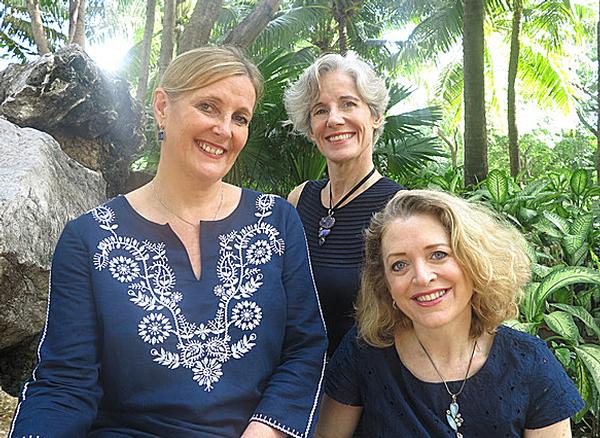
The DSM team, from left: Sharon Menzies, Joy Menzies, Samantha Foster
Q’in Wellness Hainan, China Opening: late 2018 Q’in Wellness will include 1,000 homes, a residents’ club and a 110-bedroom destination spa resort, including 10,000sq m (108,000sq ft) of wellness facilities. Destination Spa Management (DSM) provided concept planning for the project, and will manage the destination spa.
Services at the spa will include diagnostics, holistic health, physiotherapy, fitness, spa, beauty, and non-invasive cosmetic procedures.
Samantha Foster, director at DSM, says that the wellness facilities will be available to residents and resort guests, and the next step is to work on the integration of wellness into the masterplan, with plans to add allotment gardens, running tracks, cycling paths and an organic cafe.
Q’in will include 1,000 homes
Avira Living in Wellness Malaysia Opening: unknown Avira – ancient Aramaic for ‘air, atmosphere and spirit’ – is billed as a 207-acre wellness community located within Medini, a fast-maturing enclave with easy access to Singapore.
Developed in part by Malaysian-based lifestyle property development group E&O, The community has “Living in Wellness” as its theme, and will feature homes, bungalows, condominiums, and serviced apartments peppered with green pockets, pedestrian-friendly walkways, and communal gardens. The wellness facility is currently being redesigned, and further details are not yet available.
Gran Hotel Taoro in northern Tenerife, Spain, has completed the final phase of its three-year
renovation with the debut of its Sandára Wellness Centre.
Hand and Stone Massage and Facial Spa, the spa business with more than 650 locations across
the US and Canada, has appointed franchise expert Carrie Walsh as CEO as the company plans
to expand.
Synergy – The Retreat Show, the global trade show for retreats, has launched a global research
initiative that will provide insights into the retreat sector from both consumer and industry
perspectives.
The Wellness Tourism Association (WTA) has published a non-regulatory global industry
framework designed to ensure the retreat market offers responsible experiences.
A new survey of UK and international spa practitioners shows that stress, burnout and
wellbeing concerns have caused one in three respondents to consider leaving the industry.
The UK's four Chief Medical Officers have published a refreshed edition of Physical activity
guidelines: UK Chief Medical Officers' report, updating the evidence that underpins the nation's
physical activity recommendations and placing greater emphasis on strength, balance, reducing
sedentary behaviour and, for the first time, supporting people taking weight loss medications.
Anna Bjurstam has left her role as Wellness Pioneer at Six Senses Hotels and Resorts and
launched a new wellness, longevity and “consciousness consultancy” called Wahayla.
Contrast therapy, based on the alternation of hot and cold rituals, has become one of the
most valued practices in the fields of wellness and recovery. [more...]