Yes! Send me the FREE digital editions of Spa Business and Spa Business insider magazines and the FREE weekly Spa Business and Spa Business insider ezines and breaking news alerts!
The biggest lesson of the pandemic has been the hard realisation that our industry
has little heft when it comes to political lobbying. How can we change this?
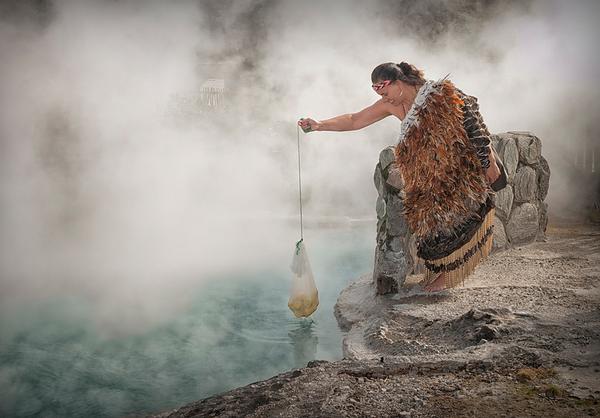
Rotorua in New Zealand has secured government funding and support due to its tourism potential / Whakarewarewa Living Maori Village
Over recent years the international spa sector was starting to gain the credibility it quite rightly deserves by those in the medical field and government as it shifted its focus to wellness and prevention. But then coronavirus struck, and it suddenly found itself fighting to catch up in a crisis.
In the UK, members of parliament sniggered at the mention of ‘beauty parlour’ businesses needing support. An embarrassing and outdated view considering the country’s spa industry is the seventh largest in the world and represents 3,457 facilities and £1.8bn (US$2.46bn, €2.02bn) in revenues annually. Without a proper understanding of the sector or its worth, the reopening of facilities was delayed and companies were forced to close for nearly four months.
Similarly, the government in Dubai was initially dubious about health and safety protocols in hotel spas, even though hair salons were allowed to reopen. These are just two examples of the struggles faced.
In both cases, spa organisations and influencers fought to be heard and witnessed some degree of success. But, moving forward, how can the industry build a better position within the corridors of power? To be recognised for its true worth as a key part of the US$4.5tn (€3.7tn, £3.34tn) global wellness economy which is growing nearly twice as fast as the overall global economy.
How can it get in front of the right people and have a voice that is heard? We ask those in government as well as those who’ve made inroads.
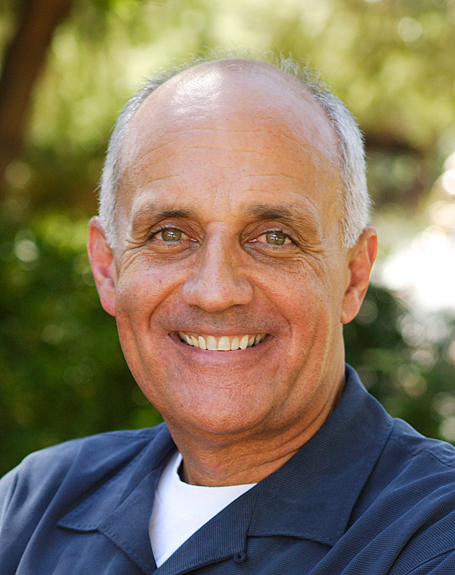
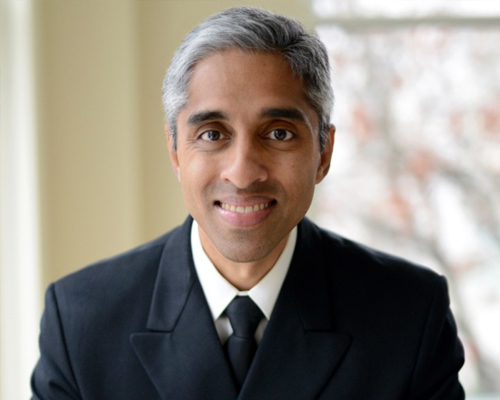
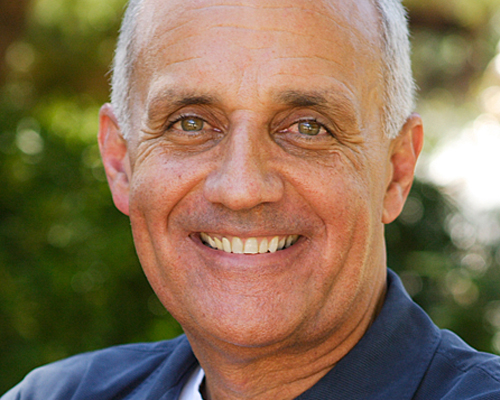
Dr Richard Carmona
17th surgeon general, USA
Over thousands of years the term ‘spa’ has broadly evolved from meaning ‘health through water’, and referring to the medicinal benefits of mineral-rich spring or seawater, to define a haven or sanctuary where health and wellness may be optimised via water and many other modalities.
Today the spa industry is part of 11 global wellness markets defined by the Global Wellness Institute, is part of a booming wellness economy that was estimated at US$4.5tn and growing in 2018. Many of the current spa practices such as massage, acupuncture, mindfulness, meditation and healthy eating which were previously characterised as complementary or alternative practices are now quite mainstream, supported by western scientific study and much in demand by the public.
Unfortunately, in our nation and the world, we’re experiencing a tsunami of preventable chronic disease and economic burden which is robbing us of quality and quantity of life while drowning us in debt. In the US we spend over US$3tn a year, 19 per cent of GDP, on healthcare which really isn’t healthcare but rather is sick care. Up to 80 cents of every dollar is spent on disease we cause by our poor lifestyle choices.
Many of the spa practices cited are beneficial to maintain mental and physical health while decreasing overall health-related costs and improving quality and quantity of life. It’s this message that will give the industry more traction in medical and political circles. In fact, in some countries outside of the US, spa visits and/or use of integrative medicinal practices are covered as part of healthcare.
Last but not least, COVID-19 has accelerated the demand for safe havens or spas where safe pursuit of mind, body and spirit practices are more in demand than ever.
• Dr Carmona, a physician, public health administrator and distinguished professor, served as the US surgeon general between 2002 and 2006. He’s also the chief of health innovations at Canyon Ranch
Citing the mental and physical
benefits of spa practices will give
the industry more traction in
medical and political circles
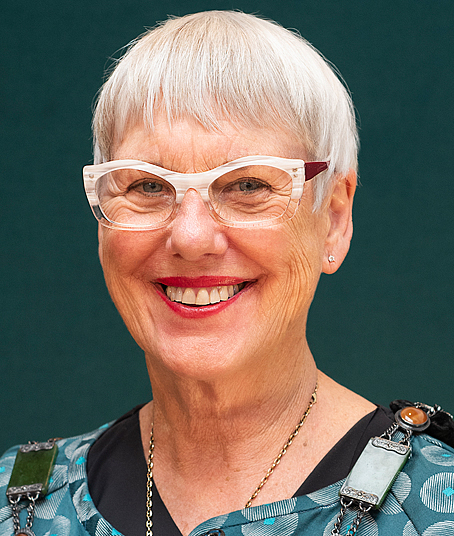
Steve Chadwick
Mayor of Rotorua, New Zealand
The spa, health and wellness sector is a key driver to improve the value of Rotorua’s tourism sector and our year-round appeal and we are uniquely placed, with a natural environment that encourages health and wellness – a geothermal landscape, a vast recreational forest and our lakes.
COVID-19 has brought the importance of wellbeing to build resilience to the fore. There’s a lot of opportunity still to build on what we already have and Rotorua is seen as being able to play a key role in rebuilding New Zealand’s tourism sector.
We’ve had significant success in gaining government support for transformational projects that will further enhance our district for locals and tourists, while also providing employment and boosting economic development. This includes government funding to support the development of a new spa and hotel on Rotorua’s lakefront, the redevelopment of which is also backed by government funding, as is the rebuild of the adjacent QE Health and Wellness Spa. These will all be a significant boost to our spa, health and wellness aspirations.
Government is also contributing to the enhancement of facilities in our forest and creating a city-wide network of shared paths and cycleways – all part of the wider spa, health and wellness sector remit to provide facilities that encourage activity.
The key has been building relationships to achieve positive outcomes for our community, including partnerships with central government and its agencies and most crucially, with our local tribe Te Arawa, which has significant land holdings across Rotorua. Our Te Arawa partnership opens many doors and opportunities, both locally and at central government level.
You have to push to be noticed by central government but you first need to ensure you have a strong proposition and partners alongside to support what you’re lobbying for.
• Steve Chadwick has been a member of parliament in New Zealand since 1999 and chair of the country’s Tourism Futures Taskforce since June 2020
You have to push to be noticed by
central government but you first
need to ensure you have a strong
proposition and supporting partners
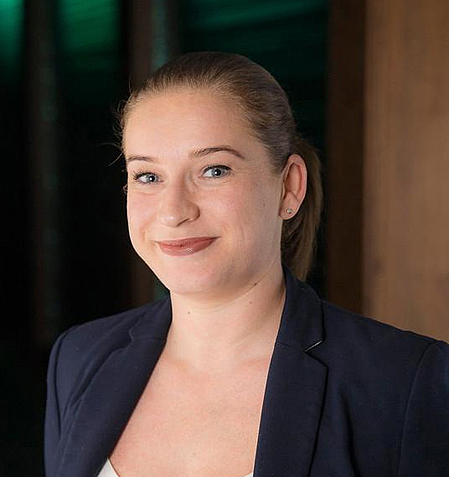
Helena Grzesk
General manager, UK Spa Association
While we know that ours is an industry of professionalism, skill and diversity which takes a huge burden off the National Health Service, it’s simply not enough. Money talks. So until our industry can tangibly prove its worth, those in power will continue to be nonchalant towards the economic, personal and social contribution of spa and wellness.
The mission statement of the UKSA has always been to acquire enough members to have a formidable voice in parliament. In 2019 we launched our Work for Wellness campaign – a key part of which was to initiate substantial research to prove not only the efficacy of spa and wellness, but in combination with our benchmarking, earn us our place as a sustainable and recognised economic sector.
In a cruel twist of fate, just as we were about to embark on this journey of governmental recognition on our terms, COVID-19 hit.
Yet there have been some really positive outcomes from the last few months. The UKSA and organisations like BABTAC, The British Beauty Council and NHBF unified to lessen the UK’s historically fragmented beauty and wellness sector. Collectively we worked as an expert task force for the Department for Business, Energy and Industrial Strategy in developing guidance for close contact services and played an intrinsic role in reopening businesses. We also forged a closer relationship with our sister fitness association, ukactive, to secure the long-awaited reopening date for saunas and steamrooms.
We’ve been forced to question why political leaders are not championing our value, but now we’ve experienced the pain I truly believe the tide will turn. The UKSA is primed and ready with a strategy to ensure we’ll never be this vulnerable again.
What we now need is more members to join and provide data for our research. ‘We don’t have the budget for annual membership’ is a statement I’m used to hearing. My question to the industry now is ‘how can you afford not to?’
• Helena Grzesk’s spa and hospitality career spans 20 years. She’s involved with UKSA’s benchmarking research as well as serving as its GM
The UKSA is primed and ready
with a strategy to ensure we’ll
never be this vulnerable again
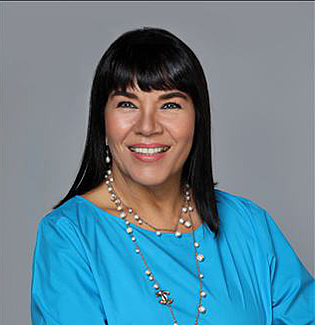
Daniella Russell
managing director, DR Global
When Dubai began to re-emerge from lockdown, we automatically assumed discussions about hospitality would include spa and wellness facilities in hotels. But they didn’t. The government wasn’t comfortable about the close proximity of its services. Similarly, it was unconfident about allowing independent sites offering spa and massage treatments to reopen even though hair and beauty salons were already in operation.
Investigation showed that we needed to make our case to a number of bodies which were all partially involved in reopening decisions. These included the Supreme Committee of Crisis and Disaster Management, the Department of Economic Development, the Dubai Health Authority and the Department of Tourism and Commerce Marketing.
Key spa influencers formed a group to compile a letter to these authorities and they gave us a good direction on what it should include. Government representatives were extremely supportive and even sent us an official form to fill out.
The one-page letter included concise bullet points outlining the impact on business due to closure. We also highlighted the similarities between spas and salons (which were safely running) and attached detailed SOP guidelines to demonstrate how prepared the sector was. What’s more, we highlighted the success of spas smoothly reopening in Germany with strict SOPs in place which led to no new COVID cases occurring.
In addition, we emphasised the value of spas to tourism as well as their key role in providing stress relief and mindfulness to thousands of people post lockdown.
We submitted the letter on 1 July and three days later facilities were permitted to reopen and then on 6 August, steam and sauna experiences were also allowed. Some other emirates reopened spas earlier, while those in Abu Dhabi only began operating again on 16 September.
At the time, it seemed to drag on, but compared to other countries we’ve actually been very fortunate. The way the Dubai government has managed all aspects of COVID, including reopening, has been very conscientious. It’s been cautious yet optimistic.
• Daniella Russell has managed and consulted on spas in the Middle East for 23 years.
Government representatives were
extremely supportive and even sent
us an official form to fill out
Katie Barnes is the editor of Spa Business magazine
| [email protected]
Read more from this issue of Spa Business magazine
View contents of Spa Business 2020 issue 4
Editor's letter: Nurturing mental health
It’s time for spas re-evaluate their mental wellness approach to help governments and society to tackle the escalating mental health crisis says Katie Barnes
Spa people: Dr Narinthorn Surasinthon
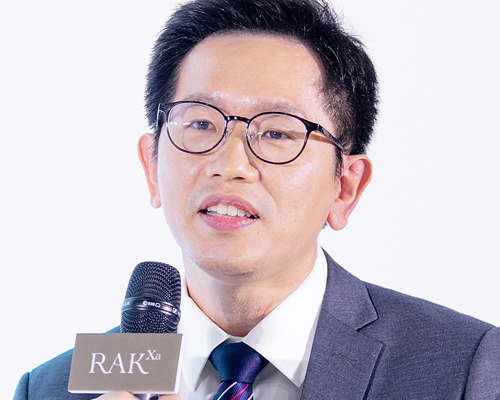
RAKxa Jai, a cutting-edge medi-wellness spa, has opened in partnership with Bumrungrad International Hospital and Minor Hotels in Bangkok. Spa Business talks to its COO
Spa people: Isabelle Duchesneau
The executive director of Québec's Le Monastère Augustines explains why its priority of serving caretakers is more relevant today than ever
Spa people: Michael Banissy
The world's largest study on touch uncovers the role it plays in our health and wellbeing. Spa Business talks to the lead researcher
Interview: Krip Rojanastien
Chiva-Som’s CEO talks to Spa Business magazine about guiding the destination spa through COVID-19 and its first contract management project in Qatar
Ask an expert: Corridors of power
What will it take to make politicians realise the value of spas? Spa Business magazine asks those in government and others who’ve made inroads
Promotion: Artofcryo: Cold Calling
Artofcryo.com aims to offer the best whole-body cryotherapy chambers as well as a complete, reliable and effective solution for operators and results for guests
Promotion: ISPA: Lead, inform, inspire
Lead, Inform, Inspire. It’s been quite a year for ISPA, with its firm commitment to supporting members through the pandemic, as president, Lynne McNees explains
Interview: Mark Hennebry
Ensana’s chair tells Spa Business magazine about its landmark development, Buxton Crescent, one of the only genuine spa hotels in the UK
Promotion: Lemi: Creating the dream team
This year leading Italian supplier Lemi launched three new spa solutions, and ventured into the creation of signature treatments for the first time. General manager Matteo Brusaferri explains why he sees this as the way forward to help spas maximise their investment
Interview: Luisa Anderson
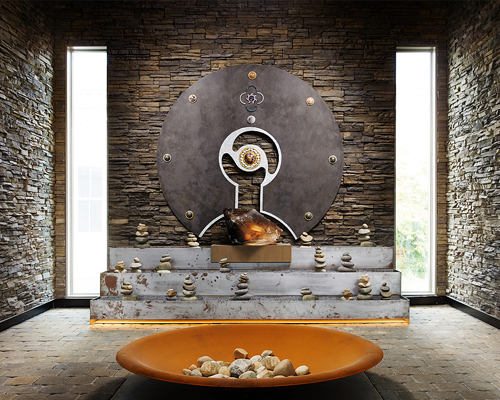
A Longevity Garden and inner healing room are just two of the extra special features at the new Healing Village Spa at Four Seasons Jimbaran Bay, Bali, says its regional spa director
Promotion: Biologique Recherche
Skincare specialist, Biologique Recherche, is using its knowledge of chronobiology to create new approaches to skincare which yield powerful results
Event review: Global Wellness Summit 2020
This year’s Global Wellness Summit saw two US surgeon generals, leading spa stakeholders and wellness professionals look towards the role they have to play following the global pandemic. Spa Business magazine gives its highlights
Research: Matter of minds
A new study is the first to define and put a value on the global mental wellness industry – estimating it to be worth US$121bn. But what does this mean for spas?
Sponsored briefing: Starpool: Cargo-tecture
During lockdown, Riccardo Turri, CEO of Starpool, was inspired to create a whole new category of product, based on recycled containers. The result is the new i.con spa brand, which fuses luxury, wellness, recycling and design
Software: All booked up
Spa software suppliers take a look at 'big data' to reveal the booking trends they’ve seen since spas have reopened
Promotion: Voya: supporting spa partners
Jessica Anhold, Voya’s head of global sales and marketing, talks community in a time of crisis and how the company is supporting its spa partners
The biggest lesson of the pandemic has been the hard realisation that our industry
has little heft when it comes to political lobbying. How can we change this?
Rotorua in New Zealand has secured government funding and support due to its tourism potential / Whakarewarewa Living Maori Village
Over recent years the international spa sector was starting to gain the credibility it quite rightly deserves by those in the medical field and government as it shifted its focus to wellness and prevention. But then coronavirus struck, and it suddenly found itself fighting to catch up in a crisis.
In the UK, members of parliament sniggered at the mention of ‘beauty parlour’ businesses needing support. An embarrassing and outdated view considering the country’s spa industry is the seventh largest in the world and represents 3,457 facilities and £1.8bn (US$2.46bn, €2.02bn) in revenues annually. Without a proper understanding of the sector or its worth, the reopening of facilities was delayed and companies were forced to close for nearly four months.
Similarly, the government in Dubai was initially dubious about health and safety protocols in hotel spas, even though hair salons were allowed to reopen. These are just two examples of the struggles faced.
In both cases, spa organisations and influencers fought to be heard and witnessed some degree of success. But, moving forward, how can the industry build a better position within the corridors of power? To be recognised for its true worth as a key part of the US$4.5tn (€3.7tn, £3.34tn) global wellness economy which is growing nearly twice as fast as the overall global economy.
How can it get in front of the right people and have a voice that is heard? We ask those in government as well as those who’ve made inroads.
Dr Richard Carmona
17th surgeon general, USA
Over thousands of years the term ‘spa’ has broadly evolved from meaning ‘health through water’, and referring to the medicinal benefits of mineral-rich spring or seawater, to define a haven or sanctuary where health and wellness may be optimised via water and many other modalities.
Today the spa industry is part of 11 global wellness markets defined by the Global Wellness Institute, is part of a booming wellness economy that was estimated at US$4.5tn and growing in 2018. Many of the current spa practices such as massage, acupuncture, mindfulness, meditation and healthy eating which were previously characterised as complementary or alternative practices are now quite mainstream, supported by western scientific study and much in demand by the public.
Unfortunately, in our nation and the world, we’re experiencing a tsunami of preventable chronic disease and economic burden which is robbing us of quality and quantity of life while drowning us in debt. In the US we spend over US$3tn a year, 19 per cent of GDP, on healthcare which really isn’t healthcare but rather is sick care. Up to 80 cents of every dollar is spent on disease we cause by our poor lifestyle choices.
Many of the spa practices cited are beneficial to maintain mental and physical health while decreasing overall health-related costs and improving quality and quantity of life. It’s this message that will give the industry more traction in medical and political circles. In fact, in some countries outside of the US, spa visits and/or use of integrative medicinal practices are covered as part of healthcare.
Last but not least, COVID-19 has accelerated the demand for safe havens or spas where safe pursuit of mind, body and spirit practices are more in demand than ever.
• Dr Carmona, a physician, public health administrator and distinguished professor, served as the US surgeon general between 2002 and 2006. He’s also the chief of health innovations at Canyon Ranch
Citing the mental and physical
benefits of spa practices will give
the industry more traction in
medical and political circles
Steve Chadwick
Mayor of Rotorua, New Zealand
The spa, health and wellness sector is a key driver to improve the value of Rotorua’s tourism sector and our year-round appeal and we are uniquely placed, with a natural environment that encourages health and wellness – a geothermal landscape, a vast recreational forest and our lakes.
COVID-19 has brought the importance of wellbeing to build resilience to the fore. There’s a lot of opportunity still to build on what we already have and Rotorua is seen as being able to play a key role in rebuilding New Zealand’s tourism sector.
We’ve had significant success in gaining government support for transformational projects that will further enhance our district for locals and tourists, while also providing employment and boosting economic development. This includes government funding to support the development of a new spa and hotel on Rotorua’s lakefront, the redevelopment of which is also backed by government funding, as is the rebuild of the adjacent QE Health and Wellness Spa. These will all be a significant boost to our spa, health and wellness aspirations.
Government is also contributing to the enhancement of facilities in our forest and creating a city-wide network of shared paths and cycleways – all part of the wider spa, health and wellness sector remit to provide facilities that encourage activity.
The key has been building relationships to achieve positive outcomes for our community, including partnerships with central government and its agencies and most crucially, with our local tribe Te Arawa, which has significant land holdings across Rotorua. Our Te Arawa partnership opens many doors and opportunities, both locally and at central government level.
You have to push to be noticed by central government but you first need to ensure you have a strong proposition and partners alongside to support what you’re lobbying for.
• Steve Chadwick has been a member of parliament in New Zealand since 1999 and chair of the country’s Tourism Futures Taskforce since June 2020
You have to push to be noticed by
central government but you first
need to ensure you have a strong
proposition and supporting partners
Helena Grzesk
General manager, UK Spa Association
While we know that ours is an industry of professionalism, skill and diversity which takes a huge burden off the National Health Service, it’s simply not enough. Money talks. So until our industry can tangibly prove its worth, those in power will continue to be nonchalant towards the economic, personal and social contribution of spa and wellness.
The mission statement of the UKSA has always been to acquire enough members to have a formidable voice in parliament. In 2019 we launched our Work for Wellness campaign – a key part of which was to initiate substantial research to prove not only the efficacy of spa and wellness, but in combination with our benchmarking, earn us our place as a sustainable and recognised economic sector.
In a cruel twist of fate, just as we were about to embark on this journey of governmental recognition on our terms, COVID-19 hit.
Yet there have been some really positive outcomes from the last few months. The UKSA and organisations like BABTAC, The British Beauty Council and NHBF unified to lessen the UK’s historically fragmented beauty and wellness sector. Collectively we worked as an expert task force for the Department for Business, Energy and Industrial Strategy in developing guidance for close contact services and played an intrinsic role in reopening businesses. We also forged a closer relationship with our sister fitness association, ukactive, to secure the long-awaited reopening date for saunas and steamrooms.
We’ve been forced to question why political leaders are not championing our value, but now we’ve experienced the pain I truly believe the tide will turn. The UKSA is primed and ready with a strategy to ensure we’ll never be this vulnerable again.
What we now need is more members to join and provide data for our research. ‘We don’t have the budget for annual membership’ is a statement I’m used to hearing. My question to the industry now is ‘how can you afford not to?’
• Helena Grzesk’s spa and hospitality career spans 20 years. She’s involved with UKSA’s benchmarking research as well as serving as its GM
The UKSA is primed and ready
with a strategy to ensure we’ll
never be this vulnerable again
Daniella Russell
managing director, DR Global
When Dubai began to re-emerge from lockdown, we automatically assumed discussions about hospitality would include spa and wellness facilities in hotels. But they didn’t. The government wasn’t comfortable about the close proximity of its services. Similarly, it was unconfident about allowing independent sites offering spa and massage treatments to reopen even though hair and beauty salons were already in operation.
Investigation showed that we needed to make our case to a number of bodies which were all partially involved in reopening decisions. These included the Supreme Committee of Crisis and Disaster Management, the Department of Economic Development, the Dubai Health Authority and the Department of Tourism and Commerce Marketing.
Key spa influencers formed a group to compile a letter to these authorities and they gave us a good direction on what it should include. Government representatives were extremely supportive and even sent us an official form to fill out.
The one-page letter included concise bullet points outlining the impact on business due to closure. We also highlighted the similarities between spas and salons (which were safely running) and attached detailed SOP guidelines to demonstrate how prepared the sector was. What’s more, we highlighted the success of spas smoothly reopening in Germany with strict SOPs in place which led to no new COVID cases occurring.
In addition, we emphasised the value of spas to tourism as well as their key role in providing stress relief and mindfulness to thousands of people post lockdown.
We submitted the letter on 1 July and three days later facilities were permitted to reopen and then on 6 August, steam and sauna experiences were also allowed. Some other emirates reopened spas earlier, while those in Abu Dhabi only began operating again on 16 September.
At the time, it seemed to drag on, but compared to other countries we’ve actually been very fortunate. The way the Dubai government has managed all aspects of COVID, including reopening, has been very conscientious. It’s been cautious yet optimistic.
• Daniella Russell has managed and consulted on spas in the Middle East for 23 years.
Government representatives were
extremely supportive and even sent
us an official form to fill out
Katie Barnes is the editor of Spa Business magazine
| [email protected]
Read more from this issue of Spa Business magazine
View contents of Spa Business 2020 issue 4
Editor's letter: Nurturing mental health
It’s time for spas re-evaluate their mental wellness approach to help governments and society to tackle the escalating mental health crisis says Katie Barnes
Spa people: Dr Narinthorn Surasinthon
RAKxa Jai, a cutting-edge medi-wellness spa, has opened in partnership with Bumrungrad International Hospital and Minor Hotels in Bangkok. Spa Business talks to its COO
Spa people: Isabelle Duchesneau
The executive director of Québec's Le Monastère Augustines explains why its priority of serving caretakers is more relevant today than ever
Spa people: Michael Banissy
The world's largest study on touch uncovers the role it plays in our health and wellbeing. Spa Business talks to the lead researcher
Interview: Krip Rojanastien
Chiva-Som’s CEO talks to Spa Business magazine about guiding the destination spa through COVID-19 and its first contract management project in Qatar
Ask an expert: Corridors of power
What will it take to make politicians realise the value of spas? Spa Business magazine asks those in government and others who’ve made inroads
Promotion: Artofcryo: Cold Calling
Artofcryo.com aims to offer the best whole-body cryotherapy chambers as well as a complete, reliable and effective solution for operators and results for guests
Promotion: ISPA: Lead, inform, inspire
Lead, Inform, Inspire. It’s been quite a year for ISPA, with its firm commitment to supporting members through the pandemic, as president, Lynne McNees explains
Interview: Mark Hennebry
Ensana’s chair tells Spa Business magazine about its landmark development, Buxton Crescent, one of the only genuine spa hotels in the UK
Promotion: Lemi: Creating the dream team
This year leading Italian supplier Lemi launched three new spa solutions, and ventured into the creation of signature treatments for the first time. General manager Matteo Brusaferri explains why he sees this as the way forward to help spas maximise their investment
Interview: Luisa Anderson
A Longevity Garden and inner healing room are just two of the extra special features at the new Healing Village Spa at Four Seasons Jimbaran Bay, Bali, says its regional spa director
Promotion: Biologique Recherche
Skincare specialist, Biologique Recherche, is using its knowledge of chronobiology to create new approaches to skincare which yield powerful results
Event review: Global Wellness Summit 2020
This year’s Global Wellness Summit saw two US surgeon generals, leading spa stakeholders and wellness professionals look towards the role they have to play following the global pandemic. Spa Business magazine gives its highlights
Research: Matter of minds
A new study is the first to define and put a value on the global mental wellness industry – estimating it to be worth US$121bn. But what does this mean for spas?
Sponsored briefing: Starpool: Cargo-tecture
During lockdown, Riccardo Turri, CEO of Starpool, was inspired to create a whole new category of product, based on recycled containers. The result is the new i.con spa brand, which fuses luxury, wellness, recycling and design
Software: All booked up
Spa software suppliers take a look at 'big data' to reveal the booking trends they’ve seen since spas have reopened
Promotion: Voya: supporting spa partners
Jessica Anhold, Voya’s head of global sales and marketing, talks community in a time of crisis and how the company is supporting its spa partners
Synergy – The Retreat Show, the global trade show for retreats, has launched a global research
initiative that will provide insights into the retreat sector from both consumer and industry
perspectives.
The Wellness Tourism Association (WTA) has published a non-regulatory global industry
framework designed to ensure the retreat market offers responsible experiences.
A new survey of UK and international spa practitioners shows that stress, burnout and
wellbeing concerns have caused one in three respondents to consider leaving the industry.
The UK's four Chief Medical Officers have published a refreshed edition of Physical activity
guidelines: UK Chief Medical Officers' report, updating the evidence that underpins the nation's
physical activity recommendations and placing greater emphasis on strength, balance, reducing
sedentary behaviour and, for the first time, supporting people taking weight loss medications.
Anna Bjurstam has left her role as Wellness Pioneer at Six Senses Hotels and Resorts and
launched a new wellness, longevity and “consciousness consultancy” called Wahayla.
Fairmont Cheshire, The Mere, has opened today (10 July) in the Northwest of England
with a
1,715sq m Fairmont Spa that has been designed using a ‘Wellness without Walls’
concept.
Wellness hotels generating less than US$1 million (€932,700, £785,200) – or 10 per cent of
total revenue from wellness and leisure – recorded the strongest RevPAR and TRevPAR growth
in 2025 across categories when compared with 2024, according to the latest Wellness Real
Estate Report by RLA Global, produced in partnership with P and L benchmarking firm HotStats.
Lefay Resorts, the portfolio of two luxury wellness properties in Italy, has added emotional
dance classes and group cold plunge sessions in response to market demand for social
connection.