Anni Hood tours spas in Lithuania, where up to a quarter of tourists visit wellness resorts or traditional sanatoriums to experience the country’s historical curative health services
By Anni Hood | Published in Spa Business 2013 issue 1
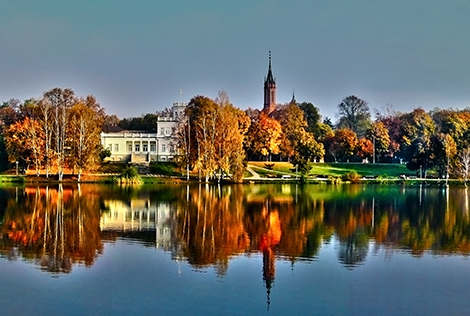
The mineral waters in the spa town of Druskininkai were first noted for their health benefits in the late 18th century
Lithuania is the largest of the three Baltic states, covering 65,200sq km (25,150sq mile) and with a population of 3 million people. Tourists are attracted by its beautiful unspoilt landscape of coniferous forests, lakes and the sand dunes of the Curonian Spit, its medical heritage and the affordability of its integrative health services which are intrinsic to the national culture and a core part of its healthcare system. A 70-minute massage, for example, costs only €38 (US$51, £32).
In 2011, 26 per cent of tourists stayed in a dedicated spa resort or old sanatorium according to figures from the Lithuanian Association of Hotels and Resorts (LAHR). They came to drink and bathe in the country’s famous mineral waters and sample its therapeutic mud baths and treatments that are frequently prescribed to improve health and wellbeing. Lukas Mackevicius, president of the National Spa Association of Lithuania, explains the appeal: “Lithuania had been, and remains, rich in its wellness culture. In the late 18th century, mineral waters in the southern town of Druskininkai were found to have health benefits and so its usage in the medical treatment of asthma and other ailments began. The practice became increasingly more popular as the word about them spread.
“Then in the early 19th century, Ignatius Fonberg, a professor at Vilnius University [in Lithuania’s capital], analysed the chemical composition of the water to find it contained large amounts of calcium, sodium, potassium, iodine, bromine, iron and magnesium. He recommended that the government declare the town an official health resort and today it’s widely known as the spa capital of Lithuania.”
Tourism growth In March 1990, a year before the break-up of the Soviet Union, Lithuania stunned the world as the first country to stand up to the powerhouse and declare its independence.
In the years that followed, Lithuania struggled greatly in the transition from a planned communist economy to a free market one, yet prior to the global financial crisis of 2007 it reportedly had one of the fastest growing economies in the European Union. And in 2011, it was categorised in the highest category in the United Nations Human Development Index, a composite measure of health, education and income levels, alongside countries like the USA, Japan and UK.
In 2011, LAHR statistics show that tourism generated €1.3bn (US$1.7bn, £1.1bn) or a 4.6 per cent slice of GDP. A significantly larger proportion of revenue was generated by foreign visitors compared to domestic visitors – €960m (US$1,281m, £804m) versus €356m (US$475m, £298m).
Despite the austerity backdrop, the number of visitors to Lithuania is growing significantly. The most recent figures available from Statistics Lithuania, a government department, show visitors rose by 27 per cent from 2010 to 2011 and by 12.2 per cent in the first six months of 2012 compared to the same period in 2011 (see Table 1). From January to June 2012, the trend of slightly higher foreign visitor numbers also continued with 484,000 tourists (56.9 per cent) from abroad compared to 370,000 (43.1 per cent) from Lithuania. The foreign tourism comes mainly from the European countries of Russia, Poland, Germany, Belorussia and Latvia.
Spa tour During my short trip to Lithuania, I covered almost 1,000 miles visiting seven spas from traditional wellness sanatoriums, to those focused on pampering and even one, Etno Spa, which offered beer baths! In the spa town of Druskininkai there were spa and wellness venues everywhere you looked from small outlets to those of bewildering vastness – the Grand Spa Lietuva which I was shown around had 500 bedrooms and offered more than 160 treatments. It was created in 2009 from a huge €53m (US$70m, £44m) investment party funded by the European Union.
Most of the spas concentrate their offerings around the mineral water and mud treatments administered by medical staff. Mackevicius says: “Our spa culture is medically-orientated and results-driven, generally with no frills. We’re not so biased towards pampering, as 95 per cent of spa visitors have therapeutic experiences and come to prevent or treat illnesses.”
Unfortunately, high standards of delivery, comfort and service were a little harder to find. Years of suppression following the split from the Soviet Union has meant the readiness of a smile or a naturally relaxed demeanour is not yet common. Another generation or two and I think things may look a lot different.
In addition, very few facilities are profit orientated. “Most spa venues are busy, however, the commercial success is not as prevalent in all of them,” says Mackevicius pointing out two extremes. Energetikas, like most old-style sanatoriums, has a large number of guests (70 per cent) who are government-funded patients he says, with only 30 per cent of its customers actually paying for services direct (see Case Study 1). And from my visit to Grand Spa Lietuva, I can confirm that no value is usually given to even simple commercial additions such as retail. In comparison nearly all guests at Spa Vilnius Sana – a high-end hotel spa that opened in 2004 – are private customers (see Case Study 2).
This was my first visit to Lithuania and I know it won’t be my last. It surprised and thrilled me in equal measure. Not least, the preventative and pro-active health traditions that are so ingrained in everyday living, but also the immense potential to further develop the wellness offering.
Read more from this issue of Spa Business magazine
View contents of Spa Business 2013 issue 1
Project update: Floating point
Michel Kreuger, the man behind Amsterdam’s €9m Floating Gardens spa, tells Magali Robathan how the innovative project is shaping up
Everyone's talking about...: Online reviews
Economists have revealed that just half a star difference in online consumer reviews can make or break a business. But are spa operators doing enough to boost their online reputation?
Marketing: Award winning advice
Spa judge Samantha Foster shares her top tips on how to write an award application entry with a winning edge
Interview: Deborah Szekely
The extraordinary Deborah Szekely has spent 73 years in the industry, creating Rancho La Puerta and the Golden Door. Her 90th birthday marked the dawn of a new era, with the launch of lobbying organisation Wellness Warrior. She talks to Liz Terry
Research: Recovery begins
Hotel spas in the US are starting to bounce back from the economic downturn. Andrea Foster from PKF Consulting analyses its 2012 Trends® in the Hotel Spa Industry report
Trends: Watch this space
The Brazilian middle class, millennials and gamification will have a significant impact on the spa industry moving forwards. Health and wellness experts at global foresights firm The Futures Company tell us why and suggest other trends to keep an eye out for
Promotion: company profile: Thalgo
Spa Business talks to Bernard Sirop, managing director of Thalgo, about the evolution of the company and where it is set to go in the future
Spa science: Entering the telo-age
Jay Williams explains the science behind telomere health – DNA structures linked to cellular ageing – and how it can be used in spas
Top team: Botanique Hotel & Spa
The hottest new spa in Brazil is backed by leading entrepreneurs including The Body Shop’s Gordon Roddick and AOL co-founder David Cole. We find out more
Promotional feature : Concept development
Special experiences are created when spa concepts are expressed through great design. Kate Corney talks to WTS president Gary Henkin and business partner Doug Chambers, principal of Blu Spas, about concept and branding
Product focus: Amenities - part two
Amenities, which are often overlooked by spa suppliers, can bring in 20 per cent of revenue for a product house. Spa Business get the low-down
Research: Fighting fat
A new type of ‘beige fat’ cell has been found to burn energy rather than store excess calories. Scientists say it could be key to tackling obesity
Spa Vilnius sana Spa Vilnius Sana in the spa town of Druskininkai, was once a famous Soviet sanatorium dating back to 1961. It struggled following the Soviet dissolution until Valdas Trinkuinas – a medical graduate – embarked on a €4.8m (US$6.4m, £4m) joint venture with the government to relaunch it as a 177-bed hotel in February 2004. Its centrepiece? A 4,100sq m (44,150sq ft) spa with 50 treatment rooms offering the traditional mud and mineral water therapies (of course) with a mix of pampering treatments from Elemis, Phytomer and Japanese brand Kobido. Trinkuinas says this was the first time Lithuania had heard the word ‘spa’.
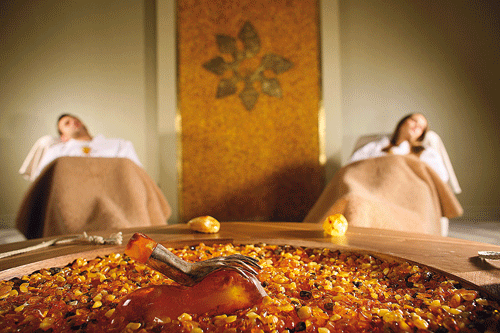
While this is a country that clearly understands the value of natural medicine, Spa Vilnius Sana is in a league of its own. It ‘gets’ wellness, but has an edge that would see it easily compete on the worldwide spa stage. Unique touches, for example, include the Amber Therapy Room, a concept created by their own medical doctor based on the anti-inflammatory properties of the amber gemstone for the body and mind. Guests lie on an amber mattress and wear a large piece of amber around their neck while specially selected music is played and calming essential oils are burned. Another bespoke option, also developed by its team of 11 on-site doctors, is a dedicated music room where musicians play particular pieces that vibrate at the correct level to enhance emotional state and increase vibrational energies.
An overnight stay costs €90 (US$120, £75) and includes meals, a consultation and up to four treatments. There’s an even split between national and international guests, averaging 3.8 nights and one week-plus, respectively. What’s more, business is growing, occupancy for 2012 was 70.5 per cent – a 2.5 per cent increase on 2011; while treatment room utilisation is estimated at 50-60 per cent,º based on a guest flow of 300-350 a day (there are 56 full-time therapists) between 8am-10pm.
As an indication of how well things are going, the business expanded with the opening of Spa Vilnius Dia, a day spa in the capital, in 2008.
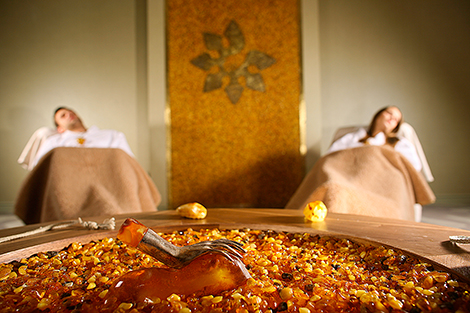
An Amber Room has been built because of the stone’s anti-inflammatory properties
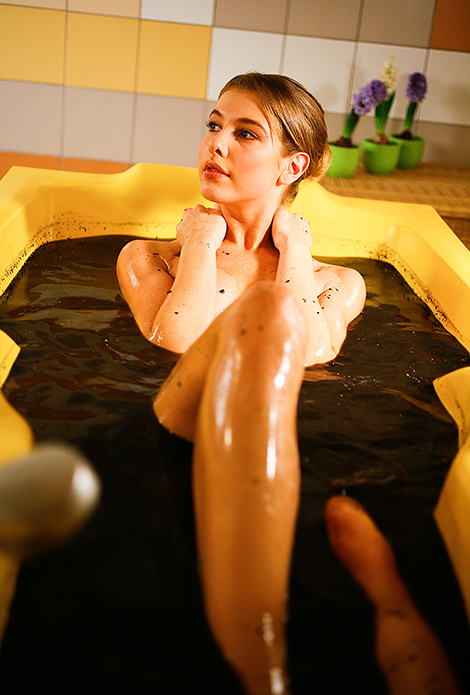
There are traditional mud baths as well as pampering treatments
National Spa Association of Lithuania
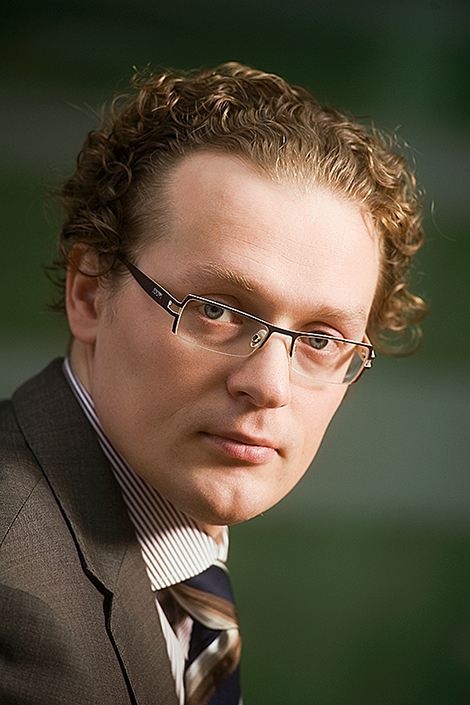
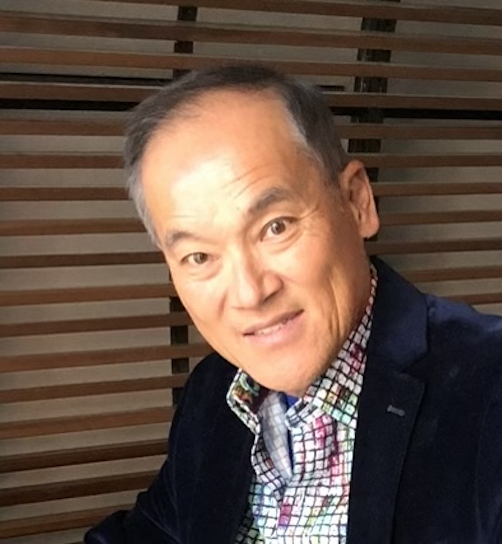
Association president Lukas Mackevicius
Lukas MackeviciusPresident National Spa Association of Lithuania
The National Spa Association of Lithuania was formed in 2007 to regulate marketing, set standards for therapists and treatments and educate on the benefits of spa.
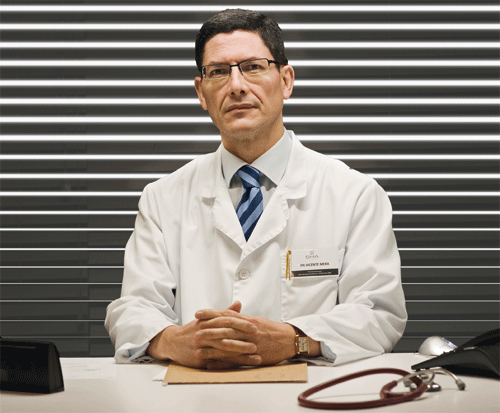
The president is Lukas Mackevicius, a management consultant who was previously a director at Spa Vilnius Sana. The six other board members all hold management positions and above in leading spas around the country. Altogether, there are 21 spa operator members.
From the outset, the association initiated steps for official documentation, developed by the Ministry of Health, to clarify the method by which mud and mineral treatments are applied. The passing of the Law of Certification of Treatment in November 2012 was a milestone achievement.
In collaboration with the Lithuanian Resort Association, it continues to build awareness of spas in Lithuania locally, by attending beauty and health trade shows, events and various initiatives with colleges; and internationally by participating in tourism exhibitions in countries such as Russia, Latvia, Finland, Azerbaijan, Kazakhstan and Norway.
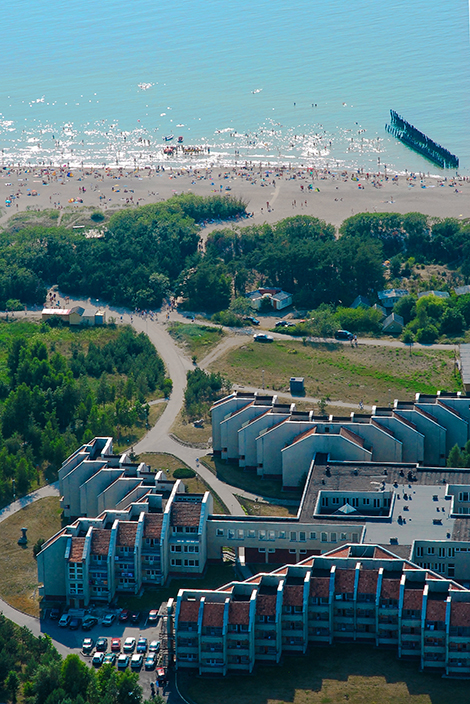
Energetikas Palanga, on the north-west coast of Lithuania, is the location of Energetikas – a health and wellness centre specialising in rehabilitation. It has two buildings on-site: one epitomising the traditional sanatorium, which has 650 bedrooms and is undergoing a badly needed refurbishment; the other, a new spa hotel with 100-bedrooms due to open by mid 2013.
Largely serving a government-funded patient clientele accounting for 70 per cent of custom, there are 16 full-time doctors to prescribe and administer the health-focused treatments. Alongside the mineral water and mud baths, the venue offers everything from oxygen therapy to ECGs and psychological assessments. Massage is widely available, with the possibility of booking one leg or arm at a time – it’s believed to be pointless to massage parts of the body that don’t have pain. What an opportunity for education!
Average room stay for private guests is 14 days and for funded patients a staggering 40 days. The costs are sensibly packaged into a nights’ accommodation including meals, a doctor consultation and up to four treatments a day. Someone staying in a double room in the spa hotel will pay only €48 (US$64, £40). While it’s far from five-stars – very much a no frills venue – it functions well, gets results and people can afford it.
Energetikas has 650 beds and 70 per cent of customers are government-funded patients
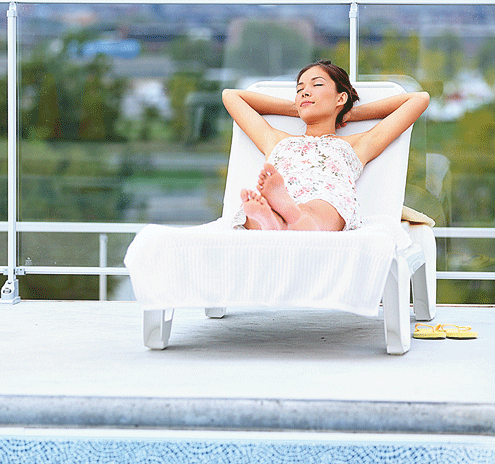
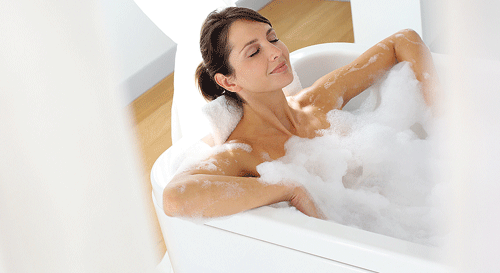
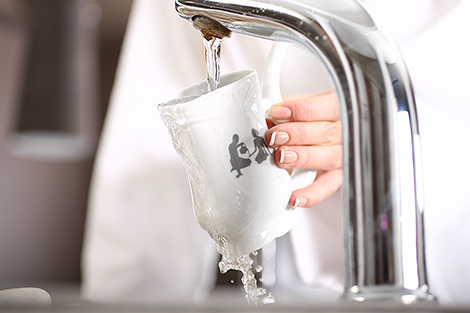
Visitors come to Lithuania to drink and bathe in its mineral waters
Anni Hood tours spas in Lithuania, where up to a quarter of tourists visit wellness resorts or traditional sanatoriums to experience the country’s historical curative health services
By Anni Hood | Published in Spa Business 2013 issue 1
The mineral waters in the spa town of Druskininkai were first noted for their health benefits in the late 18th century
Lithuania is the largest of the three Baltic states, covering 65,200sq km (25,150sq mile) and with a population of 3 million people. Tourists are attracted by its beautiful unspoilt landscape of coniferous forests, lakes and the sand dunes of the Curonian Spit, its medical heritage and the affordability of its integrative health services which are intrinsic to the national culture and a core part of its healthcare system. A 70-minute massage, for example, costs only €38 (US$51, £32).
In 2011, 26 per cent of tourists stayed in a dedicated spa resort or old sanatorium according to figures from the Lithuanian Association of Hotels and Resorts (LAHR). They came to drink and bathe in the country’s famous mineral waters and sample its therapeutic mud baths and treatments that are frequently prescribed to improve health and wellbeing. Lukas Mackevicius, president of the National Spa Association of Lithuania, explains the appeal: “Lithuania had been, and remains, rich in its wellness culture. In the late 18th century, mineral waters in the southern town of Druskininkai were found to have health benefits and so its usage in the medical treatment of asthma and other ailments began. The practice became increasingly more popular as the word about them spread.
“Then in the early 19th century, Ignatius Fonberg, a professor at Vilnius University [in Lithuania’s capital], analysed the chemical composition of the water to find it contained large amounts of calcium, sodium, potassium, iodine, bromine, iron and magnesium. He recommended that the government declare the town an official health resort and today it’s widely known as the spa capital of Lithuania.”
Tourism growth In March 1990, a year before the break-up of the Soviet Union, Lithuania stunned the world as the first country to stand up to the powerhouse and declare its independence.
In the years that followed, Lithuania struggled greatly in the transition from a planned communist economy to a free market one, yet prior to the global financial crisis of 2007 it reportedly had one of the fastest growing economies in the European Union. And in 2011, it was categorised in the highest category in the United Nations Human Development Index, a composite measure of health, education and income levels, alongside countries like the USA, Japan and UK.
In 2011, LAHR statistics show that tourism generated €1.3bn (US$1.7bn, £1.1bn) or a 4.6 per cent slice of GDP. A significantly larger proportion of revenue was generated by foreign visitors compared to domestic visitors – €960m (US$1,281m, £804m) versus €356m (US$475m, £298m).
Despite the austerity backdrop, the number of visitors to Lithuania is growing significantly. The most recent figures available from Statistics Lithuania, a government department, show visitors rose by 27 per cent from 2010 to 2011 and by 12.2 per cent in the first six months of 2012 compared to the same period in 2011 (see Table 1). From January to June 2012, the trend of slightly higher foreign visitor numbers also continued with 484,000 tourists (56.9 per cent) from abroad compared to 370,000 (43.1 per cent) from Lithuania. The foreign tourism comes mainly from the European countries of Russia, Poland, Germany, Belorussia and Latvia.
Spa tour During my short trip to Lithuania, I covered almost 1,000 miles visiting seven spas from traditional wellness sanatoriums, to those focused on pampering and even one, Etno Spa, which offered beer baths! In the spa town of Druskininkai there were spa and wellness venues everywhere you looked from small outlets to those of bewildering vastness – the Grand Spa Lietuva which I was shown around had 500 bedrooms and offered more than 160 treatments. It was created in 2009 from a huge €53m (US$70m, £44m) investment party funded by the European Union.
Most of the spas concentrate their offerings around the mineral water and mud treatments administered by medical staff. Mackevicius says: “Our spa culture is medically-orientated and results-driven, generally with no frills. We’re not so biased towards pampering, as 95 per cent of spa visitors have therapeutic experiences and come to prevent or treat illnesses.”
Unfortunately, high standards of delivery, comfort and service were a little harder to find. Years of suppression following the split from the Soviet Union has meant the readiness of a smile or a naturally relaxed demeanour is not yet common. Another generation or two and I think things may look a lot different.
In addition, very few facilities are profit orientated. “Most spa venues are busy, however, the commercial success is not as prevalent in all of them,” says Mackevicius pointing out two extremes. Energetikas, like most old-style sanatoriums, has a large number of guests (70 per cent) who are government-funded patients he says, with only 30 per cent of its customers actually paying for services direct (see Case Study 1). And from my visit to Grand Spa Lietuva, I can confirm that no value is usually given to even simple commercial additions such as retail. In comparison nearly all guests at Spa Vilnius Sana – a high-end hotel spa that opened in 2004 – are private customers (see Case Study 2).
This was my first visit to Lithuania and I know it won’t be my last. It surprised and thrilled me in equal measure. Not least, the preventative and pro-active health traditions that are so ingrained in everyday living, but also the immense potential to further develop the wellness offering.
Read more from this issue of Spa Business magazine
View contents of Spa Business 2013 issue 1
Project update: Floating point
Michel Kreuger, the man behind Amsterdam’s €9m Floating Gardens spa, tells Magali Robathan how the innovative project is shaping up
Everyone's talking about...: Online reviews
Economists have revealed that just half a star difference in online consumer reviews can make or break a business. But are spa operators doing enough to boost their online reputation?
Marketing: Award winning advice
Spa judge Samantha Foster shares her top tips on how to write an award application entry with a winning edge
Interview: Deborah Szekely
The extraordinary Deborah Szekely has spent 73 years in the industry, creating Rancho La Puerta and the Golden Door. Her 90th birthday marked the dawn of a new era, with the launch of lobbying organisation Wellness Warrior. She talks to Liz Terry
Research: Recovery begins
Hotel spas in the US are starting to bounce back from the economic downturn. Andrea Foster from PKF Consulting analyses its 2012 Trends® in the Hotel Spa Industry report
Trends: Watch this space
The Brazilian middle class, millennials and gamification will have a significant impact on the spa industry moving forwards. Health and wellness experts at global foresights firm The Futures Company tell us why and suggest other trends to keep an eye out for
Promotion: company profile: Thalgo
Spa Business talks to Bernard Sirop, managing director of Thalgo, about the evolution of the company and where it is set to go in the future
Spa science: Entering the telo-age
Jay Williams explains the science behind telomere health – DNA structures linked to cellular ageing – and how it can be used in spas
Top team: Botanique Hotel & Spa
The hottest new spa in Brazil is backed by leading entrepreneurs including The Body Shop’s Gordon Roddick and AOL co-founder David Cole. We find out more
Promotional feature : Concept development
Special experiences are created when spa concepts are expressed through great design. Kate Corney talks to WTS president Gary Henkin and business partner Doug Chambers, principal of Blu Spas, about concept and branding
Product focus: Amenities - part two
Amenities, which are often overlooked by spa suppliers, can bring in 20 per cent of revenue for a product house. Spa Business get the low-down
Research: Fighting fat
A new type of ‘beige fat’ cell has been found to burn energy rather than store excess calories. Scientists say it could be key to tackling obesity
Spa Vilnius sana Spa Vilnius Sana in the spa town of Druskininkai, was once a famous Soviet sanatorium dating back to 1961. It struggled following the Soviet dissolution until Valdas Trinkuinas – a medical graduate – embarked on a €4.8m (US$6.4m, £4m) joint venture with the government to relaunch it as a 177-bed hotel in February 2004. Its centrepiece? A 4,100sq m (44,150sq ft) spa with 50 treatment rooms offering the traditional mud and mineral water therapies (of course) with a mix of pampering treatments from Elemis, Phytomer and Japanese brand Kobido. Trinkuinas says this was the first time Lithuania had heard the word ‘spa’.
While this is a country that clearly understands the value of natural medicine, Spa Vilnius Sana is in a league of its own. It ‘gets’ wellness, but has an edge that would see it easily compete on the worldwide spa stage. Unique touches, for example, include the Amber Therapy Room, a concept created by their own medical doctor based on the anti-inflammatory properties of the amber gemstone for the body and mind. Guests lie on an amber mattress and wear a large piece of amber around their neck while specially selected music is played and calming essential oils are burned. Another bespoke option, also developed by its team of 11 on-site doctors, is a dedicated music room where musicians play particular pieces that vibrate at the correct level to enhance emotional state and increase vibrational energies.
An overnight stay costs €90 (US$120, £75) and includes meals, a consultation and up to four treatments. There’s an even split between national and international guests, averaging 3.8 nights and one week-plus, respectively. What’s more, business is growing, occupancy for 2012 was 70.5 per cent – a 2.5 per cent increase on 2011; while treatment room utilisation is estimated at 50-60 per cent,º based on a guest flow of 300-350 a day (there are 56 full-time therapists) between 8am-10pm.
As an indication of how well things are going, the business expanded with the opening of Spa Vilnius Dia, a day spa in the capital, in 2008.
An Amber Room has been built because of the stone’s anti-inflammatory properties
There are traditional mud baths as well as pampering treatments
National Spa Association of Lithuania
Association president Lukas Mackevicius
Lukas MackeviciusPresident National Spa Association of Lithuania
The National Spa Association of Lithuania was formed in 2007 to regulate marketing, set standards for therapists and treatments and educate on the benefits of spa.
The president is Lukas Mackevicius, a management consultant who was previously a director at Spa Vilnius Sana. The six other board members all hold management positions and above in leading spas around the country. Altogether, there are 21 spa operator members.
From the outset, the association initiated steps for official documentation, developed by the Ministry of Health, to clarify the method by which mud and mineral treatments are applied. The passing of the Law of Certification of Treatment in November 2012 was a milestone achievement.
In collaboration with the Lithuanian Resort Association, it continues to build awareness of spas in Lithuania locally, by attending beauty and health trade shows, events and various initiatives with colleges; and internationally by participating in tourism exhibitions in countries such as Russia, Latvia, Finland, Azerbaijan, Kazakhstan and Norway.
Energetikas Palanga, on the north-west coast of Lithuania, is the location of Energetikas – a health and wellness centre specialising in rehabilitation. It has two buildings on-site: one epitomising the traditional sanatorium, which has 650 bedrooms and is undergoing a badly needed refurbishment; the other, a new spa hotel with 100-bedrooms due to open by mid 2013.
Largely serving a government-funded patient clientele accounting for 70 per cent of custom, there are 16 full-time doctors to prescribe and administer the health-focused treatments. Alongside the mineral water and mud baths, the venue offers everything from oxygen therapy to ECGs and psychological assessments. Massage is widely available, with the possibility of booking one leg or arm at a time – it’s believed to be pointless to massage parts of the body that don’t have pain. What an opportunity for education!
Average room stay for private guests is 14 days and for funded patients a staggering 40 days. The costs are sensibly packaged into a nights’ accommodation including meals, a doctor consultation and up to four treatments a day. Someone staying in a double room in the spa hotel will pay only €48 (US$64, £40). While it’s far from five-stars – very much a no frills venue – it functions well, gets results and people can afford it.
Energetikas has 650 beds and 70 per cent of customers are government-funded patients
Visitors come to Lithuania to drink and bathe in its mineral waters
Eighty-four per cent of consumers now say wellness is a top priority in their lives, with this
percentage increasing year on year, according to a preview presentation of McKinsey’s Future of
Wellness 2026 research report.
Mass protests have been taking place since Monday 1 June in Albania over the development of
a luxury resort by Donald Trump’s daughter Ivanka Trump and her husband Jared Kushner.
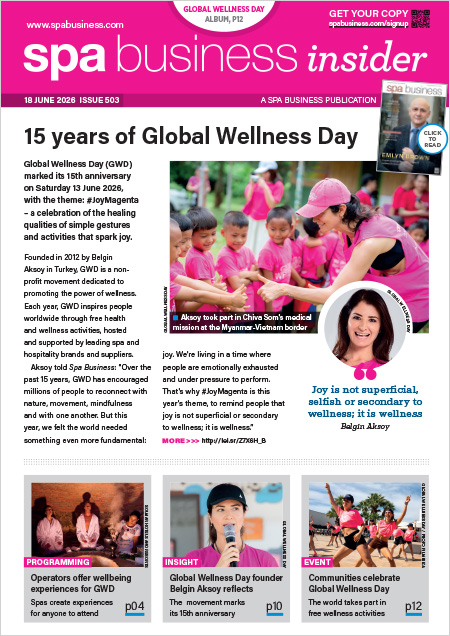
Global Wellness Day (GWD) marked its 15th anniversary on Saturday 13 June 2026, with the
theme: #JoyMagenta – a celebration of the healing qualities of simple gestures and activities
that spark joy.
Global luxury hospitality brand, Six Senses, has partnered with longevity healthcare provider,
HUM2N, to launch a clinic at Six Senses London, at The Whiteley.
As part of its first hotel partnership, Mayrlife – the medical health resort company known for its
site in Altaussee, Austria – has launched a day clinic at the Rosewood Vienna.
Premium London health club, KX Chelsea, will imminently unveil its most significant
redevelopment since its launch in 2002 to create an integrated wellness model combining
training, recovery and relaxation.
Rosewood Le Guanahani St Barth, on the northeast coast of Saint Barthélemy in the French
West Indies, is offering a programme of ocean-inspired yoga classes between 8-14 June to
celebrate Global Wellness Day (GWD).
Hotel de France, located on the British Isle of Jersey, has created a wellness retreat package
that includes a hot yoga session that will take place in Jersey Zoo’s butterfly sanctuary.
The Ritz-Carlton, Langkawi, in Malaysia, has revealed a schedule for Global Wellness Day
(GWD) that includes guided rainforest walks, mindful movement and guided coastal meditation
experiences.
Longevitix, a clinical platform for preventive and longevity medicine, has launched its AI-
powered intelligence system to help physicians deliver continuous, personalised longevity-
focused care at scale.