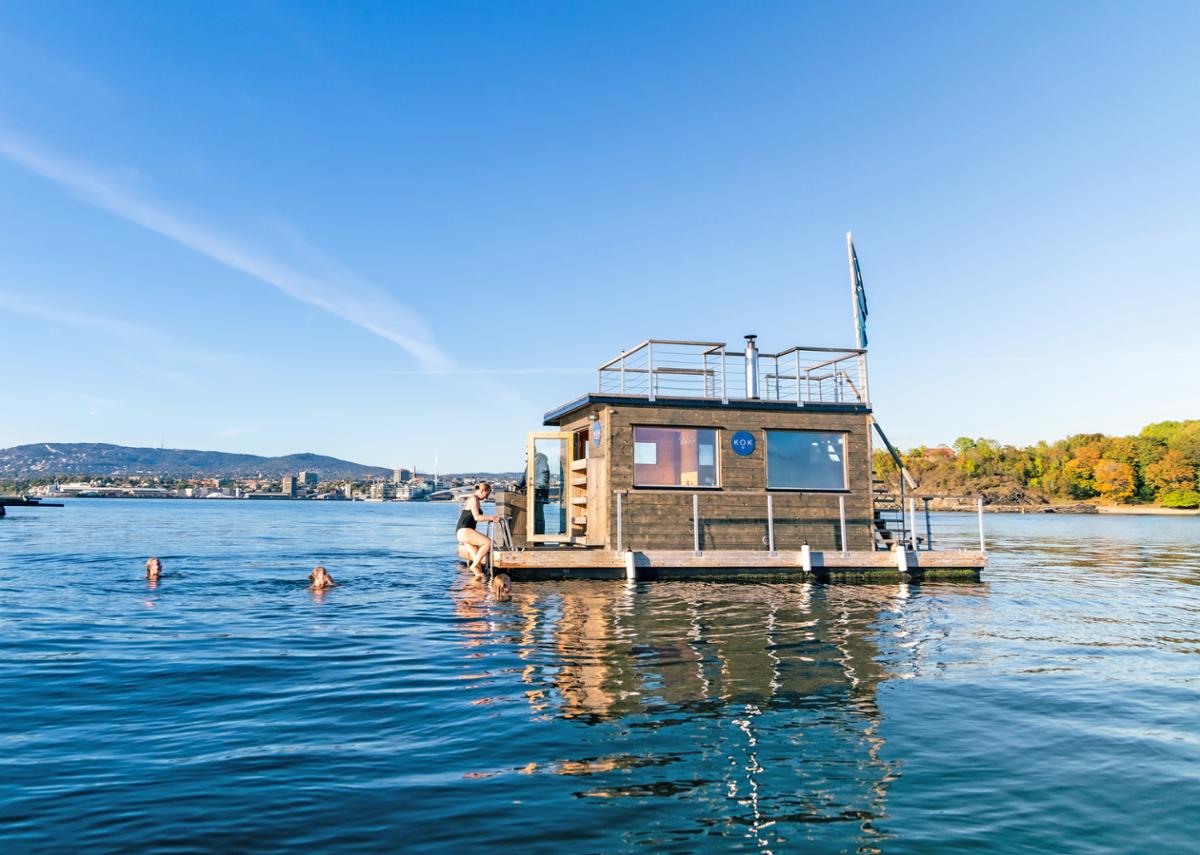
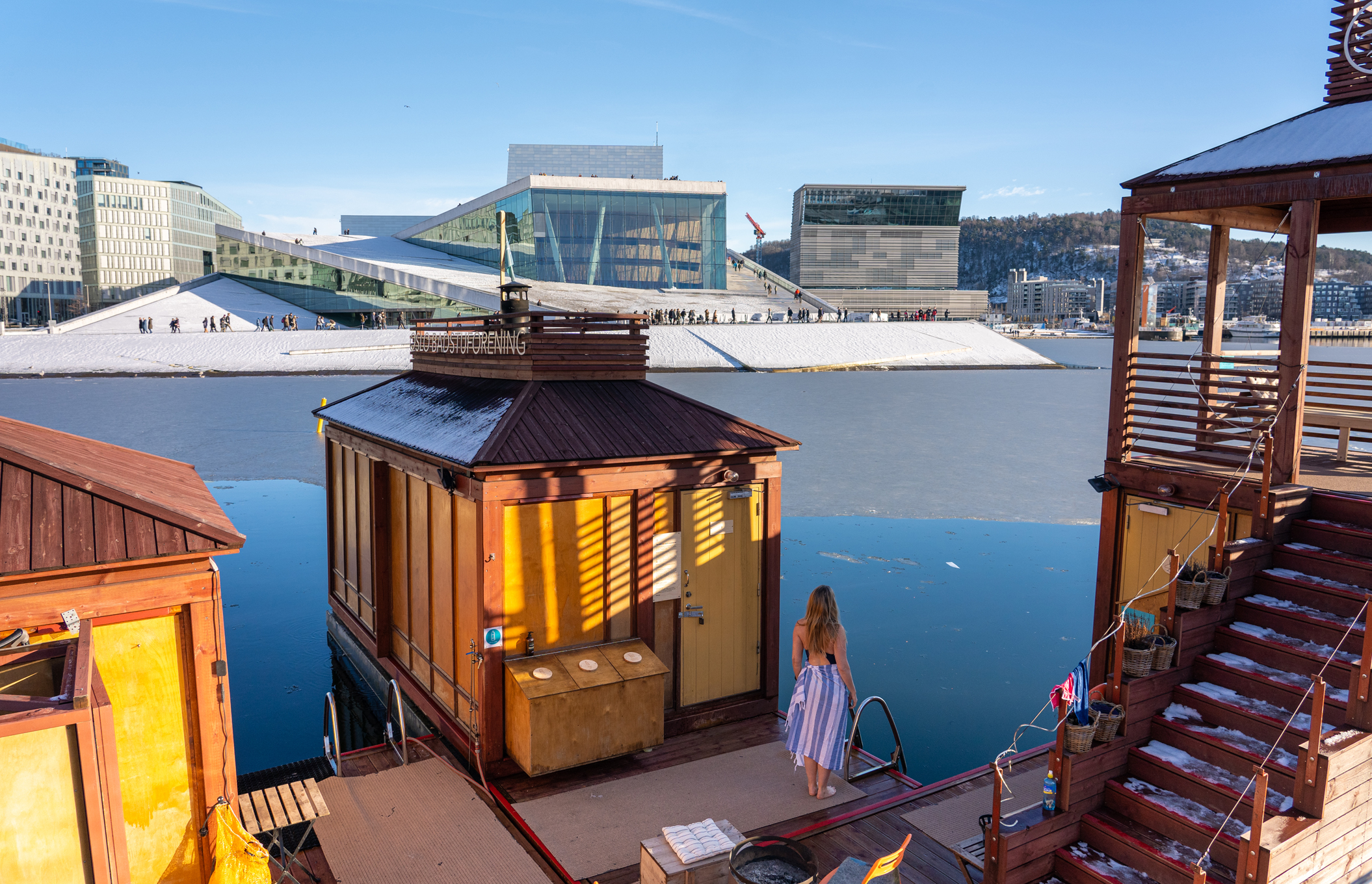
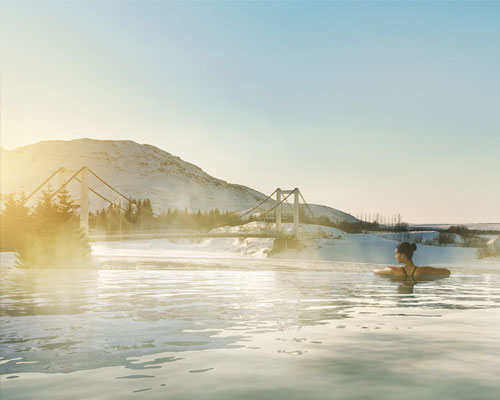
Norway’s capital has 25 floating saunas (and counting) for public use / photo: oslo sauna association
In a world where spa and wellness has been typically reserved for the upper echelons of society, three organisations are on a mission to make facilities available to everyone – for the public, in public spaces. From New York to Norway to the UK, purpose-built facilities for community use are popping up as part of a larger movement to widen access to wellness – and three women are blazing the trail.
In New York City, + POOL is an ambitious project paving the way for public access to the city’s rivers. Managing director Kara Meyer wants to help New Yorkers rethink their relationship between the natural and built environment, while also providing safe, swimmable water.
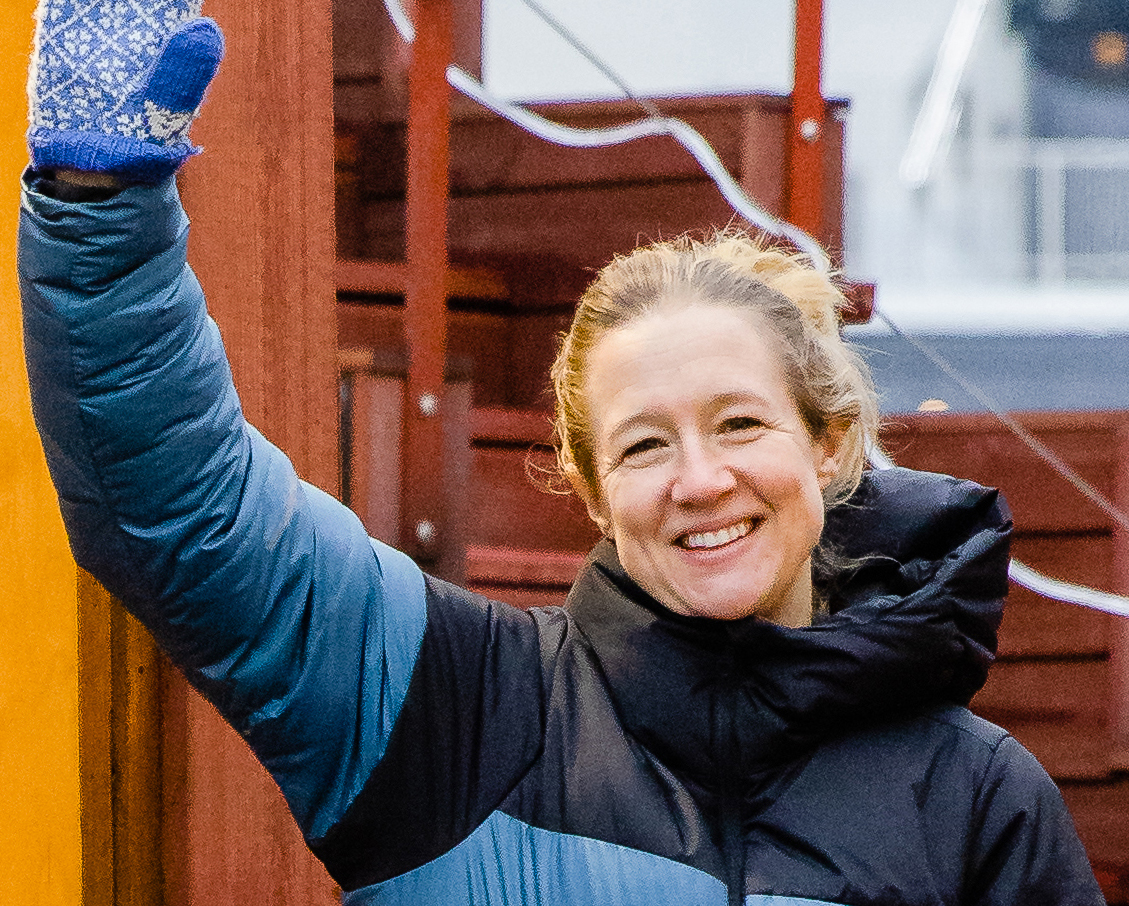
The Oslo Sauna Association is also changing city-dwellers’ relationship with the area’s waterways. On a mission to bring ‘sauna to the people’, it’s created 25 floating saunas (and counting) in the Norwegian capital’s harbour, making it one of the most exciting places for sauna culture in the world today. General manager Ragna Marie Fjeld left her job at the Ministry of Foreign Affairs to help the growing movement and is now getting interest from other cities wanting to follow suit.
Meanwhile, in the UK, Katie Bracher has helped to promote and develop sauna culture in a country without much history of one, making sauna’s physical, mental and social health benefits more accessible through her work with the British Sauna Society.
All three women are ushering in a new era of democratic wellness – one that’s more inclusive, with further-reaching implications for the health and wellbeing of the public. We sat down with them to hear more.
Kara Meyer
Managing director, + POOL
photo: +POOL
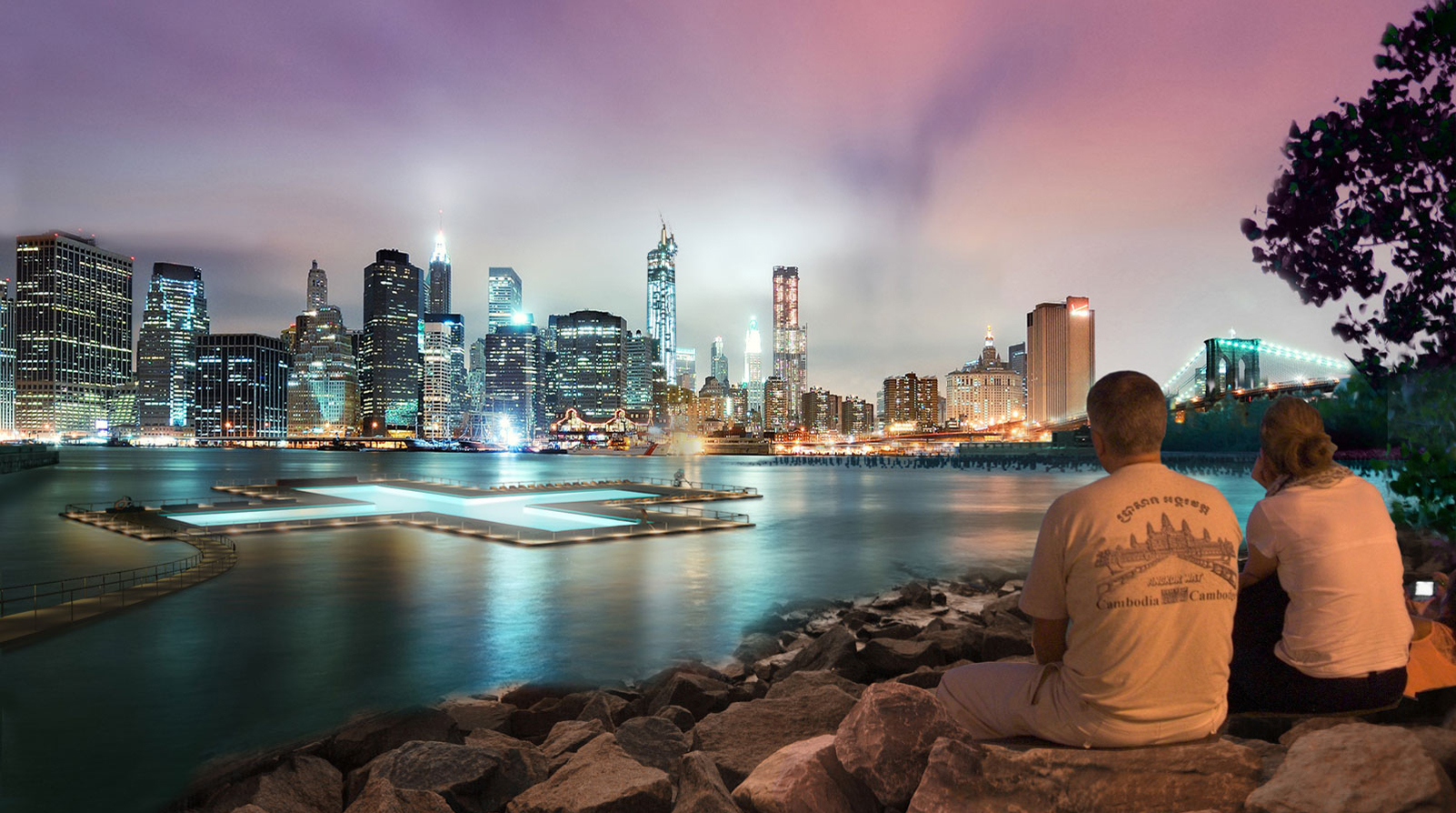
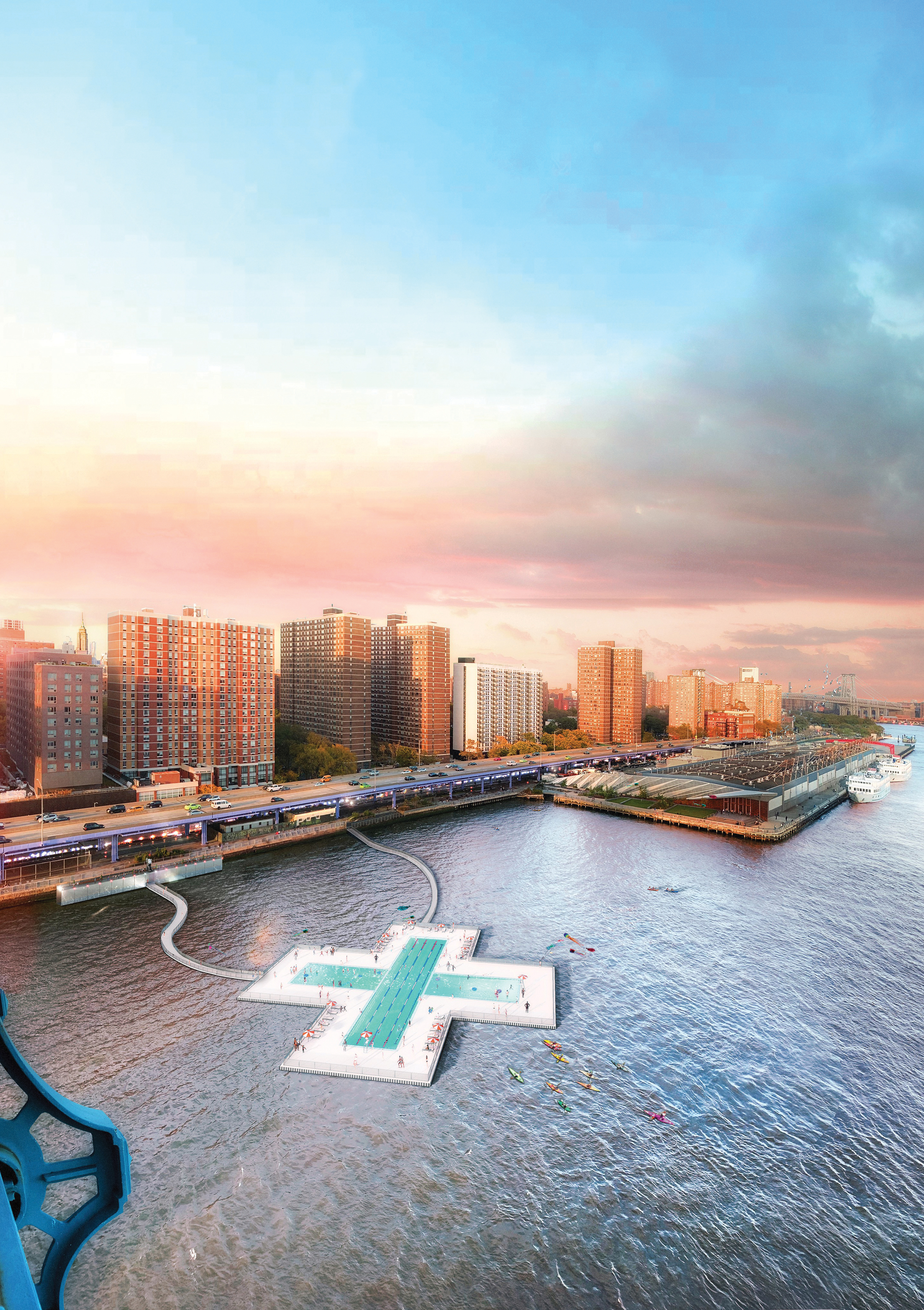
In New York City, + POOL is an initiative to build a floating, Olympic-size pool in the East River. The proposed offering – which gets its name from its plus-shaped design – includes four pools in one: a children’s pool, sports pool, lap pool and lounge pool. Managing director Kara Meyer launched the organisation, developing it with the project’s designers.
The nonprofit has raised US$16 million (€14 million, £11.9 million) in capital funding and is planning its first 2,000sq m pool. The ambition is to provide public access to the city’s natural waters and to develop community programmes, including free swim lessons, environmental education and water stewardship activities.
“The idea was simple,” says Meyer. “What if you could carve out a small piece of the river and make it clean enough for people to regularly swim in? And what if you could change the relationship New Yorkers have to their rivers, just by giving them a chance to swim in them?”
The floating pool is unique because it acts like a giant strainer that can process up to 600,000 gallons a day – cleaning the very water it floats in. It boasts a three-step system consisting of a strainer, membrane filtration process and UV disinfection to remove bacteria and contaminants. Its 2024 test site in Lower Manhattan has garnered media attention and major support from the public – in large part because the project benefits everyone.
“We hope to reconnect city dwellers to their natural environment by giving them safe public access to city waters – and we believe that connection to nature is the ultimate wellness tool,” says Meyer. “We’re all interconnected – just like the world’s waters. Equitable access to wellness means better health outcomes for all.”
Floating pools in New York City are not new. Many immigrants in the early 19th century frequented establishments on the Hudson and East Rivers, built because their homes lacked bathing facilities. These eventually closed due to concerns over water quality. Now, the team at + POOL hopes to use modern technology to bring back the floating pool for recreation, joining facilities like the Badeschiff in Berlin or the Josephine Baker pool in Paris, but with the added benefit of using the water in which it floats to feed the pool and helping to clean the city’s waterways.
Once built, the plan is for the pool to be free and open to the public. Meyer explains that it will function like a public pool, but be operated by + POOL instead of the Parks Department, much like the High Line in New York City. Operations are currently funded through private contributions, though public funds have been given to capital construction.
Meyer hopes to take + POOL’s filtration technology, advanced engineering and design to other cities and says she’s already received interest from around the world. “New York is a tough place to build,” she says, “but as the saying goes: if we can make it here, we can make it anywhere!”
What if you could
change how New Yorkers
see their rivers, by
giving them a chance
to swim in them?
+ POOL has raised US$16 million and is planning its first 2,000sq m site / photo: +POOL
Community programmes will include free swimming lessons / photo: +POOL
Ragna Marie Fjeld
General manager, Oslo Sauna Association
photo: Marie Fjeld bilde
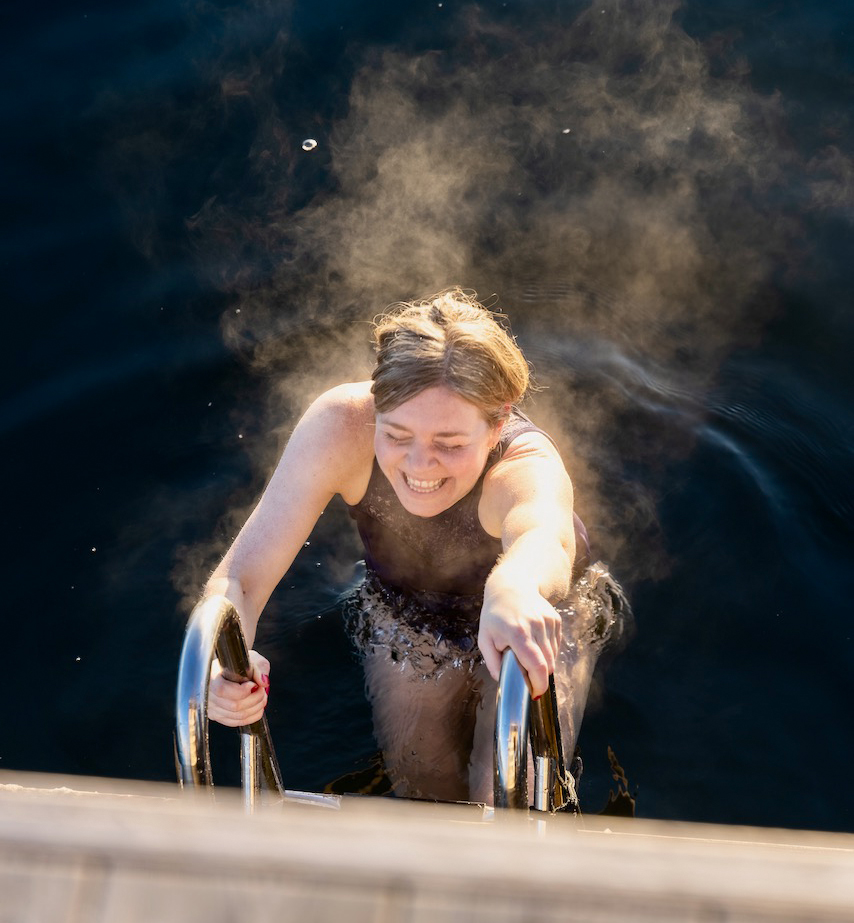
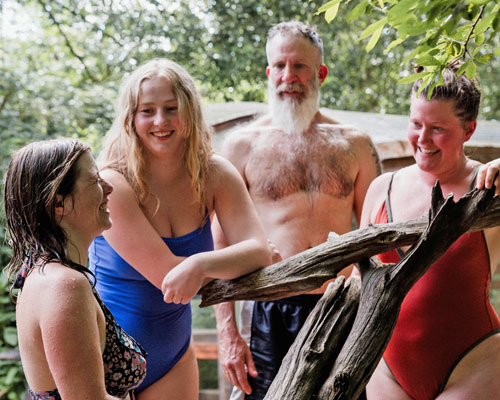
The Oslo Badstuforening (OBF), or Oslo Sauna Association, is on a mission to bring ‘sauna to the people,’ with 25 floating saunas along the Oslo Fjord, which vary from bohemian community-built facilities to large event establishments. Locals pay an annual membership of NOK300 (US$29, €26, £22), or tourists can pay a one-off fee starting at NOK100 (US$10, €9, £7) for 90 minutes.
General manager Ragna Marie Fjeld used to work at the Ministry of Foreign Affairs, but when a DIY floating sauna made of driftwood appeared in the harbour, she and other diplomats worked to help make sure it could stay. “It turns out we needed each other,” says Fjeld. “The anarchists were good at building and getting things done and the diplomats were good at writing applications and speaking to the municipality.”
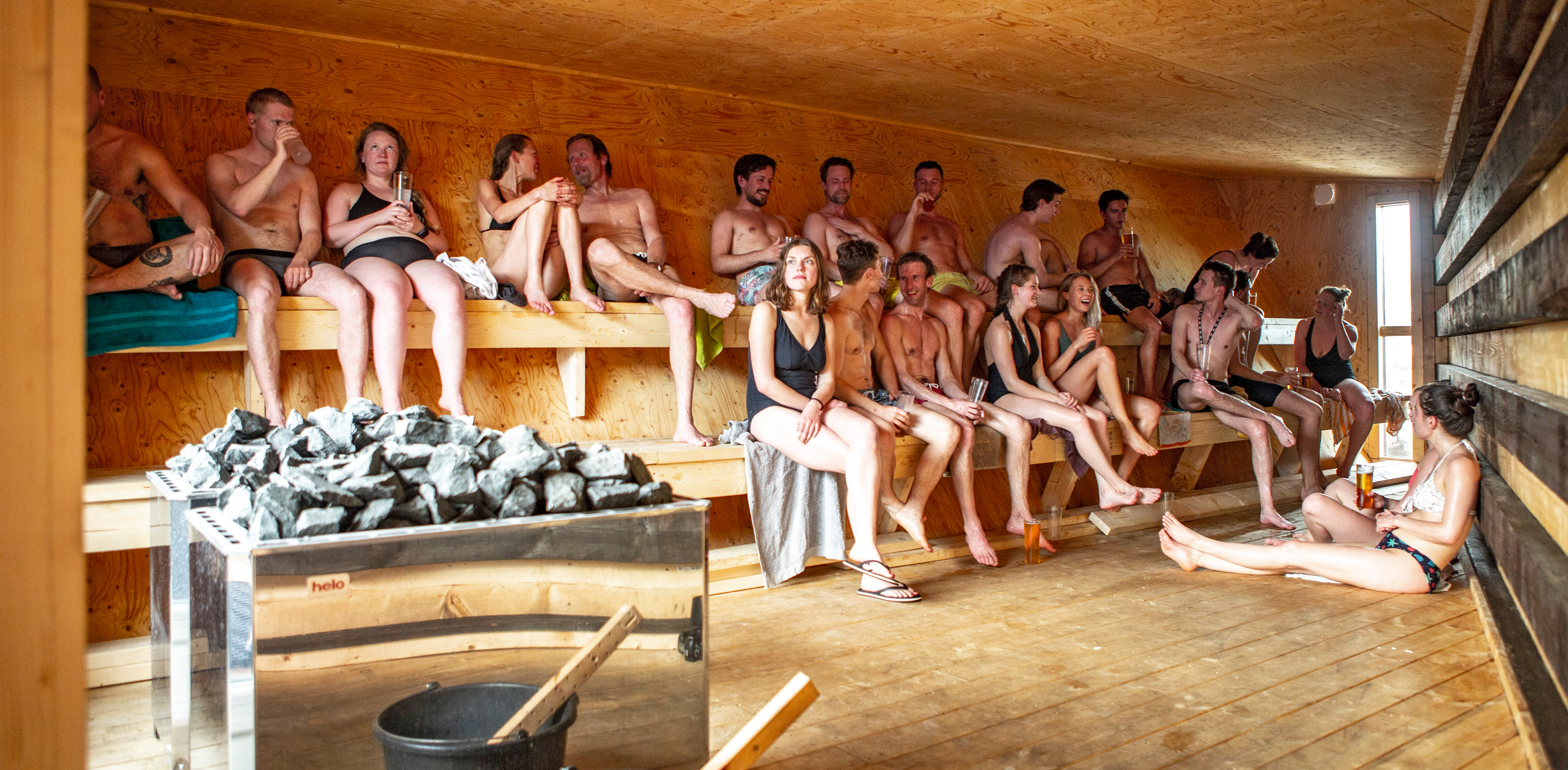
Soon after, in 2016, the OBF was formed. Today, it boasts more than 18,000 members and its facilities attract more than 260,000 visitors a year. “The effect the saunas have on people’s everyday lives motivates me,” says Fjeld. “Wellness should be for everyone – accessible and affordable.” In the sauna, she explains, everyone is equal, status symbols are shed and people from different backgrounds easily share new perspectives with one another. “This takes your wellness experience to another level,” she says.
As a nonprofit owned by its members, OBF’s mission is to bring ‘sauna to the people’, which includes keeping prices affordable. On top of the yearly fee, members pay varying amounts per visit depending on duration and the number of people in a group. Or for NOK575 (US$57, €50, £42) each month, they can take as many saunas as they like. About 20 per cent of its visitors are tourists and Fjeld says while the average age of guests is between 30-45, all ages are represented, with an increasing number of families and a new ‘senior sauna’ programme being introduced.
“‘Sauna to the people’ is not only our slogan, it’s our core value,” explains Fjeld. “We should be for people from all social classes, in all parts of the city, for every age and for people with disabilities and so on.” The OBF offers free saunas for refugees and school classes – and increasingly, they’re getting interest from municipalities around the world that want to bring a sauna movement to their own city.
Fjeld says she sees the rustic saunas on the Oslo harbourfront as supporters and friends of luxury spas – not as competitors and that they both can learn from each other. At the end of the day, she says, “there’s room for everyone and more awareness is positive. The sauna movement has enormous momentum at the moment and this is very exciting to be a part of.”
In the sauna, everyone
is equal, status
symbols are shed
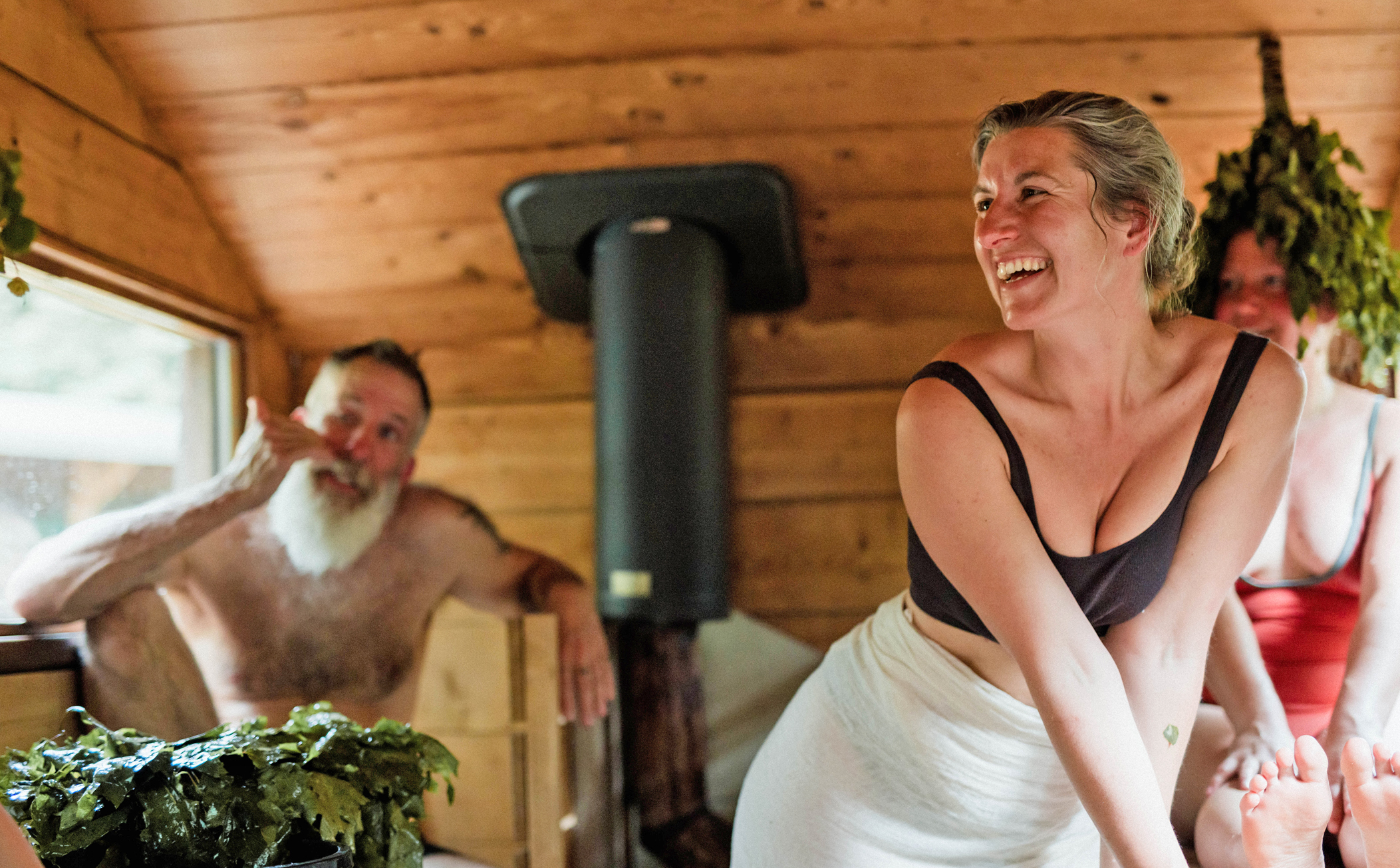
The Oslo Sauna Association has more than 18,000 members / photo: Fara_Mohri
The saunas attract up to 260,000 visitors a year / photo: Magne_Haheim.
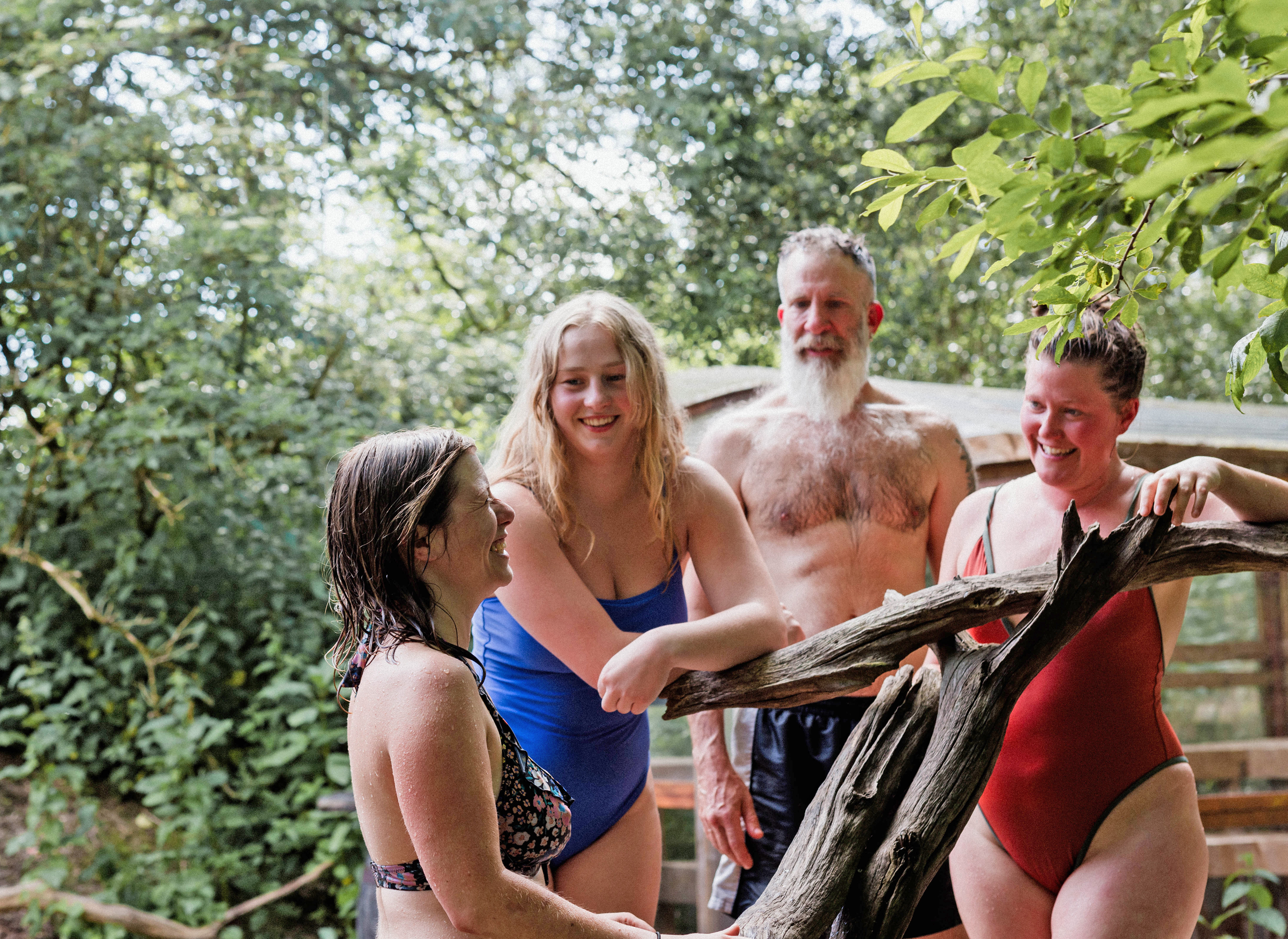
Locals pay an annual membership of US$29 and tourists pay a one-off fee / photo: oslo sauna association
Katie Bracher
Co-founder & council member, British Sauna Society
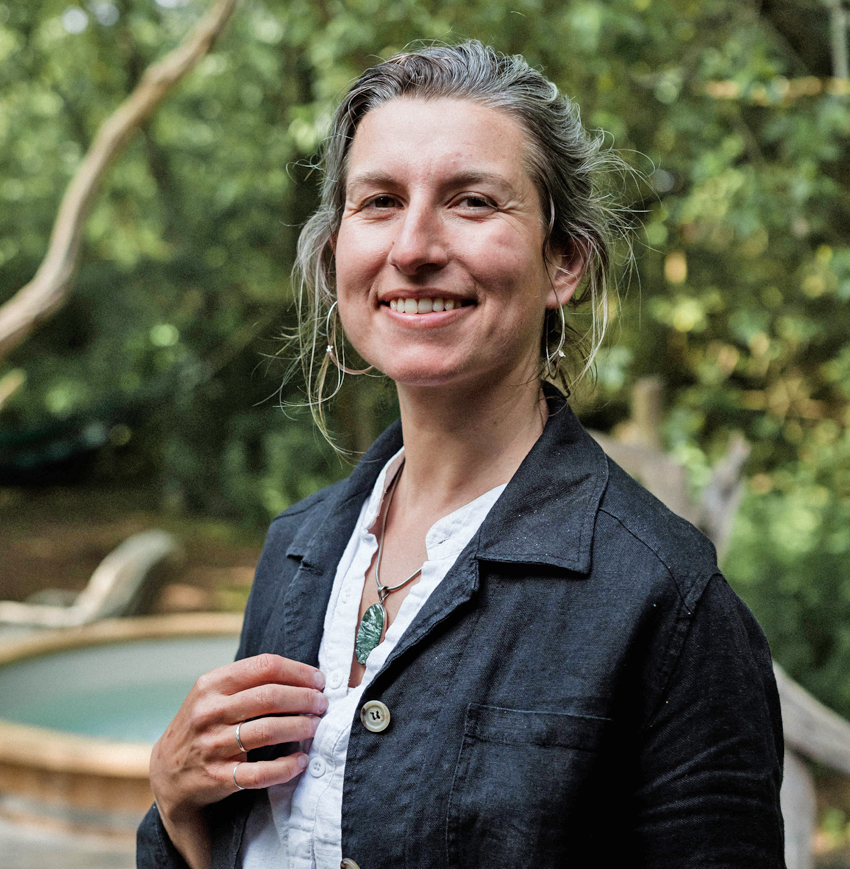
photo: Katie Bracher
During the 2012 London Olympics, a wood-fired pop-up sauna was erected in Barking as part of a cultural programme to educate the public about sauna culture around the world. There, Katie Bracher met members of the Finnish Sauna Society who wanted to help Brits set up a similar concept. “From the very beginning, we wanted there to be more saunas everywhere – we wanted everyone to know about saunas and to share the love,” says Bracher, who co-founded the British Sauna Society and now runs Wild Spa Wowo and Sauna Master UK.
The not-for-profit British Sauna Society started as a grass-roots movement to bring ‘more sauna to more people’ by promoting and developing sauna culture and educating people on its physical, mental and social benefits. “We were grounded in a strong sense of equality and inclusivity, focusing on public benefit and the greater good,” Bracher says. As a testament to that, she says price points for community saunas across the UK are an affordable £8-£20 (US$10.8-US$27.1, €9.5-€23.8) for 1-2 hours.
By 2017, Bracher was offered a role as the sauna master at a new pop-up sauna on London’s South Bank. “It was packed the whole time,” she recalls, “everyone loved it.”
Soon after, she built the pop-up Beach Box Sauna on the Brighton shorefront out of a converted horse box. Originally intended as a temporary fixture, it became so popular it expanded to three saunas, a chilled steel tub, cool plunge pool, freshwater showers and changing rooms. Its opening is seen as a key moment and has inspired the explosive growth of sauna culture in the UK over the past eight years. Today, Bracher reports that across Sussex, many of these saunas are fully booked each weekend, hosting 50-100 people per day.
“It’s interesting that once an idea takes hold, it ripples out widely,” says Bracher. “Horseboxes in the UK were having a moment, as it’s easier to get planning permission for temporary structures; many were being converted to coffee trucks and bars.” A sauna on the beach also made sense with England’s year-round cold seawater. Bracher explains: “People are looking for new ways to socialise that feel good and also benefit their health – a trend that was amplified by the pandemic.”
Over the past seven years, Bracher has hosted experienced sauna master trainers from all over Europe, helping to grow the British sauna movement by training more than 100 sauna masters in the art of leaf whisking and aufguss (see www.spabusiness.com/aufgusswm). She continues to deliver an ever-widening range of training through her work with Sauna Master UK.
With her role with the British Sauna Society, she was also part of the team that seeded the not-for-profit Hackney Community Sauna Baths in London in 2021, which has grown from a single location in Hackney to six across London. With a vision to bring local, affordable and authentic sauna to the UK, the baths host everything from aufguss events to storytelling, sound baths, yoga, breathwork, queer poetry, speed dating and even a sauna festival, The Saunaverse, which includes music, dance, workshops and sauna rituals.
Championing the smaller, community-focused, more rustic sense of the British sauna is something that Bracher is passionate about, especially as big event-style saunas are on the rise. Her latest project is Wild Spa Wowo, a forest glade wood-fired sauna sanctuary in Sussex that sits in a wooded area near a family campground. “It was an opportunity to set up a new site based in nature, creating space for innovation and events,” she says.
Bracher sees a bright future for Britain’s growing sauna movement. “There’s something very beautiful about the opportunity for particular communities – not just countries – to develop cultures of bathing that suit their needs,” she says. “I think this will continue to evolve globally.”
We were grounded
in a strong sense
of equality and
inclusivity, focusing
on public benefit
and the greater good
There’s something very beautiful about the
opportunity for particular communities
to develop cultures of bathing
Bracher has been inspired by the work of the Finnish Sauna Society / photo: Katie Bracher
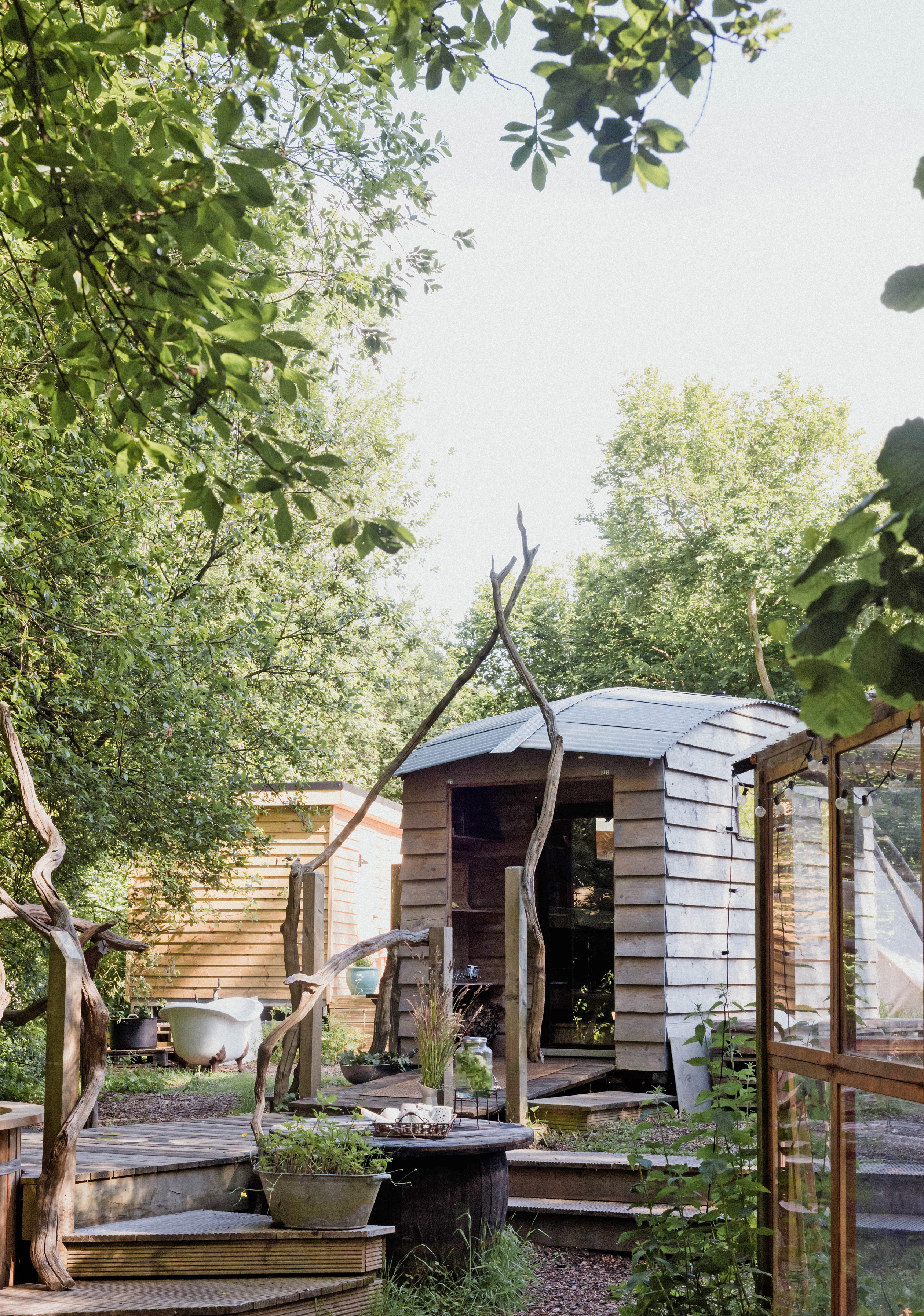
Wild Spa Wowo is a wood-fired sauna sanctuary near a family campground / photo: Katie Bracher
Community saunas across the UK are an affordable £8-£20 for 1-2 hours / photo: Katie Bracher
Read more from this issue of Spa Business magazine
View contents of Spa Business 2025 issue 2
Editor’s letter: The Gen Z effect
With young adults reshaping our industry, affordable, community-based models are thriving, while traditional spas risk being left behind
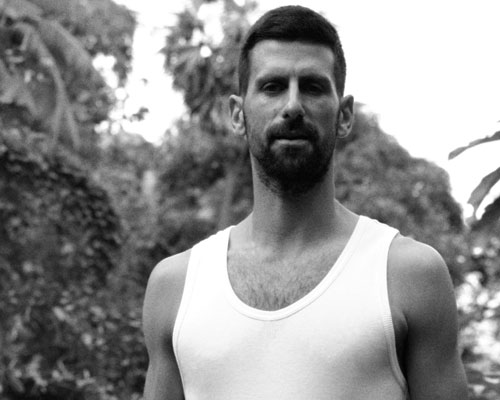
Spa people: Novak Djokovic
Game, set, spa. The tennis star is poised to launch a biohacking pod while also entering a multi-year ambassador partnership with Aman
Spa people: Peter Attia
One of the most respected names in longevity medicine has co-founded preventative health clinic, Biograph
Spa people: Alexis Dean
The founder of Soak is on a mission to deliver social wellness without the hefty price tag across Australia
News report: Young influencers
Millennials and Gen Zers are redefining the wellness landscape according to new research by McKinsey
News report: Double vision
Fresh data from RLA Global reveals that hotels delivering wellness earn twice as much as those that don’t
Project preview: Laugarás Lagoon
Contrast bathing and fine dining are two USPs of a new geothermal destination in Iceland’s Golden Circle
Interview: Suzanne Holbrook
Marriott’s new global leader of spa, fitness and wellness talks candidly to Katie Barnes about her plans for the world’s largest hotel spa portfolio
Ask an expert: Vagus nerve
Insider insights into why this critical nerve is a key to wellbeing and how supportive treatments are set to shake up spa menus. Kath Hudson reports
Research: Marginally speaking
CBRE’s latest numbers show that spa revenues in US hotels have edged upward, profits have slipped slightly and costs are down
Investigation: Dealing with death
With a new openness emerging around the subject of end-of-life care, Julie Cramer investigates whether spas could offer death doula services
Trend: Head first
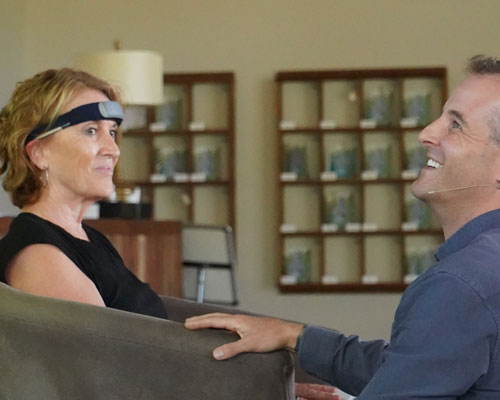
Judy Chapman tries out brain mapping at Gwinganna to see why it’s become so popular
First person: Relaxation rebooted
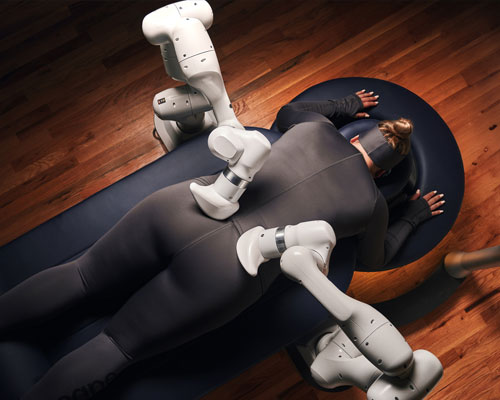
Does AI massage have a place in luxury spas? Cassandra Cavanah heads to The Ritz-Carlton Bacara, Santa Barbara to find out
Contrast therapy, based on the alternation of hot and cold rituals, has become one of the
most valued practices in the fields of wellness and recovery. [more...]
+ More featured suppliers
COMPANY PROFILES
Gharieni Group
For 35 years, the Gharieni Group has
redefined wellness, spa and medical
equipment, setting global [more...]
Norway’s capital has 25 floating saunas (and counting) for public use / photo: oslo sauna association
In a world where spa and wellness has been typically reserved for the upper echelons of society, three organisations are on a mission to make facilities available to everyone – for the public, in public spaces. From New York to Norway to the UK, purpose-built facilities for community use are popping up as part of a larger movement to widen access to wellness – and three women are blazing the trail.
In New York City, + POOL is an ambitious project paving the way for public access to the city’s rivers. Managing director Kara Meyer wants to help New Yorkers rethink their relationship between the natural and built environment, while also providing safe, swimmable water.
The Oslo Sauna Association is also changing city-dwellers’ relationship with the area’s waterways. On a mission to bring ‘sauna to the people’, it’s created 25 floating saunas (and counting) in the Norwegian capital’s harbour, making it one of the most exciting places for sauna culture in the world today. General manager Ragna Marie Fjeld left her job at the Ministry of Foreign Affairs to help the growing movement and is now getting interest from other cities wanting to follow suit.
Meanwhile, in the UK, Katie Bracher has helped to promote and develop sauna culture in a country without much history of one, making sauna’s physical, mental and social health benefits more accessible through her work with the British Sauna Society.
All three women are ushering in a new era of democratic wellness – one that’s more inclusive, with further-reaching implications for the health and wellbeing of the public. We sat down with them to hear more.
Kara Meyer
Managing director, + POOL
photo: +POOL
In New York City, + POOL is an initiative to build a floating, Olympic-size pool in the East River. The proposed offering – which gets its name from its plus-shaped design – includes four pools in one: a children’s pool, sports pool, lap pool and lounge pool. Managing director Kara Meyer launched the organisation, developing it with the project’s designers.
The nonprofit has raised US$16 million (€14 million, £11.9 million) in capital funding and is planning its first 2,000sq m pool. The ambition is to provide public access to the city’s natural waters and to develop community programmes, including free swim lessons, environmental education and water stewardship activities.
“The idea was simple,” says Meyer. “What if you could carve out a small piece of the river and make it clean enough for people to regularly swim in? And what if you could change the relationship New Yorkers have to their rivers, just by giving them a chance to swim in them?”
The floating pool is unique because it acts like a giant strainer that can process up to 600,000 gallons a day – cleaning the very water it floats in. It boasts a three-step system consisting of a strainer, membrane filtration process and UV disinfection to remove bacteria and contaminants. Its 2024 test site in Lower Manhattan has garnered media attention and major support from the public – in large part because the project benefits everyone.
“We hope to reconnect city dwellers to their natural environment by giving them safe public access to city waters – and we believe that connection to nature is the ultimate wellness tool,” says Meyer. “We’re all interconnected – just like the world’s waters. Equitable access to wellness means better health outcomes for all.”
Floating pools in New York City are not new. Many immigrants in the early 19th century frequented establishments on the Hudson and East Rivers, built because their homes lacked bathing facilities. These eventually closed due to concerns over water quality. Now, the team at + POOL hopes to use modern technology to bring back the floating pool for recreation, joining facilities like the Badeschiff in Berlin or the Josephine Baker pool in Paris, but with the added benefit of using the water in which it floats to feed the pool and helping to clean the city’s waterways.
Once built, the plan is for the pool to be free and open to the public. Meyer explains that it will function like a public pool, but be operated by + POOL instead of the Parks Department, much like the High Line in New York City. Operations are currently funded through private contributions, though public funds have been given to capital construction.
Meyer hopes to take + POOL’s filtration technology, advanced engineering and design to other cities and says she’s already received interest from around the world. “New York is a tough place to build,” she says, “but as the saying goes: if we can make it here, we can make it anywhere!”
What if you could
change how New Yorkers
see their rivers, by
giving them a chance
to swim in them?
+ POOL has raised US$16 million and is planning its first 2,000sq m site / photo: +POOL
Community programmes will include free swimming lessons / photo: +POOL
Ragna Marie Fjeld
General manager, Oslo Sauna Association
photo: Marie Fjeld bilde
The Oslo Badstuforening (OBF), or Oslo Sauna Association, is on a mission to bring ‘sauna to the people,’ with 25 floating saunas along the Oslo Fjord, which vary from bohemian community-built facilities to large event establishments. Locals pay an annual membership of NOK300 (US$29, €26, £22), or tourists can pay a one-off fee starting at NOK100 (US$10, €9, £7) for 90 minutes.
General manager Ragna Marie Fjeld used to work at the Ministry of Foreign Affairs, but when a DIY floating sauna made of driftwood appeared in the harbour, she and other diplomats worked to help make sure it could stay. “It turns out we needed each other,” says Fjeld. “The anarchists were good at building and getting things done and the diplomats were good at writing applications and speaking to the municipality.”
Soon after, in 2016, the OBF was formed. Today, it boasts more than 18,000 members and its facilities attract more than 260,000 visitors a year. “The effect the saunas have on people’s everyday lives motivates me,” says Fjeld. “Wellness should be for everyone – accessible and affordable.” In the sauna, she explains, everyone is equal, status symbols are shed and people from different backgrounds easily share new perspectives with one another. “This takes your wellness experience to another level,” she says.
As a nonprofit owned by its members, OBF’s mission is to bring ‘sauna to the people’, which includes keeping prices affordable. On top of the yearly fee, members pay varying amounts per visit depending on duration and the number of people in a group. Or for NOK575 (US$57, €50, £42) each month, they can take as many saunas as they like. About 20 per cent of its visitors are tourists and Fjeld says while the average age of guests is between 30-45, all ages are represented, with an increasing number of families and a new ‘senior sauna’ programme being introduced.
“‘Sauna to the people’ is not only our slogan, it’s our core value,” explains Fjeld. “We should be for people from all social classes, in all parts of the city, for every age and for people with disabilities and so on.” The OBF offers free saunas for refugees and school classes – and increasingly, they’re getting interest from municipalities around the world that want to bring a sauna movement to their own city.
Fjeld says she sees the rustic saunas on the Oslo harbourfront as supporters and friends of luxury spas – not as competitors and that they both can learn from each other. At the end of the day, she says, “there’s room for everyone and more awareness is positive. The sauna movement has enormous momentum at the moment and this is very exciting to be a part of.”
In the sauna, everyone
is equal, status
symbols are shed
The Oslo Sauna Association has more than 18,000 members / photo: Fara_Mohri
The saunas attract up to 260,000 visitors a year / photo: Magne_Haheim.
Locals pay an annual membership of US$29 and tourists pay a one-off fee / photo: oslo sauna association
Katie Bracher
Co-founder & council member, British Sauna Society
photo: Katie Bracher
During the 2012 London Olympics, a wood-fired pop-up sauna was erected in Barking as part of a cultural programme to educate the public about sauna culture around the world. There, Katie Bracher met members of the Finnish Sauna Society who wanted to help Brits set up a similar concept. “From the very beginning, we wanted there to be more saunas everywhere – we wanted everyone to know about saunas and to share the love,” says Bracher, who co-founded the British Sauna Society and now runs Wild Spa Wowo and Sauna Master UK.
The not-for-profit British Sauna Society started as a grass-roots movement to bring ‘more sauna to more people’ by promoting and developing sauna culture and educating people on its physical, mental and social benefits. “We were grounded in a strong sense of equality and inclusivity, focusing on public benefit and the greater good,” Bracher says. As a testament to that, she says price points for community saunas across the UK are an affordable £8-£20 (US$10.8-US$27.1, €9.5-€23.8) for 1-2 hours.
By 2017, Bracher was offered a role as the sauna master at a new pop-up sauna on London’s South Bank. “It was packed the whole time,” she recalls, “everyone loved it.”
Soon after, she built the pop-up Beach Box Sauna on the Brighton shorefront out of a converted horse box. Originally intended as a temporary fixture, it became so popular it expanded to three saunas, a chilled steel tub, cool plunge pool, freshwater showers and changing rooms. Its opening is seen as a key moment and has inspired the explosive growth of sauna culture in the UK over the past eight years. Today, Bracher reports that across Sussex, many of these saunas are fully booked each weekend, hosting 50-100 people per day.
“It’s interesting that once an idea takes hold, it ripples out widely,” says Bracher. “Horseboxes in the UK were having a moment, as it’s easier to get planning permission for temporary structures; many were being converted to coffee trucks and bars.” A sauna on the beach also made sense with England’s year-round cold seawater. Bracher explains: “People are looking for new ways to socialise that feel good and also benefit their health – a trend that was amplified by the pandemic.”
Over the past seven years, Bracher has hosted experienced sauna master trainers from all over Europe, helping to grow the British sauna movement by training more than 100 sauna masters in the art of leaf whisking and aufguss (see www.spabusiness.com/aufgusswm). She continues to deliver an ever-widening range of training through her work with Sauna Master UK.
With her role with the British Sauna Society, she was also part of the team that seeded the not-for-profit Hackney Community Sauna Baths in London in 2021, which has grown from a single location in Hackney to six across London. With a vision to bring local, affordable and authentic sauna to the UK, the baths host everything from aufguss events to storytelling, sound baths, yoga, breathwork, queer poetry, speed dating and even a sauna festival, The Saunaverse, which includes music, dance, workshops and sauna rituals.
Championing the smaller, community-focused, more rustic sense of the British sauna is something that Bracher is passionate about, especially as big event-style saunas are on the rise. Her latest project is Wild Spa Wowo, a forest glade wood-fired sauna sanctuary in Sussex that sits in a wooded area near a family campground. “It was an opportunity to set up a new site based in nature, creating space for innovation and events,” she says.
Bracher sees a bright future for Britain’s growing sauna movement. “There’s something very beautiful about the opportunity for particular communities – not just countries – to develop cultures of bathing that suit their needs,” she says. “I think this will continue to evolve globally.”
We were grounded
in a strong sense
of equality and
inclusivity, focusing
on public benefit
and the greater good
There’s something very beautiful about the
opportunity for particular communities
to develop cultures of bathing
Bracher has been inspired by the work of the Finnish Sauna Society / photo: Katie Bracher
Wild Spa Wowo is a wood-fired sauna sanctuary near a family campground / photo: Katie Bracher
Community saunas across the UK are an affordable £8-£20 for 1-2 hours / photo: Katie Bracher
Read more from this issue of Spa Business magazine
View contents of Spa Business 2025 issue 2
Editor’s letter: The Gen Z effect
With young adults reshaping our industry, affordable, community-based models are thriving, while traditional spas risk being left behind
Spa people: Novak Djokovic
Game, set, spa. The tennis star is poised to launch a biohacking pod while also entering a multi-year ambassador partnership with Aman
Spa people: Peter Attia
One of the most respected names in longevity medicine has co-founded preventative health clinic, Biograph
Spa people: Alexis Dean
The founder of Soak is on a mission to deliver social wellness without the hefty price tag across Australia
News report: Young influencers
Millennials and Gen Zers are redefining the wellness landscape according to new research by McKinsey
News report: Double vision
Fresh data from RLA Global reveals that hotels delivering wellness earn twice as much as those that don’t
Project preview: Laugarás Lagoon
Contrast bathing and fine dining are two USPs of a new geothermal destination in Iceland’s Golden Circle
Interview: Suzanne Holbrook
Marriott’s new global leader of spa, fitness and wellness talks candidly to Katie Barnes about her plans for the world’s largest hotel spa portfolio
Ask an expert: Vagus nerve
Insider insights into why this critical nerve is a key to wellbeing and how supportive treatments are set to shake up spa menus. Kath Hudson reports
Research: Marginally speaking
CBRE’s latest numbers show that spa revenues in US hotels have edged upward, profits have slipped slightly and costs are down
Investigation: Dealing with death
With a new openness emerging around the subject of end-of-life care, Julie Cramer investigates whether spas could offer death doula services
Trend: Head first
Judy Chapman tries out brain mapping at Gwinganna to see why it’s become so popular
First person: Relaxation rebooted
Does AI massage have a place in luxury spas? Cassandra Cavanah heads to The Ritz-Carlton Bacara, Santa Barbara to find out
Jessica Sloyan, a wellness operations and training expert, has established an independent
private training academy to provide professional qualifications for practitioners looking to offer
immersive wellness experiences.
The International Spa Association (ISPA) has published its full 2026 US Spa Industry Study,
providing further insights into the region’s total US$1 billion (€855 million, £780 million)
industry revenue increase from 2024 to 2025.
Ameyalli, the 78-acre wellbeing resort and residential community in Midway in Utah, US, has
broken ground on phase two of the hot spring development – the Ameyalli Resort and Spa –
which is due to open in 2028.
TLee Spas and Wellness has revealed the design concept for a high-tech spa with body
mapping scanners to improve public health, for AI company Midjourney.
Gran Hotel Taoro in northern Tenerife, Spain, has completed the final phase of its three-year
renovation with the debut of its Sandára Wellness Centre.
Hand and Stone Massage and Facial Spa, the spa business with more than 650 locations across
the US and Canada, has appointed franchise expert Carrie Walsh as CEO as the company plans
to expand.
Synergy – The Retreat Show, the global trade show for retreats, has launched a global research
initiative that will provide insights into the retreat sector from both consumer and industry
perspectives.
The Wellness Tourism Association (WTA) has published a non-regulatory global industry
framework designed to ensure the retreat market offers responsible experiences.
A new survey of UK and international spa practitioners shows that stress, burnout and
wellbeing concerns have caused one in three respondents to consider leaving the industry.
Contrast therapy, based on the alternation of hot and cold rituals, has become one of the
most valued practices in the fields of wellness and recovery. [more...]
+ More featured suppliers
COMPANY PROFILES
Gharieni Group For 35 years, the Gharieni Group has
redefined wellness, spa and medical
equipment, setting global [more...]