Yes! Send me the FREE digital editions of Spa Business and Spa Business insider magazines and the FREE weekly Spa Business and Spa Business insider ezines and breaking news alerts!
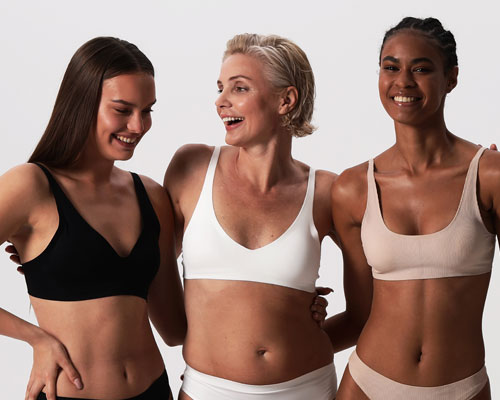
Gen Zers and millennials are most likely to fall into the ‘maximalist optimiser’ segment / photo: shutterstock/Jacob Lund
The global spa and wellness industry is being transformed by millennials and Gen Z. According to the Future of Wellness 2025 report, released by McKinsey in May, these younger generations see wellness not as an occasional luxury indulgence, but as a personalised daily priority.
Now in its fourth year, McKinsey’s research was based on more than 9,000 consumers across China, Germany, the UK and the US, covering six wellness dimensions – health, sleep, nutrition, fitness, appearance and mindfulness.
Soaring wellness spending It’s estimated that in the US, wellness represents more than US$500 billion (€438.1 billion, £369.1 billion) in annual spend, growing at 4-5 per cent each year, says Eric Falardeau, the head of the fitness and health group at McKinsey who contributed to the study.
Eighty-four per cent of American consumers rank wellness as a “top” or “important” priority – compared to 79 per cent in the UK and a huge 94 per cent in China.
Gen Z (born 1997-2012) now makes up 36 per cent of the US adult population, but drives more than 41 per cent of the country’s wellness spend. Meanwhile, older generations (aged 58-plus) account for 35 per cent of the population but only 28 per cent of spending.
Nearly 30 per cent of Gen Zers and millennials (born 1981-1996) say they’re prioritising wellness “a lot more” than a year ago, compared to 23 per cent of older consumers. Burnout, declining health and social media influence are the key drivers behind this spike in attention.
Gen Z prioritises sleep, health and appearance, while millennials lean towards health, sleep and mindfulness.
Despite the wellness sector’s booming growth in recent years, the research shows significant gaps remain. Consumers of all ages report unmet needs in areas such as mental health, cognitive function and longevity.
Falardeau unveiled the research in an online discussion hosted by World Wellness Weekend, a movement started by industry figure Jean-Guy de Gabriac. He says: “Consumers remain highly focused on their health and wellness, with 84 per cent [overall] ranking it as a top priority.
“That number is high compared with other discretionary categories, which is fuelling a lot of the tailwinds for this broadly-defined sector.
“This ranking has also been increasing over the last five years and that’s testament to this macro trend of consumers increasingly spending time and money on taking care of themselves and also due to the definition of this ‘taking care’ being broader and broader.”
Falardeau highlighted heart health as another major area of interest for consumers, stressing the need for products and services with proven efficacy and strong quality standards.
Fast-growing subcategories McKinsey identified six hot areas where wellness spending is set to grow.
1. Functional nutrition Demand is rising for food and drink that offers health benefits. About half of consumers – and two-thirds of Gen Z and millennials – in the US, UK and Germany are interested in this space. They’re looking for energy, gut health, immunity and muscle support. The most successful products will sit at the crossroads of supplements and snacks.
2. Beauty and wellness convergence The line between beauty and wellness is blurring. Consumers are embracing beauty products with active health ingredients and ingestible supplements like collagen gummies. Cosmetic procedure spending is up too – 46 per cent of US consumers (and 53 per cent of Gen Z) are spending more in 2024 than in 2023.
3. Longevity Healthy ageing is a priority for up to 60 per cent of consumers across markets. This includes interest in supplements that target cellular ageing, epigenetic age-testing kits and virtual physical therapy. Younger consumers are also focused on preventative approaches that deliver both short- and long-term benefits.
4. In-person wellness experiences Wellness retreats, boutique fitness and IV therapy are gaining popularity. More than half of US consumers are willing to travel 2 hours or more for these services and 60 per cent say they’ll do so again in 2025.
The report suggests successful programming will offer consumers ways to learn skills that they can use beyond their stay (meditation and nutrition plans) as well as ‘edutainment’ – retreats that teach something to participants about their health.
5. Weight management Traditional exercise remains dominant, but new solutions are emerging fast. Nutritionist-led plans, meal services and prescription weight-loss drugs are all gaining traction.
6. Mental health Young consumers report worse mental health than older ones but are more proactive about finding solutions. Forty-two per cent of Gen Z and millennials in the US are actively seeking mental health support and exploring unexpected avenues, such as buying skincare, socialising and focusing on sleep hygiene, compared to older generations who steer towards explicit treatments such as talk therapy. Competition in the subsector, however, is fierce, especially for app-based services with low entry barriers.
Wellness personas identified The report authors found that consumers fall into five different wellness segments:
1. Maximalist optimisers (25 per cent of consumers, 40 per cent of spend) Gen Zers and millennials are most likely to fall into this category of younger, tech-savvy consumers who experiment, research and rely on digital tools to optimise their wellness. They seek science-backed advice, are influenced by social media and are twice as likely to use natural and alternative products. For them, it’s quality over price.
2. Confident enthusiasts (11 per cent of consumers, 15 per cent of spend) Fitness-focused and loyal to what works for them. They’re less experimental but more self-assured.
3. Health traditionalists (20 per cent of consumers, 13 per cent of spend) Older and more pragmatic. They stick to simple routines such as healthy eating, vitamins and steady exercise. Less likely to try new tech or trends.
4. Health strugglers (24 per cent of consumers, 22 per cent of spend) Motivated but often overwhelmed. They care about wellness and spend more than health traditionalists, but struggle with follow-through, frequently experiencing stress about their health.
5. Wellness shirkers (20 per cent of consumers, 10 per cent of spend) Least engaged and highly price-sensitive. They buy the bare essentials and are not actively tracking or optimising their health.
Is wellness recession-proof? Falardeau and researchers at McKinsey also tested how resilient the spa and wellness industry would be in an economic downturn. The first things consumers say they’d cut? Subscription meal services (52 per cent), fertility and period-tracking apps (49 per cent) and spa/aesthetic treatments (48 per cent).
Categories with more staying power include menstrual care products (58 per cent), infant care items (45 per cent), corrective eyewear (45 per cent), contraception (30 per cent) and supplements (27 per cent). Brands should diversify into these essential segments to weather future recessions.
The overall message is that wellness isn’t just a trend – but it’s facing a generational shift. As Gen Z and millennials lead the charge, the industry must adapt fast, prioritising personalisation, digital innovation and proven efficacy to meet evolving expectations.
"Gen Z accounts for over 40 per cent of US wellness spending – and they’re just getting started" – Eric Falardeau
Read more from this issue of Spa Business magazine
View contents of Spa Business 2025 issue 2
Editor’s letter: The Gen Z effect
With young adults reshaping our industry, affordable, community-based models are thriving, while traditional spas risk being left behind
Spa people: Novak Djokovic
Game, set, spa. The tennis star is poised to launch a biohacking pod while also entering a multi-year ambassador partnership with Aman
Spa people: Peter Attia
One of the most respected names in longevity medicine has co-founded preventative health clinic, Biograph
Spa people: Alexis Dean
The founder of Soak is on a mission to deliver social wellness without the hefty price tag across Australia
News report: Young influencers
Millennials and Gen Zers are redefining the wellness landscape according to new research by McKinsey
News report: Double vision
Fresh data from RLA Global reveals that hotels delivering wellness earn twice as much as those that don’t
Project preview: Laugarás Lagoon
Contrast bathing and fine dining are two USPs of a new geothermal destination in Iceland’s Golden Circle
Interview: Suzanne Holbrook
Marriott’s new global leader of spa, fitness and wellness talks candidly to Katie Barnes about her plans for the world’s largest hotel spa portfolio
Ask an expert: Vagus nerve
Insider insights into why this critical nerve is a key to wellbeing and how supportive treatments are set to shake up spa menus. Kath Hudson reports
Research: Marginally speaking
CBRE’s latest numbers show that spa revenues in US hotels have edged upward, profits have slipped slightly and costs are down
Investigation: Dealing with death
With a new openness emerging around the subject of end-of-life care, Julie Cramer investigates whether spas could offer death doula services
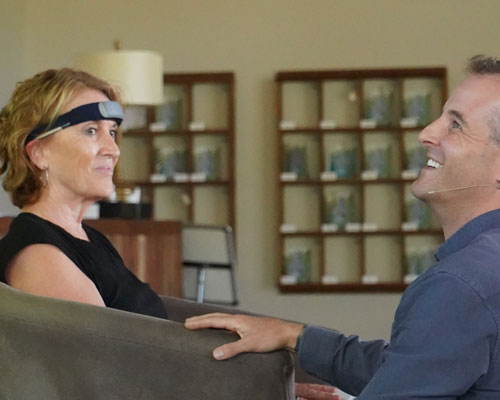
Trend: Head first
Judy Chapman tries out brain mapping at Gwinganna to see why it’s become so popular
First person: Relaxation rebooted
Does AI massage have a place in luxury spas? Cassandra Cavanah heads to The Ritz-Carlton Bacara, Santa Barbara to find out
In the fast-paced world of fitness and wellness, where high-intensity workouts push us to
our limits and the sweat pours, the importance of efficient recovery cannot be overstated. [more...]
Gen Zers and millennials are most likely to fall into the ‘maximalist optimiser’ segment / photo: shutterstock/Jacob Lund
The global spa and wellness industry is being transformed by millennials and Gen Z. According to the Future of Wellness 2025 report, released by McKinsey in May, these younger generations see wellness not as an occasional luxury indulgence, but as a personalised daily priority.
Now in its fourth year, McKinsey’s research was based on more than 9,000 consumers across China, Germany, the UK and the US, covering six wellness dimensions – health, sleep, nutrition, fitness, appearance and mindfulness.
Soaring wellness spending It’s estimated that in the US, wellness represents more than US$500 billion (€438.1 billion, £369.1 billion) in annual spend, growing at 4-5 per cent each year, says Eric Falardeau, the head of the fitness and health group at McKinsey who contributed to the study.
Eighty-four per cent of American consumers rank wellness as a “top” or “important” priority – compared to 79 per cent in the UK and a huge 94 per cent in China.
Gen Z (born 1997-2012) now makes up 36 per cent of the US adult population, but drives more than 41 per cent of the country’s wellness spend. Meanwhile, older generations (aged 58-plus) account for 35 per cent of the population but only 28 per cent of spending.
Nearly 30 per cent of Gen Zers and millennials (born 1981-1996) say they’re prioritising wellness “a lot more” than a year ago, compared to 23 per cent of older consumers. Burnout, declining health and social media influence are the key drivers behind this spike in attention.
Gen Z prioritises sleep, health and appearance, while millennials lean towards health, sleep and mindfulness.
Despite the wellness sector’s booming growth in recent years, the research shows significant gaps remain. Consumers of all ages report unmet needs in areas such as mental health, cognitive function and longevity.
Falardeau unveiled the research in an online discussion hosted by World Wellness Weekend, a movement started by industry figure Jean-Guy de Gabriac. He says: “Consumers remain highly focused on their health and wellness, with 84 per cent [overall] ranking it as a top priority.
“That number is high compared with other discretionary categories, which is fuelling a lot of the tailwinds for this broadly-defined sector.
“This ranking has also been increasing over the last five years and that’s testament to this macro trend of consumers increasingly spending time and money on taking care of themselves and also due to the definition of this ‘taking care’ being broader and broader.”
Falardeau highlighted heart health as another major area of interest for consumers, stressing the need for products and services with proven efficacy and strong quality standards.
Fast-growing subcategories McKinsey identified six hot areas where wellness spending is set to grow.
1. Functional nutrition Demand is rising for food and drink that offers health benefits. About half of consumers – and two-thirds of Gen Z and millennials – in the US, UK and Germany are interested in this space. They’re looking for energy, gut health, immunity and muscle support. The most successful products will sit at the crossroads of supplements and snacks.
2. Beauty and wellness convergence The line between beauty and wellness is blurring. Consumers are embracing beauty products with active health ingredients and ingestible supplements like collagen gummies. Cosmetic procedure spending is up too – 46 per cent of US consumers (and 53 per cent of Gen Z) are spending more in 2024 than in 2023.
3. Longevity Healthy ageing is a priority for up to 60 per cent of consumers across markets. This includes interest in supplements that target cellular ageing, epigenetic age-testing kits and virtual physical therapy. Younger consumers are also focused on preventative approaches that deliver both short- and long-term benefits.
4. In-person wellness experiences Wellness retreats, boutique fitness and IV therapy are gaining popularity. More than half of US consumers are willing to travel 2 hours or more for these services and 60 per cent say they’ll do so again in 2025.
The report suggests successful programming will offer consumers ways to learn skills that they can use beyond their stay (meditation and nutrition plans) as well as ‘edutainment’ – retreats that teach something to participants about their health.
5. Weight management Traditional exercise remains dominant, but new solutions are emerging fast. Nutritionist-led plans, meal services and prescription weight-loss drugs are all gaining traction.
6. Mental health Young consumers report worse mental health than older ones but are more proactive about finding solutions. Forty-two per cent of Gen Z and millennials in the US are actively seeking mental health support and exploring unexpected avenues, such as buying skincare, socialising and focusing on sleep hygiene, compared to older generations who steer towards explicit treatments such as talk therapy. Competition in the subsector, however, is fierce, especially for app-based services with low entry barriers.
Wellness personas identified The report authors found that consumers fall into five different wellness segments:
1. Maximalist optimisers (25 per cent of consumers, 40 per cent of spend) Gen Zers and millennials are most likely to fall into this category of younger, tech-savvy consumers who experiment, research and rely on digital tools to optimise their wellness. They seek science-backed advice, are influenced by social media and are twice as likely to use natural and alternative products. For them, it’s quality over price.
2. Confident enthusiasts (11 per cent of consumers, 15 per cent of spend) Fitness-focused and loyal to what works for them. They’re less experimental but more self-assured.
3. Health traditionalists (20 per cent of consumers, 13 per cent of spend) Older and more pragmatic. They stick to simple routines such as healthy eating, vitamins and steady exercise. Less likely to try new tech or trends.
4. Health strugglers (24 per cent of consumers, 22 per cent of spend) Motivated but often overwhelmed. They care about wellness and spend more than health traditionalists, but struggle with follow-through, frequently experiencing stress about their health.
5. Wellness shirkers (20 per cent of consumers, 10 per cent of spend) Least engaged and highly price-sensitive. They buy the bare essentials and are not actively tracking or optimising their health.
Is wellness recession-proof? Falardeau and researchers at McKinsey also tested how resilient the spa and wellness industry would be in an economic downturn. The first things consumers say they’d cut? Subscription meal services (52 per cent), fertility and period-tracking apps (49 per cent) and spa/aesthetic treatments (48 per cent).
Categories with more staying power include menstrual care products (58 per cent), infant care items (45 per cent), corrective eyewear (45 per cent), contraception (30 per cent) and supplements (27 per cent). Brands should diversify into these essential segments to weather future recessions.
The overall message is that wellness isn’t just a trend – but it’s facing a generational shift. As Gen Z and millennials lead the charge, the industry must adapt fast, prioritising personalisation, digital innovation and proven efficacy to meet evolving expectations.
"Gen Z accounts for over 40 per cent of US wellness spending – and they’re just getting started" – Eric Falardeau
Read more from this issue of Spa Business magazine
View contents of Spa Business 2025 issue 2
Editor’s letter: The Gen Z effect
With young adults reshaping our industry, affordable, community-based models are thriving, while traditional spas risk being left behind
Spa people: Novak Djokovic
Game, set, spa. The tennis star is poised to launch a biohacking pod while also entering a multi-year ambassador partnership with Aman
Spa people: Peter Attia
One of the most respected names in longevity medicine has co-founded preventative health clinic, Biograph
Spa people: Alexis Dean
The founder of Soak is on a mission to deliver social wellness without the hefty price tag across Australia
News report: Young influencers
Millennials and Gen Zers are redefining the wellness landscape according to new research by McKinsey
News report: Double vision
Fresh data from RLA Global reveals that hotels delivering wellness earn twice as much as those that don’t
Project preview: Laugarás Lagoon
Contrast bathing and fine dining are two USPs of a new geothermal destination in Iceland’s Golden Circle
Interview: Suzanne Holbrook
Marriott’s new global leader of spa, fitness and wellness talks candidly to Katie Barnes about her plans for the world’s largest hotel spa portfolio
Ask an expert: Vagus nerve
Insider insights into why this critical nerve is a key to wellbeing and how supportive treatments are set to shake up spa menus. Kath Hudson reports
Research: Marginally speaking
CBRE’s latest numbers show that spa revenues in US hotels have edged upward, profits have slipped slightly and costs are down
Investigation: Dealing with death
With a new openness emerging around the subject of end-of-life care, Julie Cramer investigates whether spas could offer death doula services
Trend: Head first
Judy Chapman tries out brain mapping at Gwinganna to see why it’s become so popular
First person: Relaxation rebooted
Does AI massage have a place in luxury spas? Cassandra Cavanah heads to The Ritz-Carlton Bacara, Santa Barbara to find out
The UK's four Chief Medical Officers have published a refreshed edition of Physical activity
guidelines: UK Chief Medical Officers' report, updating the evidence that underpins the nation's
physical activity recommendations and placing greater emphasis on strength, balance, reducing
sedentary behaviour and, for the first time, supporting people taking weight loss medications.
Anna Bjurstam has left her role as Wellness Pioneer at Six Senses Hotels and Resorts and
launched a new wellness, longevity and “consciousness consultancy” called Wahayla.
Fairmont Cheshire, The Mere, has opened today (10 July) in the Northwest of England with a
1,715sq m Fairmont Spa that has been designed using a ‘Wellness without Walls’ concept.
Wellness hotels generating less than US$1 million (€932,700, £785,200) – or 10 per cent of
total revenue from wellness and leisure – recorded the strongest RevPAR and TRevPAR growth
in 2025 across categories when compared with 2024, according to the latest Wellness Real
Estate Report by RLA Global, produced in partnership with P and L benchmarking firm HotStats.
Lefay Resorts, the portfolio of two luxury wellness properties in Italy, has added emotional
dance classes and group cold plunge sessions in response to market demand for social
connection.
Aditya Saluja, an industry leader in luxury wellness hospitality, has been
appointed as
commercial director of spa and wellness for the spa management division of
Minor Hotels,
MSpa International.
Preidlhof Luxury DolceVita Resort, a destination resort and spa in Naturno, South Tyrol in Italy,
will reveal a new spa in February 2027, which has been designed by wellness expert and
consultant Patrizia Bortolin.
In the fast-paced world of fitness and wellness, where high-intensity workouts push us to
our limits and the sweat pours, the importance of efficient recovery cannot be overstated. [more...]