Yes! Send me the FREE digital editions of Spa Business and Spa Business insider magazines and the FREE weekly Spa Business and Spa Business insider ezines and breaking news alerts!
Hotels homing in on wellness earn twice as much as non-wellness peers, reshaping hospitality investment strategies, according to new data from RLA Global
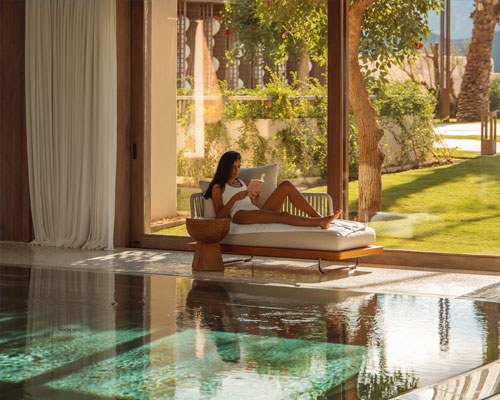
There’s a pivot towards experience-led luxury over traditional opulence / photo: Hilton Hotels & Resorts
Hotels with significant wellness components reported more than double the total revenue per available room (TRevPAR) of properties with no wellness income in 2024. That’s according to the new Wellness Real Estate Report by consultancy Resources for Leisure Assets (RLA) Global, developed in partnership with performance benchmarking specialist HotStats.
The report shows that major wellness properties – those generating over US$1 million (€932,700, £785,200) or 10 per cent of total revenue from wellness and leisure – outpaced both minor wellness sites and non-wellness hotels across KPIs.
Wellness premium Average TRevPAR at major wellness properties was 56 per cent higher than at minor wellness hotels and exceeded non-wellness hotels by a substantial 108 per cent.
Meanwhile, minor wellness hotels – those generating less than US$1 million (€932,700, £785,200) or 10 per cent of total revenue from wellness and leisure – led the way in year-on-year growth rates in RevPAR and TRevPAR. That’s particularly true in the luxury and upper upscale segments and for minor wellness hotels in Africa and the Middle East, which report double-digit gains, driven by a strong rebound in demand and leaner operating models.
Major difference While minor wellness sites posted the strongest percentage growth, the most dramatic uplift in absolute revenue was seen in major wellness hotels – particularly in the upscale segment. These properties achieved revenue KPI gains of up to 160 per cent.
“Major wellness hotels came roaring back in 2024,” says Roger Allen, group CEO of RLA Global, “displaying a standout top-line performance in TRevPAR and RevPAR and impressive year-on-year growth rates in the upscale category.
“The all-important bottom line performance showed major wellness outperforming minor wellness in gross operating profit per available room (GOPPAR) in absolute terms in 2024, but minor wellness had higher year-on-year GOPPAR growth compared to 2023.”
Rachael Rothman, head of hotels research and data analytics at CBRE, says: “Major wellness assets in the upscale segment are now outperforming even luxury properties in total revenue per room – a clear sign that traditional assumptions about service levels and positioning are being challenged. This shift could have significant implications for how capital is allocated and how future developments are designed.”
Occupancy and spend Occupancy trends remained relatively stable, sitting between 63-66 per cent, across all hotel types in 2024. Major and minor wellness sites posted slight increases, while non-wellness hotels saw a marginal decline. But ancillary revenue – a key component of TRevPAR – dipped slightly versus 2023, representing 56 per cent of TRevPAR at major wellness and 38 per cent at minor wellness properties.
Major wellness hotels led in leisure profitability, with a profit conversion rate of 49 per cent. Payroll represents a significant 35 per cent of their leisure income, but departmental expenses were at 16 per cent, suggesting efficient operational spending.
Food and beverage (F&B) revenue per occupied room grew by just 1 per cent across the board – and only at major wellness sites – underscoring that room and leisure departments are driving the lion’s share of revenue.
Looking ahead Despite strong top-line figures, researchers noted that monetisation opportunities in wellness remain under-leveraged.
The report also identified several emerging trends shaping development in 2025. A heightened demand for core health – lower stress levels and mental clarity – for example, is driving wellness design. There’s a pivot toward experience-led luxury over traditional opulence and a rising emphasis on sleep optimisation as a tool to increase repeat business.
For investors and operators, the message is clear: wellness is no longer a niche amenity but a key revenue and profit driver – and it’s redefining hospitality asset performance in both established and emerging markets.
"Major wellness hotels came roaring back, displaying standout top-line TRevPAR and RevPAR" - Roger Allen
Read more from this issue of Spa Business magazine
View contents of Spa Business 2025 issue 2
Editor’s letter: The Gen Z effect
With young adults reshaping our industry, affordable, community-based models are thriving, while traditional spas risk being left behind
Spa people: Novak Djokovic
Game, set, spa. The tennis star is poised to launch a biohacking pod while also entering a multi-year ambassador partnership with Aman
Spa people: Peter Attia
One of the most respected names in longevity medicine has co-founded preventative health clinic, Biograph
Spa people: Alexis Dean
The founder of Soak is on a mission to deliver social wellness without the hefty price tag across Australia
News report: Young influencers
Millennials and Gen Zers are redefining the wellness landscape according to new research by McKinsey
News report: Double vision
Fresh data from RLA Global reveals that hotels delivering wellness earn twice as much as those that don’t
Project preview: Laugarás Lagoon
Contrast bathing and fine dining are two USPs of a new geothermal destination in Iceland’s Golden Circle
Interview: Suzanne Holbrook
Marriott’s new global leader of spa, fitness and wellness talks candidly to Katie Barnes about her plans for the world’s largest hotel spa portfolio
Ask an expert: Vagus nerve
Insider insights into why this critical nerve is a key to wellbeing and how supportive treatments are set to shake up spa menus. Kath Hudson reports
Research: Marginally speaking
CBRE’s latest numbers show that spa revenues in US hotels have edged upward, profits have slipped slightly and costs are down
Investigation: Dealing with death
With a new openness emerging around the subject of end-of-life care, Julie Cramer investigates whether spas could offer death doula services
Trend: Head first
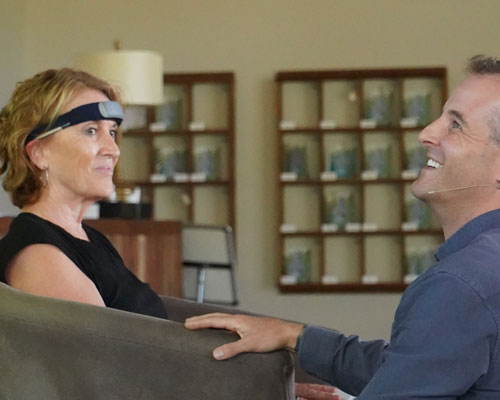
Judy Chapman tries out brain mapping at Gwinganna to see why it’s become so popular
First person: Relaxation rebooted
Does AI massage have a place in luxury spas? Cassandra Cavanah heads to The Ritz-Carlton Bacara, Santa Barbara to find out
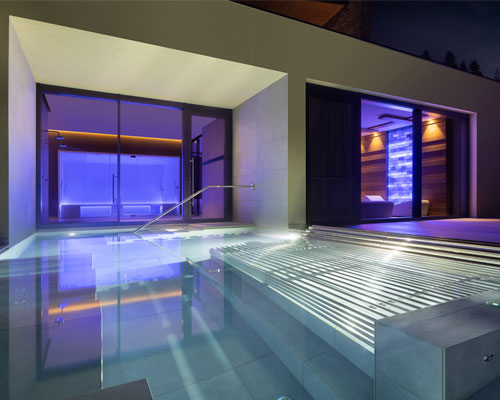
Contrast therapy, based on the alternation of hot and cold rituals, has become one of the
most valued practices in the fields of wellness and recovery. [more...]
+ More featured suppliers
COMPANY PROFILES
Fenix Group srl
Founded in Italy by Gianluca Cavalletti, Fenix Group introduced Endospheres with the aim of redefini [more...]
Nilo Spa Design
Nilo SPA Design, part of the Maletti group, has led the Beauty & Wellness sector for over 35 years p [more...]
Hotels homing in on wellness earn twice as much as non-wellness peers, reshaping hospitality investment strategies, according to new data from RLA Global
There’s a pivot towards experience-led luxury over traditional opulence / photo: Hilton Hotels & Resorts
Hotels with significant wellness components reported more than double the total revenue per available room (TRevPAR) of properties with no wellness income in 2024. That’s according to the new Wellness Real Estate Report by consultancy Resources for Leisure Assets (RLA) Global, developed in partnership with performance benchmarking specialist HotStats.
The report shows that major wellness properties – those generating over US$1 million (€932,700, £785,200) or 10 per cent of total revenue from wellness and leisure – outpaced both minor wellness sites and non-wellness hotels across KPIs.
Wellness premium Average TRevPAR at major wellness properties was 56 per cent higher than at minor wellness hotels and exceeded non-wellness hotels by a substantial 108 per cent.
Meanwhile, minor wellness hotels – those generating less than US$1 million (€932,700, £785,200) or 10 per cent of total revenue from wellness and leisure – led the way in year-on-year growth rates in RevPAR and TRevPAR. That’s particularly true in the luxury and upper upscale segments and for minor wellness hotels in Africa and the Middle East, which report double-digit gains, driven by a strong rebound in demand and leaner operating models.
Major difference While minor wellness sites posted the strongest percentage growth, the most dramatic uplift in absolute revenue was seen in major wellness hotels – particularly in the upscale segment. These properties achieved revenue KPI gains of up to 160 per cent.
“Major wellness hotels came roaring back in 2024,” says Roger Allen, group CEO of RLA Global, “displaying a standout top-line performance in TRevPAR and RevPAR and impressive year-on-year growth rates in the upscale category.
“The all-important bottom line performance showed major wellness outperforming minor wellness in gross operating profit per available room (GOPPAR) in absolute terms in 2024, but minor wellness had higher year-on-year GOPPAR growth compared to 2023.”
Rachael Rothman, head of hotels research and data analytics at CBRE, says: “Major wellness assets in the upscale segment are now outperforming even luxury properties in total revenue per room – a clear sign that traditional assumptions about service levels and positioning are being challenged. This shift could have significant implications for how capital is allocated and how future developments are designed.”
Occupancy and spend Occupancy trends remained relatively stable, sitting between 63-66 per cent, across all hotel types in 2024. Major and minor wellness sites posted slight increases, while non-wellness hotels saw a marginal decline. But ancillary revenue – a key component of TRevPAR – dipped slightly versus 2023, representing 56 per cent of TRevPAR at major wellness and 38 per cent at minor wellness properties.
Major wellness hotels led in leisure profitability, with a profit conversion rate of 49 per cent. Payroll represents a significant 35 per cent of their leisure income, but departmental expenses were at 16 per cent, suggesting efficient operational spending.
Food and beverage (F&B) revenue per occupied room grew by just 1 per cent across the board – and only at major wellness sites – underscoring that room and leisure departments are driving the lion’s share of revenue.
Looking ahead Despite strong top-line figures, researchers noted that monetisation opportunities in wellness remain under-leveraged.
The report also identified several emerging trends shaping development in 2025. A heightened demand for core health – lower stress levels and mental clarity – for example, is driving wellness design. There’s a pivot toward experience-led luxury over traditional opulence and a rising emphasis on sleep optimisation as a tool to increase repeat business.
For investors and operators, the message is clear: wellness is no longer a niche amenity but a key revenue and profit driver – and it’s redefining hospitality asset performance in both established and emerging markets.
"Major wellness hotels came roaring back, displaying standout top-line TRevPAR and RevPAR" - Roger Allen
Read more from this issue of Spa Business magazine
View contents of Spa Business 2025 issue 2
Editor’s letter: The Gen Z effect
With young adults reshaping our industry, affordable, community-based models are thriving, while traditional spas risk being left behind
Spa people: Novak Djokovic
Game, set, spa. The tennis star is poised to launch a biohacking pod while also entering a multi-year ambassador partnership with Aman
Spa people: Peter Attia
One of the most respected names in longevity medicine has co-founded preventative health clinic, Biograph
Spa people: Alexis Dean
The founder of Soak is on a mission to deliver social wellness without the hefty price tag across Australia
News report: Young influencers
Millennials and Gen Zers are redefining the wellness landscape according to new research by McKinsey
News report: Double vision
Fresh data from RLA Global reveals that hotels delivering wellness earn twice as much as those that don’t
Project preview: Laugarás Lagoon
Contrast bathing and fine dining are two USPs of a new geothermal destination in Iceland’s Golden Circle
Interview: Suzanne Holbrook
Marriott’s new global leader of spa, fitness and wellness talks candidly to Katie Barnes about her plans for the world’s largest hotel spa portfolio
Ask an expert: Vagus nerve
Insider insights into why this critical nerve is a key to wellbeing and how supportive treatments are set to shake up spa menus. Kath Hudson reports
Research: Marginally speaking
CBRE’s latest numbers show that spa revenues in US hotels have edged upward, profits have slipped slightly and costs are down
Investigation: Dealing with death
With a new openness emerging around the subject of end-of-life care, Julie Cramer investigates whether spas could offer death doula services
Trend: Head first
Judy Chapman tries out brain mapping at Gwinganna to see why it’s become so popular
First person: Relaxation rebooted
Does AI massage have a place in luxury spas? Cassandra Cavanah heads to The Ritz-Carlton Bacara, Santa Barbara to find out
Preidlhof Luxury DolceVita Resort, a destination resort and spa in Naturno, South Tyrol in Italy,
will reveal a new spa in February 2027, which has been designed by wellness expert and
consultant Patrizia Bortolin.
Private hotel owner and developer HVL Hotels will open a new luxury resort and tourism
destination called Laval Hunter Valley in the second half of 2027 in Pokolbin, Australia.
The annual wellness festival dedicated to wellbeing, culture, longevity and human connection,
called Alma, will be hosted by Rocco Forte hotel, Verdura Resort in Sicily, Italy.
Capella Hotel Group has appointed Feisal Jaffer as chief development officer as the company
ramps up its global expansion of both its Capella and Patina brands.
People taking GLP-1 weight loss medications such as Ozempic, Wegovy, Mounjaro and Zepbound
may be losing weight, but they’re also becoming less physically active, according to new
research presented at the ENDO 2026 annual meeting of the Endocrine Society
Abu Dhabi-based investment firm Mubadala Capital has made a binding, fully financed
€1 billion
offer to acquire Pierre and Vacances SA, the European holiday resort operator behind the
continental European Center Parcs business.
Global retreat trade show, Synergy The Retreat Show, has launched a resource called The
Source, which hosts an open-access online Transformation Series programme.
Contrast therapy, based on the alternation of hot and cold rituals, has become one of the
most valued practices in the fields of wellness and recovery. [more...]
+ More featured suppliers
COMPANY PROFILES
Fenix Group srl Founded in Italy by Gianluca Cavalletti, Fenix Group introduced Endospheres with the aim of redefini [more...]