Yes! Send me the FREE digital editions of Spa Business and Spa Business insider magazines and the FREE weekly Spa Business and Spa Business insider ezines and breaking news alerts!
Poor pay is leading to staff shortages across the spa industry as we exploit our caring, largely female workforce. The spa industry can take a lead in fighting this insidious gender pay gap
By Liz Terry | Published in Spa Business 2018 issue 2
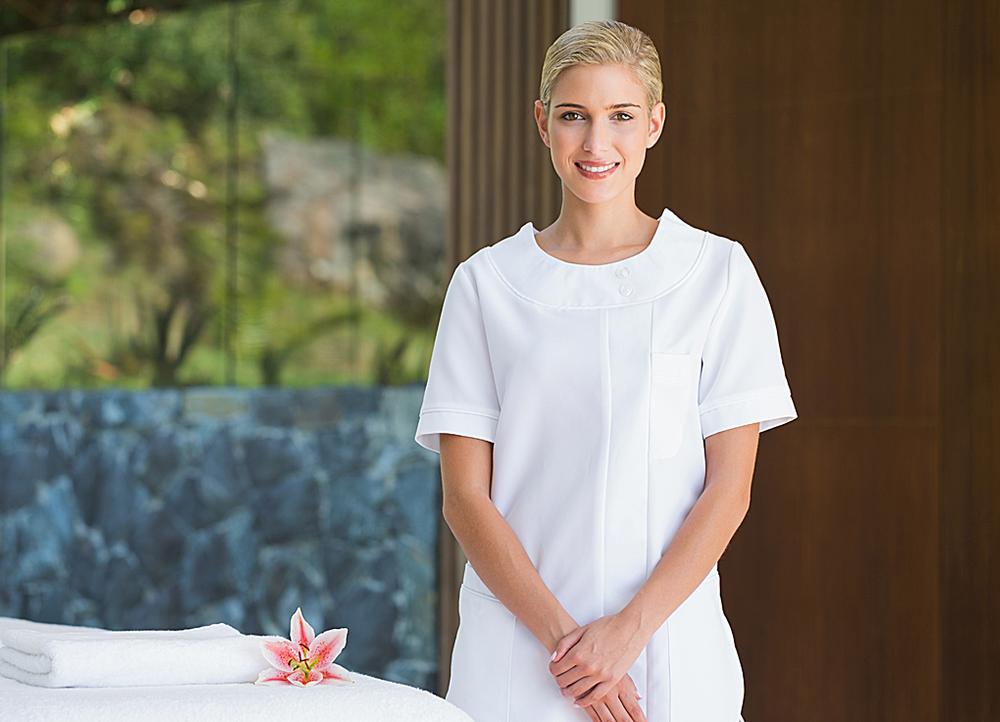
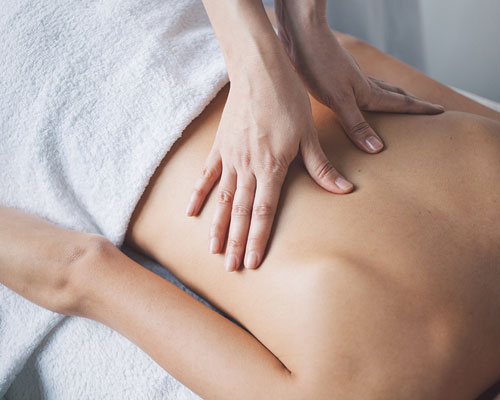
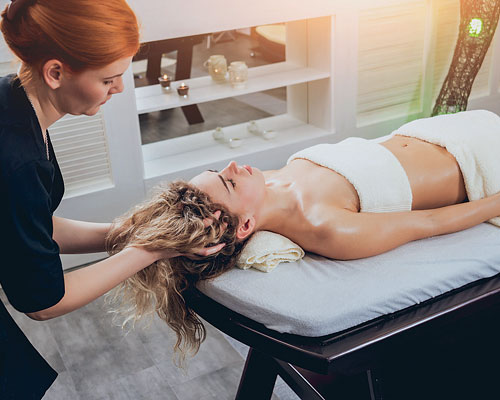
Caring women are the most ‘exploitable’ workers / Wavebreakmedia /shutterstock
Congratulations to ISPA on the publication of its first piece of research into careers and employment in the spa market. The recently published ISPA Spa Workforce report was carried out by Colin McIlheney of PricewaterhouseCoopers and is covered in our feature on page 44.
First the good news and as if we didn’t know already, the report confirms the industry attracts committed, caring people.
McIlheney says “The overwhelming majority of [therapists] are passionate about providing exceptional client service and would like to have a long-term career in the industry”.
The study also found they stick to the same employer far more than expected, saying: “Almost 80 per cent expect to be working in their current organisation 12 months from now. This challenges another traditional belief that many spa professionals are actively seeking a new job.”
Set against this, however, researchers found long hours, poor pay, less than great management, lack of training and pressure to be responsible for retail upselling are seen as issues.
Importantly, more than 50 per cent of therapists surveyed said their pay does not fairly reflect their contribution and this goes to the heart of why – as McIlheney notes – there are more than 32,000 vacancies for spa therapists in the US alone.
Fundamentally, this is discrimination against women. Research shows that when women take up an occupation, pay levels fall and when men enter a profession, they increase.
Prof Paula England, co-author of Occupational Feminization and Pay says once women start doing a job, “It just doesn’t look like it’s as important to the bottom line or requires as much skill and gender bias sneaks into [pay] decisions”. She also found jobs involving caregiving pay less, even after controlling for the disproportionate share of female workers.
So we’re sitting on the cusp of these two forces – we employ caring women and it’s clear we’re exploiting them.
We’re not the only industry to face this challenge, but we are one of the only ones which profess to want to make the world a better place and to create happiness and wellbeing for all, so let’s start in our own back yard with fair pay for our workers.
Wouldn’t it be great if sometime soon academics were writing research papers showing how the spa industry became the first sector to reverse this insidious gender pay gap?
It would have the added benefit of attracting more people and imagine how profitable we’d be if we filled all those vacancies?
Read more from this issue of Spa Business magazine
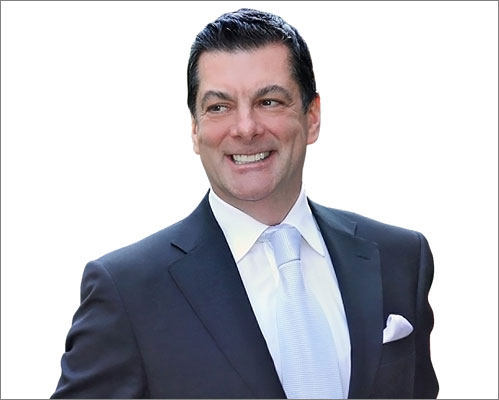
People profile: Garrett Mersberger
Garrett Mersberger on the overhaul of Kohler Waters’ flagship spa in Europe, plus his vision for ISPA following his appointment as chair of the association
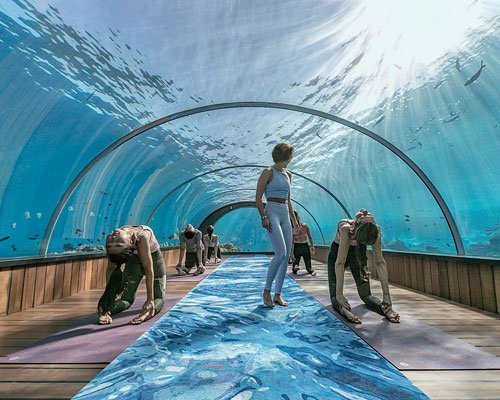
Spa programmes: On the menu
Underwater yoga, healing breathwork and genetics all feature in Spa Business’ brand new series revealing the latest treatments, programmes and retreats in spas
Promotional feature: Zimmer MedizinSysteme
Cold therapy is suddenly all the rage, but Zimmer MedizinSysteme’s icelab takes it a step further, creating a cold sauna for the whole body. Rainer Bolsinger explains more about this cutting-edge therapy
Promotional feature: The Tides: pure Dutch nature inside
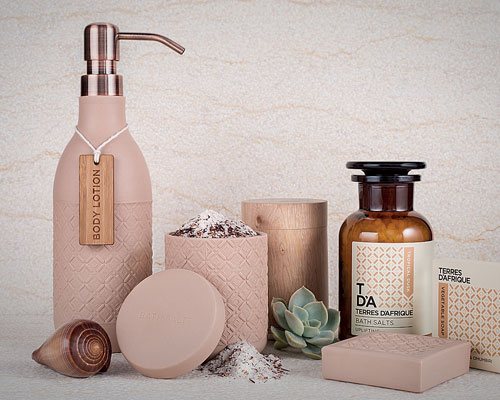
Modern living might be tough on our minds and bodies, but newly-launched Dutch wellness and self-care brand The Tides offers just the antidote with a new class of pure, raw products and treatments
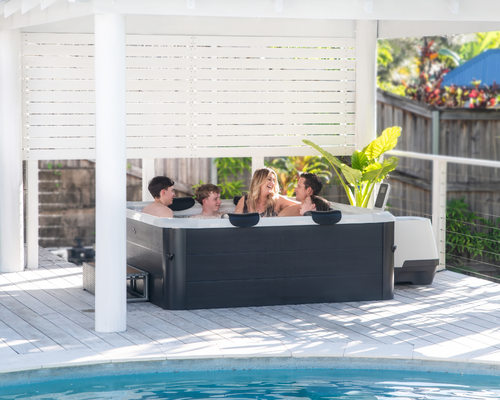
The MSpa Oslo series is a perennial bestseller in global markets. With innovative
engineering and premium performance, this completely portable spa line-up is expertly
designed to meet the needs of customers worldwide. [more...]
Poor pay is leading to staff shortages across the spa industry as we exploit our caring, largely female workforce. The spa industry can take a lead in fighting this insidious gender pay gap
By Liz Terry | Published in Spa Business 2018 issue 2
Caring women are the most ‘exploitable’ workers / Wavebreakmedia /shutterstock
Congratulations to ISPA on the publication of its first piece of research into careers and employment in the spa market. The recently published ISPA Spa Workforce report was carried out by Colin McIlheney of PricewaterhouseCoopers and is covered in our feature on page 44.
First the good news and as if we didn’t know already, the report confirms the industry attracts committed, caring people.
McIlheney says “The overwhelming majority of [therapists] are passionate about providing exceptional client service and would like to have a long-term career in the industry”.
The study also found they stick to the same employer far more than expected, saying: “Almost 80 per cent expect to be working in their current organisation 12 months from now. This challenges another traditional belief that many spa professionals are actively seeking a new job.”
Set against this, however, researchers found long hours, poor pay, less than great management, lack of training and pressure to be responsible for retail upselling are seen as issues.
Importantly, more than 50 per cent of therapists surveyed said their pay does not fairly reflect their contribution and this goes to the heart of why – as McIlheney notes – there are more than 32,000 vacancies for spa therapists in the US alone.
Fundamentally, this is discrimination against women. Research shows that when women take up an occupation, pay levels fall and when men enter a profession, they increase.
Prof Paula England, co-author of Occupational Feminization and Pay says once women start doing a job, “It just doesn’t look like it’s as important to the bottom line or requires as much skill and gender bias sneaks into [pay] decisions”. She also found jobs involving caregiving pay less, even after controlling for the disproportionate share of female workers.
So we’re sitting on the cusp of these two forces – we employ caring women and it’s clear we’re exploiting them.
We’re not the only industry to face this challenge, but we are one of the only ones which profess to want to make the world a better place and to create happiness and wellbeing for all, so let’s start in our own back yard with fair pay for our workers.
Wouldn’t it be great if sometime soon academics were writing research papers showing how the spa industry became the first sector to reverse this insidious gender pay gap?
It would have the added benefit of attracting more people and imagine how profitable we’d be if we filled all those vacancies?
Read more from this issue of Spa Business magazine
People profile: Garrett Mersberger
Garrett Mersberger on the overhaul of Kohler Waters’ flagship spa in Europe, plus his vision for ISPA following his appointment as chair of the association
Spa programmes: On the menu
Underwater yoga, healing breathwork and genetics all feature in Spa Business’ brand new series revealing the latest treatments, programmes and retreats in spas
Promotional feature: Zimmer MedizinSysteme
Cold therapy is suddenly all the rage, but Zimmer MedizinSysteme’s icelab takes it a step further, creating a cold sauna for the whole body. Rainer Bolsinger explains more about this cutting-edge therapy
Promotional feature: The Tides: pure Dutch nature inside
Modern living might be tough on our minds and bodies, but newly-launched Dutch wellness and self-care brand The Tides offers just the antidote with a new class of pure, raw products and treatments
Gran Hotel Taoro in northern Tenerife, Spain, has completed the final phase of its three-year
renovation with the debut of its Sandára Wellness Centre.
Hand and Stone Massage and Facial Spa, the spa business with more than 650 locations across
the US and Canada, has appointed franchise expert Carrie Walsh as CEO as the company plans
to expand.
Synergy – The Retreat Show, the global trade show for retreats, has launched a global research
initiative that will provide insights into the retreat sector from both consumer and industry
perspectives.
The Wellness Tourism Association (WTA) has published a non-regulatory global industry
framework designed to ensure the retreat market offers responsible experiences.
A new survey of UK and international spa practitioners shows that stress, burnout and
wellbeing concerns have caused one in three respondents to consider leaving the industry.
The UK's four Chief Medical Officers have published a refreshed edition of Physical activity
guidelines: UK Chief Medical Officers' report, updating the evidence that underpins the nation's
physical activity recommendations and placing greater emphasis on strength, balance, reducing
sedentary behaviour and, for the first time, supporting people taking weight loss medications.
Anna Bjurstam has left her role as Wellness Pioneer at Six Senses Hotels and Resorts and
launched a new wellness, longevity and “consciousness consultancy” called Wahayla.
Fairmont Cheshire, The Mere, has opened today (10 July) in the Northwest of England
with a
1,715sq m Fairmont Spa that has been designed using a ‘Wellness without Walls’
concept.
The MSpa Oslo series is a perennial bestseller in global markets. With innovative
engineering and premium performance, this completely portable spa line-up is expertly
designed to meet the needs of customers worldwide. [more...]