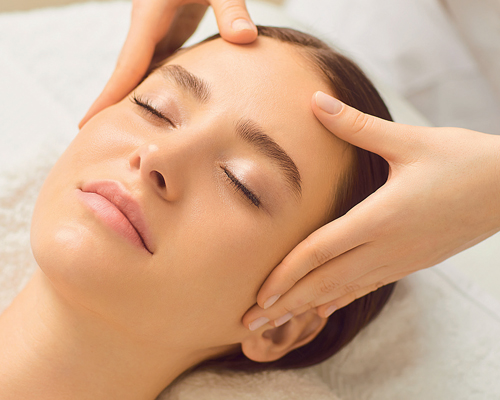
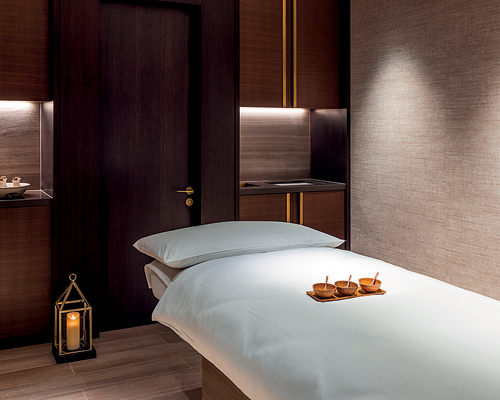
Spas could use the findings to help guests cope with their emotions / Africa Studio/shutterstock
Spa operators could help guests reduce feelings of sadness, successfully make healthy eating choices and improve self-control and discipline, using learnings from new research published in the Journal of Consumer Psychology.
Called When Sadness Comes Alive, Will it be Less Painful? The Effects of Anthropomorphic Thinking on Sadness Regulation and Consumption, the research found that thinking of sadness as a ‘person’ – what psychologists call anthropomorphising – can reduce its effects, according to teams at the University of Austin, Texas, Hong Kong Polytechnic University and Hong Kong Baptist University.
With mental wellness interventions and programmes becoming increasingly popular in the spa and wellness industry, this research and its approach could inform future treatments and help equip guests to take control of their emotions.
Previous studies have shown that someone feeling sad exhibits a desire for urgent reward and little willpower, such as succumbing to hedonic temptations or engaging in impulsive purchases. The new research explores how anthropomorphic thinking influences people’s feelings and subsequent behaviour.
The research included six test studies involving 1,059 participants, 56 per cent of whom were female and 44 per cent were male. Each test involved subjects rating their level of sadness following prompts designed to induce sadness, such as writing about a sad event which had happened to them. Participants were then asked to imagine sadness as a person and describe their characteristics and concluded by rating their levels of sadness again. All six studies demonstrated that anthropomorphising sadness reduces its severity and changes behaviour.
Lead author Li Yang explains: “We found that anthropomorphic thinking enables individuals to view sadness as an independent human being that is separate from them and consequently creates a feeling of detachment.
“As a result, an individual who anthropomorphises sadness will feel less sad and will also tend to display better self-control in subsequent decisions about consumption.”
In one study participants anthropomorphised their sadness and chose either a healthy food option (salad) or an unhealthy one (cheesecake). Evidence highlighted that those who humanised sadness were less likely to indulge in the unhealthy choice because as their sadness reduced so did their self-indulgent behaviour.
Read more from this issue of Spa Business magazine
View contents of Spa Business 2020 issue 1
Editor's letter: Time to shine
As spas reach peak revenues, now’s the time for our industry to act as a catalyst in working out how we measure the impact of an experience and the ‘return on wellness’ says Spa Business' editor Katie Barnes
Promotional feature: TechnoAlpin
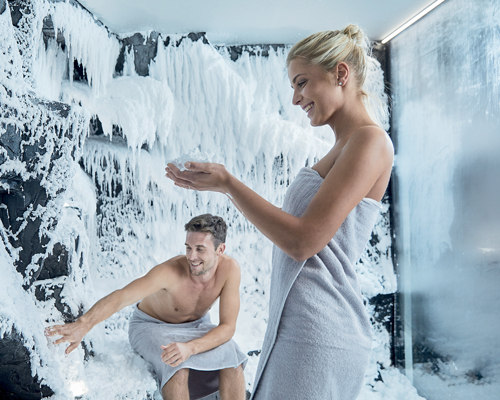
If you want to deliver a hot and cold experience as part of your wellness programme, adding a snowroom will introduce a delightful and more gentle form of cold therapy, as Sara Brenninger explains
Trends: Spa Foresight™
Climate emergency, gen alpha and brain optimisation are among Spa Business’ latest trend predictions
Promotional feature: The Wellness
Investing in children’s facilities gives a spa and wellness offering a competitive edge, as well as helping the next generation achieve their potential, explains Mohammed Ibrahim, CEO of industry design and consultancy practice, The Wellness
Promotional feature: RKF Luxury Linen
As a symbol of luxury, innovation and quality in the world of spa and hospitality, much of RKF Luxury Linen’s success comes from its highly client-centric design process, says CEO Riadh Bouaziz
Design: Heat of the moment
From giant golden eggs and converted ski lifts to rustic, hand-crafted huts, we showcase the latest in heat experience design and innovations
The Spa Life UK Convention returns from 21–23 June 2026 at Whittlebury Park Hotel, Spa &
Golf Resort, bringing together spa managers, directors and owners for two days of focused
education, meaningful connection and commercial insight. [more...]
+ More featured suppliers
COMPANY PROFILES
Capsix
Founded in 2016 by Carole Eyssautier, PhD in AI, François Eyssautier, robotics engineer, and Stéphan [more...]
RKF Luxury Linen
RKF Luxury Linen, established in the East of France for several decades, owns an artisanal know-how [more...]
Spas could use the findings to help guests cope with their emotions / Africa Studio/shutterstock
Spa operators could help guests reduce feelings of sadness, successfully make healthy eating choices and improve self-control and discipline, using learnings from new research published in the Journal of Consumer Psychology.
Called When Sadness Comes Alive, Will it be Less Painful? The Effects of Anthropomorphic Thinking on Sadness Regulation and Consumption, the research found that thinking of sadness as a ‘person’ – what psychologists call anthropomorphising – can reduce its effects, according to teams at the University of Austin, Texas, Hong Kong Polytechnic University and Hong Kong Baptist University.
With mental wellness interventions and programmes becoming increasingly popular in the spa and wellness industry, this research and its approach could inform future treatments and help equip guests to take control of their emotions.
Previous studies have shown that someone feeling sad exhibits a desire for urgent reward and little willpower, such as succumbing to hedonic temptations or engaging in impulsive purchases. The new research explores how anthropomorphic thinking influences people’s feelings and subsequent behaviour.
The research included six test studies involving 1,059 participants, 56 per cent of whom were female and 44 per cent were male. Each test involved subjects rating their level of sadness following prompts designed to induce sadness, such as writing about a sad event which had happened to them. Participants were then asked to imagine sadness as a person and describe their characteristics and concluded by rating their levels of sadness again. All six studies demonstrated that anthropomorphising sadness reduces its severity and changes behaviour.
Lead author Li Yang explains: “We found that anthropomorphic thinking enables individuals to view sadness as an independent human being that is separate from them and consequently creates a feeling of detachment.
“As a result, an individual who anthropomorphises sadness will feel less sad and will also tend to display better self-control in subsequent decisions about consumption.”
In one study participants anthropomorphised their sadness and chose either a healthy food option (salad) or an unhealthy one (cheesecake). Evidence highlighted that those who humanised sadness were less likely to indulge in the unhealthy choice because as their sadness reduced so did their self-indulgent behaviour.
Read more from this issue of Spa Business magazine
View contents of Spa Business 2020 issue 1
Editor's letter: Time to shine
As spas reach peak revenues, now’s the time for our industry to act as a catalyst in working out how we measure the impact of an experience and the ‘return on wellness’ says Spa Business' editor Katie Barnes
Promotional feature: TechnoAlpin
If you want to deliver a hot and cold experience as part of your wellness programme, adding a snowroom will introduce a delightful and more gentle form of cold therapy, as Sara Brenninger explains
Trends: Spa Foresight™
Climate emergency, gen alpha and brain optimisation are among Spa Business’ latest trend predictions
Promotional feature: The Wellness
Investing in children’s facilities gives a spa and wellness offering a competitive edge, as well as helping the next generation achieve their potential, explains Mohammed Ibrahim, CEO of industry design and consultancy practice, The Wellness
Promotional feature: RKF Luxury Linen
As a symbol of luxury, innovation and quality in the world of spa and hospitality, much of RKF Luxury Linen’s success comes from its highly client-centric design process, says CEO Riadh Bouaziz
Design: Heat of the moment
From giant golden eggs and converted ski lifts to rustic, hand-crafted huts, we showcase the latest in heat experience design and innovations
Four Seasons Resort The Nam Hai in Hoi An, Vietnam, has put together a Global Wellness Day
(GWD) agenda with activations rooted in nature and shaped by four pillars of Joy – in
alignment with the day’s theme #JoyMagenta.
The Global Wellness Summit (GWS) will celebrate its 20th anniversary at the 2026 event in
Phuket, Thailand, later this year with the theme: The Science, Art and Soul of Wellness.
Auko, an all-inclusive development, is opening in Phong Nha in Vietnam in Q3 2026, with a
series of 30 tented eco-lodges and wellness hospitality operations by Lumina Wellbeing.
Therme Manchester’s 28-acre development, which will include interconnected glass pavilions
that measure 65,000sq m, will be the largest bathing and wellbeing attraction in the world once
complete, according to prof David Russell, CEO of Therme UK.
Naples Beach Club, a Four Seasons Resort, has opened a 2,800sq m spa called The Sanctuary,
with the design and concept inspired by the Native American people that populated Florida’s
Southwest coast – the Calusa.
Swire Hotels’ luxury hospitality brand Upper House has revealed it will roll out its two-day
House of Healing retreats at its three hotels in Hong Kong, Chengdu and Shanghai.
LVMH-owned beauty house Guerlain will launch up to five spas with partners a year as part of
its plan to expand globally, according to the brand’s international spa and wellness director,
Diane Davody.
A new global study by Kevin Kelly and Peter Yesawich, called WELLSurvey 2.0, has revealed
more than half of consumers in the UK, US and Germany would not choose numerous high-
profile wellness resort brands for a future trip.
Luxury hospitality and wellness pioneer Jeremy McCarthy has launched Leisure Alchemy, a
digital platform that will provide professionals with strategic guidance on how to build
transformational leisure experiences that drive profit.
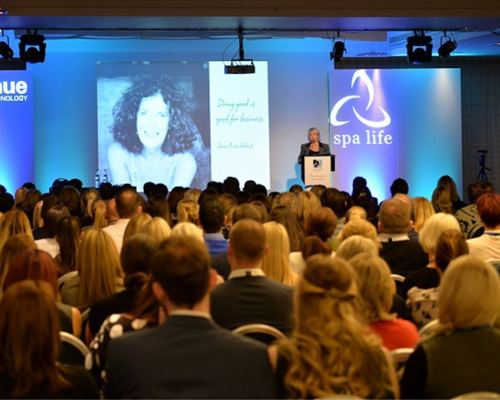
The Spa Life UK Convention returns from 21–23 June 2026 at Whittlebury Park Hotel, Spa &
Golf Resort, bringing together spa managers, directors and owners for two days of focused
education, meaningful connection and commercial insight. [more...]
+ More featured suppliers
COMPANY PROFILES
Capsix Founded in 2016 by Carole Eyssautier, PhD in AI, François Eyssautier, robotics engineer, and Stéphan [more...]