As one of Rotorua’s major and longest running attractions,
the Polynesian Mineral Day Spa features 25 thermal pools and
is something of an icon on New Zealand’s North Island
By Chris McBeath | Published in Spa Business 2012 issue 1
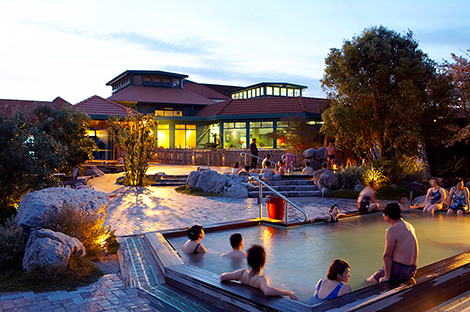
The thermal pools welcome around
300,000 visitors a year and are the most profitable part of the attraction, which also includes a 10-treatment room spa
In a landscape of bubbling mud pools and geothermal waters, Rotorua, New Zealand’s only geothermal city, is one of the world’s most unusual destinations. Known as Nature’s Spa of the South, Rotorua’s main claim to fame is its healing waters, which in the late 1800s helped transform the city into a fashionable health resort. Yet, surprisingly, Rotorua has remained remarkably underdeveloped in the modern context of a spa resort, apart from the Polynesian Spa. Here, the spa experience still embodies a bathing-for-health ritual that’s been part of the city’s heritage for more than 130 years.
Early wellness tourism As wealthy Europeans discovered Rotorua’s health-giving qualities, the New Zealand government was quick to recognise the potential of spa tourism and began investing in an infrastructure that included bathhouses, promenades, a tea-house and natural geothermal features set amid ornamental gardens.
The Pavilion Bath was one such initiative. Built where the Polynesian Spa currently stands, the baths were (and still are) fed by two springs, the Rachel Spring, and the Priest Spring which famously healed the arthritic condition of a Catholic priest. Through the decades, the baths underwent several incarnations until 1972 when, as a rundown facility, the government leased them to the family-owned Polynesian Pools Ltd and they’ve been privately run as a family business ever since.
Modernising a heritage spa Martin Lobb took over the helm of Polynesian Spa from his parents, as chief executive officer, 25 years ago. Having worked in various industries overseas, and armed with a degree in management, he’s been instrumental in creating a product that’s widely considered to be one of the world’s top mineral spas. In a country where the spa scene is 20 years behind that of North America and Europe, that’s no small feat.
“Our core product is the bathing experience,” Lobb says. “It caters to approximately 300,000 bathers a year, so the pools will always be our main focus.”
Running a mineral spa with such a rich heritage – part of the original building is registered by the New Zealand Historic Places Trust – is not without its challenges but the Lobb family has evolved the bathing experience into one of Rotorua’s major attractions. Part of that success is the willingness to make significant investment in both operational systems and infrastructure – a nz$4m (us$3m, €2.3m, £2m) redevelopment in 2007 nearly doubled the number of pools and also included refurbished therapy rooms and an upgraded café and retail area.
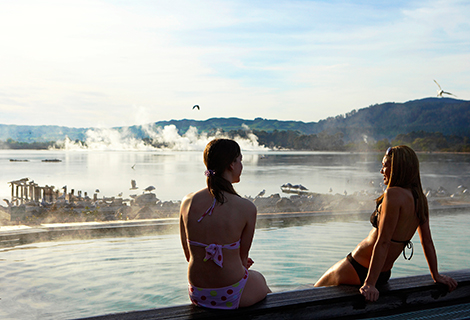
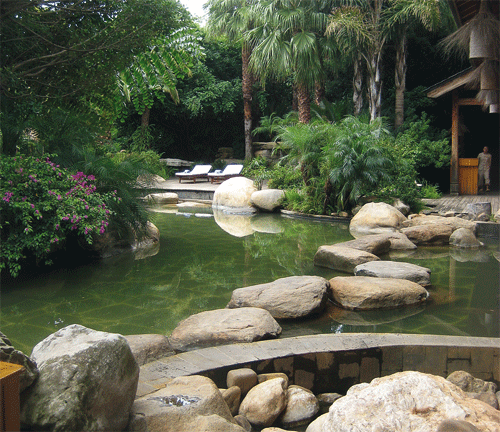
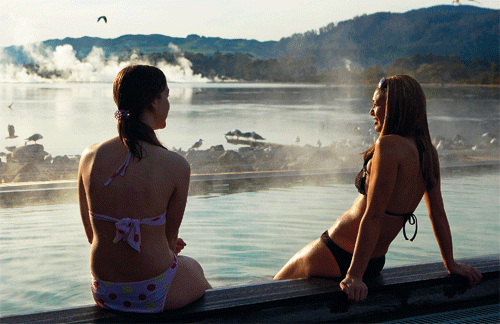
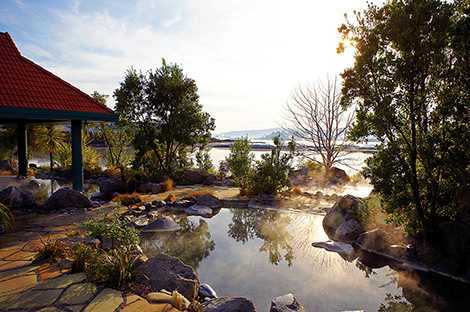
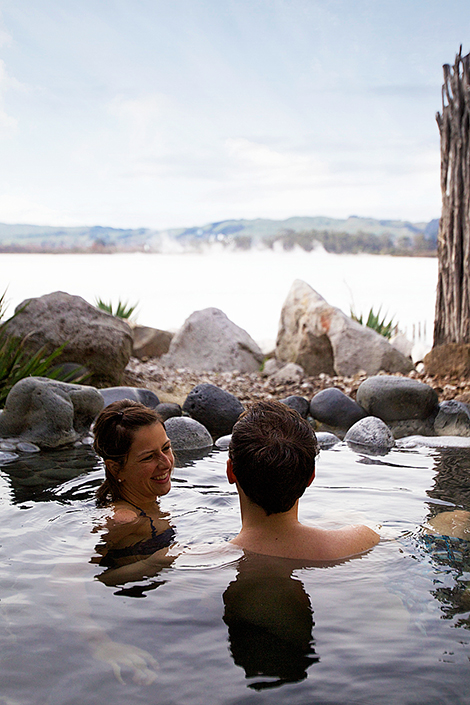
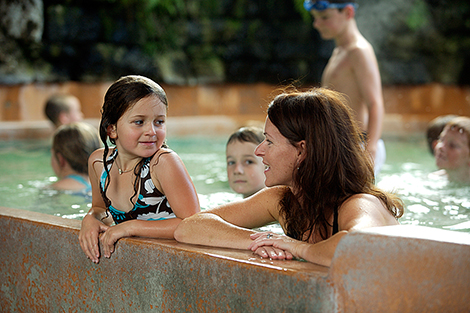
The Polynesian Spa currently has 25 thermal pools: 14 private pools, seven adult-only pools and four rock pools – landscaped with native New Zealand flora – each with their own price points (see p78). Each pool has a different therapeutic value, ranging in temperature between 38-40?C and either fed by the Rachel Spring with its alkaline water for smooth, hydrated skin, or the Priest Spring with its more acidic waters that relieves tired muscles, arthritis and rheumatism – results of which are purely anecdotal rather than scientifically based. There’s a separate family area with the spa’s only freshwater, chlorinated pool for active children.
Maintaining mineral baths has its operational challenges, too. “The sulphur [water] leads to heavy deterioration and over the years, we’ve learned what does and doesn’t work,” Lobb says. “For example, we’ve given up using pool paint in favour of natural rock, and instead of galvanised nails, we’ve found that stainless steel is more durable.”
Although saddled with higher-than-average maintenance costs, Lobb actually spends more on his staff contingent of 80. But both sides of the business are time consuming. “Essentially, we run a 24-hour operation,” says Lobb. “The Lake Spa Retreat is open 9am-8pm and the baths are open 8am-11pm. By day, the water must be cooled to a comfortable bathing temperature but in doing so, it’s necessary to add an extremely low dose of chlorine to control bacteria and algae build up. At night, we do cleaning, maintenance and a complete change out of water.
“Water from the older pools is put into the lake and the pools refilled. In the 16 newer pools, we developed a heat exchange water recycling system that uses filters and geothermal heat to kill off bacteria before returning the water back into the pools. Because of this, we’re able to limit our use of geothermal water – making us a far more sustainable operation.”
In April 2011, the Polynesian Spa earned top honours with an Enviro Gold Award from Qualmark – an official quality assurance organisation, which recognises energy efficiency, waste management, water conservation and community activities.
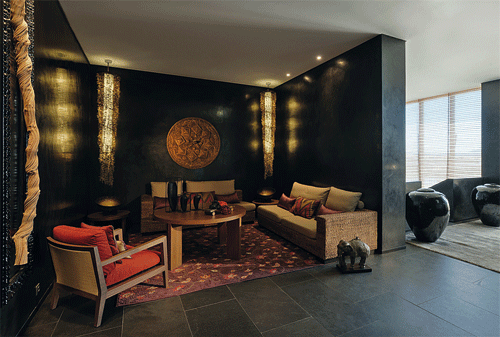
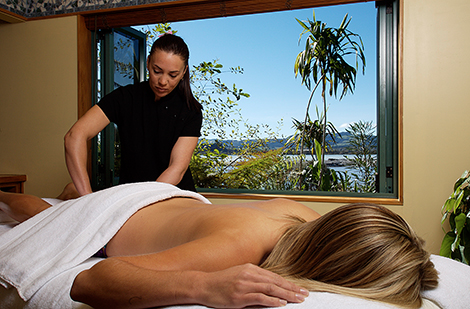
An important amenity Although the Lake Spa Retreat will always be a secondary component to the bathing experience, it has evolved into an important amenity – and a profitable cost-centre – in its own right. With 10 treatment rooms, including two dual-therapy rooms and three wet rooms, the spa employs 12 full-time therapists as well as a spa manager. In high season, November through March, that figure often rises to 18.
“When I joined, my mandate was to give a wow factor to the spa menu,” recalls spa manager Helena Keenan, who was formerly the spa operations manager at Hepburn Bathhouse & Spa in Victoria, Australia (see sb09/3, p36). “Coming here enabled me to return home to New Zealand and allowed me to continue working in an industry I love – in a capacity that matched my experience. There are very few spa management roles here,” she observes, referencing New Zealand’s relative youth in the world spa economy.
The spa already offered a general spa menu, including its signature Aix massages – a treatment for joint and muscular pains that originates from the French ski spa at Aix-les-Bains – but in just over a year Keenan has added pregnancy and aromatherapy massages, introduced signature mud body scrubs and wraps and created two facials. The retail area, too, carries more swimwear and lifestyle items as well as New Zealand -made, spa-related products such as GeoSkin Care and PureSource. In total, sales contribute about 15 per cent to overall revenues.
“As more of our guests are sophisticated, international and spa-experienced clients, recruitment and training has been essential,” Keenan says. “All our practitioners are certified, most are remedial massage therapists, but many have never worked outside of these environs. As I have a therapist and training background, I’ve been able to introduce a higher level of standard operating procedures for treatments and I recognise how to help individuals tailor their style to this new level of excellence.”
Market make up Of New Zealand’s 2.4 million international visitors a year, half include Rotorua in their holiday plans. “We have a very young tourism product which appeals mostly to the active, independent traveller,” says Gregg Anderson, general manager, Long Haul Markets, Tourism New Zealand. “Although figures have declined slightly in the last 18 months, the Lord of the Rings films helped keep our profile high and, with United Airlines launching non-stop flights between Houston and Auckland in 2012, the US is an important growth market.”
In spite of a bumpy economy, the Polynesian Spa has fared well, because 50 per cent of its customers are independent travellers from New Zealand, with 20 per cent coming from Australia and China, followed by the US, UK and Europe. Consequently, most advertising dollars are spent in the domestic market, promoting the baths as an attraction in local guide books, travel maps and in all major visitor information centres. Tours make up the balance of the market mix, specifically from Korea and China where Lobb has just hired a sales representative in recognition that China is an ever more notable player in the tourism industry.
A considerable revamp of Polynesian Spa’s online and mobile presence has been part of the marketing mix, including active participation in social media, use of quick response codes and links to spa therapy bookings and gift certificates. The website is available in Mandarin, French, German, Japanese, Korean and Spanish.
“The assumption is that because we’re the only major mineral spa in town, we have no competitor – but the truth is quite the reverse,” Lobb says. “We are thought of as an attraction, albeit a healthful one, but when the average visitor stays an average of only 1.9 nights [in Rotorua], there’s a lot of competition for their time and money. That’s why I’m thankful that 50 per cent of our business is from New Zealand – those travellers are easier to access and develop, and are more likely to come back.” A strong local resident programme (see p78) also helps to level out the peaks and troughs that other visitor attractions often experience.
“I think the spa industry has a rosy future because of the way people live their lives, and it is why we continue to reinvest considerably,” Lobb concludes. “The baths will always be our primary focus but as we develop the spa therapy side of the business, we are very well positioned to take advantage of a market in New Zealand that is going to grow very quickly in the years ahead.”
Read more from this issue of Spa Business magazine
Top team: Peninsula Hotels
Kath Hudson talks to key figures behind the leading Asian hotel chain about how they run their spas and exciting future plans
Profile: Cynthia Chua
The Singapore entrepreneur behind Ministry of Waxing and Browhaus has revolutionised personal grooming worldwide. She talks to Katie Barnes about the business of beauty and integration with spas
Hot springs: Chinese-style!
Lisa Starr tries out two hot spring spas - one catering to international visitors and the other to the domestic market - in China's Yunnan province
Bath time: The Chinese bathhouse
Lee David Stephens gives an insight into a traditional Chinese bathhouse and how Chinese people like to spa
Resort Spa: Sands of time
The Oitavos hotel and spa on Portugal's Estoril coast is 90 years in the making. Tom Walker pays a visit
Interview: Gary Henkin
The president and founder of WTS International - the US-based spa management and consultancy firm - talks to Rhianon Howells about expanding globally
Ask an expert: Crisis control
The Arab Spring, the Japanese tsunami and bombings in Mumbai - what's the best way of dealing with a crisis? We ask those who have first-hand experience of the events
New Zealand thermal spa: Pooling resources
The Polynesian Spa in the geothermal town of Rotorua in New Zealand boasts 25 thermal pools and is one of the longest running attractions in the country. Chris McBeath takes a look
Tourism: Booming Baku
Terry Stevens reports on the Azerbaijan capital which has seen a surge of international hotel openings in the past two years
Fitness: Pilates pure vs applied
Pure vs applied - should pilates only ever involve the exercises designed by Joseph Pilates, or can his philosophy be applied while keeping the product moving with the times?
Family Pool adult: nz$14.50 (us$11.30, €8.80, £7.30) child (five-14 years): nz$6.60 (us$5.10, €4, £3.30) family pass for two adults and up to four children: nz$36 (us$28, €22, £18)
Private Pools (minimum of two) deluxe (with view): nz$26 (us$20, €16, £13) per 30 minutes standard: nz$18 (us$14, €11, £9) per 30 minutes
adult-only pools per person: nz$21.50 (us$16.18, €13, £10.80)
Lake Spa Rock Pools adult: nz$43 (us$34, €26, £22) child (five-14years): nz$15.50 (us$12.10, €9.40, £7.80)
Deals * Local residents qualify for 30 per cent discount with purchase of nz$20 (us$16, €12, £10)?/?year club membership * A Local Residents High Volume User monthly pass costs nz$43 (us$34, €26, £22) * Groups of 15-plus receive a 15 per cent discount on entrance fee
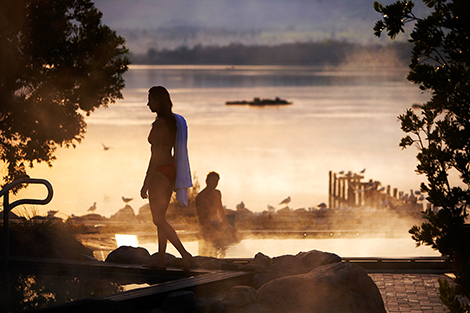
There are seven adult-only pools which cost nz$21.5o per person
The 38-40?C pools, have either alkaline or acidic waters offering numerous therapeutic benefits
The spa has become an important amenity and is a profitable cost-centre in its own right
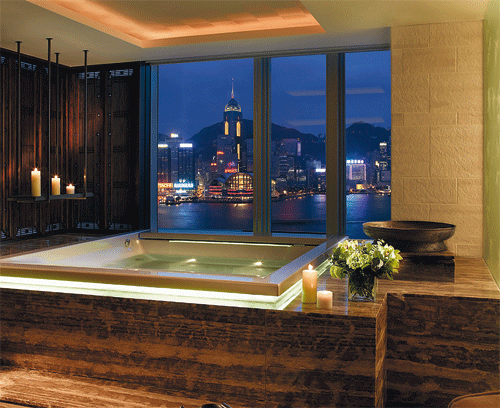
Private Pools
Polynesian’s main competitors are visitor attractions rather than spas, but a strong local resident programme helps to
maintain a steady number of customers
The freshwater pool is cooled to 30?C
to make it more children-friendly
The MSpa Oslo series is a perennial bestseller in global markets. With innovative
engineering and premium performance, this completely portable spa line-up is expertly
designed to meet the needs of customers worldwide. [more...]
+ More featured suppliers
COMPANY PROFILES
Pearl Tree
Pearl Tree was established in 2014 by Soraya and
Sarry Jouzy with a mission to champion
personal w [more...]
Aquaform
With a rich heritage in the spa industry, Aquaform offers a diverse array of water wellness experien [more...]
As one of Rotorua’s major and longest running attractions,
the Polynesian Mineral Day Spa features 25 thermal pools and
is something of an icon on New Zealand’s North Island
By Chris McBeath | Published in Spa Business 2012 issue 1
The thermal pools welcome around
300,000 visitors a year and are the most profitable part of the attraction, which also includes a 10-treatment room spa
In a landscape of bubbling mud pools and geothermal waters, Rotorua, New Zealand’s only geothermal city, is one of the world’s most unusual destinations. Known as Nature’s Spa of the South, Rotorua’s main claim to fame is its healing waters, which in the late 1800s helped transform the city into a fashionable health resort. Yet, surprisingly, Rotorua has remained remarkably underdeveloped in the modern context of a spa resort, apart from the Polynesian Spa. Here, the spa experience still embodies a bathing-for-health ritual that’s been part of the city’s heritage for more than 130 years.
Early wellness tourism As wealthy Europeans discovered Rotorua’s health-giving qualities, the New Zealand government was quick to recognise the potential of spa tourism and began investing in an infrastructure that included bathhouses, promenades, a tea-house and natural geothermal features set amid ornamental gardens.
The Pavilion Bath was one such initiative. Built where the Polynesian Spa currently stands, the baths were (and still are) fed by two springs, the Rachel Spring, and the Priest Spring which famously healed the arthritic condition of a Catholic priest. Through the decades, the baths underwent several incarnations until 1972 when, as a rundown facility, the government leased them to the family-owned Polynesian Pools Ltd and they’ve been privately run as a family business ever since.
Modernising a heritage spa Martin Lobb took over the helm of Polynesian Spa from his parents, as chief executive officer, 25 years ago. Having worked in various industries overseas, and armed with a degree in management, he’s been instrumental in creating a product that’s widely considered to be one of the world’s top mineral spas. In a country where the spa scene is 20 years behind that of North America and Europe, that’s no small feat.
“Our core product is the bathing experience,” Lobb says. “It caters to approximately 300,000 bathers a year, so the pools will always be our main focus.”
Running a mineral spa with such a rich heritage – part of the original building is registered by the New Zealand Historic Places Trust – is not without its challenges but the Lobb family has evolved the bathing experience into one of Rotorua’s major attractions. Part of that success is the willingness to make significant investment in both operational systems and infrastructure – a nz$4m (us$3m, €2.3m, £2m) redevelopment in 2007 nearly doubled the number of pools and also included refurbished therapy rooms and an upgraded café and retail area.
The Polynesian Spa currently has 25 thermal pools: 14 private pools, seven adult-only pools and four rock pools – landscaped with native New Zealand flora – each with their own price points (see p78). Each pool has a different therapeutic value, ranging in temperature between 38-40?C and either fed by the Rachel Spring with its alkaline water for smooth, hydrated skin, or the Priest Spring with its more acidic waters that relieves tired muscles, arthritis and rheumatism – results of which are purely anecdotal rather than scientifically based. There’s a separate family area with the spa’s only freshwater, chlorinated pool for active children.
Maintaining mineral baths has its operational challenges, too. “The sulphur [water] leads to heavy deterioration and over the years, we’ve learned what does and doesn’t work,” Lobb says. “For example, we’ve given up using pool paint in favour of natural rock, and instead of galvanised nails, we’ve found that stainless steel is more durable.”
Although saddled with higher-than-average maintenance costs, Lobb actually spends more on his staff contingent of 80. But both sides of the business are time consuming. “Essentially, we run a 24-hour operation,” says Lobb. “The Lake Spa Retreat is open 9am-8pm and the baths are open 8am-11pm. By day, the water must be cooled to a comfortable bathing temperature but in doing so, it’s necessary to add an extremely low dose of chlorine to control bacteria and algae build up. At night, we do cleaning, maintenance and a complete change out of water.
“Water from the older pools is put into the lake and the pools refilled. In the 16 newer pools, we developed a heat exchange water recycling system that uses filters and geothermal heat to kill off bacteria before returning the water back into the pools. Because of this, we’re able to limit our use of geothermal water – making us a far more sustainable operation.”
In April 2011, the Polynesian Spa earned top honours with an Enviro Gold Award from Qualmark – an official quality assurance organisation, which recognises energy efficiency, waste management, water conservation and community activities.
An important amenity Although the Lake Spa Retreat will always be a secondary component to the bathing experience, it has evolved into an important amenity – and a profitable cost-centre – in its own right. With 10 treatment rooms, including two dual-therapy rooms and three wet rooms, the spa employs 12 full-time therapists as well as a spa manager. In high season, November through March, that figure often rises to 18.
“When I joined, my mandate was to give a wow factor to the spa menu,” recalls spa manager Helena Keenan, who was formerly the spa operations manager at Hepburn Bathhouse & Spa in Victoria, Australia (see sb09/3, p36). “Coming here enabled me to return home to New Zealand and allowed me to continue working in an industry I love – in a capacity that matched my experience. There are very few spa management roles here,” she observes, referencing New Zealand’s relative youth in the world spa economy.
The spa already offered a general spa menu, including its signature Aix massages – a treatment for joint and muscular pains that originates from the French ski spa at Aix-les-Bains – but in just over a year Keenan has added pregnancy and aromatherapy massages, introduced signature mud body scrubs and wraps and created two facials. The retail area, too, carries more swimwear and lifestyle items as well as New Zealand -made, spa-related products such as GeoSkin Care and PureSource. In total, sales contribute about 15 per cent to overall revenues.
“As more of our guests are sophisticated, international and spa-experienced clients, recruitment and training has been essential,” Keenan says. “All our practitioners are certified, most are remedial massage therapists, but many have never worked outside of these environs. As I have a therapist and training background, I’ve been able to introduce a higher level of standard operating procedures for treatments and I recognise how to help individuals tailor their style to this new level of excellence.”
Market make up Of New Zealand’s 2.4 million international visitors a year, half include Rotorua in their holiday plans. “We have a very young tourism product which appeals mostly to the active, independent traveller,” says Gregg Anderson, general manager, Long Haul Markets, Tourism New Zealand. “Although figures have declined slightly in the last 18 months, the Lord of the Rings films helped keep our profile high and, with United Airlines launching non-stop flights between Houston and Auckland in 2012, the US is an important growth market.”
In spite of a bumpy economy, the Polynesian Spa has fared well, because 50 per cent of its customers are independent travellers from New Zealand, with 20 per cent coming from Australia and China, followed by the US, UK and Europe. Consequently, most advertising dollars are spent in the domestic market, promoting the baths as an attraction in local guide books, travel maps and in all major visitor information centres. Tours make up the balance of the market mix, specifically from Korea and China where Lobb has just hired a sales representative in recognition that China is an ever more notable player in the tourism industry.
A considerable revamp of Polynesian Spa’s online and mobile presence has been part of the marketing mix, including active participation in social media, use of quick response codes and links to spa therapy bookings and gift certificates. The website is available in Mandarin, French, German, Japanese, Korean and Spanish.
“The assumption is that because we’re the only major mineral spa in town, we have no competitor – but the truth is quite the reverse,” Lobb says. “We are thought of as an attraction, albeit a healthful one, but when the average visitor stays an average of only 1.9 nights [in Rotorua], there’s a lot of competition for their time and money. That’s why I’m thankful that 50 per cent of our business is from New Zealand – those travellers are easier to access and develop, and are more likely to come back.” A strong local resident programme (see p78) also helps to level out the peaks and troughs that other visitor attractions often experience.
“I think the spa industry has a rosy future because of the way people live their lives, and it is why we continue to reinvest considerably,” Lobb concludes. “The baths will always be our primary focus but as we develop the spa therapy side of the business, we are very well positioned to take advantage of a market in New Zealand that is going to grow very quickly in the years ahead.”
Read more from this issue of Spa Business magazine
Top team: Peninsula Hotels
Kath Hudson talks to key figures behind the leading Asian hotel chain about how they run their spas and exciting future plans
Profile: Cynthia Chua
The Singapore entrepreneur behind Ministry of Waxing and Browhaus has revolutionised personal grooming worldwide. She talks to Katie Barnes about the business of beauty and integration with spas
Hot springs: Chinese-style!
Lisa Starr tries out two hot spring spas - one catering to international visitors and the other to the domestic market - in China's Yunnan province
Bath time: The Chinese bathhouse
Lee David Stephens gives an insight into a traditional Chinese bathhouse and how Chinese people like to spa
Resort Spa: Sands of time
The Oitavos hotel and spa on Portugal's Estoril coast is 90 years in the making. Tom Walker pays a visit
Interview: Gary Henkin
The president and founder of WTS International - the US-based spa management and consultancy firm - talks to Rhianon Howells about expanding globally
Ask an expert: Crisis control
The Arab Spring, the Japanese tsunami and bombings in Mumbai - what's the best way of dealing with a crisis? We ask those who have first-hand experience of the events
New Zealand thermal spa: Pooling resources
The Polynesian Spa in the geothermal town of Rotorua in New Zealand boasts 25 thermal pools and is one of the longest running attractions in the country. Chris McBeath takes a look
Tourism: Booming Baku
Terry Stevens reports on the Azerbaijan capital which has seen a surge of international hotel openings in the past two years
Fitness: Pilates pure vs applied
Pure vs applied - should pilates only ever involve the exercises designed by Joseph Pilates, or can his philosophy be applied while keeping the product moving with the times?
Family Pool adult: nz$14.50 (us$11.30, €8.80, £7.30) child (five-14 years): nz$6.60 (us$5.10, €4, £3.30) family pass for two adults and up to four children: nz$36 (us$28, €22, £18)
Private Pools (minimum of two) deluxe (with view): nz$26 (us$20, €16, £13) per 30 minutes standard: nz$18 (us$14, €11, £9) per 30 minutes
adult-only pools per person: nz$21.50 (us$16.18, €13, £10.80)
Lake Spa Rock Pools adult: nz$43 (us$34, €26, £22) child (five-14years): nz$15.50 (us$12.10, €9.40, £7.80)
Deals * Local residents qualify for 30 per cent discount with purchase of nz$20 (us$16, €12, £10)?/?year club membership * A Local Residents High Volume User monthly pass costs nz$43 (us$34, €26, £22) * Groups of 15-plus receive a 15 per cent discount on entrance fee
There are seven adult-only pools which cost nz$21.5o per person
The 38-40?C pools, have either alkaline or acidic waters offering numerous therapeutic benefits
The spa has become an important amenity and is a profitable cost-centre in its own right
Private Pools
Polynesian’s main competitors are visitor attractions rather than spas, but a strong local resident programme helps to
maintain a steady number of customers
The freshwater pool is cooled to 30?C
to make it more children-friendly
Private hotel owner and developer HVL Hotels will open a new luxury resort and tourism
destination called Laval Hunter Valley in the second half of 2027 in Pokolbin, Australia.
The annual wellness festival dedicated to wellbeing, culture, longevity and human connection,
called Alma, will be hosted by Rocco Forte hotel, Verdura Resort in Sicily, Italy.
Capella Hotel Group has appointed Feisal Jaffer as chief development officer as the company
ramps up its global expansion of both its Capella and Patina brands.
People taking GLP-1 weight loss medications such as Ozempic, Wegovy, Mounjaro and Zepbound
may be losing weight, but they’re also becoming less physically active, according to new
research presented at the ENDO 2026 annual meeting of the Endocrine Society
Abu Dhabi-based investment firm Mubadala Capital has made a binding, fully financed
€1 billion
offer to acquire Pierre and Vacances SA, the European holiday resort operator behind the
continental European Center Parcs business.
Global retreat trade show, Synergy The Retreat Show, has launched a resource called The
Source, which hosts an open-access online Transformation Series programme.
The Standards Authority for Touch in Cancer Care (SATCC) charity has announced its first five-
day Living with Cancer and Beyond retreat, which will be held at Carden Park Hotel and Spa in
Cheshire, UK, between 1 and 5 September.
Patmos Aktis, a Luxury Collection Resort and Spa, has opened in Greece, with a renovated and
rebranded wellness offering called Ansana Wellness and Spa.
The MSpa Oslo series is a perennial bestseller in global markets. With innovative
engineering and premium performance, this completely portable spa line-up is expertly
designed to meet the needs of customers worldwide. [more...]
+ More featured suppliers
COMPANY PROFILES
Pearl Tree Pearl Tree was established in 2014 by Soraya and
Sarry Jouzy with a mission to champion
personal w [more...]