Yes! Send me the FREE digital editions of Spa Business and Spa Business insider magazines and the FREE weekly Spa Business and Spa Business insider ezines and breaking news alerts!
Brazil’s Museum of Tomorrow, with its constantly updating
digital collection, documents the successes and failures of the
human race as it battles to halt the destruction of the planet
By Tom Anstey | Published in Attractions Management 2016 issue 2
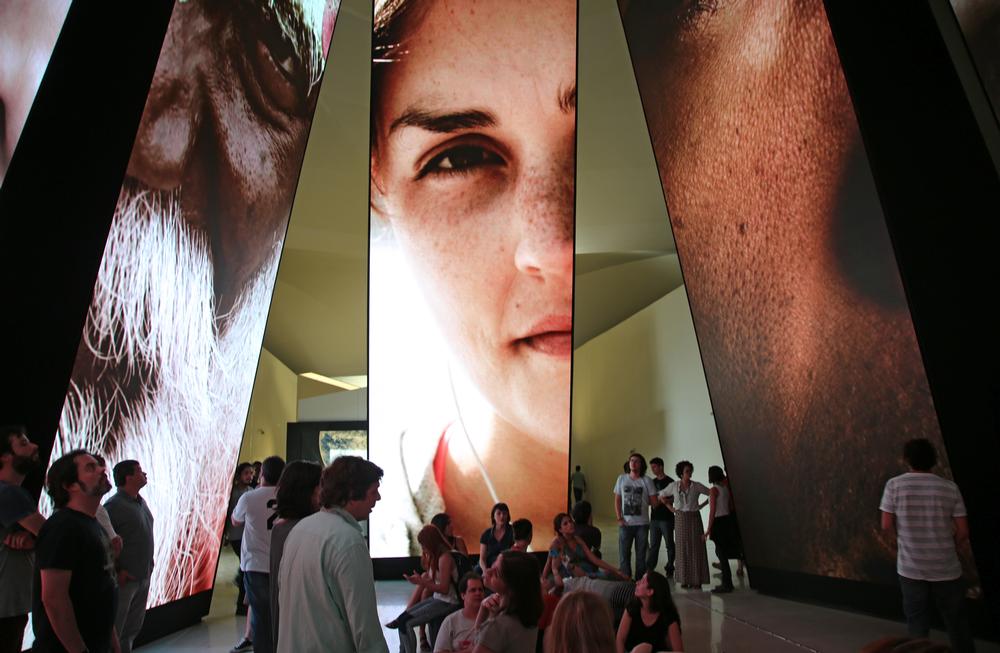
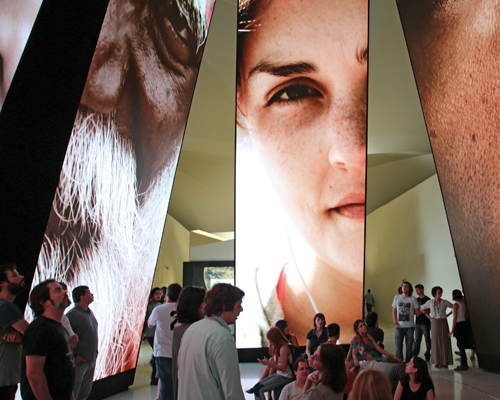
Tall screens in the main exhibition present continually updated data
Abraham Lincoln said that we “cannot escape the responsibility of tomorrow by evading it today”. The newly built Museum of Tomorrow in Rio de Janeiro, Brazil, wants to impart the same wisdom.
The science and technology museum, which opened in December 2015, is as modern as they come. Its entire collection is digital, built around real-time scientific data collected from partner institutions around the world, communicated through multimedia, installations and games. Its mission is focused on the future, presenting the potential outcomes the planet is facing and what actions could result in a better tomorrow.
Even the building is a piece of a wider initiative to build the future. Located in Praça Mauá (Mauá Square) in a poor port in Rio, the $100m (£69m, €88m) museum was designed by Spanish architect Santiago Calatrava as part of an extensive regeneration of the depressed area. Known as the Porto Maravilha project, the $2bn (£1.4m, €1.8m) urban regeneration strategy aims to sustainably reintegrate the area with the rest of the city by developing better transportation, residences, culture and leisure, ultimately increasing the local population from 28,000 to 100,000 by 2020.
New cultural attractions were central to the initiative, making Museum of Tomorrow the shining star of Mauá Square, in time for the upcoming Olympic Games.
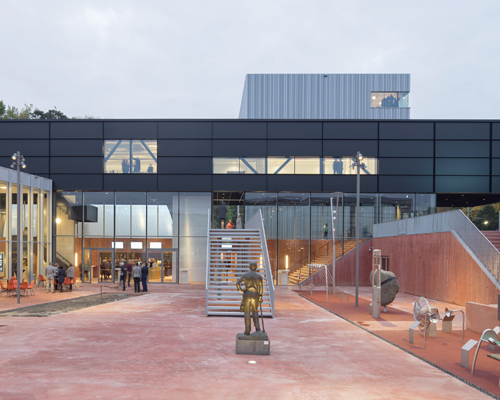
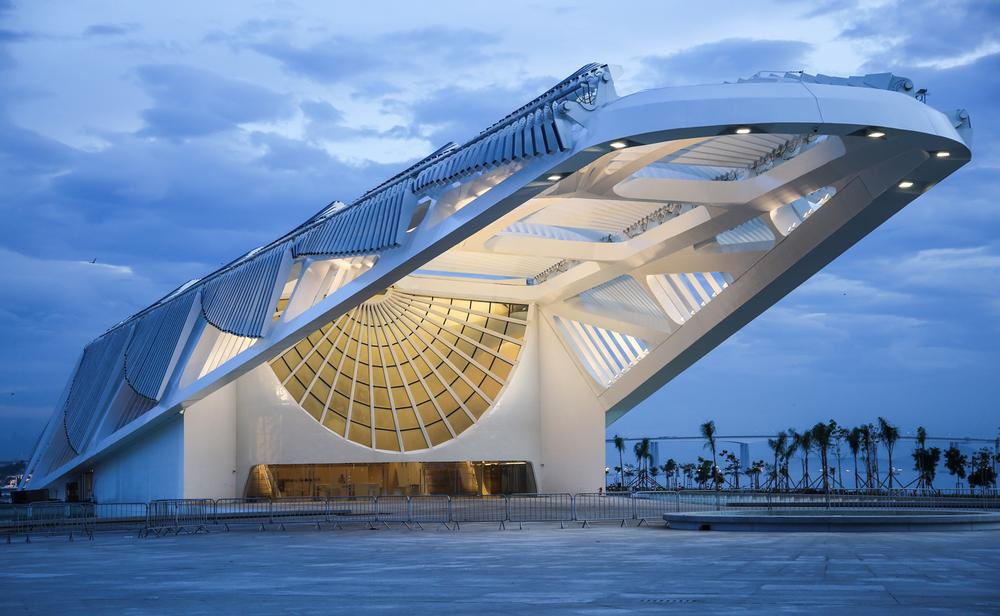
The striking design of the 15,000sqm (161,500sq ft) museum features a 75-metre-long (246-foot) cantilevered roof that juts out over the sea to create the impression that it’s floating. It’s surrounded by water pools, gardens, green spaces and recreational areas.
For Eduardo Paes, the mayor of Rio, the museum has set an example for the city to follow. “The Museum of Tomorrow is a symbol of the redevelopment of the important Port of Rio and, since its construction, has inspired reflection on our hopes for the city to be more integrated and more generous with public spaces.”
Attractions Management met chief curator Luiz Alberto Oliveira and audience development director Alexandre Fernandez to learn more about the first days of the Museum of Tomorrow.
Read more from this issue of Spa Business magazine
Promotional feature: IDEATTACK
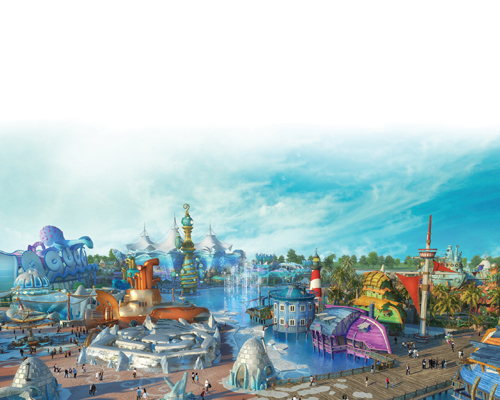
IDEATTACK’s new project in Hainan, China,
introduces the storytelling elements of a
theme park to the oceanarium concept
Science Museums: Shaping Tomorrow
Brazil’s Museum of Tomorrow uses
constantly updating, real-time digital
collection to communicate with visitors.
We met members of the team
Promotional feature: EAS
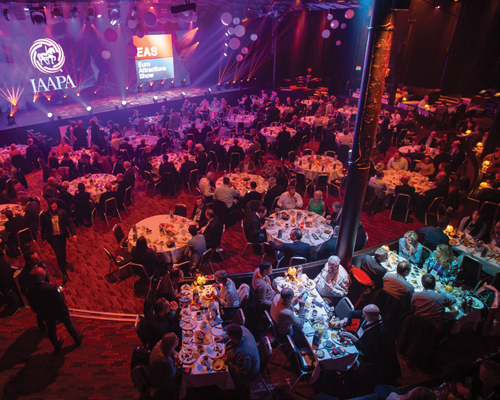
This year, the Euro Attractions Show is
coming to the Spanish city of Barcelona
Disney Special: Shanghai Disney: The Best Yet?
As Disney opens its first resort in mainland
China, our special feature examines its
business model, its potential impact and
the modernisation of the Disney castle park
New Openings: Space Inversion
A new contemporary museum district
in the Netherlands – Museumplein
Limburg – features a science centre,
a design museum and an inverted
planetarium. We take a closer look
Promotional feature: Polin
Polin’s patented technologies, extensive R&D and creative flair have made it one of the world’s leading waterpark design and manufacturing companies
Waterparks: Taking the Plunge
Waterpark suppliers constantly develop
their product offers. We dive into the
world of waterpark R&D to find out more
Zoos & Aquariums: The Long Game
UK safari park Longleat is undertaking a
decade-long upgrade that starts by going
back to its roots. As the attraction turns
50, CEO Bob Montgomery explains how
he’s bridging the past and the future
Luiz Alberto OliveiraChief curatorMuseum of Tomorrow
Luiz Alberto Oliveira
How did the Museum of Tomorrow come about? The proposal was to develop a museum that would have wide-reaching effects within its location. We wanted an architectural icon to help lead the process of renewal in the harbour area. Santiago Calatrava was commissioned to create an entirely new and original building specifically for Praça Mauá.
Can you give an overview of the museum? It would be hard to find another museum like this in the world right now; it’s really the first of its kind. At the Museum of Tomorrow, our aim is to probe the possible future scenarios of the next five decades by considering past and current trends.
We’re not a traditional museum that preserves a collection. We have an immaterial collection communicated through experiential exhibits. The idea is that through the sequence of concepts and experiences, the visitor becomes aware of the choices we all have in our hands today that will decide which future we will have.
The Museum of Tomorrow is described as an experiential museum. What does that mean? The aim is not to just convey information or offer works to be contemplated by the visitor, but to engage the visitor – their senses, mind, heart and soul – in a series of experiences that affect a change in them.
How did you curate the content? We assembled a group of experts and identified the science we wanted to present. We discussed how to build a narrative where the visitor would follow a journey that presented a range of different moments, perspectives and supporting evidence. We wanted to provide them with the means to work out different outcomes and build on our possible future scenarios. Science is about cause and effect and we want our visitors to engage with the idea that if they take certain actions today then certain future scenarios are favoured. We wanted them to experience cause and effect.
What role does technology play? Technology is fundamental in an experiential museum that has no physical collection and traditional artefacts. Technology enables us to deliver our content because the museum is entirely digital – except for one single material piece, everything is digital.
All the museum’s multimedia, audiovisual content is stored in a central system, which we call the Cerebrum. It also collects real-time data on climate and population from space agencies and organisations like the UN. We can manage each exhibit separately so if we receive a new report or new scientific findings then we we can easily update the relevant content.
We also have a system that allows us to monitor the ‘metabolism’ of the building – we call it the Iris – which collects visitor data via a card that they can scan.
So the exhibits are based on data from institutions around the world? Yes. We work with around 80 institutions, including Brazil’s National Institute of Space Research (INPE), NASA, ESA, UNESCO and Massachusetts Institute of Technology (MIT).
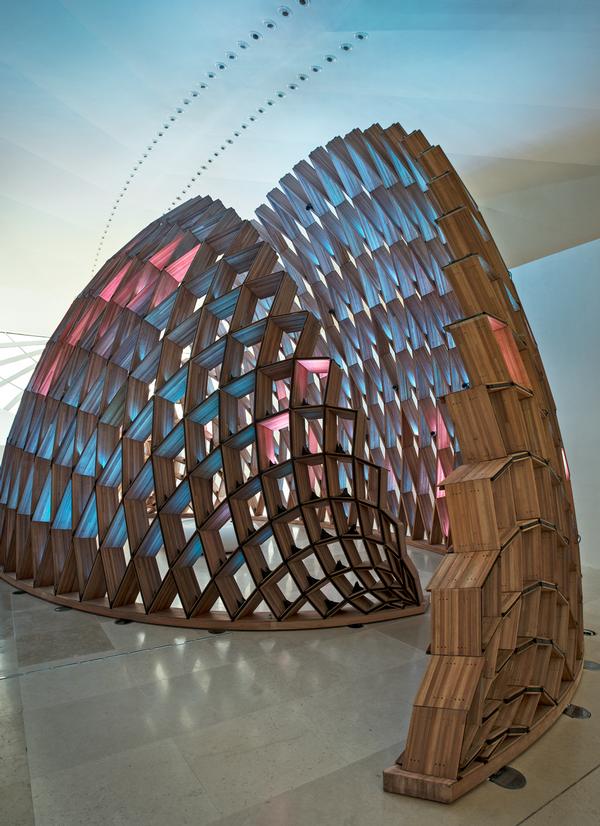
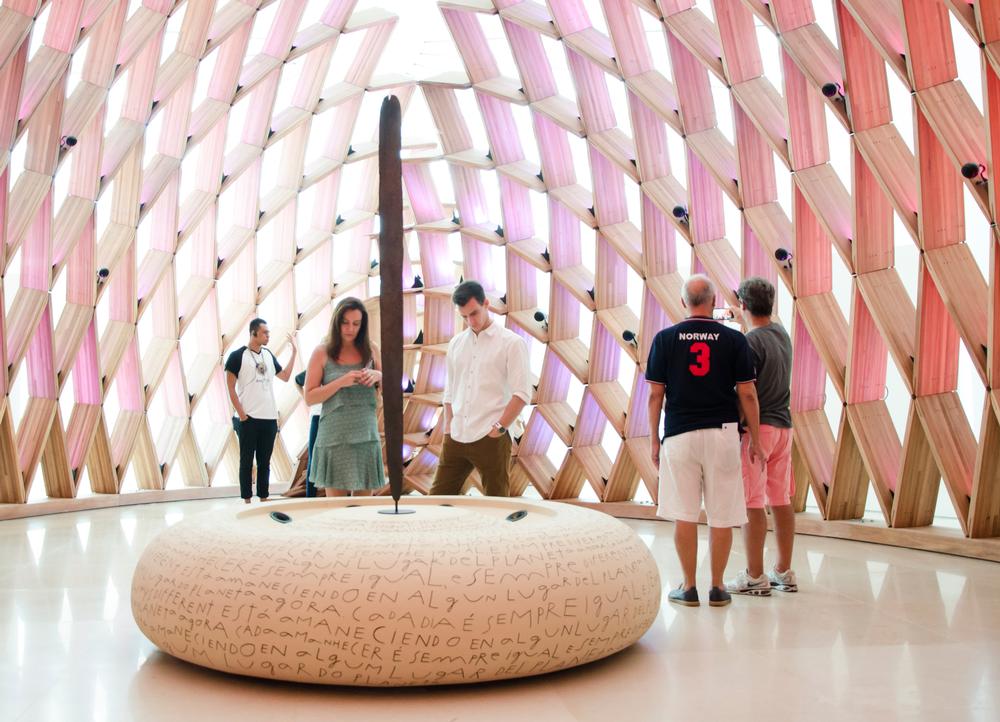
You mentioned a single material artefact. What is that? There are five main zones in the museum. In the Us zone, there’s an oca, an indigenous “wisdom longhouse” where elders share information and wisdom with younger generations. The tjurunga, an object used by Australian aborigines to symbolise the passing on of knowledge, is central to this area. It’s among the most ancient artefacts ever created and is the only physical object in the main exhibit.
The wooden longhouse is lit by over 1,000 bulbs, which switch on and off and change through the colours of sunrise to sunset in synch with soft music. This sensory experience was designed by architect Mônica Lobo, designer Muti Randolph and composer Lucas Marcier. The exhibit aims to communicate the notion that it is always tomorrow since the sun is always rising somewhere in the world, and each dawn is different because every day is a new day.
Why was Santiago Calatrava chosen as architect? It was the personal choice of the mayor of Rio de Janeiro. Calatrava was selected, I think, because of the impact that his work has and because he is a disciple of the late Brazilian architect Oscar Niemeyer.
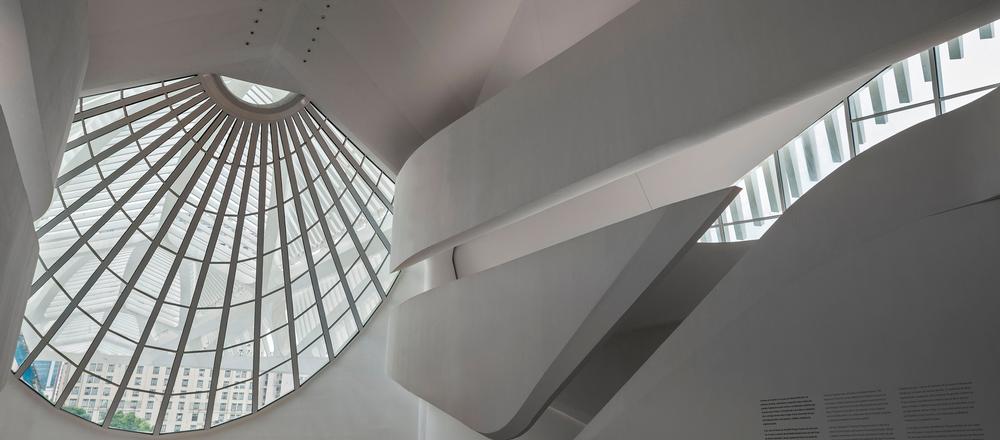
Calatrava spent two months in Rio making sense of the place, looking at the historical and natural environment and getting to know the city. During his research, he went to the botanical gardens and saw a flower, the bromeliad, which is a very typical to this tropical ecosystem. The building’s shape was inspired by the form of the bromeliad flower. Calatrava created more than 400 designs, sketches and paintings during this process.
Who funded the museum? The museum cost about $100m (£69m, €88m) and was funded by the City of Rio de Janeiro and the Roberto Marinho Foundation, with Banco Santander as master sponsor. It has BG Brasil as maintainer, providing about $864,000 (£599,000, €756,000) per year, and the support of the State of Rio de Janeiro.
What is the Roberto Marinho Foundation and how does it assist in the development of the museum? The Roberto Marinho Foundation is a private foundation associated with the largest media group in Brazil, Globo Group. It has a long tradition in education and heritage and for some time now it has been creating new kinds of museums, such as the Museum of the Portuguese Language and the Museum of Football, in São Paulo, the Palace of Frevo, in Recife, and the Museum of Art of Rio (MAR), which forms a cultural hub in Praça Mauá with the Museum of Tomorrow.
How do you keep the museum financially viable? We receive funds from the city government and our aim is to run on 50 per cent government funding and 50 per cent raised through corporate funding, individual giving, memberships and private events.
The science museum attracted 300,000 visitors in its first 100 days
DID YOU KNOW?
• Solar panels, which move in the direction of the sun, provide 9 per cent of the museum’s power and water from the bay is used to cool the building
• The museum is aiming to get LEED Platinum certification, the highest status available
• The exhibition spaces were designed Ralph Appelbaum, who also worked on the Museum of the Portuguese Language
• The Activities of Tomorrow Laboratory holds a creative residency program for global innovators
• Santiago Calatrava’s City of Arts and Sciences in Valencia, Spain, was a location for Disney’s Tomorrowland
• Excavation for the Porto Maravilha project uncovered the site of Valongo Wharf, an international slave trade hub where about one million African slaves arrived
NAVE OF HEARTS:
The Museum of Tomorrow works in partnership with a network of institutions called NAVE (Advanced Education Centres). NAVE focuses on teaching technological and digital skills to students in impoverished areas, and has been identified as among the most innovative school programmes in the world by Microsoft. The first year is a technical vocational course while in the second students choose to specialise in coding, multimedia or game programming.
www.oifuturo.org.br/en/education/nave/
The Five Chapters The Museum of Tomorrow’s main exhibition is structured into five narratives: Cosmos, Earth, Anthropocene, Tomorrow and Us. There are more than 60 experiences and exhibits, all available in Portuguese, Spanish and English Anthropocene The central experience, told through six 10-metre (33-foot) digital totems, describes the effects of human activity on the planet in terms of climate change, destruction of nature and population growth, through impactful multimedia displays based on authentic images and real-time data
10-metre (33-foot) digital totems
Cosmos
360? 9-projector dome
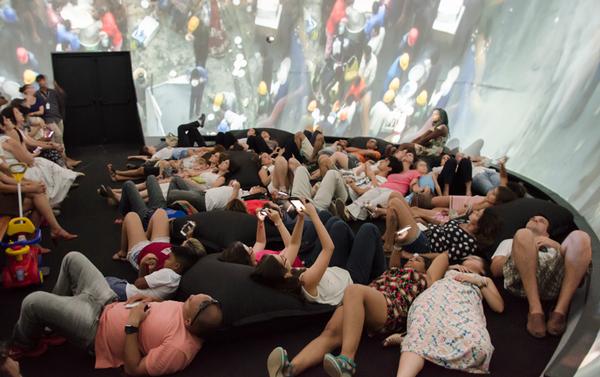
An eight-minute film by City of God director Fernando Meirelles and Ricardo Laganaro tells the story of universe inside an immersive 360? 9-projector dome Earth
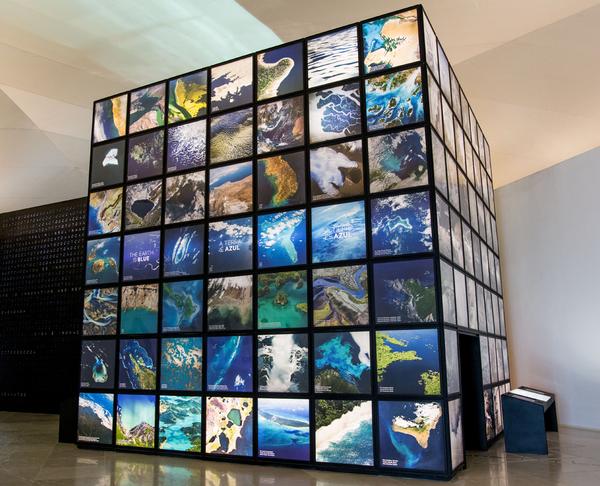
Enormous cubes represent Matter, Life and Thought
Three enormous cubes represent Matter, Life and Thought, each with different installations on the exterior and inside. Altogether they describe how life came to exist on Earth Tomorrow
Global trends
Global trends are the topic of this exhibit, such as the ageing population, megacities, hyper-connectivity and sustainability Us
visitors are invited to engage with tomorrow
In the last section, visitors are invited to engage with tomorrow, understanding that our actions alter the planet, for better – or worse
Alexandre FernandezAudience development directorMuseum of Tomorrow
Alexandre Fernandez
Who is your target audience? We believe that an eight-year-old and an 88-year-old are able to experience our content and exhibitions, so the publicity and media campaigns target everyone.
We also have ways of developing different audiences. We targeted those who live in the port region close to the museum with a specific membership programme before we opened. We invited them to visit the museum during the final stages of construction and we had about 2,000 members by the time the museum opened.
The port region is a poor region, where half the population earns less than $400 (£277, €350) per month so it was a challenge to engage them, but they became very interested in the museum and it’s become a place for them – a place for encounters, for leisure and so on.
How many visitors are you receiving? We reached 300,000 visitors in under 100 days. At this rate, we’ll probably have 1 million people within the first year.
What is the museum’s capacity? We can easily accommodate 6,000 people at a time, but to provide the best experience for the visitors we believe that 5,000 people per day is a healthy number.
How are you encouraging repeat visits? Our programme invites the public to investigate the past, understand the changes we can make in the present and explore and imagine possible futures. So the programmes we offer in the Activities of Tomorrow Laboratory and the Observatory of Tomorrow – which receives and processes information from our institutions – are designed to encourage those people to come back to the museum.
For example, on Tuesdays we monitor the vital signs of the Earth through workshops showing the dynamics of the oceans. We recently invited a scientist to talk about the Zika virus – a big health issue in Brazil right now. We also change our temporary exhibitions to keep people coming back.
What reaction has there been to the museum so far and do you have a feedback system in place? The digital data the Iris gathers is feedback for us. We also conducted a survey in January in order to understand the visitor profile and their satisfaction rates. Ninety-eight per cent of people said that they had a great experience and they would recommend the museum. We found out that 98 per cent of visitors were coming with a family member or a friend and interestingly about 42 per cent of our visitors said they did not describe themselves as museum visitors. Most of them hadn’t been to a museum in the past year and 10 per cent had never been to a museum before.
What future development plans do you have? We are focused right now on our next temporary exhibitions, making sure that we have very good exhibitions for the next two years so. We just opened a second main temporary exhibition about Alberto Santos-Dumont, the Brazilian aviator. It will open until October, running at the museum during the Olympic period.
After that, we have an exhibition on Brazilian innovation – in the sense of dealing with the unexpected and improvising. It’s something that goes deep into the culture and tradition, especially of the poor people of Brazil. It’s also a paradigm for innovation in the most expensive and technical sense. It will be very interesting to combine these aspects.
We’re also looking to forge partnerships with important institutions that will enable us to bring major exhibitions to Brazil. Perhaps at some time we can start exporting our exhibitions, too.
"We monitor the vital signs of the Earth through workshops showing the dynamics of the oceans"
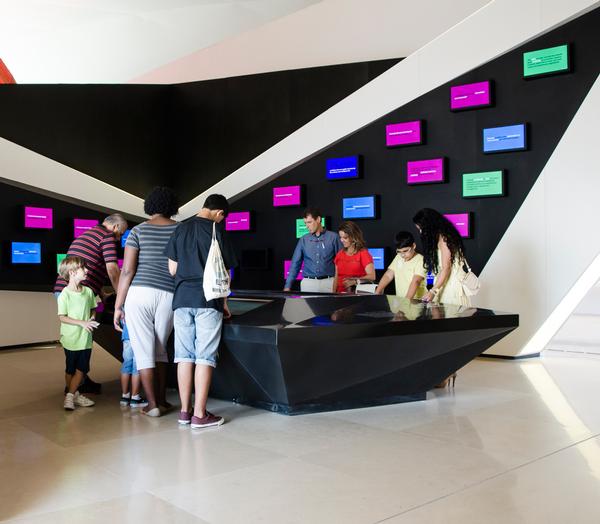
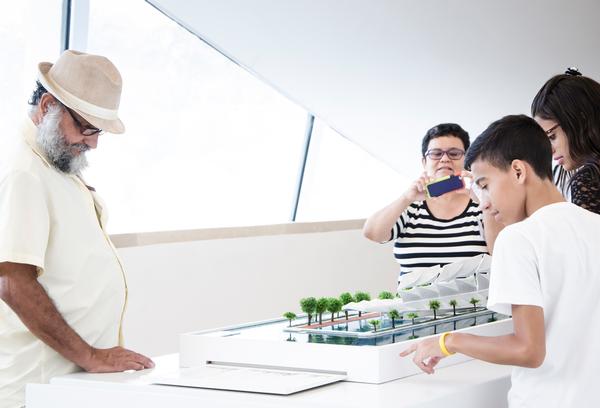
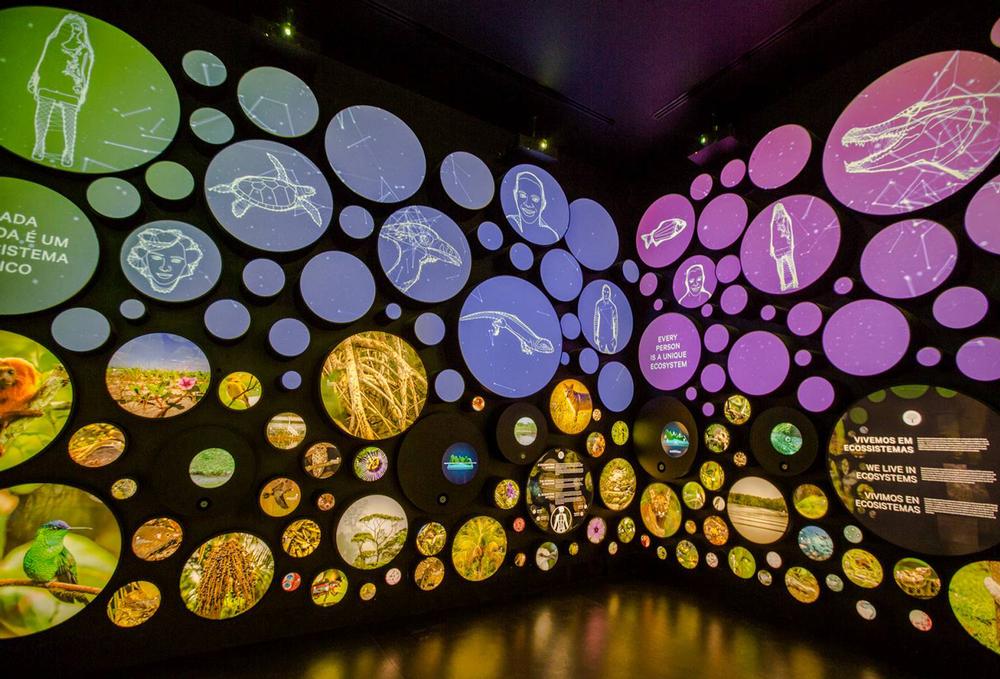
Interactive technology is key to challenging the visitors’ own perceptions
Architect Santiago Calatrava designed a cantilever roof for the futuristic building
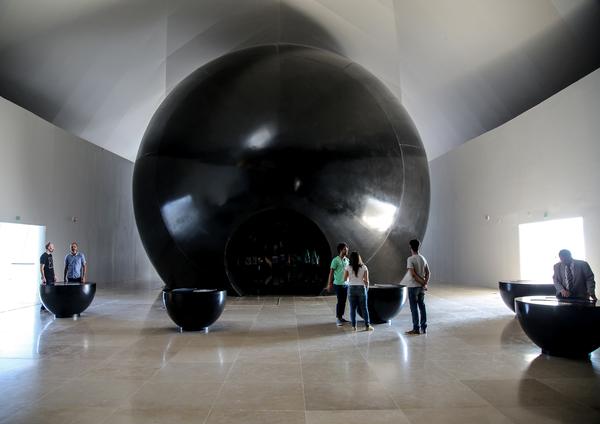
The tjurunga symbolises passing knowledge down to the next generation
Calatrava was inspired by the bromeliads he saw in Rio’s botanical gardens
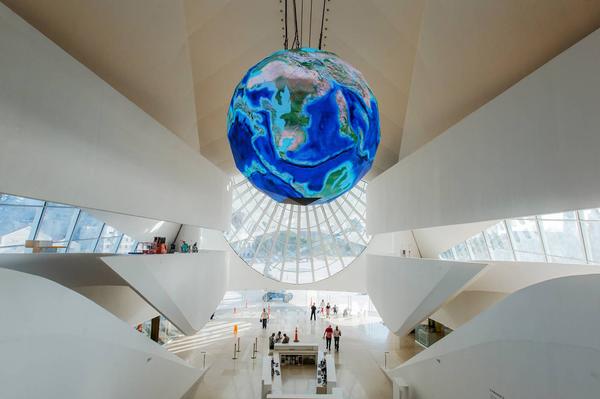
The museum sources data from partner institutions around the world
In the Cosmic Portal visitors are taken on a visual journey through galaxies
In the fast-paced world of fitness and wellness, where high-intensity workouts push us to
our limits and the sweat pours, the importance of efficient recovery cannot be overstated. [more...]
Brazil’s Museum of Tomorrow, with its constantly updating
digital collection, documents the successes and failures of the
human race as it battles to halt the destruction of the planet
By Tom Anstey | Published in Attractions Management 2016 issue 2
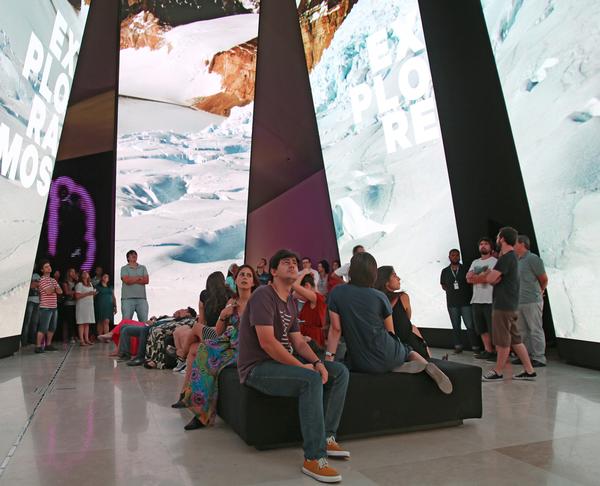
Tall screens in the main exhibition present continually updated data
Abraham Lincoln said that we “cannot escape the responsibility of tomorrow by evading it today”. The newly built Museum of Tomorrow in Rio de Janeiro, Brazil, wants to impart the same wisdom.
The science and technology museum, which opened in December 2015, is as modern as they come. Its entire collection is digital, built around real-time scientific data collected from partner institutions around the world, communicated through multimedia, installations and games. Its mission is focused on the future, presenting the potential outcomes the planet is facing and what actions could result in a better tomorrow.
Even the building is a piece of a wider initiative to build the future. Located in Praça Mauá (Mauá Square) in a poor port in Rio, the $100m (£69m, €88m) museum was designed by Spanish architect Santiago Calatrava as part of an extensive regeneration of the depressed area. Known as the Porto Maravilha project, the $2bn (£1.4m, €1.8m) urban regeneration strategy aims to sustainably reintegrate the area with the rest of the city by developing better transportation, residences, culture and leisure, ultimately increasing the local population from 28,000 to 100,000 by 2020.
New cultural attractions were central to the initiative, making Museum of Tomorrow the shining star of Mauá Square, in time for the upcoming Olympic Games.
The striking design of the 15,000sqm (161,500sq ft) museum features a 75-metre-long (246-foot) cantilevered roof that juts out over the sea to create the impression that it’s floating. It’s surrounded by water pools, gardens, green spaces and recreational areas.
For Eduardo Paes, the mayor of Rio, the museum has set an example for the city to follow. “The Museum of Tomorrow is a symbol of the redevelopment of the important Port of Rio and, since its construction, has inspired reflection on our hopes for the city to be more integrated and more generous with public spaces.”
Attractions Management met chief curator Luiz Alberto Oliveira and audience development director Alexandre Fernandez to learn more about the first days of the Museum of Tomorrow.
Read more from this issue of Spa Business magazine
Promotional feature: IDEATTACK
IDEATTACK’s new project in Hainan, China,
introduces the storytelling elements of a
theme park to the oceanarium concept
Science Museums: Shaping Tomorrow
Brazil’s Museum of Tomorrow uses
constantly updating, real-time digital
collection to communicate with visitors.
We met members of the team
Promotional feature: EAS
This year, the Euro Attractions Show is
coming to the Spanish city of Barcelona
Disney Special: Shanghai Disney: The Best Yet?
As Disney opens its first resort in mainland
China, our special feature examines its
business model, its potential impact and
the modernisation of the Disney castle park
New Openings: Space Inversion
A new contemporary museum district
in the Netherlands – Museumplein
Limburg – features a science centre,
a design museum and an inverted
planetarium. We take a closer look
Promotional feature: Polin
Polin’s patented technologies, extensive R&D and creative flair have made it one of the world’s leading waterpark design and manufacturing companies
Waterparks: Taking the Plunge
Waterpark suppliers constantly develop
their product offers. We dive into the
world of waterpark R&D to find out more
Zoos & Aquariums: The Long Game
UK safari park Longleat is undertaking a
decade-long upgrade that starts by going
back to its roots. As the attraction turns
50, CEO Bob Montgomery explains how
he’s bridging the past and the future
Luiz Alberto OliveiraChief curatorMuseum of Tomorrow
Luiz Alberto Oliveira
How did the Museum of Tomorrow come about? The proposal was to develop a museum that would have wide-reaching effects within its location. We wanted an architectural icon to help lead the process of renewal in the harbour area. Santiago Calatrava was commissioned to create an entirely new and original building specifically for Praça Mauá.
Can you give an overview of the museum? It would be hard to find another museum like this in the world right now; it’s really the first of its kind. At the Museum of Tomorrow, our aim is to probe the possible future scenarios of the next five decades by considering past and current trends.
We’re not a traditional museum that preserves a collection. We have an immaterial collection communicated through experiential exhibits. The idea is that through the sequence of concepts and experiences, the visitor becomes aware of the choices we all have in our hands today that will decide which future we will have.
The Museum of Tomorrow is described as an experiential museum. What does that mean? The aim is not to just convey information or offer works to be contemplated by the visitor, but to engage the visitor – their senses, mind, heart and soul – in a series of experiences that affect a change in them.
How did you curate the content? We assembled a group of experts and identified the science we wanted to present. We discussed how to build a narrative where the visitor would follow a journey that presented a range of different moments, perspectives and supporting evidence. We wanted to provide them with the means to work out different outcomes and build on our possible future scenarios. Science is about cause and effect and we want our visitors to engage with the idea that if they take certain actions today then certain future scenarios are favoured. We wanted them to experience cause and effect.
What role does technology play? Technology is fundamental in an experiential museum that has no physical collection and traditional artefacts. Technology enables us to deliver our content because the museum is entirely digital – except for one single material piece, everything is digital.
All the museum’s multimedia, audiovisual content is stored in a central system, which we call the Cerebrum. It also collects real-time data on climate and population from space agencies and organisations like the UN. We can manage each exhibit separately so if we receive a new report or new scientific findings then we we can easily update the relevant content.
We also have a system that allows us to monitor the ‘metabolism’ of the building – we call it the Iris – which collects visitor data via a card that they can scan.
So the exhibits are based on data from institutions around the world? Yes. We work with around 80 institutions, including Brazil’s National Institute of Space Research (INPE), NASA, ESA, UNESCO and Massachusetts Institute of Technology (MIT).
You mentioned a single material artefact. What is that? There are five main zones in the museum. In the Us zone, there’s an oca, an indigenous “wisdom longhouse” where elders share information and wisdom with younger generations. The tjurunga, an object used by Australian aborigines to symbolise the passing on of knowledge, is central to this area. It’s among the most ancient artefacts ever created and is the only physical object in the main exhibit.
The wooden longhouse is lit by over 1,000 bulbs, which switch on and off and change through the colours of sunrise to sunset in synch with soft music. This sensory experience was designed by architect Mônica Lobo, designer Muti Randolph and composer Lucas Marcier. The exhibit aims to communicate the notion that it is always tomorrow since the sun is always rising somewhere in the world, and each dawn is different because every day is a new day.
Why was Santiago Calatrava chosen as architect? It was the personal choice of the mayor of Rio de Janeiro. Calatrava was selected, I think, because of the impact that his work has and because he is a disciple of the late Brazilian architect Oscar Niemeyer.
Calatrava spent two months in Rio making sense of the place, looking at the historical and natural environment and getting to know the city. During his research, he went to the botanical gardens and saw a flower, the bromeliad, which is a very typical to this tropical ecosystem. The building’s shape was inspired by the form of the bromeliad flower. Calatrava created more than 400 designs, sketches and paintings during this process.
Who funded the museum? The museum cost about $100m (£69m, €88m) and was funded by the City of Rio de Janeiro and the Roberto Marinho Foundation, with Banco Santander as master sponsor. It has BG Brasil as maintainer, providing about $864,000 (£599,000, €756,000) per year, and the support of the State of Rio de Janeiro.
What is the Roberto Marinho Foundation and how does it assist in the development of the museum? The Roberto Marinho Foundation is a private foundation associated with the largest media group in Brazil, Globo Group. It has a long tradition in education and heritage and for some time now it has been creating new kinds of museums, such as the Museum of the Portuguese Language and the Museum of Football, in São Paulo, the Palace of Frevo, in Recife, and the Museum of Art of Rio (MAR), which forms a cultural hub in Praça Mauá with the Museum of Tomorrow.
How do you keep the museum financially viable? We receive funds from the city government and our aim is to run on 50 per cent government funding and 50 per cent raised through corporate funding, individual giving, memberships and private events.
The science museum attracted 300,000 visitors in its first 100 days
DID YOU KNOW?
• Solar panels, which move in the direction of the sun, provide 9 per cent of the museum’s power and water from the bay is used to cool the building
• The museum is aiming to get LEED Platinum certification, the highest status available
• The exhibition spaces were designed Ralph Appelbaum, who also worked on the Museum of the Portuguese Language
• The Activities of Tomorrow Laboratory holds a creative residency program for global innovators
• Santiago Calatrava’s City of Arts and Sciences in Valencia, Spain, was a location for Disney’s Tomorrowland
• Excavation for the Porto Maravilha project uncovered the site of Valongo Wharf, an international slave trade hub where about one million African slaves arrived
NAVE OF HEARTS:
The Museum of Tomorrow works in partnership with a network of institutions called NAVE (Advanced Education Centres). NAVE focuses on teaching technological and digital skills to students in impoverished areas, and has been identified as among the most innovative school programmes in the world by Microsoft. The first year is a technical vocational course while in the second students choose to specialise in coding, multimedia or game programming.
www.oifuturo.org.br/en/education/nave/
The Five Chapters The Museum of Tomorrow’s main exhibition is structured into five narratives: Cosmos, Earth, Anthropocene, Tomorrow and Us. There are more than 60 experiences and exhibits, all available in Portuguese, Spanish and English Anthropocene The central experience, told through six 10-metre (33-foot) digital totems, describes the effects of human activity on the planet in terms of climate change, destruction of nature and population growth, through impactful multimedia displays based on authentic images and real-time data
10-metre (33-foot) digital totems
Cosmos
360? 9-projector dome
An eight-minute film by City of God director Fernando Meirelles and Ricardo Laganaro tells the story of universe inside an immersive 360? 9-projector dome Earth
Enormous cubes represent Matter, Life and Thought
Three enormous cubes represent Matter, Life and Thought, each with different installations on the exterior and inside. Altogether they describe how life came to exist on Earth Tomorrow
Global trends
Global trends are the topic of this exhibit, such as the ageing population, megacities, hyper-connectivity and sustainability Us
visitors are invited to engage with tomorrow
In the last section, visitors are invited to engage with tomorrow, understanding that our actions alter the planet, for better – or worse
Alexandre FernandezAudience development directorMuseum of Tomorrow
Alexandre Fernandez
Who is your target audience? We believe that an eight-year-old and an 88-year-old are able to experience our content and exhibitions, so the publicity and media campaigns target everyone.
We also have ways of developing different audiences. We targeted those who live in the port region close to the museum with a specific membership programme before we opened. We invited them to visit the museum during the final stages of construction and we had about 2,000 members by the time the museum opened.
The port region is a poor region, where half the population earns less than $400 (£277, €350) per month so it was a challenge to engage them, but they became very interested in the museum and it’s become a place for them – a place for encounters, for leisure and so on.
How many visitors are you receiving? We reached 300,000 visitors in under 100 days. At this rate, we’ll probably have 1 million people within the first year.
What is the museum’s capacity? We can easily accommodate 6,000 people at a time, but to provide the best experience for the visitors we believe that 5,000 people per day is a healthy number.
How are you encouraging repeat visits? Our programme invites the public to investigate the past, understand the changes we can make in the present and explore and imagine possible futures. So the programmes we offer in the Activities of Tomorrow Laboratory and the Observatory of Tomorrow – which receives and processes information from our institutions – are designed to encourage those people to come back to the museum.
For example, on Tuesdays we monitor the vital signs of the Earth through workshops showing the dynamics of the oceans. We recently invited a scientist to talk about the Zika virus – a big health issue in Brazil right now. We also change our temporary exhibitions to keep people coming back.
What reaction has there been to the museum so far and do you have a feedback system in place? The digital data the Iris gathers is feedback for us. We also conducted a survey in January in order to understand the visitor profile and their satisfaction rates. Ninety-eight per cent of people said that they had a great experience and they would recommend the museum. We found out that 98 per cent of visitors were coming with a family member or a friend and interestingly about 42 per cent of our visitors said they did not describe themselves as museum visitors. Most of them hadn’t been to a museum in the past year and 10 per cent had never been to a museum before.
What future development plans do you have? We are focused right now on our next temporary exhibitions, making sure that we have very good exhibitions for the next two years so. We just opened a second main temporary exhibition about Alberto Santos-Dumont, the Brazilian aviator. It will open until October, running at the museum during the Olympic period.
After that, we have an exhibition on Brazilian innovation – in the sense of dealing with the unexpected and improvising. It’s something that goes deep into the culture and tradition, especially of the poor people of Brazil. It’s also a paradigm for innovation in the most expensive and technical sense. It will be very interesting to combine these aspects.
We’re also looking to forge partnerships with important institutions that will enable us to bring major exhibitions to Brazil. Perhaps at some time we can start exporting our exhibitions, too.
"We monitor the vital signs of the Earth through workshops showing the dynamics of the oceans"
Interactive technology is key to challenging the visitors’ own perceptions
Architect Santiago Calatrava designed a cantilever roof for the futuristic building
The tjurunga symbolises passing knowledge down to the next generation
Calatrava was inspired by the bromeliads he saw in Rio’s botanical gardens
The museum sources data from partner institutions around the world
In the Cosmic Portal visitors are taken on a visual journey through galaxies
The International Spa Association (ISPA) has published its full 2026 US Spa Industry Study,
providing further insights into the region’s total US$1 billion (€855 million, £780 million)
industry revenue increase from 2024 to 2025.
Ameyalli, the 78-acre wellbeing resort and residential community in Midway in Utah, US, has
broken ground on phase two of the hot spring development – the Ameyalli Resort and Spa –
which is due to open in 2028.
TLee Spas and Wellness has revealed the design concept for a high-tech spa with body
mapping scanners to improve public health, for AI company Midjourney.
Gran Hotel Taoro in northern Tenerife, Spain, has completed the final phase of its three-year
renovation with the debut of its Sandára Wellness Centre.
Hand and Stone Massage and Facial Spa, the spa business with more than 650 locations across
the US and Canada, has appointed franchise expert Carrie Walsh as CEO as the company plans
to expand.
Synergy – The Retreat Show, the global trade show for retreats, has launched a global research
initiative that will provide insights into the retreat sector from both consumer and industry
perspectives.
The Wellness Tourism Association (WTA) has published a non-regulatory global industry
framework designed to ensure the retreat market offers responsible experiences.
A new survey of UK and international spa practitioners shows that stress, burnout and
wellbeing concerns have caused one in three respondents to consider leaving the industry.
The UK's four Chief Medical Officers have published a refreshed edition of Physical activity
guidelines: UK Chief Medical Officers' report, updating the evidence that underpins the nation's
physical activity recommendations and placing greater emphasis on strength, balance, reducing
sedentary behaviour and, for the first time, supporting people taking weight loss medications.
In the fast-paced world of fitness and wellness, where high-intensity workouts push us to
our limits and the sweat pours, the importance of efficient recovery cannot be overstated. [more...]