Yes! Send me the FREE digital editions of Spa Business and Spa Business insider magazines and the FREE weekly Spa Business and Spa Business insider ezines and breaking news alerts!
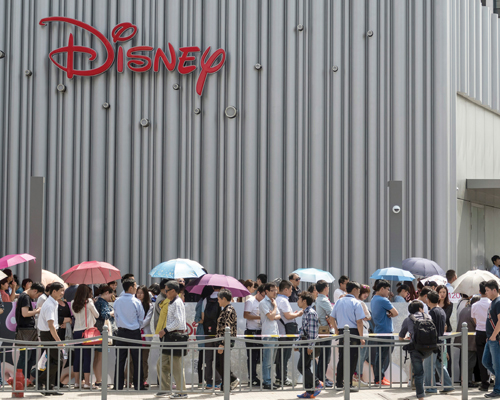
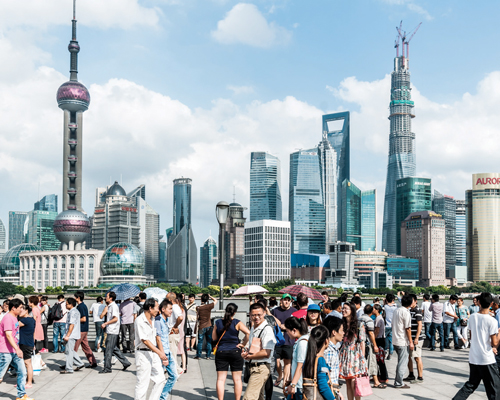
After decades of hard graft, Disney Shanghai – the most expensive
theme park ever built – is open. Tuned to Chinese sensibilities and
with capacity to handle huge volumes of guests, the development has
required sustained diplomacy at the highest level to bring it to fruition
By Liz Terry | Published in Attractions Management 2016 issue 2
When China began to open up to the West in the 90s, the world’s major brands went calling, in search of the partnerships they needed to get their products in front of what – it was becoming clear – would be the biggest market in the world.
The Chinese were urbanising fast, growing a huge, affluent middle class and adjusting their communist ideology to fit the modern world – the potential opportunities were off the chart.
For some, moving into China was a straightforward process retailers are nimble enough to get up and trading in no time.
It wasn’t long before Gucci, Prada and many other high-end brands were present in China’s big cities. For Disney, however, massive infrastructure was needed for it to fulfil its ambitions, and that meant an unbelievably complex journey.
As Disney Shanghai opens for business, it’s clear the creation of the resort has turned out to be a life’s work for many in the team. Even more so because the opening of this phase is just the beginning of the journey. In this issue of Attractions Management we celebrate the opening, with our supplement which starts on page 60.
Projects of this size are a long-term play when it comes to investment. Disney initiated its move into China more than two decades ago and has effectively missed the first boom years. Growth in the economy is slowing, but this won’t matter when the appetite for the product is factored in. The demand is such that the resort will trade at capacity from the off.
And what capacity it is. The Shanghai International Tourism and Resorts Zone, within which the Disney resort sits, covers 25sq km (9.7 sq mi), with a core area of 7sq km (2.7sq mi), including 4sq km (1.5sq mi) for Phase One of the Shanghai Disney Resort. This leaves plenty of room for subsequent phases. Disney is forecasting 12 million visitors in year one – we think mthis is conservative – growing to an eventual 30 million.
A generation ago, the average Chinese citizen lived a life of subsistence, with little to spend on leisure, but the new middle class is emerging so fast Disney CEO Bob Iger says the company has identified an ‘income-qualified audience’ within a three-and-a-half hour travel radius of more than 300 million people. “It would be as though the whole population of the US could afford a ticket to Orlando and could get there within three-and-a-half hours,” he said. Couple this with the fact that the one-child policy has been relaxed to two and it’s clear the stars are aligning.
A final piece of information that proves the Chinese market has come of age is that peak ticket prices for Disney Shanghai are higher than both Tokyo Disney and Disney Hong Kong.
Disney learned hard, valuable lessons from Euro Disney a projected which went through several rounds of wretched refinancing – so the business case for this new development is clearer. And there’s more to come. The build-out will continue for years, with three parks the goal for Shanghai. This opening is just the beginning. Behind the scenes, the work continues.
Will Disney Mumbai follow? Disney Moscow? Maybe one day the final act of soft power will be to open in the former Soviet Union.
Liz Terry, editor. Twitter: @elizterry
Read more from this issue of Spa Business magazine
Promotional feature: IDEATTACK
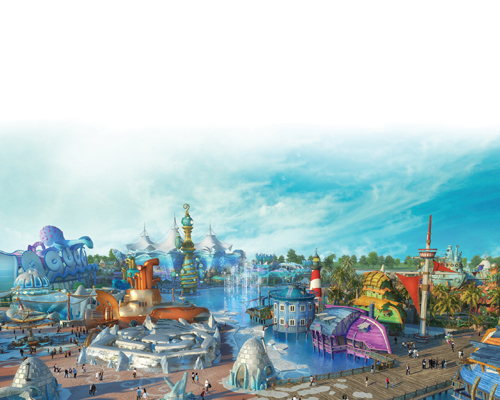
IDEATTACK’s new project in Hainan, China,
introduces the storytelling elements of a
theme park to the oceanarium concept
Science Museums: Shaping Tomorrow
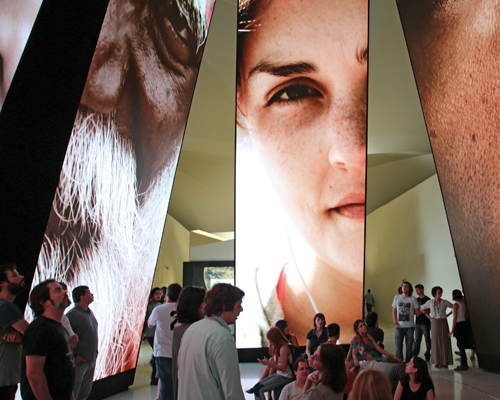
Brazil’s Museum of Tomorrow uses
constantly updating, real-time digital
collection to communicate with visitors.
We met members of the team
Promotional feature: EAS
This year, the Euro Attractions Show is
coming to the Spanish city of Barcelona
Disney Special: Shanghai Disney: The Best Yet?
As Disney opens its first resort in mainland
China, our special feature examines its
business model, its potential impact and
the modernisation of the Disney castle park
New Openings: Space Inversion
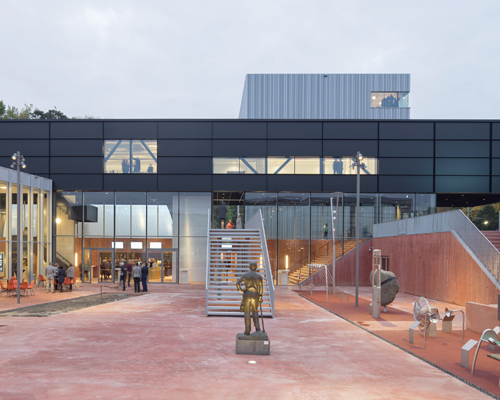
A new contemporary museum district
in the Netherlands – Museumplein
Limburg – features a science centre,
a design museum and an inverted
planetarium. We take a closer look
Promotional feature: Polin
Polin’s patented technologies, extensive R&D and creative flair have made it one of the world’s leading waterpark design and manufacturing companies
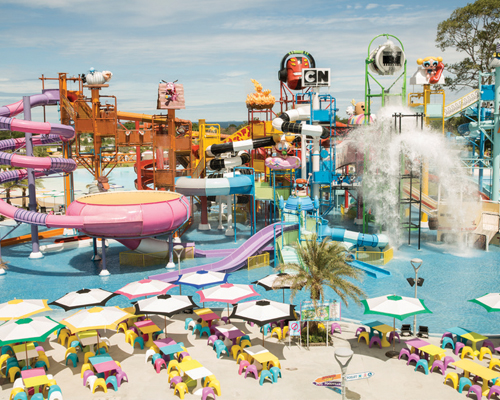
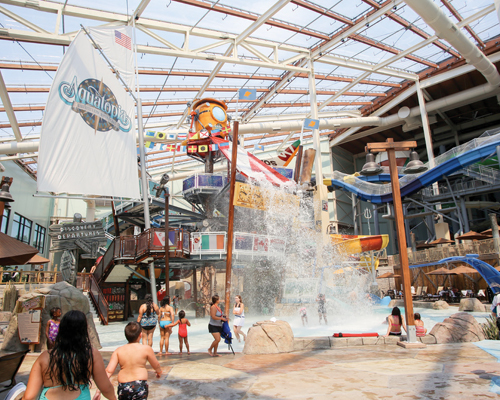
Waterparks: Taking the Plunge
Waterpark suppliers constantly develop
their product offers. We dive into the
world of waterpark R&D to find out more
Zoos & Aquariums: The Long Game
UK safari park Longleat is undertaking a
decade-long upgrade that starts by going
back to its roots. As the attraction turns
50, CEO Bob Montgomery explains how
he’s bridging the past and the future
Contrast therapy, based on the alternation of hot and cold rituals, has become one of the
most valued practices in the fields of wellness and recovery. [more...]
After decades of hard graft, Disney Shanghai – the most expensive
theme park ever built – is open. Tuned to Chinese sensibilities and
with capacity to handle huge volumes of guests, the development has
required sustained diplomacy at the highest level to bring it to fruition
By Liz Terry | Published in Attractions Management 2016 issue 2
When China began to open up to the West in the 90s, the world’s major brands went calling, in search of the partnerships they needed to get their products in front of what – it was becoming clear – would be the biggest market in the world.
The Chinese were urbanising fast, growing a huge, affluent middle class and adjusting their communist ideology to fit the modern world – the potential opportunities were off the chart.
For some, moving into China was a straightforward process retailers are nimble enough to get up and trading in no time.
It wasn’t long before Gucci, Prada and many other high-end brands were present in China’s big cities. For Disney, however, massive infrastructure was needed for it to fulfil its ambitions, and that meant an unbelievably complex journey.
As Disney Shanghai opens for business, it’s clear the creation of the resort has turned out to be a life’s work for many in the team. Even more so because the opening of this phase is just the beginning of the journey. In this issue of Attractions Management we celebrate the opening, with our supplement which starts on page 60.
Projects of this size are a long-term play when it comes to investment. Disney initiated its move into China more than two decades ago and has effectively missed the first boom years. Growth in the economy is slowing, but this won’t matter when the appetite for the product is factored in. The demand is such that the resort will trade at capacity from the off.
And what capacity it is. The Shanghai International Tourism and Resorts Zone, within which the Disney resort sits, covers 25sq km (9.7 sq mi), with a core area of 7sq km (2.7sq mi), including 4sq km (1.5sq mi) for Phase One of the Shanghai Disney Resort. This leaves plenty of room for subsequent phases. Disney is forecasting 12 million visitors in year one – we think mthis is conservative – growing to an eventual 30 million.
A generation ago, the average Chinese citizen lived a life of subsistence, with little to spend on leisure, but the new middle class is emerging so fast Disney CEO Bob Iger says the company has identified an ‘income-qualified audience’ within a three-and-a-half hour travel radius of more than 300 million people. “It would be as though the whole population of the US could afford a ticket to Orlando and could get there within three-and-a-half hours,” he said. Couple this with the fact that the one-child policy has been relaxed to two and it’s clear the stars are aligning.
A final piece of information that proves the Chinese market has come of age is that peak ticket prices for Disney Shanghai are higher than both Tokyo Disney and Disney Hong Kong.
Disney learned hard, valuable lessons from Euro Disney a projected which went through several rounds of wretched refinancing – so the business case for this new development is clearer. And there’s more to come. The build-out will continue for years, with three parks the goal for Shanghai. This opening is just the beginning. Behind the scenes, the work continues.
Will Disney Mumbai follow? Disney Moscow? Maybe one day the final act of soft power will be to open in the former Soviet Union.
Liz Terry, editor. Twitter: @elizterry
Read more from this issue of Spa Business magazine
Promotional feature: IDEATTACK
IDEATTACK’s new project in Hainan, China,
introduces the storytelling elements of a
theme park to the oceanarium concept
Science Museums: Shaping Tomorrow
Brazil’s Museum of Tomorrow uses
constantly updating, real-time digital
collection to communicate with visitors.
We met members of the team
Promotional feature: EAS
This year, the Euro Attractions Show is
coming to the Spanish city of Barcelona
Disney Special: Shanghai Disney: The Best Yet?
As Disney opens its first resort in mainland
China, our special feature examines its
business model, its potential impact and
the modernisation of the Disney castle park
New Openings: Space Inversion
A new contemporary museum district
in the Netherlands – Museumplein
Limburg – features a science centre,
a design museum and an inverted
planetarium. We take a closer look
Promotional feature: Polin
Polin’s patented technologies, extensive R&D and creative flair have made it one of the world’s leading waterpark design and manufacturing companies
Waterparks: Taking the Plunge
Waterpark suppliers constantly develop
their product offers. We dive into the
world of waterpark R&D to find out more
Zoos & Aquariums: The Long Game
UK safari park Longleat is undertaking a
decade-long upgrade that starts by going
back to its roots. As the attraction turns
50, CEO Bob Montgomery explains how
he’s bridging the past and the future
Jessica Sloyan, a wellness operations and training expert, has established an independent
private training academy to provide professional qualifications for practitioners looking to offer
immersive wellness experiences.
The International Spa Association (ISPA) has published its full 2026 US Spa Industry Study,
providing further insights into the region’s total US$1 billion (€855 million, £780 million)
industry revenue increase from 2024 to 2025.
Ameyalli, the 78-acre wellbeing resort and residential community in Midway in Utah, US, has
broken ground on phase two of the hot spring development – the Ameyalli Resort and Spa –
which is due to open in 2028.
TLee Spas and Wellness has revealed the design concept for a high-tech spa with body
mapping scanners to improve public health, for AI company Midjourney.
Gran Hotel Taoro in northern Tenerife, Spain, has completed the final phase of its three-year
renovation with the debut of its Sandára Wellness Centre.
Hand and Stone Massage and Facial Spa, the spa business with more than 650 locations across
the US and Canada, has appointed franchise expert Carrie Walsh as CEO as the company plans
to expand.
Synergy – The Retreat Show, the global trade show for retreats, has launched a global research
initiative that will provide insights into the retreat sector from both consumer and industry
perspectives.
The Wellness Tourism Association (WTA) has published a non-regulatory global industry
framework designed to ensure the retreat market offers responsible experiences.
A new survey of UK and international spa practitioners shows that stress, burnout and
wellbeing concerns have caused one in three respondents to consider leaving the industry.
Contrast therapy, based on the alternation of hot and cold rituals, has become one of the
most valued practices in the fields of wellness and recovery. [more...]