VR technology offers seemingly endless possibilities across all the attractions sectors. But is it worth investing in a VR experience – and where should you start? We asked a panel of experts
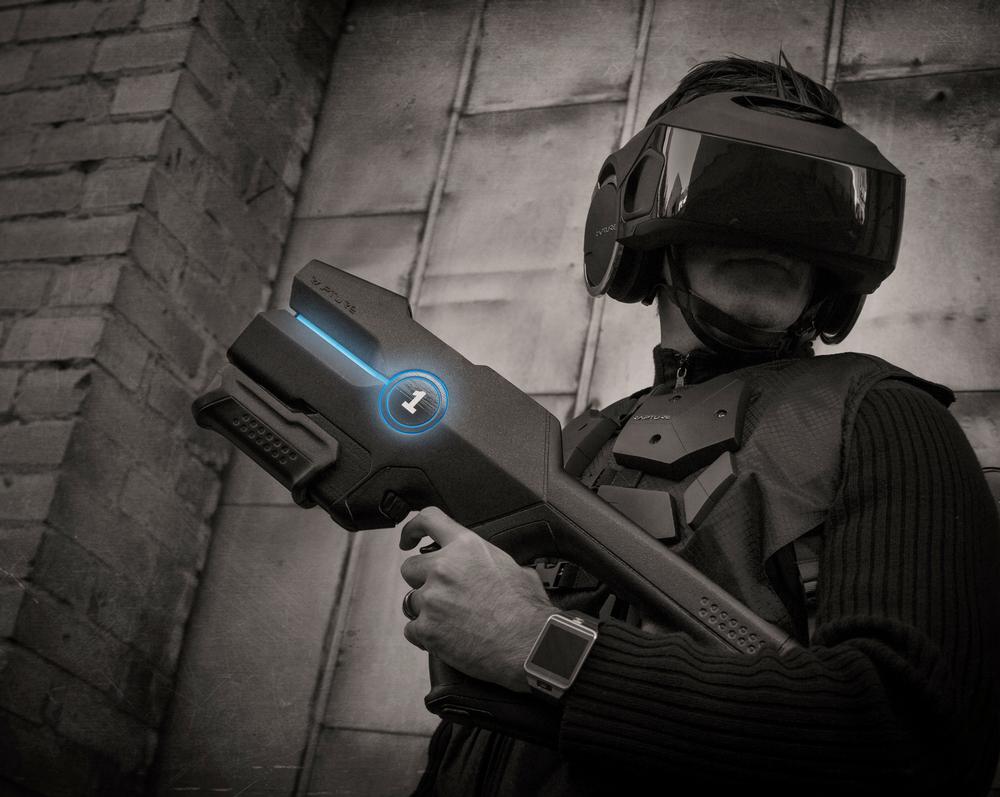
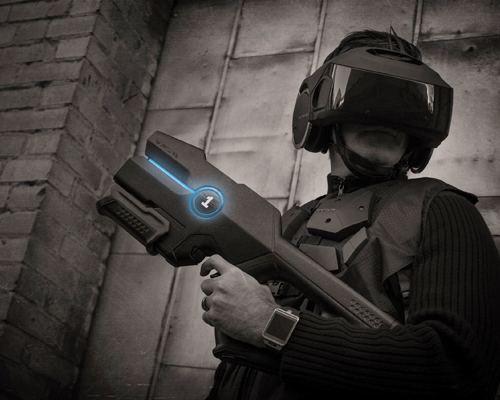
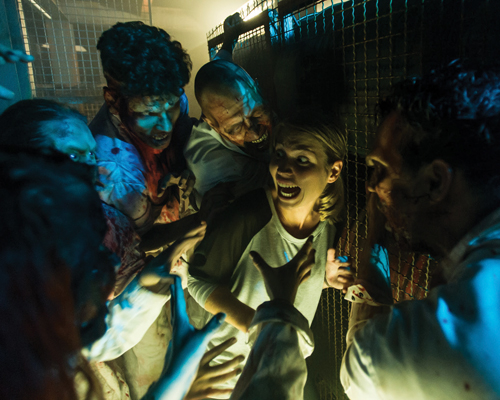
The Void is inventing a new type of VR-based out-of-home attraction
The hugely immersive medium of VR is a natural companion to the experiential, visual and narrative world of attractions. The technology’s applications for and within the industry are countless because, when it comes to storytelling, a VR experience really is like entering another world.
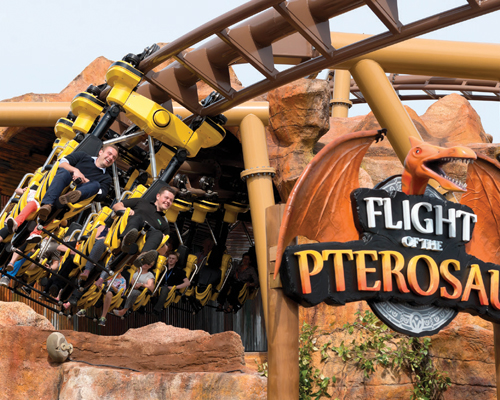
It’s no wonder a number of theme park and museum operators have already brought the technology to their visitors. For example, Europa Park, Six Flags Magic Mountain, Universal Japan and Alton Towers have reinvented veteran rollercoasters with the addition of a VR experience. London’s Natural History Museum has collaborated with David Attenborough to offer on-site VR experiences, while The Void, which is expected to fully open in Lindon, Utah, this year is defining a whole new genre for the attractions industry, the Virtual Entertainment Centre (VEC).
While some big players are already adapting the technology to their needs, creating the top-quality experience that people expect from out-of-home entertainment requires investment and the work of highly skilled technicians and creatives. It also poses challenges for operators in that it can be deemed too isolating an experience. It can also be awkward to implement on the ground with slow throughput and hygiene issues. However, the possibilities of content are infinite and when done well, a VR experience can boost revenues.
Is it time to embrace VR? Can it work for your attraction? We asked the experts.
Read more from this issue of Spa Business magazine
Promotional feature: IDEATTACK
IDEATTACK’s new project in Hainan, China,
introduces the storytelling elements of a
theme park to the oceanarium concept
Science Museums: Shaping Tomorrow
Brazil’s Museum of Tomorrow uses
constantly updating, real-time digital
collection to communicate with visitors.
We met members of the team
Promotional feature: EAS
This year, the Euro Attractions Show is
coming to the Spanish city of Barcelona
Disney Special: Shanghai Disney: The Best Yet?
As Disney opens its first resort in mainland
China, our special feature examines its
business model, its potential impact and
the modernisation of the Disney castle park
New Openings: Space Inversion
A new contemporary museum district
in the Netherlands – Museumplein
Limburg – features a science centre,
a design museum and an inverted
planetarium. We take a closer look
Promotional feature: Polin
Polin’s patented technologies, extensive R&D and creative flair have made it one of the world’s leading waterpark design and manufacturing companies
Waterparks: Taking the Plunge
Waterpark suppliers constantly develop
their product offers. We dive into the
world of waterpark R&D to find out more
Zoos & Aquariums: The Long Game
UK safari park Longleat is undertaking a
decade-long upgrade that starts by going
back to its roots. As the attraction turns
50, CEO Bob Montgomery explains how
he’s bridging the past and the future
Paul MoretonCreative directorMerlin Entertainments
Paul Moreton
The leisure and attraction sector has already entered an exciting new dimension with the arrival of VR. However, I don’t think we should get too carried away. It’s a great new tool for us to play with, but it’s not the be all and end all for attraction development. Imagination and storytelling are still, and always will be, the vital ingredients for creating world-class attractions.
What VR does is give us an exciting new way to further enhance and expand the stories we want to tell and the worlds we want to create; and to engage and stimulate our guests’ every sense – physical and psychological. However, this can only be achieved through the creative mixing of new techniques and technologies like VR with more traditional ones. This approach will produce the groundbreaking attractions of the future – the ones that cannot be reproduced in someone’s bedroom or a VR suite – ensuring attractions remain relevant and successful.
This is what we’ve been doing at Merlin Magic Making with the launch of two brand new groundbreaking attractions.
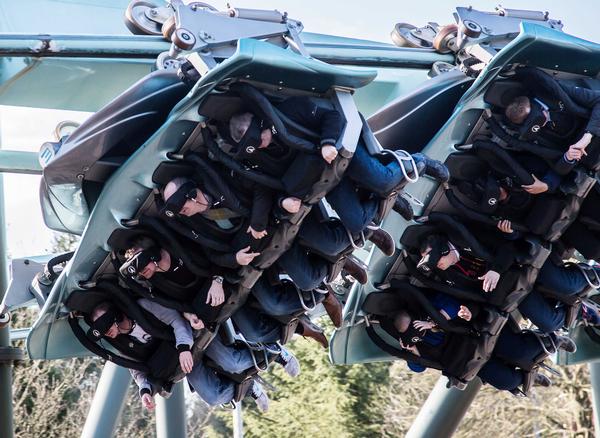
At Alton Towers, we’ve created one of the first rollercoasters fully dedicated to VR. Galactica is a breathtaking journey through space, where guests experience total immersion into an incredible story of space exploration. It’s achieved through a combination of a specially created VR film delivered through individual headsets, a coaster which recreates the feeling of flying and new theming.
In Derren Brown’s Ghost Train at Thorpe Park, we’ve used VR in a very different way. Here, VR is just one element of a multi-million pound, multi-dimensional attraction – it’s something that’s never been seen before.
Again, we employ uniquely created VR footage, but this works alongside grand illusion, live action, 4D effects and a very scary storyline where guests play a central role.
The public response to both these new attractions has been incredible – people love them.
It’s clear, however, that it’s not the VR, but the way we use it which is critical both to customer reaction and the long-term development and relevance of VR to the sector. Consumers’ expectations are always rising and it won’t be enough for the industry to make generic VR films, played in standard theatres. The public will expect much more.
In short, the future is very exciting but only if we continue to dream the impossible and then use VR, along with many other techniques, to bring it to life.
"What VR does is give us an exciting new way to further enhance and expand the stories we want to tell"
VR coaster Galactica opened this season at Alton Towers, UK
Stuart CupitTechnical DirectorInition VR
Stuart Cupit
For the first time since the invention of motion pictures, we have a new channel of storytelling: VR. As with any new channel of art, the rules are being established, language being developed and devices being explored.
Recent developments in the medium mean nobody currently has all the answers. It’s an exciting time for experimentation. Industry experts open to sharing information on their experiences of creating stories for VR, thus creating an accessible atmosphere of content creation dialogue.
VR is an ideal tool for visitor attractions because it provides multisensory environments. We are constantly challenged to think “out of the headset” and explore ways that allow the user to interact with objects around them. Engaging additional senses through motion, touch/haptics, scent, taste, temperature and weather simulations adds to the sense of immersion, but the experience is only as good as the content, that is why the storytelling aspect is paramount to get “inside” and bring the production to life.
Technology has evolved in such a way that we can provide truly unique, fully immersive experiences that engage the senses to create memorable brand theatre, whereby the content doesn’t break the spell and keeps the users in suspended belief mode.
VR can be a worthwhile investment for marketing attractions in that it is the ultimate interface to the digital world, with the ability to take you anywhere, anytime. We can build fantastical imaginary worlds or put visitors in remote places – making them feel as though they’re actually there.
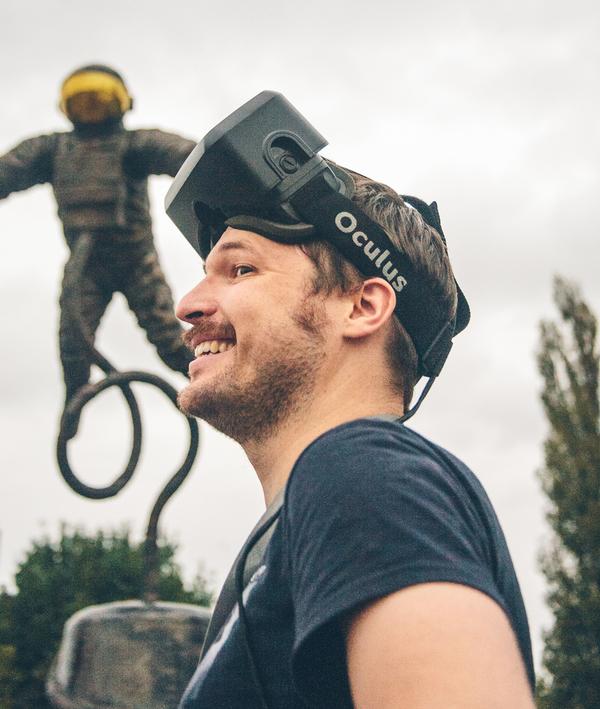
Every experience should offer a new opportunity for social connection. Our world-first Topshop project opened up London Fashion Week to a wider audience, transmitting the catwalk show live from a front row seat in the Tate Modern’s Turbine Hall to enthralled fashion-lovers sitting in the window of Topshop’s flagship store on Oxford Street. Five competition winners donned specially customised Oculus Rift headsets to experience the show as it happened.
To really get a great piece of VR theatre, we can use feelings that are natural to us as human beings to evoke a powerful response, like our 19th-century circus experience where the user was undertaking a daring stunt by jumping through rings of fire. The experience aimed to fully transport users into the circus atmosphere, engaging in our very real and natural emotions of fear and wonder.
These are but a few examples of how we have led the way for clients, helping to create more engaging consumer experiences and reinvigorate how content is delivered. The possibilities are almost overwhelming as they are endless. If you can imagine it, then we will be able to build it.
"We are constantly challenged to think ‘out of the headset’"
Ed BartonCEOCuriscope
Ed Barton
Virtual and augmented reality open up a huge market of opportunity for the attractions industry. We’ve seen VR before, but with low latency, higher quality devices that cost a lot less, there are going to be exciting developments.
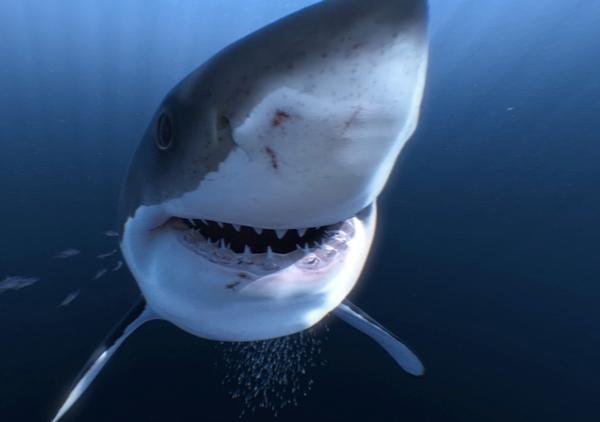
We created a VR experience that lets you dive with great white sharks. It’s the second-most viewed VR experience in the world on a number of platforms, outperforming anything that’s been released by Hollywood, proving there’s demand for experiences that are not only exciting but also informative. Ultimately, an aquarium can offer a great white experience without having to keep one in captivity.
This creation of impossible experiences is where things get exciting. You no longer need to be constrained to the physicality of an environment or the time period.
To use the technologies most effectively, shoot for landmarks. Don’t jump on them just because they’re a buzzword; embrace them because they will fundamentally improve the visitor experience. We’re in the early days of a tectonic shift in the computing industry, from an information economy to an experience economy. This is what the attraction industry does best and it must take the lead if it’s to capitalise on the opportunity.
Imagine you no longer just look at an Apollo spaceship, but experience the mission; no longer just look at a volcano, but dive through it. Imagine shrinking to the size of a blood cell and going on an adventure inside the body.
There’s never been a medium that’s able to so effectively provide you with the feeling of presence in another location and that’s ultimately what the attractions industry has always sought to emulate. Demand has never been higher and the technology is only getting better. This is the opportunity to be pioneers and provide real value and engagement at a level higher than ever before.
"Imagine shrinking to the size of a blood cell and going on an adventure inside the body"
Curiscope’s great white shark VR experience
Paul MowbrayDirectorNSC Creative
Paul Mowbray, director at NSC Creative
At NSC Creative, we started in the planetarium environment, where large fixed venues evolved into expansive digital canvases with the capability to transport audiences into a diverse range of topics. The themes are no longer constrained to astronomy now that the opto-mechanical star ball is collecting dust in the pit.
The 360° digital dome format is in a way a form of social VR. The dome allows people to have a shared immersive experience without the logistical challenges of HMDs. However, there are many venues that do not have the space or budget for a large dome and this is where the VR Planetarium or VR Theatre concept comes into play. At its most basic, it’s a room full of spinny chairs with a VR headset for each guest. The investment for this is the cost of the smartphones and headphones, but the experience can actually deliver higher visual fidelity than a multi-million pound dome. This is because VR natively supports stereoscopic 3D content and uses screens rather than projection, hugely increasing the contrast ratio and brightness.
If offering a passive experience like a pre-rendered movie it’s important to try to synchronise the experience. Start with a short pre-show and briefing and ensure everyone’s show begins and ends at the same time. Encourage guests to share their VR experience with others by offering a follow-on social space.
Our 8K 60fps 3D film We Are Stars is a cross-platform science documentary designed and optimised for both domes and HMDs. We maximise investment by opening up new formats, while exhibitors can add a 360° 3D experience for very little up-front cost.
A cheap option is Google Cardboard. We did a lesson about the moon as part of our relationship with the Google Lunar XPRIZE project. Each child has a Cardboard with a smartphone synched to the teacher’s tablet. By having the audience take the device off multiple times throughout the lesson to engage with each other and the teacher, it became a dynamic group event. This approach suits science centres and museums, who have the experts on-hand to give amazing insights and intimate tours of their areas of expertise.
At the high end of the VR spectrum are room-scale, fully interactive experiences enabled by solutions such as the HTC Vive, which tracks a person’s position to a sub-millimetre level, enabling unprecedented immersion into a virtual world. The current holy grail for this kind of experience is putting multiple people in the same physical space. Projects like The Void are already doing this and more attractions will roll out similar and equally compelling and transformative experiences. Making this form of VR – True VR – work technically, financially and operationally poses serious challenges, but the level of visitor engagement has the potential to be off the scale.
There’s a massive buzz around VR, but research shows only a tiny percentage of the public have tried it. Therefore, there’ll be a period of time where attractions can introduce VR and simply offer the wow factor that comes for free from everyone’s first VR experience. As more people get it at home, venues will have to work harder with custom, high-end experiences that serve their mission and offer something unique. VR will be ubiquitous across attractions, but will come in waves as the content and guests’ desires become more sophisticated.
"True VR poses serious challenges, but the level of visitor engagement has the potential to be off the scale"
A fulldome 4K fisheye still taken from We Are Stars
The MSpa Oslo series is a perennial bestseller in global markets. With innovative
engineering and premium performance, this completely portable spa line-up is expertly
designed to meet the needs of customers worldwide. [more...]
VR technology offers seemingly endless possibilities across all the attractions sectors. But is it worth investing in a VR experience – and where should you start? We asked a panel of experts
The Void is inventing a new type of VR-based out-of-home attraction
The hugely immersive medium of VR is a natural companion to the experiential, visual and narrative world of attractions. The technology’s applications for and within the industry are countless because, when it comes to storytelling, a VR experience really is like entering another world.
It’s no wonder a number of theme park and museum operators have already brought the technology to their visitors. For example, Europa Park, Six Flags Magic Mountain, Universal Japan and Alton Towers have reinvented veteran rollercoasters with the addition of a VR experience. London’s Natural History Museum has collaborated with David Attenborough to offer on-site VR experiences, while The Void, which is expected to fully open in Lindon, Utah, this year is defining a whole new genre for the attractions industry, the Virtual Entertainment Centre (VEC).
While some big players are already adapting the technology to their needs, creating the top-quality experience that people expect from out-of-home entertainment requires investment and the work of highly skilled technicians and creatives. It also poses challenges for operators in that it can be deemed too isolating an experience. It can also be awkward to implement on the ground with slow throughput and hygiene issues. However, the possibilities of content are infinite and when done well, a VR experience can boost revenues.
Is it time to embrace VR? Can it work for your attraction? We asked the experts.
Read more from this issue of Spa Business magazine
Promotional feature: IDEATTACK
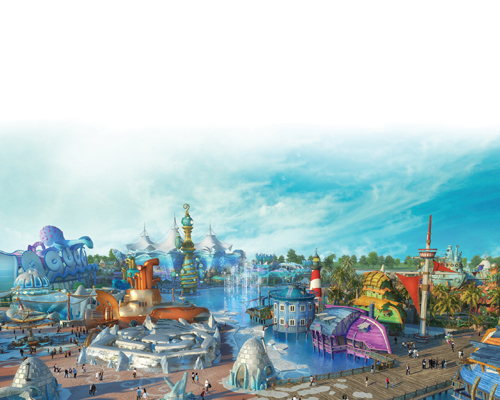
IDEATTACK’s new project in Hainan, China,
introduces the storytelling elements of a
theme park to the oceanarium concept
Science Museums: Shaping Tomorrow
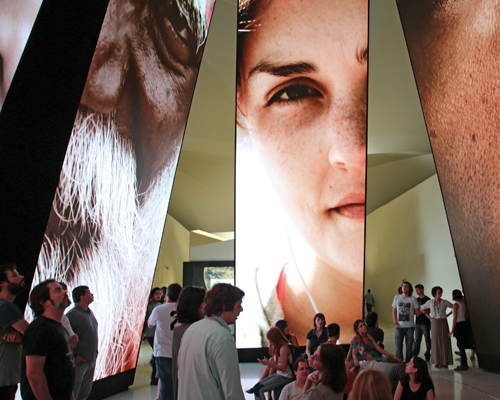
Brazil’s Museum of Tomorrow uses
constantly updating, real-time digital
collection to communicate with visitors.
We met members of the team
Promotional feature: EAS
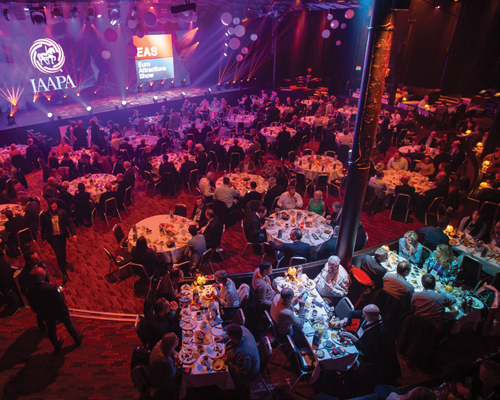
This year, the Euro Attractions Show is
coming to the Spanish city of Barcelona
Disney Special: Shanghai Disney: The Best Yet?
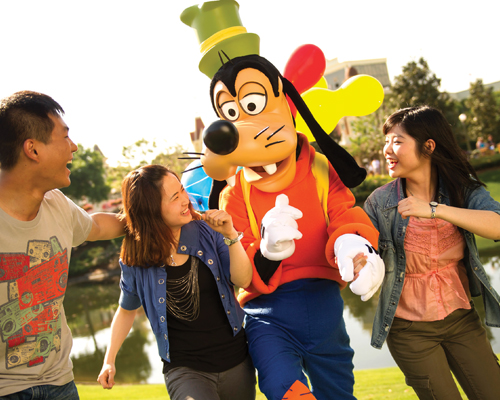
As Disney opens its first resort in mainland
China, our special feature examines its
business model, its potential impact and
the modernisation of the Disney castle park
New Openings: Space Inversion
A new contemporary museum district
in the Netherlands – Museumplein
Limburg – features a science centre,
a design museum and an inverted
planetarium. We take a closer look
Promotional feature: Polin
Polin’s patented technologies, extensive R&D and creative flair have made it one of the world’s leading waterpark design and manufacturing companies
Waterparks: Taking the Plunge
Waterpark suppliers constantly develop
their product offers. We dive into the
world of waterpark R&D to find out more
Zoos & Aquariums: The Long Game
UK safari park Longleat is undertaking a
decade-long upgrade that starts by going
back to its roots. As the attraction turns
50, CEO Bob Montgomery explains how
he’s bridging the past and the future
Paul MoretonCreative directorMerlin Entertainments
Paul Moreton
The leisure and attraction sector has already entered an exciting new dimension with the arrival of VR. However, I don’t think we should get too carried away. It’s a great new tool for us to play with, but it’s not the be all and end all for attraction development. Imagination and storytelling are still, and always will be, the vital ingredients for creating world-class attractions.
What VR does is give us an exciting new way to further enhance and expand the stories we want to tell and the worlds we want to create; and to engage and stimulate our guests’ every sense – physical and psychological. However, this can only be achieved through the creative mixing of new techniques and technologies like VR with more traditional ones. This approach will produce the groundbreaking attractions of the future – the ones that cannot be reproduced in someone’s bedroom or a VR suite – ensuring attractions remain relevant and successful.
This is what we’ve been doing at Merlin Magic Making with the launch of two brand new groundbreaking attractions.
At Alton Towers, we’ve created one of the first rollercoasters fully dedicated to VR. Galactica is a breathtaking journey through space, where guests experience total immersion into an incredible story of space exploration. It’s achieved through a combination of a specially created VR film delivered through individual headsets, a coaster which recreates the feeling of flying and new theming.
In Derren Brown’s Ghost Train at Thorpe Park, we’ve used VR in a very different way. Here, VR is just one element of a multi-million pound, multi-dimensional attraction – it’s something that’s never been seen before.
Again, we employ uniquely created VR footage, but this works alongside grand illusion, live action, 4D effects and a very scary storyline where guests play a central role.
The public response to both these new attractions has been incredible – people love them.
It’s clear, however, that it’s not the VR, but the way we use it which is critical both to customer reaction and the long-term development and relevance of VR to the sector. Consumers’ expectations are always rising and it won’t be enough for the industry to make generic VR films, played in standard theatres. The public will expect much more.
In short, the future is very exciting but only if we continue to dream the impossible and then use VR, along with many other techniques, to bring it to life.
"What VR does is give us an exciting new way to further enhance and expand the stories we want to tell"
VR coaster Galactica opened this season at Alton Towers, UK
Stuart CupitTechnical DirectorInition VR
Stuart Cupit
For the first time since the invention of motion pictures, we have a new channel of storytelling: VR. As with any new channel of art, the rules are being established, language being developed and devices being explored.
Recent developments in the medium mean nobody currently has all the answers. It’s an exciting time for experimentation. Industry experts open to sharing information on their experiences of creating stories for VR, thus creating an accessible atmosphere of content creation dialogue.
VR is an ideal tool for visitor attractions because it provides multisensory environments. We are constantly challenged to think “out of the headset” and explore ways that allow the user to interact with objects around them. Engaging additional senses through motion, touch/haptics, scent, taste, temperature and weather simulations adds to the sense of immersion, but the experience is only as good as the content, that is why the storytelling aspect is paramount to get “inside” and bring the production to life.
Technology has evolved in such a way that we can provide truly unique, fully immersive experiences that engage the senses to create memorable brand theatre, whereby the content doesn’t break the spell and keeps the users in suspended belief mode.
VR can be a worthwhile investment for marketing attractions in that it is the ultimate interface to the digital world, with the ability to take you anywhere, anytime. We can build fantastical imaginary worlds or put visitors in remote places – making them feel as though they’re actually there.
Every experience should offer a new opportunity for social connection. Our world-first Topshop project opened up London Fashion Week to a wider audience, transmitting the catwalk show live from a front row seat in the Tate Modern’s Turbine Hall to enthralled fashion-lovers sitting in the window of Topshop’s flagship store on Oxford Street. Five competition winners donned specially customised Oculus Rift headsets to experience the show as it happened.
To really get a great piece of VR theatre, we can use feelings that are natural to us as human beings to evoke a powerful response, like our 19th-century circus experience where the user was undertaking a daring stunt by jumping through rings of fire. The experience aimed to fully transport users into the circus atmosphere, engaging in our very real and natural emotions of fear and wonder.
These are but a few examples of how we have led the way for clients, helping to create more engaging consumer experiences and reinvigorate how content is delivered. The possibilities are almost overwhelming as they are endless. If you can imagine it, then we will be able to build it.
"We are constantly challenged to think ‘out of the headset’"
Ed BartonCEOCuriscope
Ed Barton
Virtual and augmented reality open up a huge market of opportunity for the attractions industry. We’ve seen VR before, but with low latency, higher quality devices that cost a lot less, there are going to be exciting developments.
We created a VR experience that lets you dive with great white sharks. It’s the second-most viewed VR experience in the world on a number of platforms, outperforming anything that’s been released by Hollywood, proving there’s demand for experiences that are not only exciting but also informative. Ultimately, an aquarium can offer a great white experience without having to keep one in captivity.
This creation of impossible experiences is where things get exciting. You no longer need to be constrained to the physicality of an environment or the time period.
To use the technologies most effectively, shoot for landmarks. Don’t jump on them just because they’re a buzzword; embrace them because they will fundamentally improve the visitor experience. We’re in the early days of a tectonic shift in the computing industry, from an information economy to an experience economy. This is what the attraction industry does best and it must take the lead if it’s to capitalise on the opportunity.
Imagine you no longer just look at an Apollo spaceship, but experience the mission; no longer just look at a volcano, but dive through it. Imagine shrinking to the size of a blood cell and going on an adventure inside the body.
There’s never been a medium that’s able to so effectively provide you with the feeling of presence in another location and that’s ultimately what the attractions industry has always sought to emulate. Demand has never been higher and the technology is only getting better. This is the opportunity to be pioneers and provide real value and engagement at a level higher than ever before.
"Imagine shrinking to the size of a blood cell and going on an adventure inside the body"
Curiscope’s great white shark VR experience
Paul MowbrayDirectorNSC Creative
Paul Mowbray, director at NSC Creative
At NSC Creative, we started in the planetarium environment, where large fixed venues evolved into expansive digital canvases with the capability to transport audiences into a diverse range of topics. The themes are no longer constrained to astronomy now that the opto-mechanical star ball is collecting dust in the pit.
The 360° digital dome format is in a way a form of social VR. The dome allows people to have a shared immersive experience without the logistical challenges of HMDs. However, there are many venues that do not have the space or budget for a large dome and this is where the VR Planetarium or VR Theatre concept comes into play. At its most basic, it’s a room full of spinny chairs with a VR headset for each guest. The investment for this is the cost of the smartphones and headphones, but the experience can actually deliver higher visual fidelity than a multi-million pound dome. This is because VR natively supports stereoscopic 3D content and uses screens rather than projection, hugely increasing the contrast ratio and brightness.
If offering a passive experience like a pre-rendered movie it’s important to try to synchronise the experience. Start with a short pre-show and briefing and ensure everyone’s show begins and ends at the same time. Encourage guests to share their VR experience with others by offering a follow-on social space.
Our 8K 60fps 3D film We Are Stars is a cross-platform science documentary designed and optimised for both domes and HMDs. We maximise investment by opening up new formats, while exhibitors can add a 360° 3D experience for very little up-front cost.
A cheap option is Google Cardboard. We did a lesson about the moon as part of our relationship with the Google Lunar XPRIZE project. Each child has a Cardboard with a smartphone synched to the teacher’s tablet. By having the audience take the device off multiple times throughout the lesson to engage with each other and the teacher, it became a dynamic group event. This approach suits science centres and museums, who have the experts on-hand to give amazing insights and intimate tours of their areas of expertise.
At the high end of the VR spectrum are room-scale, fully interactive experiences enabled by solutions such as the HTC Vive, which tracks a person’s position to a sub-millimetre level, enabling unprecedented immersion into a virtual world. The current holy grail for this kind of experience is putting multiple people in the same physical space. Projects like The Void are already doing this and more attractions will roll out similar and equally compelling and transformative experiences. Making this form of VR – True VR – work technically, financially and operationally poses serious challenges, but the level of visitor engagement has the potential to be off the scale.
There’s a massive buzz around VR, but research shows only a tiny percentage of the public have tried it. Therefore, there’ll be a period of time where attractions can introduce VR and simply offer the wow factor that comes for free from everyone’s first VR experience. As more people get it at home, venues will have to work harder with custom, high-end experiences that serve their mission and offer something unique. VR will be ubiquitous across attractions, but will come in waves as the content and guests’ desires become more sophisticated.
"True VR poses serious challenges, but the level of visitor engagement has the potential to be off the scale"
A fulldome 4K fisheye still taken from We Are Stars
Jessica Sloyan, a wellness operations and training expert, has established an independent
private training academy to provide professional qualifications for practitioners looking to offer
immersive wellness experiences.
The International Spa Association (ISPA) has published its full 2026 US Spa Industry Study,
providing further insights into the region’s total US$1 billion (€855 million, £780 million)
industry revenue increase from 2024 to 2025.
Ameyalli, the 78-acre wellbeing resort and residential community in Midway in Utah, US, has
broken ground on phase two of the hot spring development – the Ameyalli Resort and Spa –
which is due to open in 2028.
TLee Spas and Wellness has revealed the design concept for a high-tech spa with body
mapping scanners to improve public health, for AI company Midjourney.
Gran Hotel Taoro in northern Tenerife, Spain, has completed the final phase of its three-year
renovation with the debut of its Sandára Wellness Centre.
Hand and Stone Massage and Facial Spa, the spa business with more than 650 locations across
the US and Canada, has appointed franchise expert Carrie Walsh as CEO as the company plans
to expand.
Synergy – The Retreat Show, the global trade show for retreats, has launched a global research
initiative that will provide insights into the retreat sector from both consumer and industry
perspectives.
The Wellness Tourism Association (WTA) has published a non-regulatory global industry
framework designed to ensure the retreat market offers responsible experiences.
A new survey of UK and international spa practitioners shows that stress, burnout and
wellbeing concerns have caused one in three respondents to consider leaving the industry.
The MSpa Oslo series is a perennial bestseller in global markets. With innovative
engineering and premium performance, this completely portable spa line-up is expertly
designed to meet the needs of customers worldwide. [more...]