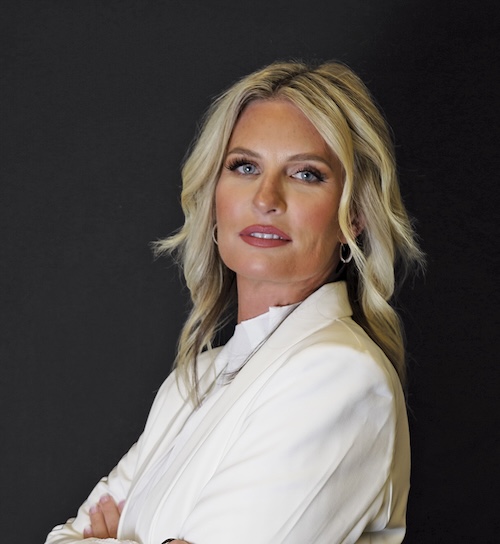
An in-demand breathwork teacher, Neese feels the modality is a great fit for spas
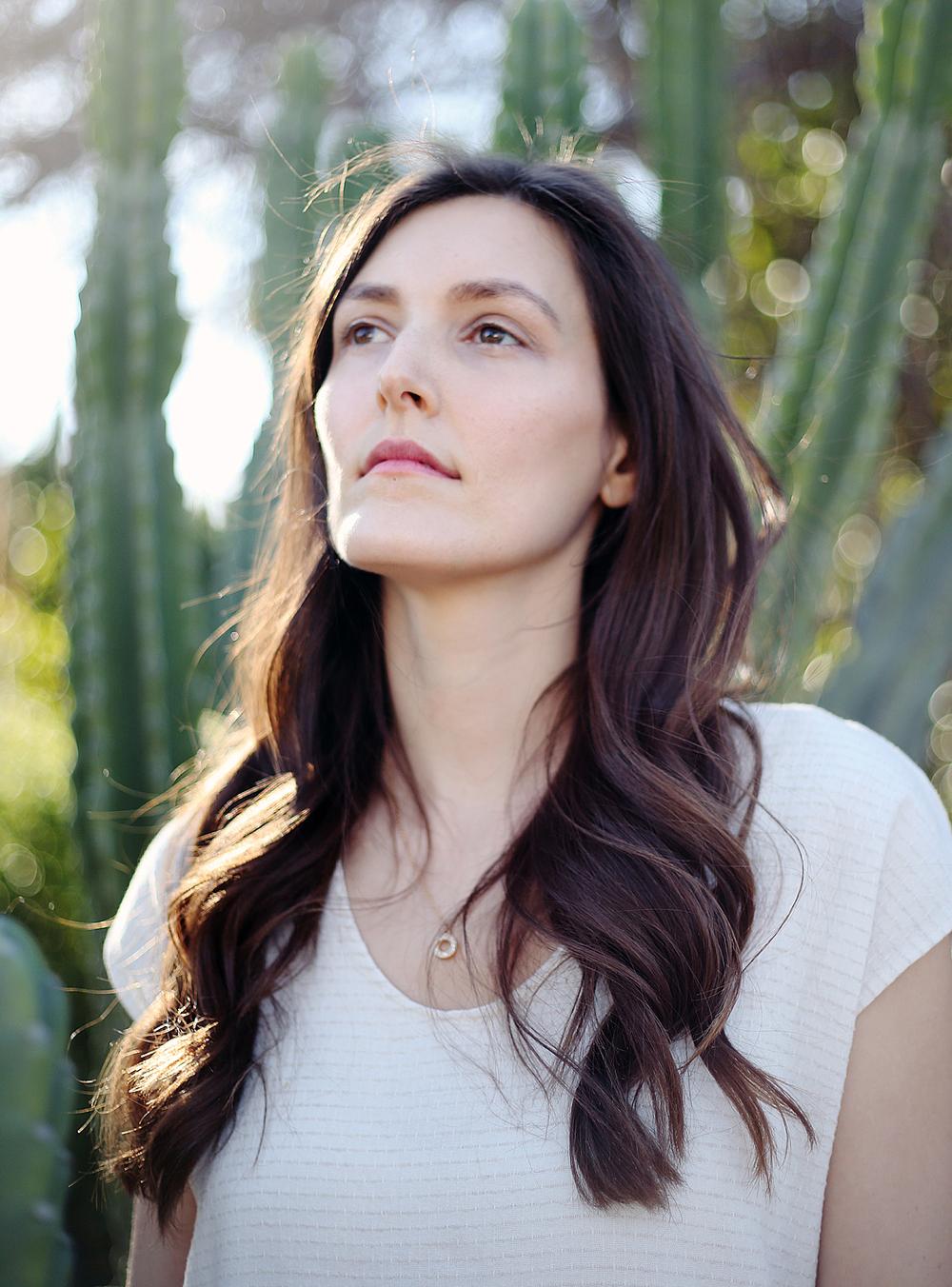
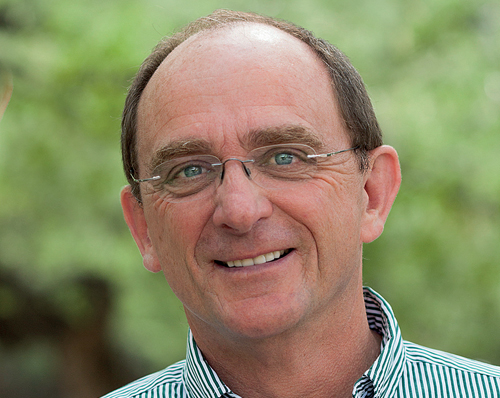
Yoga is huge, meditation has gone mainstream and there’s more interest in energetic healing,” observes in-demand, California-based breathwork teacher Ashley Neese. “As you go deeper into these facets of healing and cut through the layers, there’s one foundation. That essence is breathwork.” While scientific study into the modality is still in its infancy, practitioners of yoga and Chinese medicine have long argued that respiration influences mind, body and spirit. With the renewed uptake in yoga and meditation, as a way to not only manage anxiety but also to promote clarity in daily lives, it seems natural that people are turning their attention to the elemental question of how we breathe and what happens when we alter patterns of respiration.
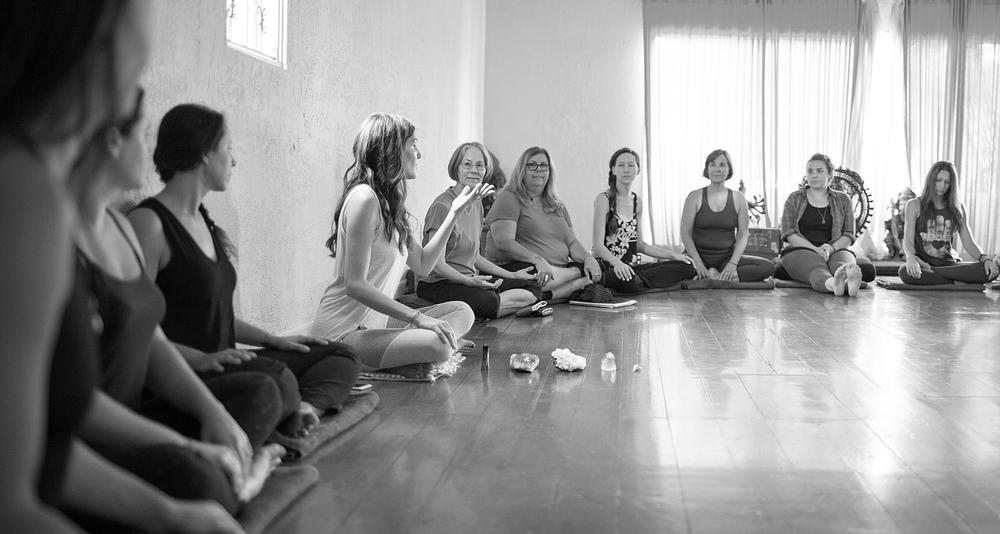
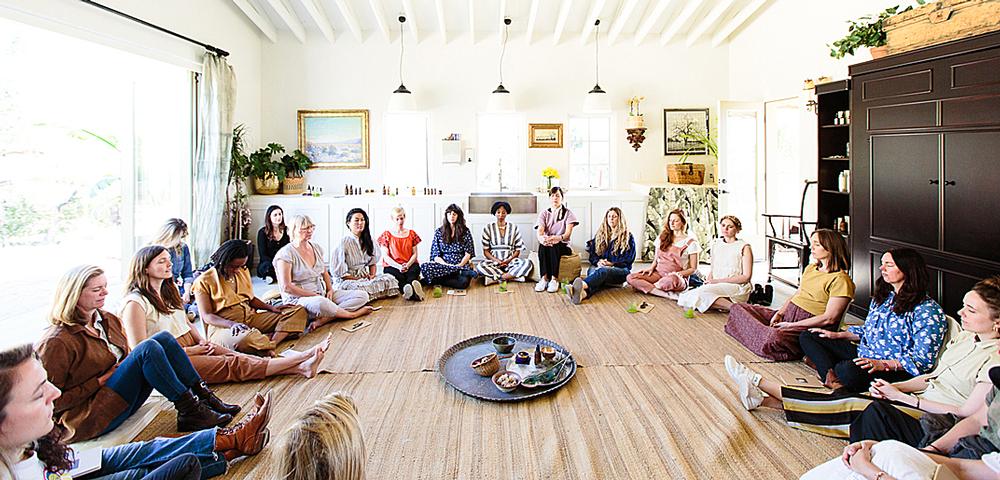
For Neese, who’s qualified and trained in hatha yoga, reiki and somatic therapy, her progression to teaching breathwork was driven by a deep interest in its community potential. “The physical aspects of what I was learning appealed to me less than the work we did with the breath,” she recalls. “While yoga has a strong body element and meditation has a mind aspect, breathwork connects the two more fully, and can be tried without special equipment or clothes in a learning environment. In my sessions, everyone sits in a circle and says what is on their mind and how they’ve been feeling. Breathing is a great way to open up to community.”
Taking into account this group aspect and as a natural extension of yoga and meditation, breathwork surely has a place in spas and health clubs.
How it works In a typical class, Neese shows participants how altering the rate of inhalation and exhalation can affect the way we think and how it reduces stress by grounding the nervous system. These are techniques valued among her on-the-go clients who have invariably tried other types of therapies yet still have difficulty quietening the mind and releasing stagnant energy.
On a basic level, the inhalation is linked to the sympathetic nervous system, its primary focus to stimulate the body’s fight-or-flight response. “We need this part of the nervous system to power us through the day but, for many, the issue is that they’re in this mode for much of the day so there’s no chance for the body to recalibrate,” explains Neese.
“Exhalation, on the other hand, feeds into the parasympathetic nervous system, which then supports activities that take place when the body is at rest. This is when we repair and restore. I don’t have a strict formula when it comes to teaching – my approach is organic – but often I find that there’s a focus on slowing and deepening exhalation to aid people’s rest-and-digest processes.”
While the science may not yet be widely accepted, recent studies including those at Trinity College Dublin reveal that the way we breathe directly affects the chemistry of our brains. As lead author, Michael Melnychuk, reports: “When we are stressed we produce too much noradrenaline and we can’t focus. When we feel sluggish, we produce too little and again can’t focus. There’s a sweet spot of noradrenaline in which our emotions, thinking and memory are much clearer. This study has shown that our attention is influenced by our breath, rising and falling with the cycle of respiration. By focusing on and regulating breathing, you can optimise your attention level.”
Over in the US, Drs Richard P Brown and Patricia L Gerbarg, elaborate further on ways of breathing. They say: “Changing the patterns of breathing makes it possible to restore balance to the stress response systems, calm an agitated mind, relieve symptoms of anxiety and post-traumatic stress disorder, improve physical health and endurance, elevate performance, and enhance relationships.”
The life force Fast becoming an authority on the subject, with a book called How to Breathe: 25 practices for calm, joy and resilience, due to be published in April 2019, Neese suggests that all the pieces are there to prove the benefits of breathwork. “Whether it’s pranayama from the ayurvedic system or chi from Chinese medicine, the idea of breath as our life force has existed for years, with these classical cultures making the connection between the energy, breath and spirit,” she says. “I’ve studied their history and witnessed their practical application in today’s world. It’s logical that we can open up areas of static energy in the body through breathing. And when you see 70-year-olds who’ve been practising for years, you just can’t argue with their levels of vitality.”
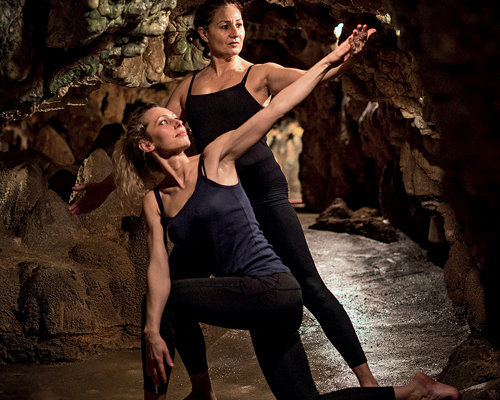
As a teacher, she offers private sessions and group classes in studios, lifestyle shops and corporate settings as well as longer four-day retreats in spas. Her public classes vary in price from US$55-US$175 (€48-€153, £43-£137) per person depending on length of class while retreats, again open to the public, start from US$2,500 (€2,191, £1,950). With an average of 30 in a public class, Neese uses somatic touch, a form of body-focused mediation that involves her guiding participants to use their own hands to access their body.
“We think of our respiratory system at the front of our bodies but I often guide people to the sides and back,” she says. “Although you physically can’t touch your diaphragm, I can direct people to a related part of the sternum, creating an intention and body memory, which helps them to shift their breathing practice. This is something they can continue at home.” Along with guided techniques to activate and regulate the nervous system, there’s a chance for people to talk about their intentions.
Clients come to manage stress, access their intuition, unleash their creativity, improve emotional intelligence or because they’re suffering trauma. Neese has seen how breathwork can be an entry point into deeper layers of emotions that practitioners need to manage effectively. “Anxiety can be a manifestation of trauma or abuse experienced by people in their earlier lives so practitioners have to be careful about reigniting this level of emotion and sending clients back out into the world,” advises Neese. “There has to be a safe container in which to work through trauma. Ideally, you’d want a small group committed to meeting regularly over six months – once a week. In this scenario, my session would widen out to include therapy-type counselling and somatic meditation. I’ve taught many corporate classes and nine times out of 10, there will be one or two executives who find emotional stress coming out, rooted in their past.”
When experience is essential Although Neese has not taught in a gym, she sees no reasons why breathwork classes should not be offered especially if yoga or meditation is already available. She has colleagues who work specifically with high-performance athletes. For spas – Neese has previously run retreats at California’s Two Bunch Palms – she says that “classes can be focused on relaxation, connection to self, creativity or intuition.”
As a note of caution, she recommends gym and spa owners seek out practitioners who have a grounding in energy medicine, yoga and breathwork. “There are so many different schools and lineages of energy medicine so it’s important to find teachers with more than a day’s worth of breathwork training,” she says. “Look for someone who has taught plenty of breath-specific modalities.”
One of breathwork’s great advantages is that it’s suited to 45-minute classes through to extensive retreats. It’s also great for self-practice at home or groups. Neese hopes that breathwork is shared with as many people as possible for its accessible and life-changing possibilities.
Neena Dhillon is a spa, hotel and travel journalist
Email: [email protected]
Read more from this issue of Spa Business magazine
Interview: Thomas Klein
Senior living, family resorts and urban retreats are all on the cards for Canyon Ranch says COO and president Thomas Klein. Katie Barnes finds out more
Trends: Spa Foresight™ 2018/19
Spa Business’ predictions for the future include vegan spas, blue light antidotes, home wellness and plastic-free facilities
Interview: Dietmar Mueller-Elmau
The owner of Germany’s Schloss Elmau tells Spa Business why music, culture and spa feed the mind and soul
Promotional feature: Living Earth Crafts
Living Earth Crafts has distinguished itself with furniture for the spa industry that combines high design with seamless functionality. Brian Paris gives us insight into the company’s stylish new introductions
Event report: GWS 2018 - Bella vita
An Italian inspired Global Wellness Summit featured fashion, food, fitness and spa… and cameos from Hugh Jackman and Oprah Winfrey. Spa Business gives its highlights
Research: Growing up
Spa is the fastest growing sector of the US$4.2tn global wellness economy according to the latest GWI research
Event report: WTA Conference
What do wellness travellers want? And what issues need to be addressed as the wellness tourism sector grows? Anne Dimon reports from the inaugural meeting of the Wellness Tourism Association
Fitness: Inhale the future
Ashley Neese tells Spa Business about the possibilities of breathwork and opening up the practice to more people
Contrast therapy, based on the alternation of hot and cold rituals, has become one of the
most valued practices in the fields of wellness and recovery. [more...]
In the fast-paced world of fitness and wellness, where high-intensity workouts push us to
our limits and the sweat pours, the importance of efficient recovery cannot be overstated. [more...]
+ More featured suppliers
COMPANY PROFILES
Borghese Roma
Borghese is an Italian luxury skincare brand founded in 1957 by Princess Marcella Borghese. [more...]
Klafs GmbH
Founded in 1928, Klafs is known as an award winning, world-leading trendsetter in wellness and spa. [more...]
An in-demand breathwork teacher, Neese feels the modality is a great fit for spas
Yoga is huge, meditation has gone mainstream and there’s more interest in energetic healing,” observes in-demand, California-based breathwork teacher Ashley Neese. “As you go deeper into these facets of healing and cut through the layers, there’s one foundation. That essence is breathwork.” While scientific study into the modality is still in its infancy, practitioners of yoga and Chinese medicine have long argued that respiration influences mind, body and spirit. With the renewed uptake in yoga and meditation, as a way to not only manage anxiety but also to promote clarity in daily lives, it seems natural that people are turning their attention to the elemental question of how we breathe and what happens when we alter patterns of respiration.
For Neese, who’s qualified and trained in hatha yoga, reiki and somatic therapy, her progression to teaching breathwork was driven by a deep interest in its community potential. “The physical aspects of what I was learning appealed to me less than the work we did with the breath,” she recalls. “While yoga has a strong body element and meditation has a mind aspect, breathwork connects the two more fully, and can be tried without special equipment or clothes in a learning environment. In my sessions, everyone sits in a circle and says what is on their mind and how they’ve been feeling. Breathing is a great way to open up to community.”
Taking into account this group aspect and as a natural extension of yoga and meditation, breathwork surely has a place in spas and health clubs.
How it works In a typical class, Neese shows participants how altering the rate of inhalation and exhalation can affect the way we think and how it reduces stress by grounding the nervous system. These are techniques valued among her on-the-go clients who have invariably tried other types of therapies yet still have difficulty quietening the mind and releasing stagnant energy.
On a basic level, the inhalation is linked to the sympathetic nervous system, its primary focus to stimulate the body’s fight-or-flight response. “We need this part of the nervous system to power us through the day but, for many, the issue is that they’re in this mode for much of the day so there’s no chance for the body to recalibrate,” explains Neese.
“Exhalation, on the other hand, feeds into the parasympathetic nervous system, which then supports activities that take place when the body is at rest. This is when we repair and restore. I don’t have a strict formula when it comes to teaching – my approach is organic – but often I find that there’s a focus on slowing and deepening exhalation to aid people’s rest-and-digest processes.”
While the science may not yet be widely accepted, recent studies including those at Trinity College Dublin reveal that the way we breathe directly affects the chemistry of our brains. As lead author, Michael Melnychuk, reports: “When we are stressed we produce too much noradrenaline and we can’t focus. When we feel sluggish, we produce too little and again can’t focus. There’s a sweet spot of noradrenaline in which our emotions, thinking and memory are much clearer. This study has shown that our attention is influenced by our breath, rising and falling with the cycle of respiration. By focusing on and regulating breathing, you can optimise your attention level.”
Over in the US, Drs Richard P Brown and Patricia L Gerbarg, elaborate further on ways of breathing. They say: “Changing the patterns of breathing makes it possible to restore balance to the stress response systems, calm an agitated mind, relieve symptoms of anxiety and post-traumatic stress disorder, improve physical health and endurance, elevate performance, and enhance relationships.”
The life force Fast becoming an authority on the subject, with a book called How to Breathe: 25 practices for calm, joy and resilience, due to be published in April 2019, Neese suggests that all the pieces are there to prove the benefits of breathwork. “Whether it’s pranayama from the ayurvedic system or chi from Chinese medicine, the idea of breath as our life force has existed for years, with these classical cultures making the connection between the energy, breath and spirit,” she says. “I’ve studied their history and witnessed their practical application in today’s world. It’s logical that we can open up areas of static energy in the body through breathing. And when you see 70-year-olds who’ve been practising for years, you just can’t argue with their levels of vitality.”
As a teacher, she offers private sessions and group classes in studios, lifestyle shops and corporate settings as well as longer four-day retreats in spas. Her public classes vary in price from US$55-US$175 (€48-€153, £43-£137) per person depending on length of class while retreats, again open to the public, start from US$2,500 (€2,191, £1,950). With an average of 30 in a public class, Neese uses somatic touch, a form of body-focused mediation that involves her guiding participants to use their own hands to access their body.
“We think of our respiratory system at the front of our bodies but I often guide people to the sides and back,” she says. “Although you physically can’t touch your diaphragm, I can direct people to a related part of the sternum, creating an intention and body memory, which helps them to shift their breathing practice. This is something they can continue at home.” Along with guided techniques to activate and regulate the nervous system, there’s a chance for people to talk about their intentions.
Clients come to manage stress, access their intuition, unleash their creativity, improve emotional intelligence or because they’re suffering trauma. Neese has seen how breathwork can be an entry point into deeper layers of emotions that practitioners need to manage effectively. “Anxiety can be a manifestation of trauma or abuse experienced by people in their earlier lives so practitioners have to be careful about reigniting this level of emotion and sending clients back out into the world,” advises Neese. “There has to be a safe container in which to work through trauma. Ideally, you’d want a small group committed to meeting regularly over six months – once a week. In this scenario, my session would widen out to include therapy-type counselling and somatic meditation. I’ve taught many corporate classes and nine times out of 10, there will be one or two executives who find emotional stress coming out, rooted in their past.”
When experience is essential Although Neese has not taught in a gym, she sees no reasons why breathwork classes should not be offered especially if yoga or meditation is already available. She has colleagues who work specifically with high-performance athletes. For spas – Neese has previously run retreats at California’s Two Bunch Palms – she says that “classes can be focused on relaxation, connection to self, creativity or intuition.”
As a note of caution, she recommends gym and spa owners seek out practitioners who have a grounding in energy medicine, yoga and breathwork. “There are so many different schools and lineages of energy medicine so it’s important to find teachers with more than a day’s worth of breathwork training,” she says. “Look for someone who has taught plenty of breath-specific modalities.”
One of breathwork’s great advantages is that it’s suited to 45-minute classes through to extensive retreats. It’s also great for self-practice at home or groups. Neese hopes that breathwork is shared with as many people as possible for its accessible and life-changing possibilities.
Neena Dhillon is a spa, hotel and travel journalist
Email: [email protected]
Read more from this issue of Spa Business magazine
Interview: Thomas Klein
Senior living, family resorts and urban retreats are all on the cards for Canyon Ranch says COO and president Thomas Klein. Katie Barnes finds out more
Trends: Spa Foresight™ 2018/19
Spa Business’ predictions for the future include vegan spas, blue light antidotes, home wellness and plastic-free facilities
Interview: Dietmar Mueller-Elmau
The owner of Germany’s Schloss Elmau tells Spa Business why music, culture and spa feed the mind and soul
Promotional feature: Living Earth Crafts
Living Earth Crafts has distinguished itself with furniture for the spa industry that combines high design with seamless functionality. Brian Paris gives us insight into the company’s stylish new introductions
Event report: GWS 2018 - Bella vita
An Italian inspired Global Wellness Summit featured fashion, food, fitness and spa… and cameos from Hugh Jackman and Oprah Winfrey. Spa Business gives its highlights
Research: Growing up
Spa is the fastest growing sector of the US$4.2tn global wellness economy according to the latest GWI research
Event report: WTA Conference
What do wellness travellers want? And what issues need to be addressed as the wellness tourism sector grows? Anne Dimon reports from the inaugural meeting of the Wellness Tourism Association
Fitness: Inhale the future
Ashley Neese tells Spa Business about the possibilities of breathwork and opening up the practice to more people
Synergy – The Retreat Show, the global trade show for retreats, has launched a global research
initiative that will provide insights into the retreat sector from both consumer and industry
perspectives.
The Wellness Tourism Association (WTA) has published a non-regulatory global industry
framework designed to ensure the retreat market offers responsible experiences.
A new survey of UK and international spa practitioners shows that stress, burnout and
wellbeing concerns have caused one in three respondents to consider leaving the industry.
The UK's four Chief Medical Officers have published a refreshed edition of Physical activity
guidelines: UK Chief Medical Officers' report, updating the evidence that underpins the nation's
physical activity recommendations and placing greater emphasis on strength, balance, reducing
sedentary behaviour and, for the first time, supporting people taking weight loss medications.
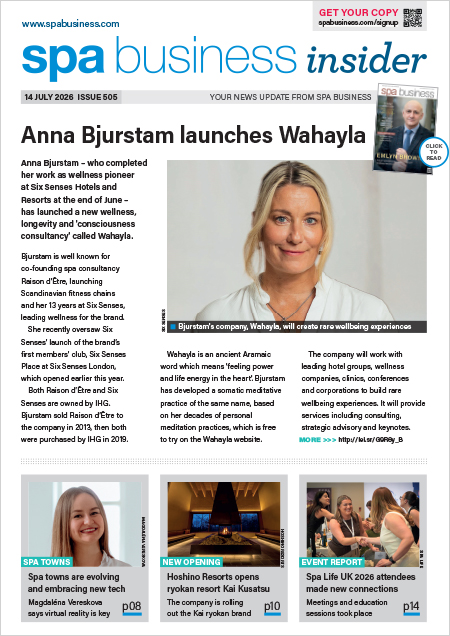
Anna Bjurstam has left her role as Wellness Pioneer at Six Senses Hotels and Resorts and
launched a new wellness, longevity and “consciousness consultancy” called Wahayla.
Fairmont Cheshire, The Mere, has opened today (10 July) in the Northwest of England
with a
1,715sq m Fairmont Spa that has been designed using a ‘Wellness without Walls’
concept.
Wellness hotels generating less than US$1 million (€932,700, £785,200) – or 10 per cent of
total revenue from wellness and leisure – recorded the strongest RevPAR and TRevPAR growth
in 2025 across categories when compared with 2024, according to the latest Wellness Real
Estate Report by RLA Global, produced in partnership with P and L benchmarking firm HotStats.
Lefay Resorts, the portfolio of two luxury wellness properties in Italy, has added emotional
dance classes and group cold plunge sessions in response to market demand for social
connection.
Contrast therapy, based on the alternation of hot and cold rituals, has become one of the
most valued practices in the fields of wellness and recovery. [more...]
In the fast-paced world of fitness and wellness, where high-intensity workouts push us to
our limits and the sweat pours, the importance of efficient recovery cannot be overstated. [more...]
+ More featured suppliers
COMPANY PROFILES
Borghese Roma Borghese is an Italian luxury skincare brand founded in 1957 by Princess Marcella Borghese. [more...]