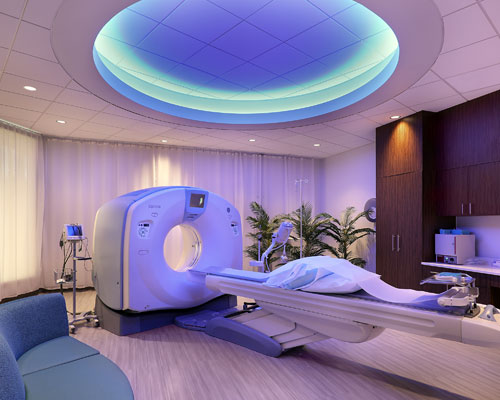
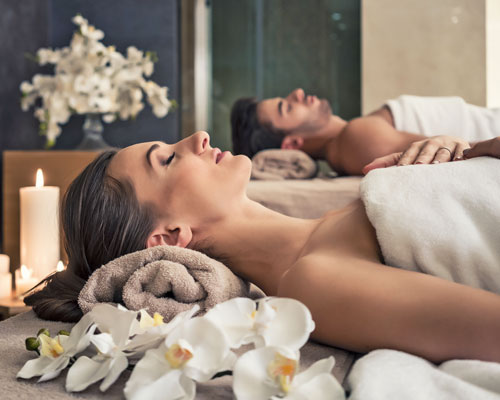
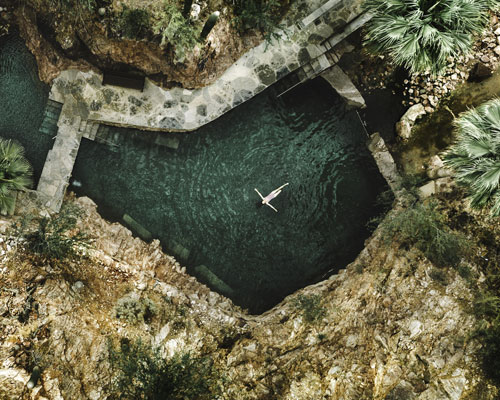
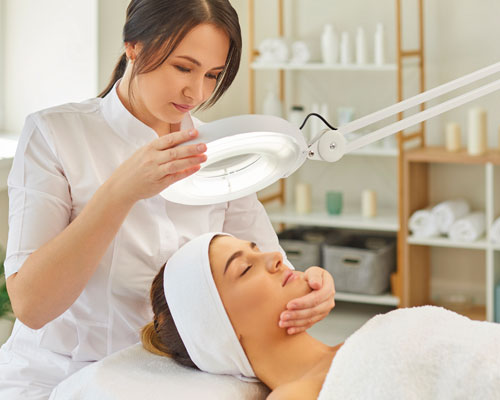
The Inns of Aurora in New York state, USA, has a WELL Certified spa / photo: Bryan Peck, courtesy of the Inns of Aurora
A new study in the Journal of Building and Environment* has found that environments which focus on things such as light, water and air quality can have a significant impact on our wellbeing in a number of ways.
For the peer-reviewed research, a team from universities in the USA which specialise in architectural engineering and design, analysed the impact of WELL Certification using more than 1,300 pre- and post-occupancy survey responses from six companies in North America.
Launched in 2014, WELL offers a framework for healthy buildings spanning 108 features across 10 categories of air, water, nourishment, light, movement, thermal comfort, sound materials, mind and community (see www.spabusiness.com/PaulScialla). It’s being used in 125 countries by more than 100 Fortune 500 companies and brands such as Four Seasons Beverly Hills.
WELL Certification is awarded to companies which meet certain requirements of the WELL Building Standard.
Specifically, this study focused on WELL Certified workplaces and found a number of benefits for occupants:
• A near 30 per cent improvement in overall satisfaction with the workplace, which jumped from 42 per cent to 70 per cent
• A 26 per cent overall increase in reported wellbeing scores
• A 10 per cent increase in mental health and a 2 per cent increase in physical health
• A 10-point jump in median productivity scores
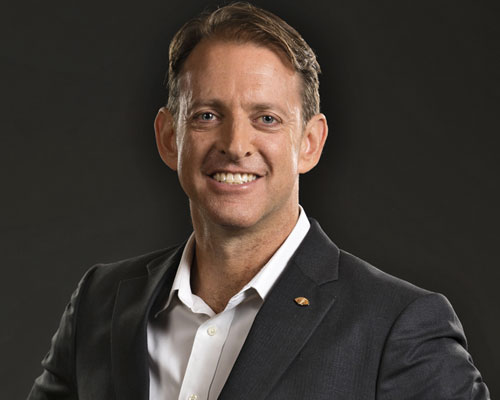
Rachel Hogdon, president and CEO of the International WELL Building Institute, creator of the standard, says this is the first time researchers have published rigorous longitudinal research into its certification. She adds: “It shows unequivocally how a people-first approach supports wide-ranging benefits for occupants and organisations alike”.
Lead study author Nasim Ildiri concludes that the findings “serve as another powerful accelerant for healthy building adoption”.
*Source. Ildiri, N et al. Impact of WELL Certification on Occupant Satisfaction and Perceived Health, Well-being, and Productivity: A Multi-Office Pre- Versus Post-Occupancy Evaluation. Journal of Building and Environment. October 2022
Read more from this issue of Spa Business magazine
View contents of Spa Business 2023 issue 2
Editor's letter: Feeling optimistic
Revenue is at an all-time high and democratic wellness is bubbling under. It’s an exciting time for spas, says Katie Barnes
Spa People: Taichi Kuma
The son of celebrated architect Kengo Kuma designs a striking shell-like sauna in Japan
Spa People: Ana Ramirez
On her plans to roll out Ancestral Handmade, her regenerative wellness hotel concept, across South America – starting in Colombia
Spa People: Daniel Golby
On ESPA Life's debut in Doha and the markets he has his eyes set on for future expansion
News report: Milestone moment
US spa industry revenue exceeds the US$20bn mark according to ISPA's latest Big Five statistics
Sponsored: MyBlend: A new vision of beauty
Clarins has elevated its myBlend brand with new tech and formulations, as well as forging powerful alliances with global spa partners
Sponsored: Gharieni: Mind expansion
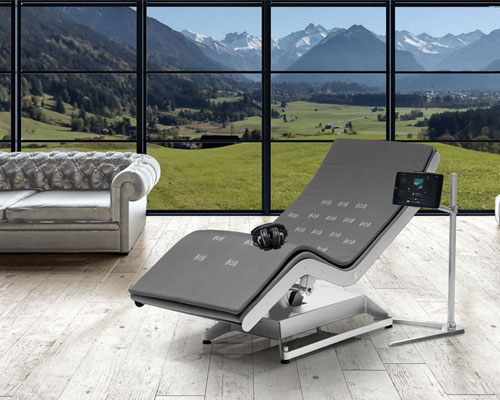
With the quest for better mental health growing ever stronger in the wake of the global pandemic, we ask Gharieni CEO Sammy Gharieni how the company’s wellness technologies are helping spas to meet this consumer demand
Top team: Hilton
Sleep, fitness and new spa concepts are top of the list as Hilton looks to deliver wellness across its 7,000 properties
Thermal spa: The heat is on
With 50 hot springs projects underway, the US is looking to establish itself as a thermal spa destination. Jane Kitchen takes a closer look
In the fast-paced world of fitness and wellness, where high-intensity workouts push us to
our limits and the sweat pours, the importance of efficient recovery cannot be overstated. [more...]
The Inns of Aurora in New York state, USA, has a WELL Certified spa / photo: Bryan Peck, courtesy of the Inns of Aurora
A new study in the Journal of Building and Environment* has found that environments which focus on things such as light, water and air quality can have a significant impact on our wellbeing in a number of ways.
For the peer-reviewed research, a team from universities in the USA which specialise in architectural engineering and design, analysed the impact of WELL Certification using more than 1,300 pre- and post-occupancy survey responses from six companies in North America.
Launched in 2014, WELL offers a framework for healthy buildings spanning 108 features across 10 categories of air, water, nourishment, light, movement, thermal comfort, sound materials, mind and community (see www.spabusiness.com/PaulScialla). It’s being used in 125 countries by more than 100 Fortune 500 companies and brands such as Four Seasons Beverly Hills.
WELL Certification is awarded to companies which meet certain requirements of the WELL Building Standard.
Specifically, this study focused on WELL Certified workplaces and found a number of benefits for occupants:
• A near 30 per cent improvement in overall satisfaction with the workplace, which jumped from 42 per cent to 70 per cent
• A 26 per cent overall increase in reported wellbeing scores
• A 10 per cent increase in mental health and a 2 per cent increase in physical health
• A 10-point jump in median productivity scores
Rachel Hogdon, president and CEO of the International WELL Building Institute, creator of the standard, says this is the first time researchers have published rigorous longitudinal research into its certification. She adds: “It shows unequivocally how a people-first approach supports wide-ranging benefits for occupants and organisations alike”.
Lead study author Nasim Ildiri concludes that the findings “serve as another powerful accelerant for healthy building adoption”.
*Source. Ildiri, N et al. Impact of WELL Certification on Occupant Satisfaction and Perceived Health, Well-being, and Productivity: A Multi-Office Pre- Versus Post-Occupancy Evaluation. Journal of Building and Environment. October 2022
Read more from this issue of Spa Business magazine
View contents of Spa Business 2023 issue 2
Editor's letter: Feeling optimistic
Revenue is at an all-time high and democratic wellness is bubbling under. It’s an exciting time for spas, says Katie Barnes
Spa People: Taichi Kuma
The son of celebrated architect Kengo Kuma designs a striking shell-like sauna in Japan
Spa People: Ana Ramirez
On her plans to roll out Ancestral Handmade, her regenerative wellness hotel concept, across South America – starting in Colombia
Spa People: Daniel Golby
On ESPA Life's debut in Doha and the markets he has his eyes set on for future expansion
News report: Milestone moment
US spa industry revenue exceeds the US$20bn mark according to ISPA's latest Big Five statistics
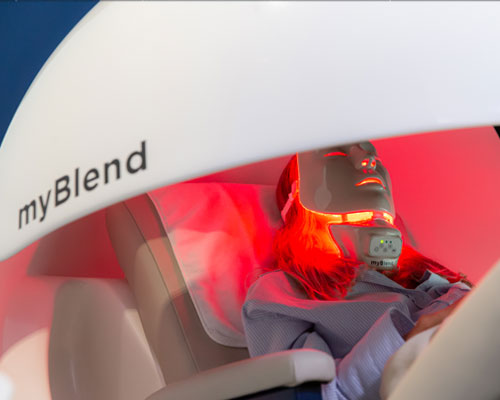
Sponsored: MyBlend: A new vision of beauty
Clarins has elevated its myBlend brand with new tech and formulations, as well as forging powerful alliances with global spa partners
Sponsored: Gharieni: Mind expansion
With the quest for better mental health growing ever stronger in the wake of the global pandemic, we ask Gharieni CEO Sammy Gharieni how the company’s wellness technologies are helping spas to meet this consumer demand
Top team: Hilton
Sleep, fitness and new spa concepts are top of the list as Hilton looks to deliver wellness across its 7,000 properties
Thermal spa: The heat is on
With 50 hot springs projects underway, the US is looking to establish itself as a thermal spa destination. Jane Kitchen takes a closer look
Gran Hotel Taoro in northern Tenerife, Spain, has completed the final phase of its three-year
renovation with the debut of its Sandára Wellness Centre.
Hand and Stone Massage and Facial Spa, the spa business with more than 650 locations across
the US and Canada, has appointed franchise expert Carrie Walsh as CEO as the company plans
to expand.
Synergy – The Retreat Show, the global trade show for retreats, has launched a global research
initiative that will provide insights into the retreat sector from both consumer and industry
perspectives.
The Wellness Tourism Association (WTA) has published a non-regulatory global industry
framework designed to ensure the retreat market offers responsible experiences.
A new survey of UK and international spa practitioners shows that stress, burnout and
wellbeing concerns have caused one in three respondents to consider leaving the industry.
The UK's four Chief Medical Officers have published a refreshed edition of Physical activity
guidelines: UK Chief Medical Officers' report, updating the evidence that underpins the nation's
physical activity recommendations and placing greater emphasis on strength, balance, reducing
sedentary behaviour and, for the first time, supporting people taking weight loss medications.
Anna Bjurstam has left her role as Wellness Pioneer at Six Senses Hotels and Resorts and
launched a new wellness, longevity and “consciousness consultancy” called Wahayla.
Fairmont Cheshire, The Mere, has opened today (10 July) in the Northwest of England
with a
1,715sq m Fairmont Spa that has been designed using a ‘Wellness without Walls’
concept.
In the fast-paced world of fitness and wellness, where high-intensity workouts push us to
our limits and the sweat pours, the importance of efficient recovery cannot be overstated. [more...]