Yes! Send me the FREE digital editions of Spa Business and Spa Business insider magazines and the FREE weekly Spa Business and Spa Business insider ezines and breaking news alerts!
The evolution of wellness equipment and technology means fully-automated self-service spas will enter the market, presenting a disruptive opportunity for investors and operators
AI-powered massage is the missing piece of the jigsaw / photo: AESCAPE
Each year the Spa Business team comes together to discuss everything we’ve seen and heard in our travels for our annual Spa Foresight predictions (see www.spaforesight.com). Many trends we’ve spotted over the past 15 years are coming to the fore – from brain optimisation and cellular health to social wellness clubs and immersive environments. As we gathered in January, self-service spas topped our list as a potential disruptor for 2025 and beyond.
While the wellness industry is embracing social wellness and connection-based experiences, ‘auto spas’ are a countertrend we’re anticipating. Such facilities will see consumers checking themselves in via a kiosk and turnstile and trying out any number of self-administered touchless therapies – from vibrating chairs and biohacking pods to floatation tanks and contrast bathing circuits. Not forgetting, of course, the missing piece of the jigsaw: AI-powered massage. ‘Robot therapists’ are now available in spas after years of development and we take a deep dive into the different kinds of equipment coming to market on p94.
Auto spas have the potential to redefine the future of operations, just like budget gyms have transformed the landscape of the health club industry globally. This approach caters to time-conscious consumers seeking efficiency, privacy and affordability.
Fully autonomous wellness centres present a strategic opportunity for investors and owners, enabling them to reduce overheads and offer flexible pricing structures, including pay-per-use, memberships or hourly rentals.
From an operational perspective, integrating automation could alleviate staffing shortages while maintaining revenue streams. Locations could expand beyond traditional luxury settings into urban hubs, co-working spaces and even airports, tapping into new markets.
The challenge lies in balancing self-service with customer experience. While some guests will value full autonomy, others will still desire human interaction – and, after all, our industry stands out for its people-centric, care-giving approach. The key to success will be a hybrid model that blends convenience with personalisation, ensuring technology enhances rather than replaces the core essence of the wellness sector.
For those willing to embrace evolution, autonomous spa solutions could future-proof businesses in an increasingly tech-driven market. The question for spa leaders is no longer if this trend will emerge – but how to capitalise on it.
photo: Jack Emmerson
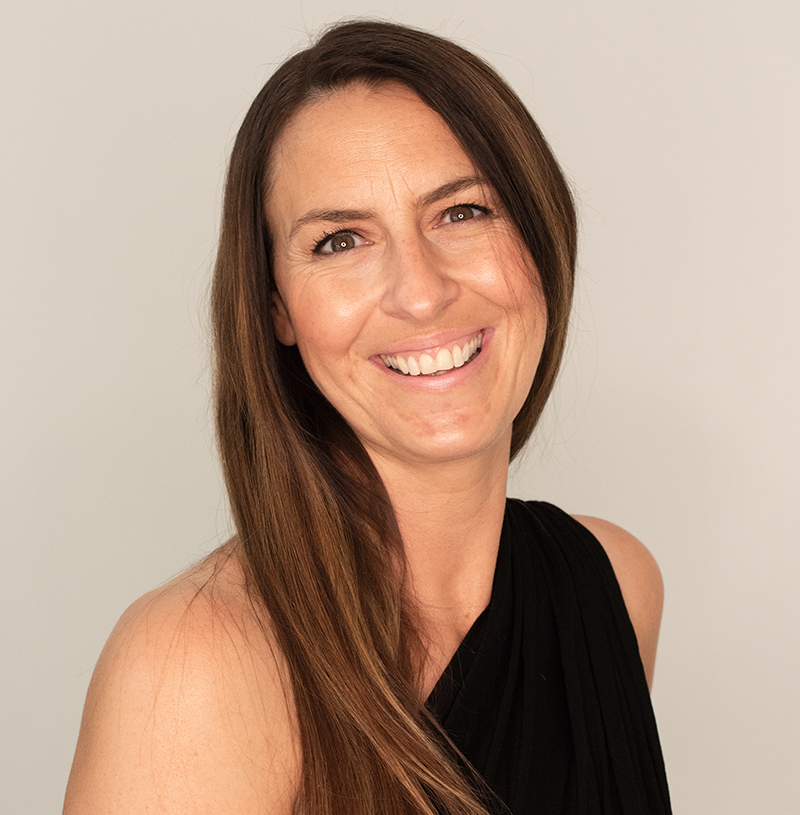
Katie Barnes is the editor of Spa Business magazine
| [email protected]
Read more from this issue of Spa Business magazine
View contents of Spa Business 2025 issue 1
Editor's letter: Auto spas
Fully automated, self-service spas are set to enter the market, presenting a disruptive opportunity for investors and operators
Spa People: Christian Louboutin
The fashion designer teams up with his personal trainer to create a Brain Edit retreat at his hotel in Portugal
Spa People: Julien Alfred
Exercise, endurance and resilience are the focus of a programme being led by Olympic 100m winner Julien Alfred at BodyHoliday in St Lucia
News report: Emerging economies
Two fresh GWI reports highlight the potential of the wellness markets in the Maldives and Saudi Arabia
Interview: Paul Hawco
Katie Barnes talks to the man heading up wellbeing at Banyan Group as it prepares to open its 100th resort and reports a 16 per cent rise in revenue
Wellness design: Design of the times
Sixteen experts share their insights on how wellness design can be used to create more impactful and profitable spas in a new white paper by Accor
Opinion: High leverage learning
What three skills do people need to master to future-proof their spa careers? Jeremy McCarthy reports
Spa tourism: Hot on the trail
A famous pilgrimage route and natural hot springs are being combined in an innovative tourism package in Spain
Opinion: Beacons of light
As cities in the US start to hire chief wellness officers, Mia Kyricos reveals what this means for our sector
Sponsored: 111SKIN - Winning formulation
111SKIN’s spa/clinic concept is making waves globally – backed by a combination of medical expertise, intuitive partner support and potent products
Product focus: AI and robot massage
Spas around the world are starting to offer AI massage. We highlight the different types of equipment coming to market
Menu engineering: At your service
A dedicated brain health facility at Kamalaya and a menopause package by actor Naomi Watts feature in our programming pages this issue
Finishing touch: Big business
Companies investing in workers’ happiness outperform other portfolios in major global stock markets, according to new research
In the fast-paced world of fitness and wellness, where high-intensity workouts push us to
our limits and the sweat pours, the importance of efficient recovery cannot be overstated. [more...]
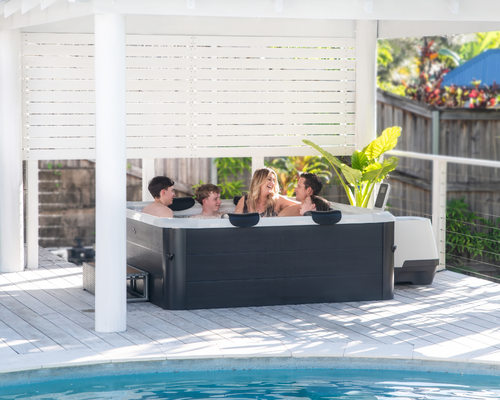
The MSpa Oslo series is a perennial bestseller in global markets. With innovative
engineering and premium performance, this completely portable spa line-up is expertly
designed to meet the needs of customers worldwide. [more...]
+ More featured suppliers
COMPANY PROFILES
Blue Rakun
Blue Rakun spaces are thoughtful, intuitive,
and designed around real human
behaviour, taking into [more...]
Klafs GmbH
Founded in 1928, Klafs is known as an award winning, world-leading trendsetter in wellness and spa. [more...]
The evolution of wellness equipment and technology means fully-automated self-service spas will enter the market, presenting a disruptive opportunity for investors and operators
AI-powered massage is the missing piece of the jigsaw / photo: AESCAPE
Each year the Spa Business team comes together to discuss everything we’ve seen and heard in our travels for our annual Spa Foresight predictions (see www.spaforesight.com). Many trends we’ve spotted over the past 15 years are coming to the fore – from brain optimisation and cellular health to social wellness clubs and immersive environments. As we gathered in January, self-service spas topped our list as a potential disruptor for 2025 and beyond.
While the wellness industry is embracing social wellness and connection-based experiences, ‘auto spas’ are a countertrend we’re anticipating. Such facilities will see consumers checking themselves in via a kiosk and turnstile and trying out any number of self-administered touchless therapies – from vibrating chairs and biohacking pods to floatation tanks and contrast bathing circuits. Not forgetting, of course, the missing piece of the jigsaw: AI-powered massage. ‘Robot therapists’ are now available in spas after years of development and we take a deep dive into the different kinds of equipment coming to market on p94.
Auto spas have the potential to redefine the future of operations, just like budget gyms have transformed the landscape of the health club industry globally. This approach caters to time-conscious consumers seeking efficiency, privacy and affordability.
Fully autonomous wellness centres present a strategic opportunity for investors and owners, enabling them to reduce overheads and offer flexible pricing structures, including pay-per-use, memberships or hourly rentals.
From an operational perspective, integrating automation could alleviate staffing shortages while maintaining revenue streams. Locations could expand beyond traditional luxury settings into urban hubs, co-working spaces and even airports, tapping into new markets.
The challenge lies in balancing self-service with customer experience. While some guests will value full autonomy, others will still desire human interaction – and, after all, our industry stands out for its people-centric, care-giving approach. The key to success will be a hybrid model that blends convenience with personalisation, ensuring technology enhances rather than replaces the core essence of the wellness sector.
For those willing to embrace evolution, autonomous spa solutions could future-proof businesses in an increasingly tech-driven market. The question for spa leaders is no longer if this trend will emerge – but how to capitalise on it.
photo: Jack Emmerson
Katie Barnes is the editor of Spa Business magazine
| [email protected]
Read more from this issue of Spa Business magazine
View contents of Spa Business 2025 issue 1
Editor's letter: Auto spas
Fully automated, self-service spas are set to enter the market, presenting a disruptive opportunity for investors and operators
Spa People: Christian Louboutin
The fashion designer teams up with his personal trainer to create a Brain Edit retreat at his hotel in Portugal
Spa People: Julien Alfred
Exercise, endurance and resilience are the focus of a programme being led by Olympic 100m winner Julien Alfred at BodyHoliday in St Lucia
News report: Emerging economies
Two fresh GWI reports highlight the potential of the wellness markets in the Maldives and Saudi Arabia
Interview: Paul Hawco
Katie Barnes talks to the man heading up wellbeing at Banyan Group as it prepares to open its 100th resort and reports a 16 per cent rise in revenue
Wellness design: Design of the times
Sixteen experts share their insights on how wellness design can be used to create more impactful and profitable spas in a new white paper by Accor
Opinion: High leverage learning
What three skills do people need to master to future-proof their spa careers? Jeremy McCarthy reports
Spa tourism: Hot on the trail
A famous pilgrimage route and natural hot springs are being combined in an innovative tourism package in Spain
Opinion: Beacons of light
As cities in the US start to hire chief wellness officers, Mia Kyricos reveals what this means for our sector
Sponsored: 111SKIN - Winning formulation
111SKIN’s spa/clinic concept is making waves globally – backed by a combination of medical expertise, intuitive partner support and potent products
Product focus: AI and robot massage
Spas around the world are starting to offer AI massage. We highlight the different types of equipment coming to market
Menu engineering: At your service
A dedicated brain health facility at Kamalaya and a menopause package by actor Naomi Watts feature in our programming pages this issue
Finishing touch: Big business
Companies investing in workers’ happiness outperform other portfolios in major global stock markets, according to new research
Synergy – The Retreat Show, the global trade show for retreats, has launched a global research
initiative that will provide insights into the retreat sector from both consumer and industry
perspectives.
The Wellness Tourism Association (WTA) has published a non-regulatory global industry
framework designed to ensure the retreat market offers responsible experiences.
A new survey of UK and international spa practitioners shows that stress, burnout and
wellbeing concerns have caused one in three respondents to consider leaving the industry.
The UK's four Chief Medical Officers have published a refreshed edition of Physical activity
guidelines: UK Chief Medical Officers' report, updating the evidence that underpins the nation's
physical activity recommendations and placing greater emphasis on strength, balance, reducing
sedentary behaviour and, for the first time, supporting people taking weight loss medications.
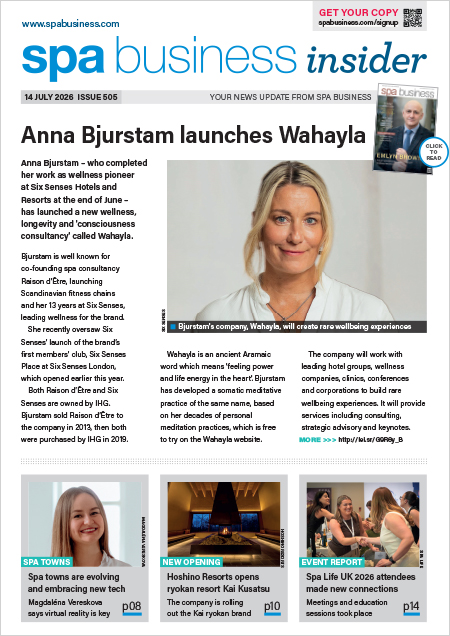
Anna Bjurstam has left her role as Wellness Pioneer at Six Senses Hotels and Resorts and
launched a new wellness, longevity and “consciousness consultancy” called Wahayla.
Fairmont Cheshire, The Mere, has opened today (10 July) in the Northwest of England
with a
1,715sq m Fairmont Spa that has been designed using a ‘Wellness without Walls’
concept.
Wellness hotels generating less than US$1 million (€932,700, £785,200) – or 10 per cent of
total revenue from wellness and leisure – recorded the strongest RevPAR and TRevPAR growth
in 2025 across categories when compared with 2024, according to the latest Wellness Real
Estate Report by RLA Global, produced in partnership with P and L benchmarking firm HotStats.
Lefay Resorts, the portfolio of two luxury wellness properties in Italy, has added emotional
dance classes and group cold plunge sessions in response to market demand for social
connection.
In the fast-paced world of fitness and wellness, where high-intensity workouts push us to
our limits and the sweat pours, the importance of efficient recovery cannot be overstated. [more...]
The MSpa Oslo series is a perennial bestseller in global markets. With innovative
engineering and premium performance, this completely portable spa line-up is expertly
designed to meet the needs of customers worldwide. [more...]
+ More featured suppliers
COMPANY PROFILES
Blue Rakun Blue Rakun spaces are thoughtful, intuitive,
and designed around real human
behaviour, taking into [more...]