The Galicia Tourism Agency in Spain is the driving force behind a
strategy to combine its two most popular attractions – a pilgrimage
route and natural thermal springs. Jane Kitchen tells us more
Half a million people walk the Way of St James pilgrimage routes in Europe each year / photo: shutterstock/rui vale sousa
The picturesque Galicia region in northwest Spain is known as ‘Green Spain’ because of its lush landscapes. Already an ideal setting for forest bathing, it’s also famous for two wellbeing practices which are now the focus of a special programme being coordinated by the local tourism agency.
The first, and possibly most well-known, offering is Camino de Santiago – a network of walking trails from different countries across Europe that culminate in Galicia’s capital Santiago de Compostela. Through the Middle Ages, pilgrims travelled from their homes to Santiago Cathedral where the Biblical apostle St James is believed to be buried. Last year, the routes attracted close to 500,000 people.
“The Way of Saint James (Camino de Santiago) is the tourist experience with the greatest international projection in Galicia,” says Xosé Manuel Merelles Remy, director of the Galicia Tourism Agency (GTA). “Every year, thousands of pilgrims travel to this corner of Spain to reach Santiago, enjoying a safe and healthy journey which combines nature, culture and gastronomy.”
He adds, however, that “among all the elements of the natural and cultural heritage that make the destination unique, the thermal waters stand out.” In fact, Galicia is Spain’s biggest thermal destination and it’s this second prolific asset that the GTA is combining with the ancient pilgrimage to entice a more discerning, lucrative wellness audience.
New tourism product Merelles Remy revealed the GTA’s plans to the public for the first time at the International Spa Heritage Festival held in October (see p74). The event, organised by the European Historic Thermal Towns Association (EHTTA), brought together heritage experts, architects and representatives from thermal towns who heard that Galicia boasts more than 300 hot springs, many of which were used by the Romans. Today, more than 20 spa establishments make use of the thermal water and the 1,500 km of Galician coastline is also home to a number of thalassotherapy facilities.
“This thermal and mineral-medicinal wealth is distributed throughout our geography, crossing with the Camino de Santiago and generating an opportunity for a new offer,” says Merelles Remy. “The GTA has decided to promote Galicia: Spa Pilgrimage in Spain as a healthy travel proposal based on two of our great identifying features and aimed at the care and wellbeing of the pilgrim.”
The idea had its genesis when architect Mario Crecente, director of Crecente Asociados, heard about the Global Wellness Summit’s 2024 trend on The Power of the Pilgrimage. He saw an opportunity to connect two ancient and spiritual forms of travel: the pilgrim routes and the thermal springs. Crecente is an expert in thermal tourism and also president of EHTTA’s scientific committee. He saw that packages for tired walkers to soak their muscles in the area’s rich mineral waters made perfect sense – and would celebrate two of the area’s most special attributes.
“Today the caminos [trails] represent the main attraction for foreign visitors to Galicia, with the Americans at the top of the list,” says Crecente. “But in the caminos, we have baños, balnearios, termas and caldas, from the beginning of time – Galician spas have roots in the origin of our civilisation. So we suggested that GTA create a concept that connects the two and a new tourist product was born.”
Multi-property approach Under the guidance of GTA, 13 thermal springs hotels have come together to create special packages and programmes for the Galicia: Spa Pilgrimage in Spain initiative.
Each of the offerings combine walking the famed pilgrimage routes with overnight stays and highlight the particular wellness expertise of the different sites. There’s a Roman spa, a forest spa, a sacred spa, a seaside spa and even a spa island. Packages include days of hiking, cultural excursions and spa treatments.
At the Hotel Balnearo de Lugo, for instance, an eight-day package includes spa treatments, a medical doctor consultation, a visit to the Roman baths, five days of hiking with transfers to and from the route, as well as breakfast and dinner.
The new tourism offering was well-received by the travel advisors in attendance at the International Spa Heritage Festival. Crecente hopes it will bring a new kind of tourist to the area – the kind that is looking for wellness on a deeper level.
“When I travel from Galicia, I often meet pilgrims who have walked the caminos and are returning home, and when I ask them about their experience, they always use the same word: ‘transformative’,” says Crecente. “In creating Galicia: Spa Pilgrimage in Spain, we hope tourists will enjoy authenticity, nature and culture in a true wellness experience that has that intangible value of being transformative.”
International Spa Heritage Festival
This past autumn, the European Historic Thermal Towns Association (EHTTA) organised a two-day International Spa Heritage Festival, with their international partner, the town of Saratoga Springs, New York. The destination is famous for its natural effervescent water and is home to the Roosevelt Baths & Spa which was established by president Franklin Roosevelt in 1935 who visited the springs to find relief from the symptoms of polio.
The event brought together heritage experts, architects and representatives from thermal towns or regions for two days of networking and meetings.
“This setting enabled meaningful discussions around wellness tourism trends and allowed our members to explore new market opportunities, fostering transatlantic interest in thermal heritage and inspiring future collaborations,” says Simone Zagrodnik, executive director of EHTTA.
It was in Saratoga that the Galicia: Spa Pilgrimage in Spain was announced (see p72). A community festival with local merchants was also a highlight, along with a parade of bathrobe-clad attendees organised by the Bathrobe Addicts. Bathrobe Addicts is a movement backed by La Route des Villes d’Eaux du Massif Central, an association of 17 spa towns in France. It was created to boost the image of thermal spas, change the public perception of spa towns and make them more attractive, by introducing an element of fun through the bathrobes.
“This event opened our eyes to the vast potential of the American market and the interest in wellness and thermal tourism,” concludes Zagrodnik. “We see great opportunities for further exchange of expertise between Europe and the US.”
Read more from this issue of Spa Business magazine
View contents of Spa Business 2025 issue 1
Editor's letter: Auto spas
Fully automated, self-service spas are set to enter the market, presenting a disruptive opportunity for investors and operators
Spa People: Christian Louboutin
The fashion designer teams up with his personal trainer to create a Brain Edit retreat at his hotel in Portugal
Spa People: Julien Alfred
Exercise, endurance and resilience are the focus of a programme being led by Olympic 100m winner Julien Alfred at BodyHoliday in St Lucia
News report: Emerging economies
Two fresh GWI reports highlight the potential of the wellness markets in the Maldives and Saudi Arabia
Interview: Paul Hawco
Katie Barnes talks to the man heading up wellbeing at Banyan Group as it prepares to open its 100th resort and reports a 16 per cent rise in revenue
Wellness design: Design of the times
Sixteen experts share their insights on how wellness design can be used to create more impactful and profitable spas in a new white paper by Accor
Opinion: High leverage learning
What three skills do people need to master to future-proof their spa careers? Jeremy McCarthy reports
Spa tourism: Hot on the trail
A famous pilgrimage route and natural hot springs are being combined in an innovative tourism package in Spain
Opinion: Beacons of light
As cities in the US start to hire chief wellness officers, Mia Kyricos reveals what this means for our sector
Sponsored: 111SKIN - Winning formulation
111SKIN’s spa/clinic concept is making waves globally – backed by a combination of medical expertise, intuitive partner support and potent products
Product focus: AI and robot massage
Spas around the world are starting to offer AI massage. We highlight the different types of equipment coming to market
Menu engineering: At your service
A dedicated brain health facility at Kamalaya and a menopause package by actor Naomi Watts feature in our programming pages this issue
Finishing touch: Big business
Companies investing in workers’ happiness outperform other portfolios in major global stock markets, according to new research
In the fast-paced world of fitness and wellness, where high-intensity workouts push us to
our limits and the sweat pours, the importance of efficient recovery cannot be overstated. [more...]
Contrast therapy, based on the alternation of hot and cold rituals, has become one of the
most valued practices in the fields of wellness and recovery. [more...]
+ More featured suppliers
COMPANY PROFILES
Starpool SRL
Founded in 1975 in the Italian Dolomites, Starpool is a company specialising in wellness, health and [more...]
Bellezi
Founded in 2009 as a Dutch family business, Bellezi brings more than 20 years of experience in treat [more...]
The Galicia Tourism Agency in Spain is the driving force behind a
strategy to combine its two most popular attractions – a pilgrimage
route and natural thermal springs. Jane Kitchen tells us more
Half a million people walk the Way of St James pilgrimage routes in Europe each year / photo: shutterstock/rui vale sousa
The picturesque Galicia region in northwest Spain is known as ‘Green Spain’ because of its lush landscapes. Already an ideal setting for forest bathing, it’s also famous for two wellbeing practices which are now the focus of a special programme being coordinated by the local tourism agency.
The first, and possibly most well-known, offering is Camino de Santiago – a network of walking trails from different countries across Europe that culminate in Galicia’s capital Santiago de Compostela. Through the Middle Ages, pilgrims travelled from their homes to Santiago Cathedral where the Biblical apostle St James is believed to be buried. Last year, the routes attracted close to 500,000 people.
“The Way of Saint James (Camino de Santiago) is the tourist experience with the greatest international projection in Galicia,” says Xosé Manuel Merelles Remy, director of the Galicia Tourism Agency (GTA). “Every year, thousands of pilgrims travel to this corner of Spain to reach Santiago, enjoying a safe and healthy journey which combines nature, culture and gastronomy.”
He adds, however, that “among all the elements of the natural and cultural heritage that make the destination unique, the thermal waters stand out.” In fact, Galicia is Spain’s biggest thermal destination and it’s this second prolific asset that the GTA is combining with the ancient pilgrimage to entice a more discerning, lucrative wellness audience.
New tourism product Merelles Remy revealed the GTA’s plans to the public for the first time at the International Spa Heritage Festival held in October (see p74). The event, organised by the European Historic Thermal Towns Association (EHTTA), brought together heritage experts, architects and representatives from thermal towns who heard that Galicia boasts more than 300 hot springs, many of which were used by the Romans. Today, more than 20 spa establishments make use of the thermal water and the 1,500 km of Galician coastline is also home to a number of thalassotherapy facilities.
“This thermal and mineral-medicinal wealth is distributed throughout our geography, crossing with the Camino de Santiago and generating an opportunity for a new offer,” says Merelles Remy. “The GTA has decided to promote Galicia: Spa Pilgrimage in Spain as a healthy travel proposal based on two of our great identifying features and aimed at the care and wellbeing of the pilgrim.”
The idea had its genesis when architect Mario Crecente, director of Crecente Asociados, heard about the Global Wellness Summit’s 2024 trend on The Power of the Pilgrimage. He saw an opportunity to connect two ancient and spiritual forms of travel: the pilgrim routes and the thermal springs. Crecente is an expert in thermal tourism and also president of EHTTA’s scientific committee. He saw that packages for tired walkers to soak their muscles in the area’s rich mineral waters made perfect sense – and would celebrate two of the area’s most special attributes.
“Today the caminos [trails] represent the main attraction for foreign visitors to Galicia, with the Americans at the top of the list,” says Crecente. “But in the caminos, we have baños, balnearios, termas and caldas, from the beginning of time – Galician spas have roots in the origin of our civilisation. So we suggested that GTA create a concept that connects the two and a new tourist product was born.”
Multi-property approach Under the guidance of GTA, 13 thermal springs hotels have come together to create special packages and programmes for the Galicia: Spa Pilgrimage in Spain initiative.
Each of the offerings combine walking the famed pilgrimage routes with overnight stays and highlight the particular wellness expertise of the different sites. There’s a Roman spa, a forest spa, a sacred spa, a seaside spa and even a spa island. Packages include days of hiking, cultural excursions and spa treatments.
At the Hotel Balnearo de Lugo, for instance, an eight-day package includes spa treatments, a medical doctor consultation, a visit to the Roman baths, five days of hiking with transfers to and from the route, as well as breakfast and dinner.
The new tourism offering was well-received by the travel advisors in attendance at the International Spa Heritage Festival. Crecente hopes it will bring a new kind of tourist to the area – the kind that is looking for wellness on a deeper level.
“When I travel from Galicia, I often meet pilgrims who have walked the caminos and are returning home, and when I ask them about their experience, they always use the same word: ‘transformative’,” says Crecente. “In creating Galicia: Spa Pilgrimage in Spain, we hope tourists will enjoy authenticity, nature and culture in a true wellness experience that has that intangible value of being transformative.”
International Spa Heritage Festival
This past autumn, the European Historic Thermal Towns Association (EHTTA) organised a two-day International Spa Heritage Festival, with their international partner, the town of Saratoga Springs, New York. The destination is famous for its natural effervescent water and is home to the Roosevelt Baths & Spa which was established by president Franklin Roosevelt in 1935 who visited the springs to find relief from the symptoms of polio.
The event brought together heritage experts, architects and representatives from thermal towns or regions for two days of networking and meetings.
“This setting enabled meaningful discussions around wellness tourism trends and allowed our members to explore new market opportunities, fostering transatlantic interest in thermal heritage and inspiring future collaborations,” says Simone Zagrodnik, executive director of EHTTA.
It was in Saratoga that the Galicia: Spa Pilgrimage in Spain was announced (see p72). A community festival with local merchants was also a highlight, along with a parade of bathrobe-clad attendees organised by the Bathrobe Addicts. Bathrobe Addicts is a movement backed by La Route des Villes d’Eaux du Massif Central, an association of 17 spa towns in France. It was created to boost the image of thermal spas, change the public perception of spa towns and make them more attractive, by introducing an element of fun through the bathrobes.
“This event opened our eyes to the vast potential of the American market and the interest in wellness and thermal tourism,” concludes Zagrodnik. “We see great opportunities for further exchange of expertise between Europe and the US.”
Read more from this issue of Spa Business magazine
View contents of Spa Business 2025 issue 1
Editor's letter: Auto spas
Fully automated, self-service spas are set to enter the market, presenting a disruptive opportunity for investors and operators
Spa People: Christian Louboutin
The fashion designer teams up with his personal trainer to create a Brain Edit retreat at his hotel in Portugal
Spa People: Julien Alfred
Exercise, endurance and resilience are the focus of a programme being led by Olympic 100m winner Julien Alfred at BodyHoliday in St Lucia
News report: Emerging economies
Two fresh GWI reports highlight the potential of the wellness markets in the Maldives and Saudi Arabia
Interview: Paul Hawco
Katie Barnes talks to the man heading up wellbeing at Banyan Group as it prepares to open its 100th resort and reports a 16 per cent rise in revenue
Wellness design: Design of the times
Sixteen experts share their insights on how wellness design can be used to create more impactful and profitable spas in a new white paper by Accor
Opinion: High leverage learning
What three skills do people need to master to future-proof their spa careers? Jeremy McCarthy reports
Spa tourism: Hot on the trail
A famous pilgrimage route and natural hot springs are being combined in an innovative tourism package in Spain
Opinion: Beacons of light
As cities in the US start to hire chief wellness officers, Mia Kyricos reveals what this means for our sector
Sponsored: 111SKIN - Winning formulation
111SKIN’s spa/clinic concept is making waves globally – backed by a combination of medical expertise, intuitive partner support and potent products
Product focus: AI and robot massage
Spas around the world are starting to offer AI massage. We highlight the different types of equipment coming to market
Menu engineering: At your service
A dedicated brain health facility at Kamalaya and a menopause package by actor Naomi Watts feature in our programming pages this issue
Finishing touch: Big business
Companies investing in workers’ happiness outperform other portfolios in major global stock markets, according to new research
Synergy – The Retreat Show, the global trade show for retreats, has launched a global research
initiative that will provide insights into the retreat sector from both consumer and industry
perspectives.
The Wellness Tourism Association (WTA) has published a non-regulatory global industry
framework designed to ensure the retreat market offers responsible experiences.
A new survey of UK and international spa practitioners shows that stress, burnout and
wellbeing concerns have caused one in three respondents to consider leaving the industry.
The UK's four Chief Medical Officers have published a refreshed edition of Physical activity
guidelines: UK Chief Medical Officers' report, updating the evidence that underpins the nation's
physical activity recommendations and placing greater emphasis on strength, balance, reducing
sedentary behaviour and, for the first time, supporting people taking weight loss medications.
Anna Bjurstam has left her role as Wellness Pioneer at Six Senses Hotels and Resorts and
launched a new wellness, longevity and “consciousness consultancy” called Wahayla.
Fairmont Cheshire, The Mere, has opened today (10 July) in the Northwest of England
with a
1,715sq m Fairmont Spa that has been designed using a ‘Wellness without Walls’
concept.
Wellness hotels generating less than US$1 million (€932,700, £785,200) – or 10 per cent of
total revenue from wellness and leisure – recorded the strongest RevPAR and TRevPAR growth
in 2025 across categories when compared with 2024, according to the latest Wellness Real
Estate Report by RLA Global, produced in partnership with P and L benchmarking firm HotStats.
Lefay Resorts, the portfolio of two luxury wellness properties in Italy, has added emotional
dance classes and group cold plunge sessions in response to market demand for social
connection.
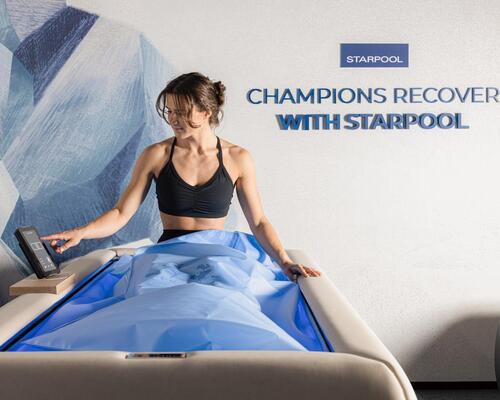
In the fast-paced world of fitness and wellness, where high-intensity workouts push us to
our limits and the sweat pours, the importance of efficient recovery cannot be overstated. [more...]
Contrast therapy, based on the alternation of hot and cold rituals, has become one of the
most valued practices in the fields of wellness and recovery. [more...]
+ More featured suppliers
COMPANY PROFILES
Starpool SRL Founded in 1975 in the Italian Dolomites, Starpool is a company specialising in wellness, health and [more...]