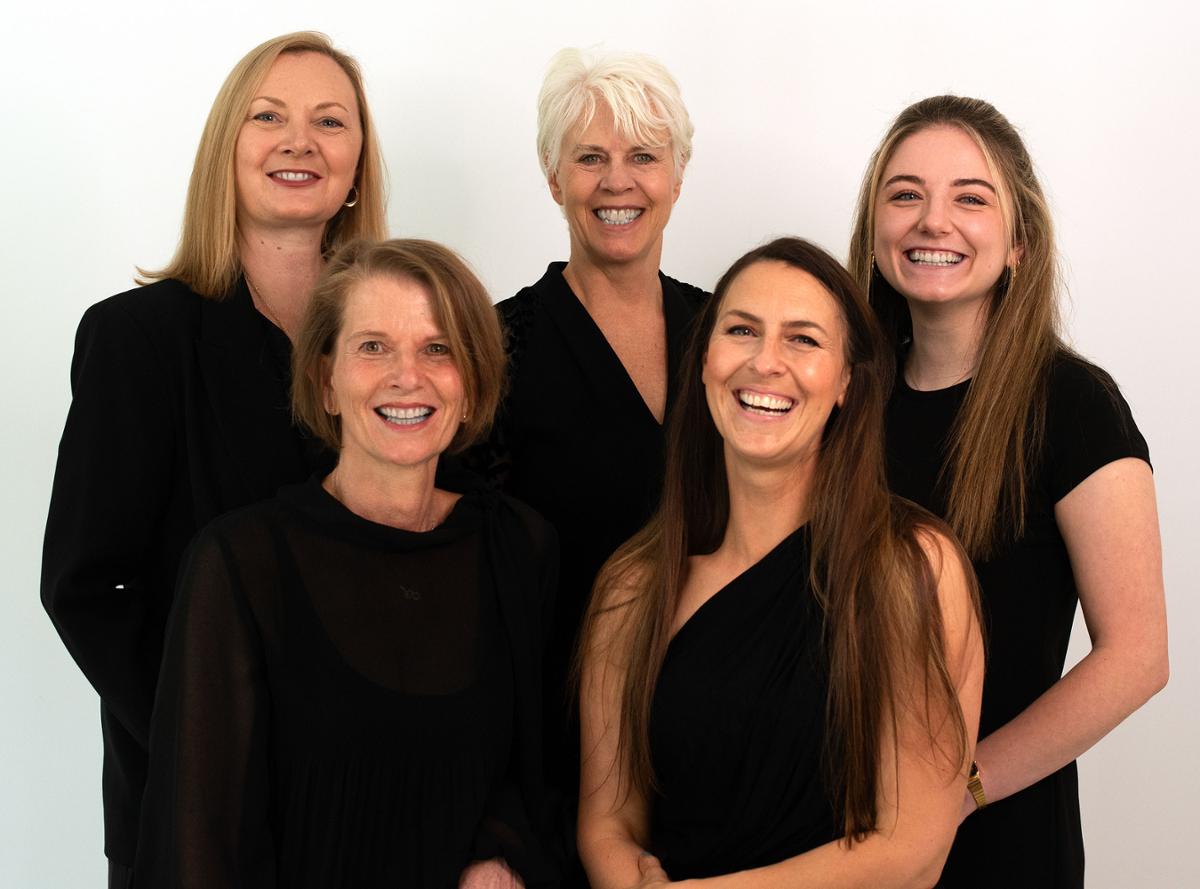
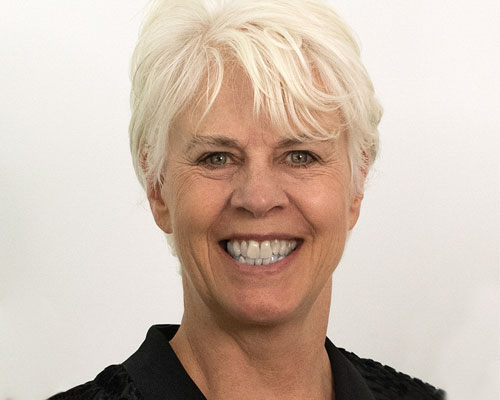
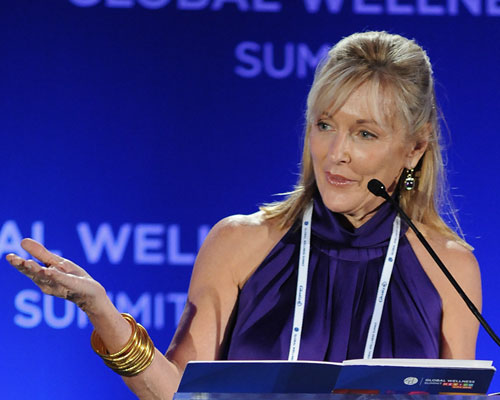
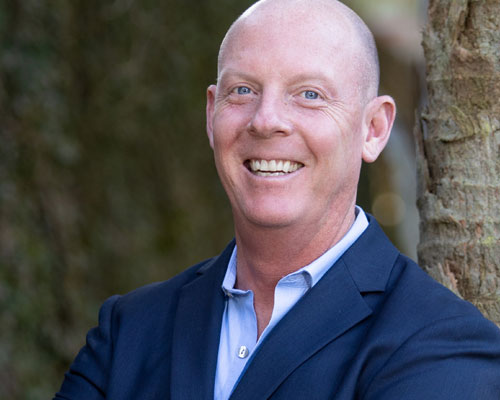
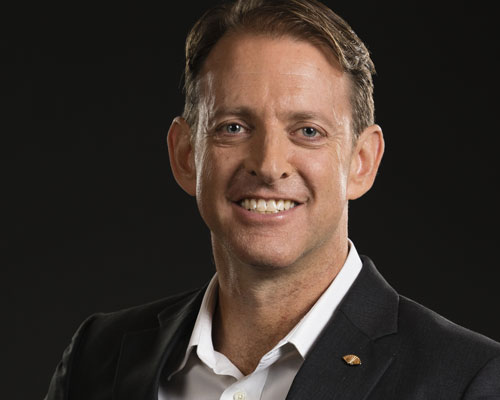
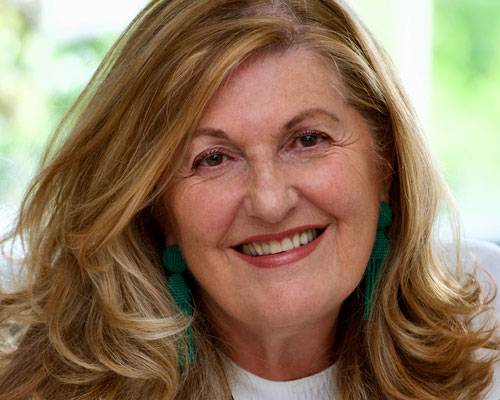
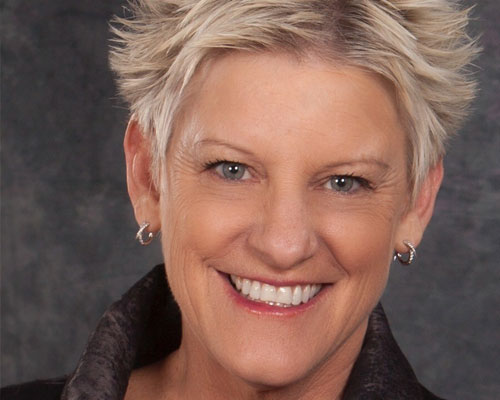
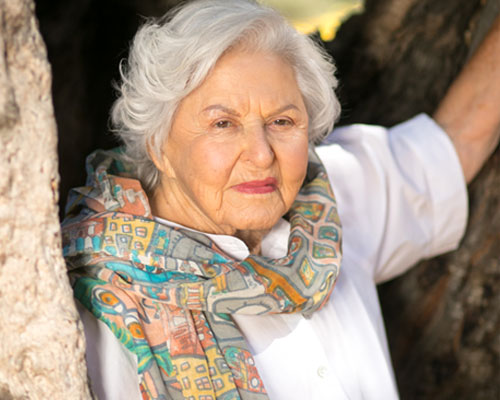
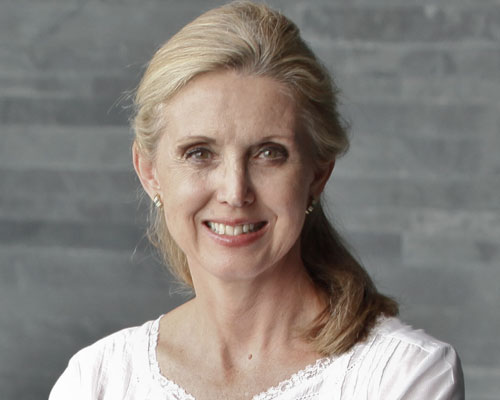
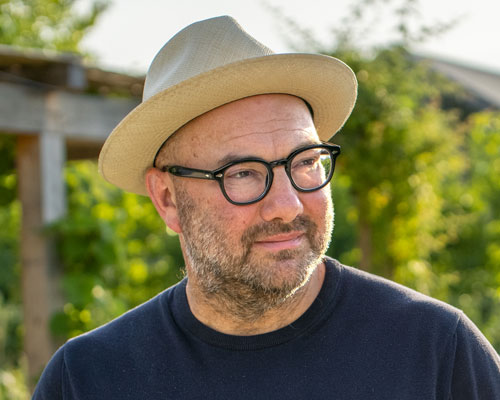
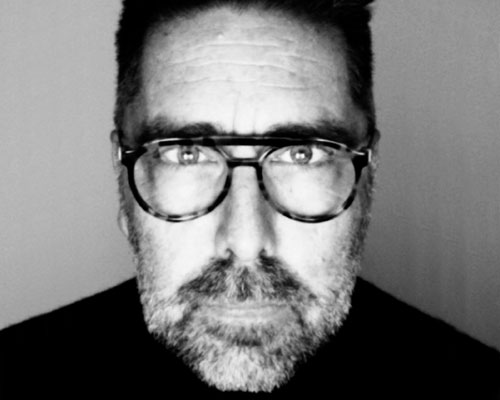
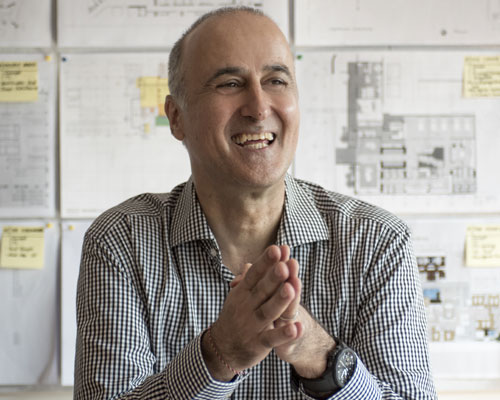
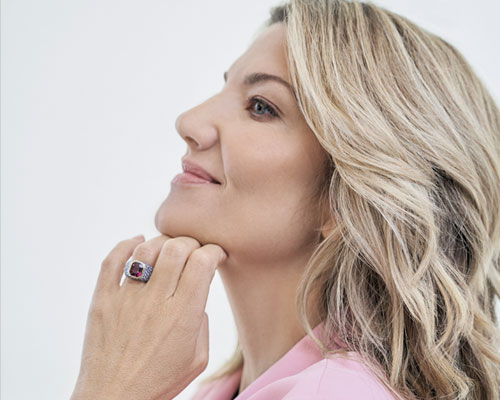
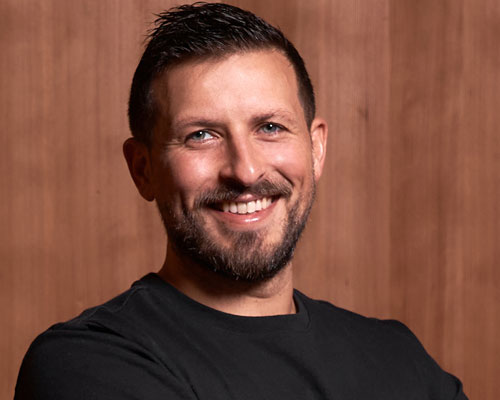
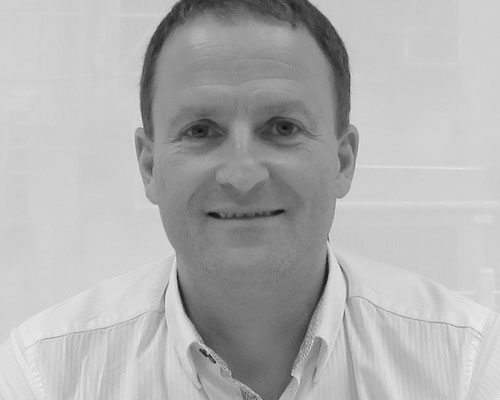
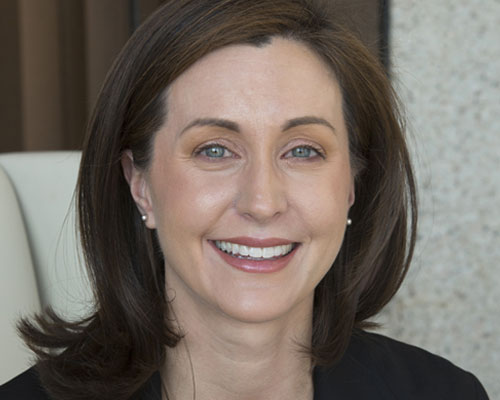
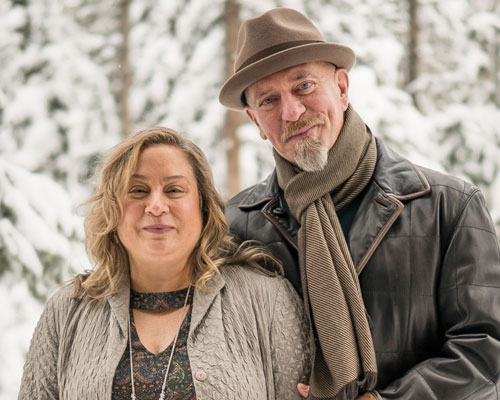
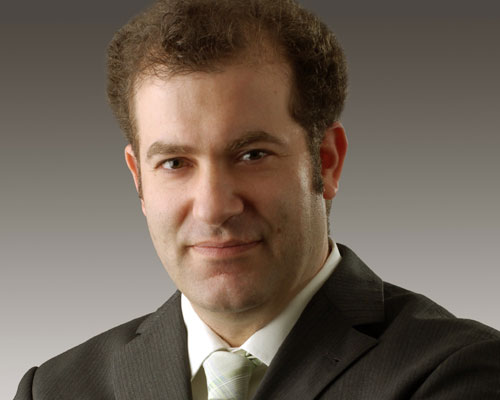
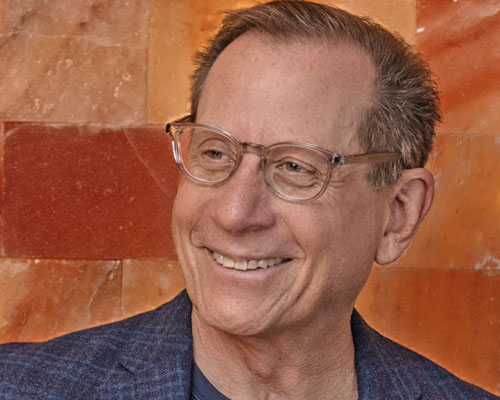
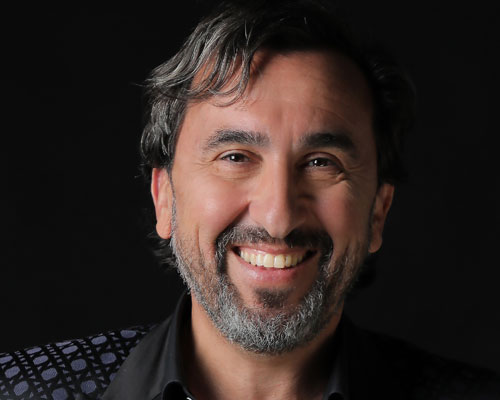
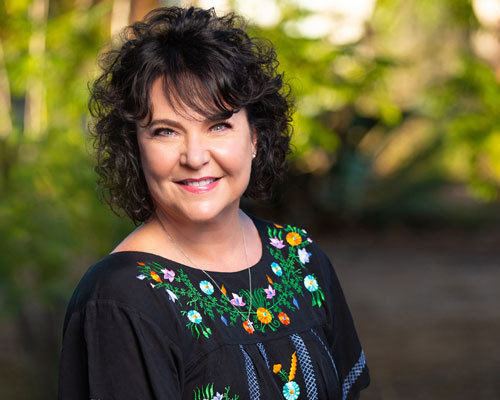
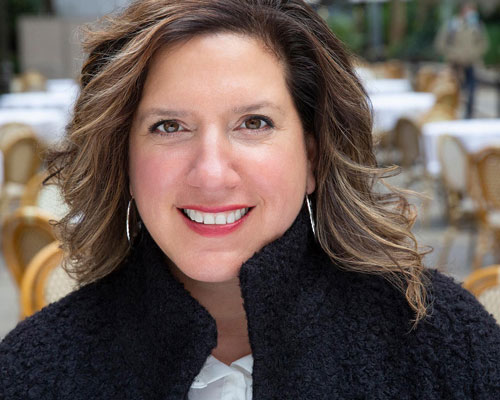
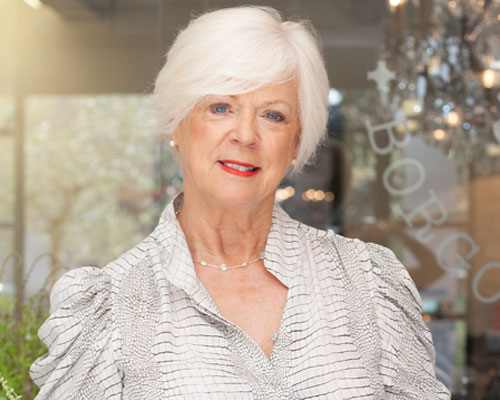
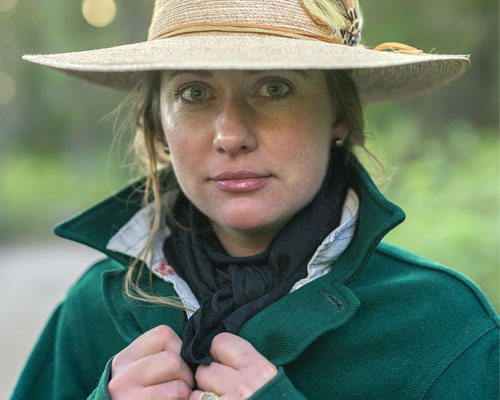
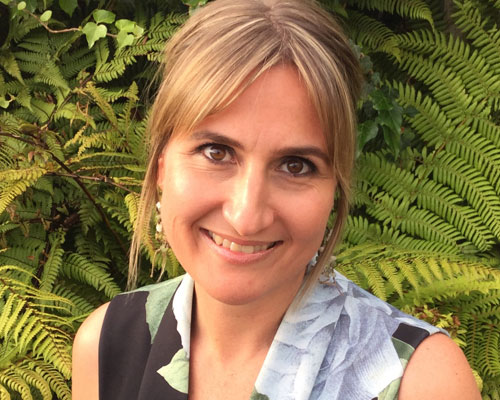
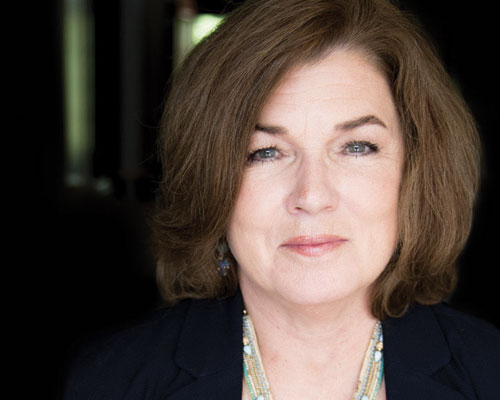
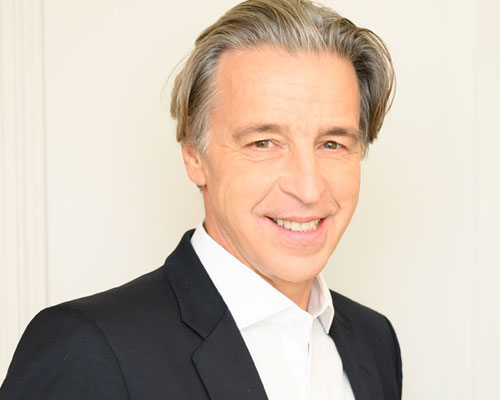
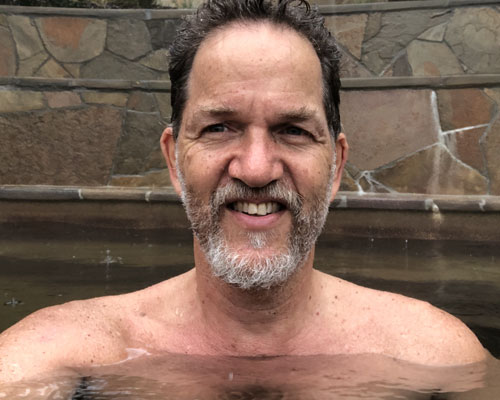
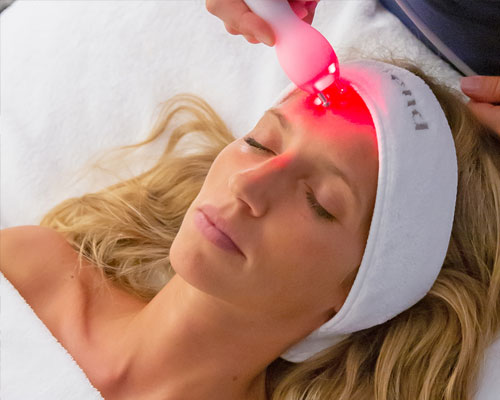
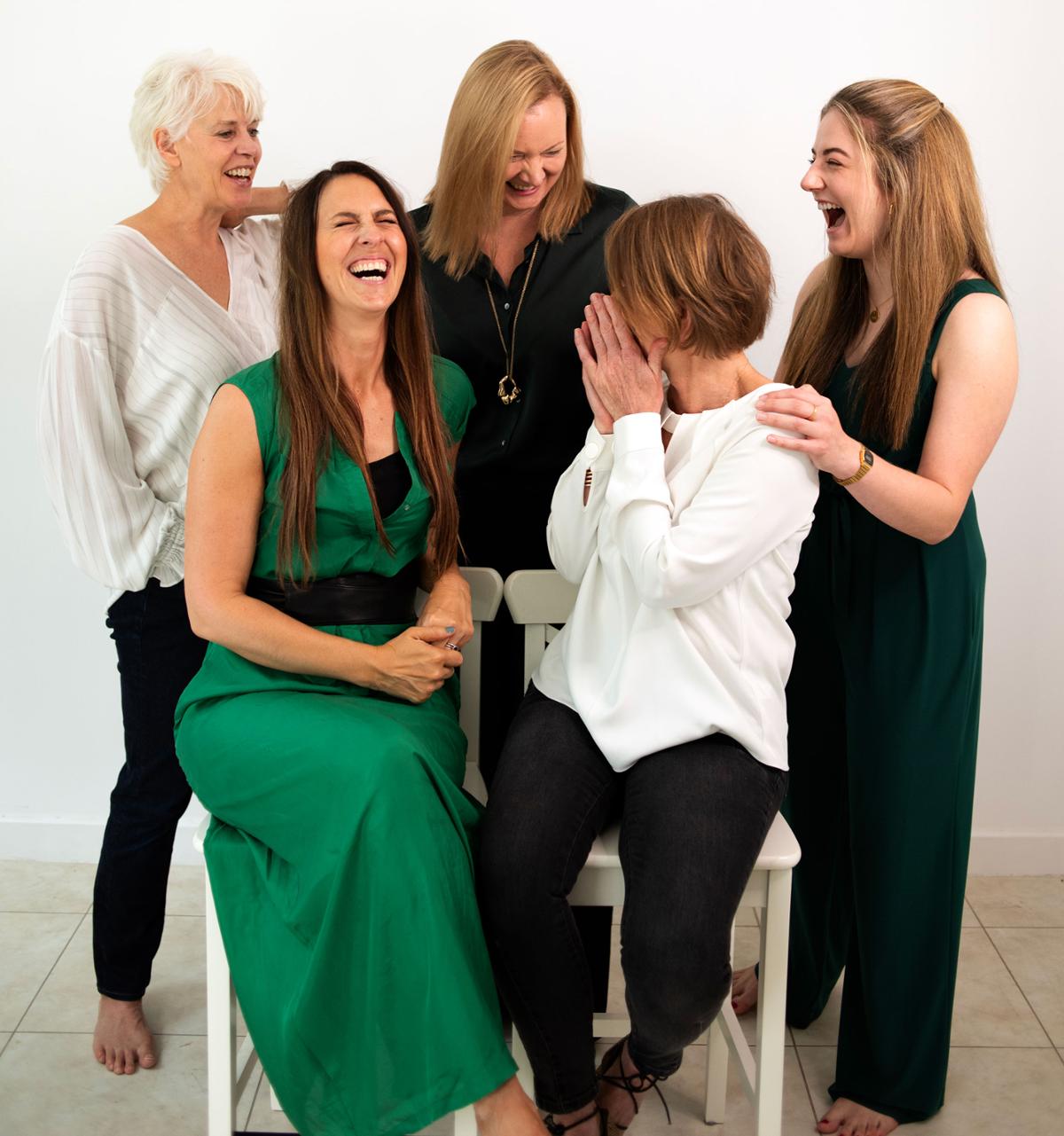
The Spa Business team. From top left: Jane Kitchen, Liz Terry, Megan Whitby. Seated: Astrid Ros and Katie Barnes / photo: Jack Emmerson
These days, the Spa Business team spend the year travelling the world, (increasingly by train) talking to industry experts to bring you the 30 Spa Business and Spa Business insider magazines we produce every 12 months, as well as the annual Spa Business Handbook, our website and news and social feeds.
But this vast scope of work has taken decades to develop and we’ve had the privilege of having grown up with the industry from very small beginnings.
As we celebrate 40 years of writing about spa and wellness and 20 years of Spa Business as a dedicated title, it’s an opportunity to look back at how all these wonderful and useful products came to be.
Small beginnings I started work for Leisure Media as a junior business reporter in 1983. These were days before desktop computing, mobile phones, the internet, social media and AI. We worked on typewriters until the magical day in 1990 when desktop publishing on Apple Macs changed our lives forever.
We had been a complete leisure publisher from launch in 1980 and my brief covered all sectors – sport, spa, health and fitness, tourism, hospitality, attractions, commercial leisure – anything (legal) you could do in your spare time.
It was thin pickings in those days, restaurants were a rare indulgence, pubs and bars were male-dominated, short break holidays had yet to be invented, gyms were for weight lifters and sport was ‘PE’. Spas were ancient thermal baths or ‘health farms’ where the wealthy went to lose weight or get dry.
Demographics told us leisure would grow and diversify, but we had no idea how world events, technology and politics would define its future.
The plan was to cover it all in one magazine – Leisure Management – until the vertical markets could support dedicated titles.
Health and fitness was the first to boom in the mid 80s, so we spun off a magazine called Health Club Management – now HCM – and today we’re the main global media for that sector (www.HCMmag.com).
Spa came a little later, but to tell that story I need to go back to the beginning.
First job I lucked out with my first assignments covering the 1984 Los Angeles Olympics and going on a series of educational press trips around Switzerland, Italy, Austria, France and Germany, visiting spas.
These trips were organised by a formidable woman called Erna Low, an Austrian who had come to England as a student in 1930, working as a code breaker during WW2 at the top secret Bletchley Park, home of the Enigma Machine and where Alan Turing invented the computer.
Low had launched one of the first travel agencies in the 1930s, firstly focusing on ski breaks and then later on the spa market, representing key operators across Europe.
She was passionate about upskilling journalists and led educational trips for groups of reporters from national media and business press.
We travelled with Low to take mud baths in St Moritz, mineral baths in Baden in Zurich, salt inhalation treatments in Bolzano and contrast therapy and cold wading in La Plagne, among many others.
We took the mountain train over the Alps to visit Clinique La Prairie in Switzerland, at a time when it was housed in one small building – a far cry from the extensive facilities that exist today – and to be hosted by the glorious Le Mirador Hotel (now Resort & Spa) in Vevey.
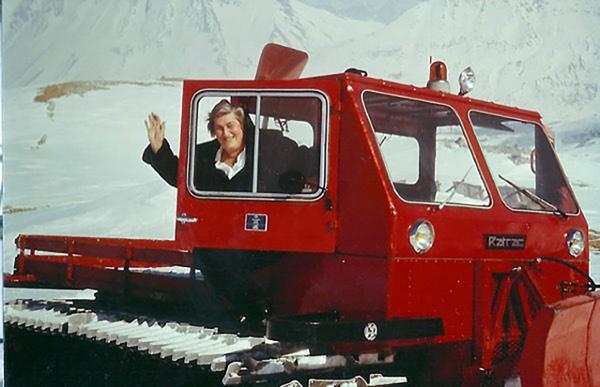
Low was already in her 80s when we first met and although she could no longer ski, would tackle mountains by snowplough, appearing over the crest of snow-covered slopes like something out of an action movie.
Although it was mainly based on traditional thermal bathing, I was convinced one day spa would broaden and take off as a sector and started to dream about launching a dedicated magazine.
Low was also clear about the opportunity and said “you must promise me one day you’ll launch a magazine for the spa market – I won’t be around, but you’ll know when the time is right”.
It was a promise I was happy to make, but although we were writing about spa in Leisure Management, we would have to wait 20 years for the launch of Spa Business.
I’ve always felt that my meeting Low was very serendipitous, as it gave me the confidence to take the team into the spa market when the time came.
First signs of life The first exciting hints a market was emerging came in the early 90s, when we became aware of the founding of a number of representative associations.
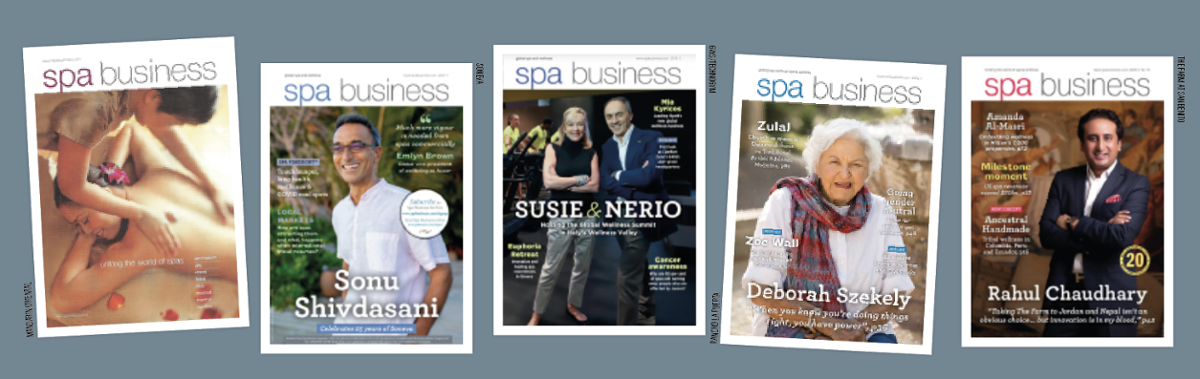
In the US, the world of fitness and spa was coming together – encouraged by Deborah and Alex Szekely of Rancho la Puerta, who championed the launch of a fitness and spa organisation in 1991 that would grow to become ISPA.
The British Spas Foundation had also been established in 1991 and the European Spas Association in the mid-90s.
Work by people such as Sonu and Eva Shivdasani, Anne McCall Wilson and Sue Harmsworth was also driving meaningful change in the hotel market, where spa was moving from being an amenity and cost centre to a compelling lifestyle offering.
The final catalyst for the launch was an awareness that people in related sectors simply didn’t know each other. We would meet contacts around the world and be astonished they’d never met (nor were aware of) companies that were a perfect fit for them in terms of collaboration. There was clearly a need to connect them.
The first steps In 1999 we gathered a team under launch editor, Rhianon Howells, to lay out plans for Spa Business, its website, product search engine (www.spa-kit.net), ezine and news alert service.
The first task was to gather contacts globally for every type of spa – hotel, resort, thermal, destination and medical etc – while developing our editorial purpose, tone of voice and advertising and marketing product roster.
I admit we were ambitious and our shared team vision for Spa Business was nothing less than to globalise the spa market and unite the industry to enable collaboration, so people could do business. That purpose endures to this day.
We wanted to bring Spa Business to market fully-formed and hit the ground running, rather than doing a tentative launch and building slowly.
The decision was also made to target decision-makers at the very top of the sector, so we could support the people driving the industry forward.
Our editorial process was developed at the same time, based on a matrix covering every key spa sector and every geographical region in every issue, making sure we captured the hottest content in each.
We also committed to a focus on business reporting, drilling down to ensure key numbers were fact-checked and we covered research from day one.
Launch day dawns Publishing our first edition in 2003 – with Mandarin Oriental on the cover – was a euphoric day and once it hit desks, it was as though a shockwave had gone around the world and people had seen – perhaps in some cases for the first time – that spa was one global industry and they now had a means by which they could communicate with each other.
Emails, phone calls and correspondence flooded in asking for introductions, coverage and marketing. It felt as though we’d caught a tiger by the tail.
The years since have been fast-moving, delightful, fascinating and personally rewarding for the whole team, as we’ve played our part in the incredible growth of the sector, from the early, pioneering days when passionate trailblazers such as Susie Ellis at the GWS and GWI put themselves on the line to drive the industry forward, to today, when the sector is recognised worldwide as one of the main growth markets of the future.
Erna Low died in 2002 aged 92, just a year before we launched, so – as she had predicted – didn’t live to see the promise fulfilled, but we owe her a debt of gratitude for her invaluable support.
What do we see going forward? Trends have always been a passion for the Spa Business team and we launched an annual trends report called Spa Foresight 10 years ago, tracking and sharing trends each year in the Spa Business Handbook and in Spa Business.
Among our first predictions were hospital spas, surge pricing, wearable tech, online reviews and fitness in spas, all of which have come to pass and we’ve gone on to write 250 trend updates since.
The creativity of leaders in spa and wellness has seen the industry grow far beyond our original expectations of health, complementary and alternative medicine, exercise, sport, hospitality, nutrition and tourism, with the sector also finding synergies with fit tech, residential communities, medicine, mental health, the arts and retail, among others.
To highlight the incredible diversity of the sector in 2023, we’ve invited industry innovators and thought leaders to celebrate our 20th birthday by sharing their thoughts about the future of the sector and their career highlights (p16). It’s been a labour of love for all involved and we hope you enjoy this special souvenir edition and all the wisdom and insight it contains.
Read more from this issue of Spa Business magazine
View contents of Spa Business 2023 issue 3
Editor's letter: Reflection point
As Spa Business celebrates its 20th birthday, Katie Barnes pauses for thought and rejoices in the industry’s evolution
Spa People: 20th anniversary issue: Anna Bjurstam
The strategic senior advisor at Six Senses and Raison d'Etre on being initiated as a shaman, why psychedelics are here to stay and her bigger fear for the global spa industry
Promotion: Klafs: Relax into wellbeing
Klafs and Studio F. A. Porsche have combined their design and wellness expertise to create an oasis for total-body relaxation
News report: Eastern promise
Japan’s spa industry is valued at US$4.2 billion and is part of the world's third highest-performing wellness economy
Jeremy McCarthy: Theory of evolution
From spa to wellness and now leisure – Spa Business’ contributing editor looks at where hospitality experiences are heading
Promotion: Lemi: Built to last
Lemi is committed to leading with innovation to create
cutting-edge treatment room solutions that excel
in terms of performance and eco-credentials
Promotion: G.M. COLLIN: Collagen pioneers
GM Collin’s expertise in collagen research and product formulation has resulted in the creation of a new serum that combats age-related skin degeneration
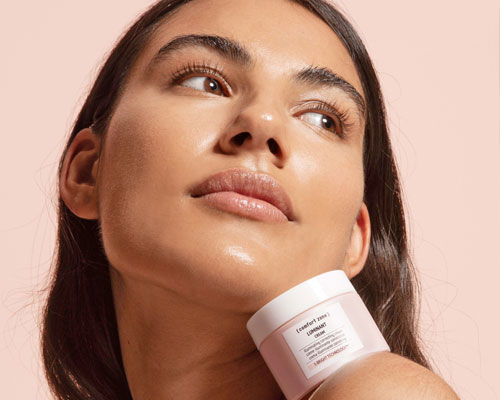
Promotion: Comfort Zone: A brighter future
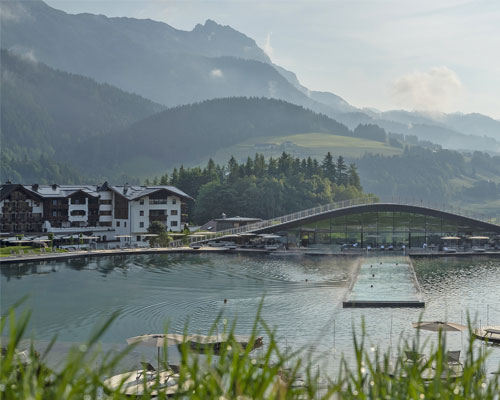
Consumers are increasingly interested in reducing dark spots and hyperpigmentation and a new line from Comfort Zone has been launched to address this emerging need
Promotion: Art of Cryo: Life changing experience
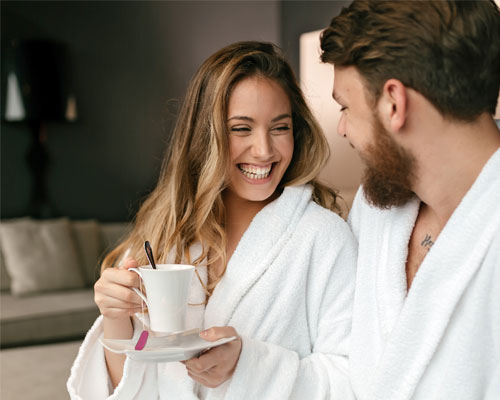
Vikki and Robbie are often exhausted after work. A visit to the spa to experience
the Art of Cryo Tech-Spa Module is a chance to re-set and rejuvenate together
The Spa Life UK Convention returns from 21–23 June 2026 at Whittlebury Park Hotel, Spa &
Golf Resort, bringing together spa managers, directors and owners for two days of focused
education, meaningful connection and commercial insight. [more...]
Le Atelier by C.O.D.E. doesn't offer a standard bespoke service, it provides a highly
customised approach to designing massage beds and loungers in high-end wellness
environments. [more...]
+ More featured suppliers
COMPANY PROFILES
Fenix Group srl
Fenix Group, founded by Gianluca Cavalletti in Italy, launched Endospheres to revolutionise aestheti [more...]
Templespa
Templespa was founded in 2000 by Liz and Mark Warom, seasoned entrepreneurs with a proven track reco [more...]
The Spa Business team. From top left: Jane Kitchen, Liz Terry, Megan Whitby. Seated: Astrid Ros and Katie Barnes / photo: Jack Emmerson
These days, the Spa Business team spend the year travelling the world, (increasingly by train) talking to industry experts to bring you the 30 Spa Business and Spa Business insider magazines we produce every 12 months, as well as the annual Spa Business Handbook, our website and news and social feeds.
But this vast scope of work has taken decades to develop and we’ve had the privilege of having grown up with the industry from very small beginnings.
As we celebrate 40 years of writing about spa and wellness and 20 years of Spa Business as a dedicated title, it’s an opportunity to look back at how all these wonderful and useful products came to be.
Small beginnings I started work for Leisure Media as a junior business reporter in 1983. These were days before desktop computing, mobile phones, the internet, social media and AI. We worked on typewriters until the magical day in 1990 when desktop publishing on Apple Macs changed our lives forever.
We had been a complete leisure publisher from launch in 1980 and my brief covered all sectors – sport, spa, health and fitness, tourism, hospitality, attractions, commercial leisure – anything (legal) you could do in your spare time.
It was thin pickings in those days, restaurants were a rare indulgence, pubs and bars were male-dominated, short break holidays had yet to be invented, gyms were for weight lifters and sport was ‘PE’. Spas were ancient thermal baths or ‘health farms’ where the wealthy went to lose weight or get dry.
Demographics told us leisure would grow and diversify, but we had no idea how world events, technology and politics would define its future.
The plan was to cover it all in one magazine – Leisure Management – until the vertical markets could support dedicated titles.
Health and fitness was the first to boom in the mid 80s, so we spun off a magazine called Health Club Management – now HCM – and today we’re the main global media for that sector (www.HCMmag.com).
Spa came a little later, but to tell that story I need to go back to the beginning.
First job I lucked out with my first assignments covering the 1984 Los Angeles Olympics and going on a series of educational press trips around Switzerland, Italy, Austria, France and Germany, visiting spas.
These trips were organised by a formidable woman called Erna Low, an Austrian who had come to England as a student in 1930, working as a code breaker during WW2 at the top secret Bletchley Park, home of the Enigma Machine and where Alan Turing invented the computer.
Low had launched one of the first travel agencies in the 1930s, firstly focusing on ski breaks and then later on the spa market, representing key operators across Europe.
She was passionate about upskilling journalists and led educational trips for groups of reporters from national media and business press.
We travelled with Low to take mud baths in St Moritz, mineral baths in Baden in Zurich, salt inhalation treatments in Bolzano and contrast therapy and cold wading in La Plagne, among many others.
We took the mountain train over the Alps to visit Clinique La Prairie in Switzerland, at a time when it was housed in one small building – a far cry from the extensive facilities that exist today – and to be hosted by the glorious Le Mirador Hotel (now Resort & Spa) in Vevey.
Low was already in her 80s when we first met and although she could no longer ski, would tackle mountains by snowplough, appearing over the crest of snow-covered slopes like something out of an action movie.
Although it was mainly based on traditional thermal bathing, I was convinced one day spa would broaden and take off as a sector and started to dream about launching a dedicated magazine.
Low was also clear about the opportunity and said “you must promise me one day you’ll launch a magazine for the spa market – I won’t be around, but you’ll know when the time is right”.
It was a promise I was happy to make, but although we were writing about spa in Leisure Management, we would have to wait 20 years for the launch of Spa Business.
I’ve always felt that my meeting Low was very serendipitous, as it gave me the confidence to take the team into the spa market when the time came.
First signs of life The first exciting hints a market was emerging came in the early 90s, when we became aware of the founding of a number of representative associations.
In the US, the world of fitness and spa was coming together – encouraged by Deborah and Alex Szekely of Rancho la Puerta, who championed the launch of a fitness and spa organisation in 1991 that would grow to become ISPA.
The British Spas Foundation had also been established in 1991 and the European Spas Association in the mid-90s.
Work by people such as Sonu and Eva Shivdasani, Anne McCall Wilson and Sue Harmsworth was also driving meaningful change in the hotel market, where spa was moving from being an amenity and cost centre to a compelling lifestyle offering.
The final catalyst for the launch was an awareness that people in related sectors simply didn’t know each other. We would meet contacts around the world and be astonished they’d never met (nor were aware of) companies that were a perfect fit for them in terms of collaboration. There was clearly a need to connect them.
The first steps In 1999 we gathered a team under launch editor, Rhianon Howells, to lay out plans for Spa Business, its website, product search engine (www.spa-kit.net), ezine and news alert service.
The first task was to gather contacts globally for every type of spa – hotel, resort, thermal, destination and medical etc – while developing our editorial purpose, tone of voice and advertising and marketing product roster.
I admit we were ambitious and our shared team vision for Spa Business was nothing less than to globalise the spa market and unite the industry to enable collaboration, so people could do business. That purpose endures to this day.
We wanted to bring Spa Business to market fully-formed and hit the ground running, rather than doing a tentative launch and building slowly.
The decision was also made to target decision-makers at the very top of the sector, so we could support the people driving the industry forward.
Our editorial process was developed at the same time, based on a matrix covering every key spa sector and every geographical region in every issue, making sure we captured the hottest content in each.
We also committed to a focus on business reporting, drilling down to ensure key numbers were fact-checked and we covered research from day one.
Launch day dawns Publishing our first edition in 2003 – with Mandarin Oriental on the cover – was a euphoric day and once it hit desks, it was as though a shockwave had gone around the world and people had seen – perhaps in some cases for the first time – that spa was one global industry and they now had a means by which they could communicate with each other.
Emails, phone calls and correspondence flooded in asking for introductions, coverage and marketing. It felt as though we’d caught a tiger by the tail.
The years since have been fast-moving, delightful, fascinating and personally rewarding for the whole team, as we’ve played our part in the incredible growth of the sector, from the early, pioneering days when passionate trailblazers such as Susie Ellis at the GWS and GWI put themselves on the line to drive the industry forward, to today, when the sector is recognised worldwide as one of the main growth markets of the future.
Erna Low died in 2002 aged 92, just a year before we launched, so – as she had predicted – didn’t live to see the promise fulfilled, but we owe her a debt of gratitude for her invaluable support.
What do we see going forward? Trends have always been a passion for the Spa Business team and we launched an annual trends report called Spa Foresight 10 years ago, tracking and sharing trends each year in the Spa Business Handbook and in Spa Business.
Among our first predictions were hospital spas, surge pricing, wearable tech, online reviews and fitness in spas, all of which have come to pass and we’ve gone on to write 250 trend updates since.
The creativity of leaders in spa and wellness has seen the industry grow far beyond our original expectations of health, complementary and alternative medicine, exercise, sport, hospitality, nutrition and tourism, with the sector also finding synergies with fit tech, residential communities, medicine, mental health, the arts and retail, among others.
To highlight the incredible diversity of the sector in 2023, we’ve invited industry innovators and thought leaders to celebrate our 20th birthday by sharing their thoughts about the future of the sector and their career highlights (p16). It’s been a labour of love for all involved and we hope you enjoy this special souvenir edition and all the wisdom and insight it contains.
Read more from this issue of Spa Business magazine
View contents of Spa Business 2023 issue 3
Editor's letter: Reflection point
As Spa Business celebrates its 20th birthday, Katie Barnes pauses for thought and rejoices in the industry’s evolution
Spa People: 20th anniversary issue: Anna Bjurstam
The strategic senior advisor at Six Senses and Raison d'Etre on being initiated as a shaman, why psychedelics are here to stay and her bigger fear for the global spa industry
Promotion: Klafs: Relax into wellbeing
Klafs and Studio F. A. Porsche have combined their design and wellness expertise to create an oasis for total-body relaxation
News report: Eastern promise
Japan’s spa industry is valued at US$4.2 billion and is part of the world's third highest-performing wellness economy
Jeremy McCarthy: Theory of evolution
From spa to wellness and now leisure – Spa Business’ contributing editor looks at where hospitality experiences are heading
Promotion: Lemi: Built to last
Lemi is committed to leading with innovation to create
cutting-edge treatment room solutions that excel
in terms of performance and eco-credentials
Promotion: G.M. COLLIN: Collagen pioneers
GM Collin’s expertise in collagen research and product formulation has resulted in the creation of a new serum that combats age-related skin degeneration
Promotion: Comfort Zone: A brighter future
Consumers are increasingly interested in reducing dark spots and hyperpigmentation and a new line from Comfort Zone has been launched to address this emerging need
Promotion: Art of Cryo: Life changing experience
Vikki and Robbie are often exhausted after work. A visit to the spa to experience
the Art of Cryo Tech-Spa Module is a chance to re-set and rejuvenate together
Four Seasons Resort The Nam Hai in Hoi An, Vietnam, has put together a Global Wellness Day
(GWD) agenda with activations rooted in nature and shaped by four pillars of Joy – in
alignment with the day’s theme #JoyMagenta.
The Global Wellness Summit (GWS) will celebrate its 20th anniversary at the 2026 event in
Phuket, Thailand, later this year with the theme: The Science, Art and Soul of Wellness.
Auko, an all-inclusive development, is opening in Phong Nha in Vietnam in Q3 2026, with a
series of 30 tented eco-lodges and wellness hospitality operations by Lumina Wellbeing.
Therme Manchester’s 28-acre development, which will include interconnected glass pavilions
that measure 65,000sq m, will be the largest bathing and wellbeing attraction in the world once
complete, according to prof David Russell, CEO of Therme UK.
Naples Beach Club, a Four Seasons Resort, has opened a 2,800sq m spa called The Sanctuary,
with the design and concept inspired by the Native American people that populated Florida’s
Southwest coast – the Calusa.
Swire Hotels’ luxury hospitality brand Upper House has revealed it will roll out its two-day
House of Healing retreats at its three hotels in Hong Kong, Chengdu and Shanghai.
LVMH-owned beauty house Guerlain will launch up to five spas with partners a year as part of
its plan to expand globally, according to the brand’s international spa and wellness director,
Diane Davody.
A new global study by Kevin Kelly and Peter Yesawich, called WELLSurvey 2.0, has revealed
more than half of consumers in the UK, US and Germany would not choose numerous high-
profile wellness resort brands for a future trip.
Luxury hospitality and wellness pioneer Jeremy McCarthy has launched Leisure Alchemy, a
digital platform that will provide professionals with strategic guidance on how to build
transformational leisure experiences that drive profit.
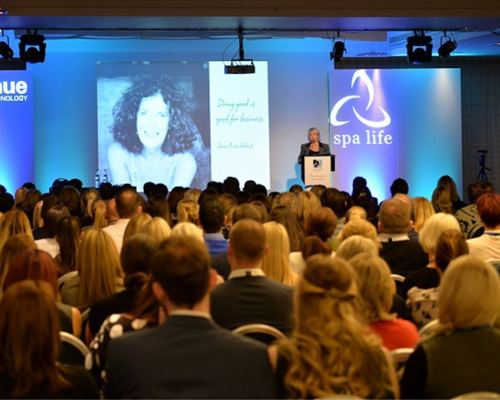
The Spa Life UK Convention returns from 21–23 June 2026 at Whittlebury Park Hotel, Spa &
Golf Resort, bringing together spa managers, directors and owners for two days of focused
education, meaningful connection and commercial insight. [more...]
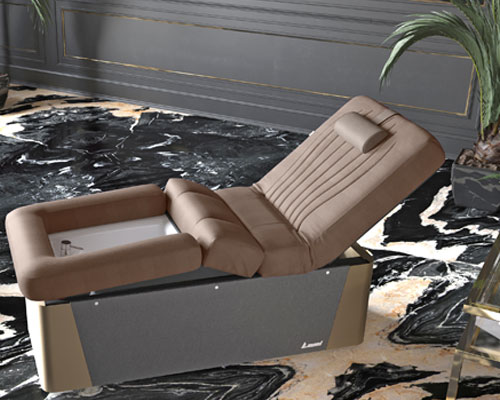
Le Atelier by C.O.D.E. doesn't offer a standard bespoke service, it provides a highly
customised approach to designing massage beds and loungers in high-end wellness
environments. [more...]
+ More featured suppliers
COMPANY PROFILES
Fenix Group srl Fenix Group, founded by Gianluca Cavalletti in Italy, launched Endospheres to revolutionise aestheti [more...]