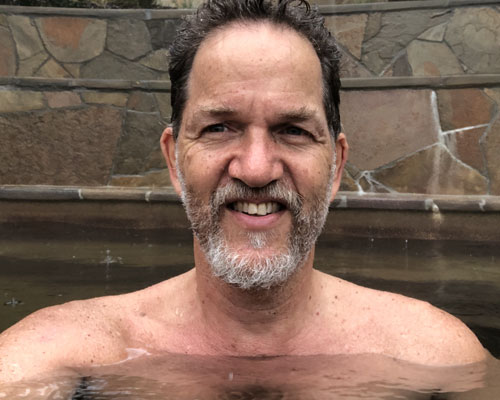
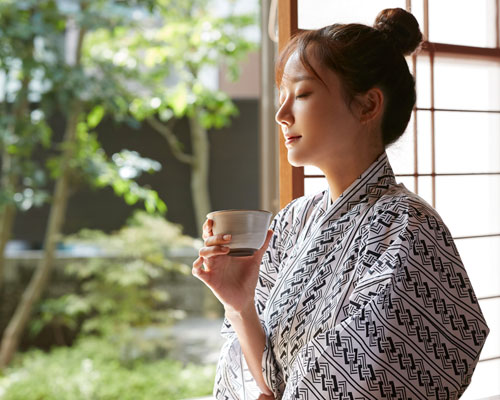
Japan has around 30,000 hot spring inns known as ryokans / photo: shutterstock/K-Angle
Japan’s wellness economy is worth US$303 billion (€283 billion, £242.6 billion) which makes it one of the most successful in the world, trumped only by the US at US$1.2 trillion (€1.1 trillion, £994.3 billion) and China at US$683 billion, (€637.4 billion, £546.3 billion).
This is based on data that’s just been revealed by the Global Wellness Institute (GWI). It focuses on 12 sub-sectors that GWI uses to measure the US$4.4 trillion (€4.1 trillion, £3.6 trillion) global wellness economy.
Sub-sector rankings The country’s three most lucrative wellness markets include personal care and beauty (US$105.9 billion, €98.8 billion, £84.7 billion), healthy eating (US$70.1 billion, €65.4 billion, £56.1 billion) and physical activity (US$41 billion, €38.2 billion, £32.8 billion).
Wellness real estate is one of the fastest-moving markets. It grew from US$2.5 billion (€2.3 billion, £2 billion) in 2017 to US$11.5 billion (€10.7 billion, £9.2 billion) in 2020.
Meanwhile, spa-related markets come lower down the rankings. Traditional and complementary medicine in Japan is valued at US$16.7 billion (€15.5 billion, £13.3 billion), thermal and mineral springs at US$9.2 billion (€8.5 billion), £7.4 billion) and spas at US$4.2 billion (€3.9 billion, £3.4 billion).
Geography of wellness The new data came to light after the GWI added Japan to its Geography of Wellness website. Launched last year, the platform gives a deep dive into a country’s distinctive wellness assets.
Other nations featured include Brazil, Singapore, Thailand, the UK, the US and Indonesia.
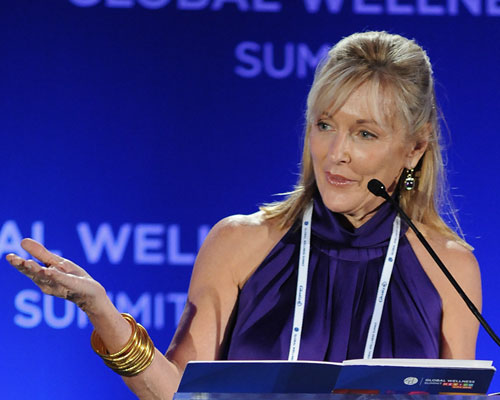
“Japan is an amazing example of a sustainable, strong wellness economy,” says Susie Ellis, GWI chair and CEO.
GWI partnered with Conceptasia and Fukui Wellness Collaboration to unveil the findings.
“Japan’s ancient customs heavily inspire our wellness culture today,” explains Yoriko Soma, CEO of Conceptasia. “These include onsen and forest bathing, hiking, a culture of cleanliness, a healthful diet and focus on martial arts based in the Zen mindset.”
Read more from this issue of Spa Business magazine
View contents of Spa Business 2023 issue 3
Editor's letter: Reflection point
As Spa Business celebrates its 20th birthday, Katie Barnes pauses for thought and rejoices in the industry’s evolution
Spa People: 20th anniversary issue: Anna Bjurstam
The strategic senior advisor at Six Senses and Raison d'Etre on being initiated as a shaman, why psychedelics are here to stay and her bigger fear for the global spa industry
Promotion: Klafs: Relax into wellbeing
Klafs and Studio F. A. Porsche have combined their design and wellness expertise to create an oasis for total-body relaxation
News report: Eastern promise
Japan’s spa industry is valued at US$4.2 billion and is part of the world's third highest-performing wellness economy
Jeremy McCarthy: Theory of evolution
From spa to wellness and now leisure – Spa Business’ contributing editor looks at where hospitality experiences are heading
Promotion: Lemi: Built to last
Lemi is committed to leading with innovation to create
cutting-edge treatment room solutions that excel
in terms of performance and eco-credentials
Promotion: G.M. COLLIN: Collagen pioneers
GM Collin’s expertise in collagen research and product formulation has resulted in the creation of a new serum that combats age-related skin degeneration
Promotion: Comfort Zone: A brighter future
Consumers are increasingly interested in reducing dark spots and hyperpigmentation and a new line from Comfort Zone has been launched to address this emerging need
Promotion: Art of Cryo: Life changing experience
Vikki and Robbie are often exhausted after work. A visit to the spa to experience
the Art of Cryo Tech-Spa Module is a chance to re-set and rejuvenate together
Le Atelier by C.O.D.E. doesn't offer a standard bespoke service, it provides a highly
customised approach to designing massage beds and loungers in high-end wellness
environments. [more...]
Japan has around 30,000 hot spring inns known as ryokans / photo: shutterstock/K-Angle
Japan’s wellness economy is worth US$303 billion (€283 billion, £242.6 billion) which makes it one of the most successful in the world, trumped only by the US at US$1.2 trillion (€1.1 trillion, £994.3 billion) and China at US$683 billion, (€637.4 billion, £546.3 billion).
This is based on data that’s just been revealed by the Global Wellness Institute (GWI). It focuses on 12 sub-sectors that GWI uses to measure the US$4.4 trillion (€4.1 trillion, £3.6 trillion) global wellness economy.
Sub-sector rankings The country’s three most lucrative wellness markets include personal care and beauty (US$105.9 billion, €98.8 billion, £84.7 billion), healthy eating (US$70.1 billion, €65.4 billion, £56.1 billion) and physical activity (US$41 billion, €38.2 billion, £32.8 billion).
Wellness real estate is one of the fastest-moving markets. It grew from US$2.5 billion (€2.3 billion, £2 billion) in 2017 to US$11.5 billion (€10.7 billion, £9.2 billion) in 2020.
Meanwhile, spa-related markets come lower down the rankings. Traditional and complementary medicine in Japan is valued at US$16.7 billion (€15.5 billion, £13.3 billion), thermal and mineral springs at US$9.2 billion (€8.5 billion), £7.4 billion) and spas at US$4.2 billion (€3.9 billion, £3.4 billion).
Geography of wellness The new data came to light after the GWI added Japan to its Geography of Wellness website. Launched last year, the platform gives a deep dive into a country’s distinctive wellness assets.
Other nations featured include Brazil, Singapore, Thailand, the UK, the US and Indonesia.
“Japan is an amazing example of a sustainable, strong wellness economy,” says Susie Ellis, GWI chair and CEO.
GWI partnered with Conceptasia and Fukui Wellness Collaboration to unveil the findings.
“Japan’s ancient customs heavily inspire our wellness culture today,” explains Yoriko Soma, CEO of Conceptasia. “These include onsen and forest bathing, hiking, a culture of cleanliness, a healthful diet and focus on martial arts based in the Zen mindset.”
Read more from this issue of Spa Business magazine
View contents of Spa Business 2023 issue 3
Editor's letter: Reflection point
As Spa Business celebrates its 20th birthday, Katie Barnes pauses for thought and rejoices in the industry’s evolution
Spa People: 20th anniversary issue: Anna Bjurstam
The strategic senior advisor at Six Senses and Raison d'Etre on being initiated as a shaman, why psychedelics are here to stay and her bigger fear for the global spa industry
Promotion: Klafs: Relax into wellbeing
Klafs and Studio F. A. Porsche have combined their design and wellness expertise to create an oasis for total-body relaxation
News report: Eastern promise
Japan’s spa industry is valued at US$4.2 billion and is part of the world's third highest-performing wellness economy
Jeremy McCarthy: Theory of evolution
From spa to wellness and now leisure – Spa Business’ contributing editor looks at where hospitality experiences are heading
Promotion: Lemi: Built to last
Lemi is committed to leading with innovation to create
cutting-edge treatment room solutions that excel
in terms of performance and eco-credentials
Promotion: G.M. COLLIN: Collagen pioneers
GM Collin’s expertise in collagen research and product formulation has resulted in the creation of a new serum that combats age-related skin degeneration
Promotion: Comfort Zone: A brighter future
Consumers are increasingly interested in reducing dark spots and hyperpigmentation and a new line from Comfort Zone has been launched to address this emerging need
Promotion: Art of Cryo: Life changing experience
Vikki and Robbie are often exhausted after work. A visit to the spa to experience
the Art of Cryo Tech-Spa Module is a chance to re-set and rejuvenate together
Global Wellness Day (GWD) marked its 15th anniversary on Saturday 13 June 2026, with the
theme: #JoyMagenta – a celebration of the healing qualities of simple gestures and activities
that spark joy.
Global luxury hospitality brand, Six Senses, has partnered with longevity healthcare provider,
HUM2N, to launch a clinic at Six Senses London, at The Whiteley.
As part of its first hotel partnership, Mayrlife – the medical health resort company known for its
site in Altaussee, Austria – has launched a day clinic at the Rosewood Vienna.
Premium London health club, KX Chelsea, will imminently unveil its most significant
redevelopment since its launch in 2002 to create an integrated wellness model combining
training, recovery and relaxation.
Rosewood Le Guanahani St Barth, on the northeast coast of Saint Barthélemy in the French
West Indies, is offering a programme of ocean-inspired yoga classes between 8-14 June to
celebrate Global Wellness Day (GWD).
Hotel de France, located on the British Isle of Jersey, has created a wellness retreat package
that includes a hot yoga session that will take place in Jersey Zoo’s butterfly sanctuary.
The Ritz-Carlton, Langkawi, in Malaysia, has revealed a schedule for Global Wellness Day
(GWD) that includes guided rainforest walks, mindful movement and guided coastal meditation
experiences.
Longevitix, a clinical platform for preventive and longevity medicine, has launched its AI-
powered intelligence system to help physicians deliver continuous, personalised longevity-
focused care at scale.
Atmantan Wellness Centre, an integrative wellness destination in Mulshi, near Pune in India, is
expanding its portfolio by adding a new centre in Hyderabad that will launch between 2028 and
2029.
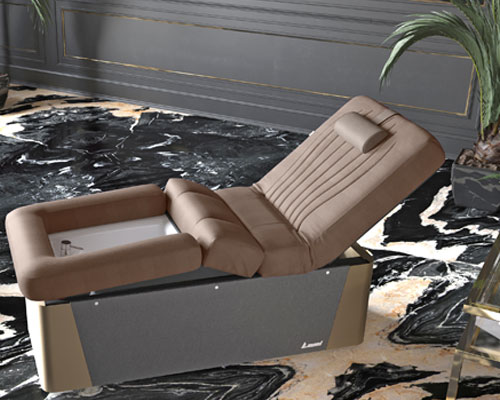
Le Atelier by C.O.D.E. doesn't offer a standard bespoke service, it provides a highly
customised approach to designing massage beds and loungers in high-end wellness
environments. [more...]