Yes! Send me the FREE digital editions of Spa Business and Spa Business insider magazines and the FREE weekly Spa Business and Spa Business insider ezines and breaking news alerts!
A deeper analysis of ISPA’s latest study shows that despite record
KPIs, the US spa industry continues to face workforce shortages, as
Eloise Corner from PricewaterhouseCoopers Research reports
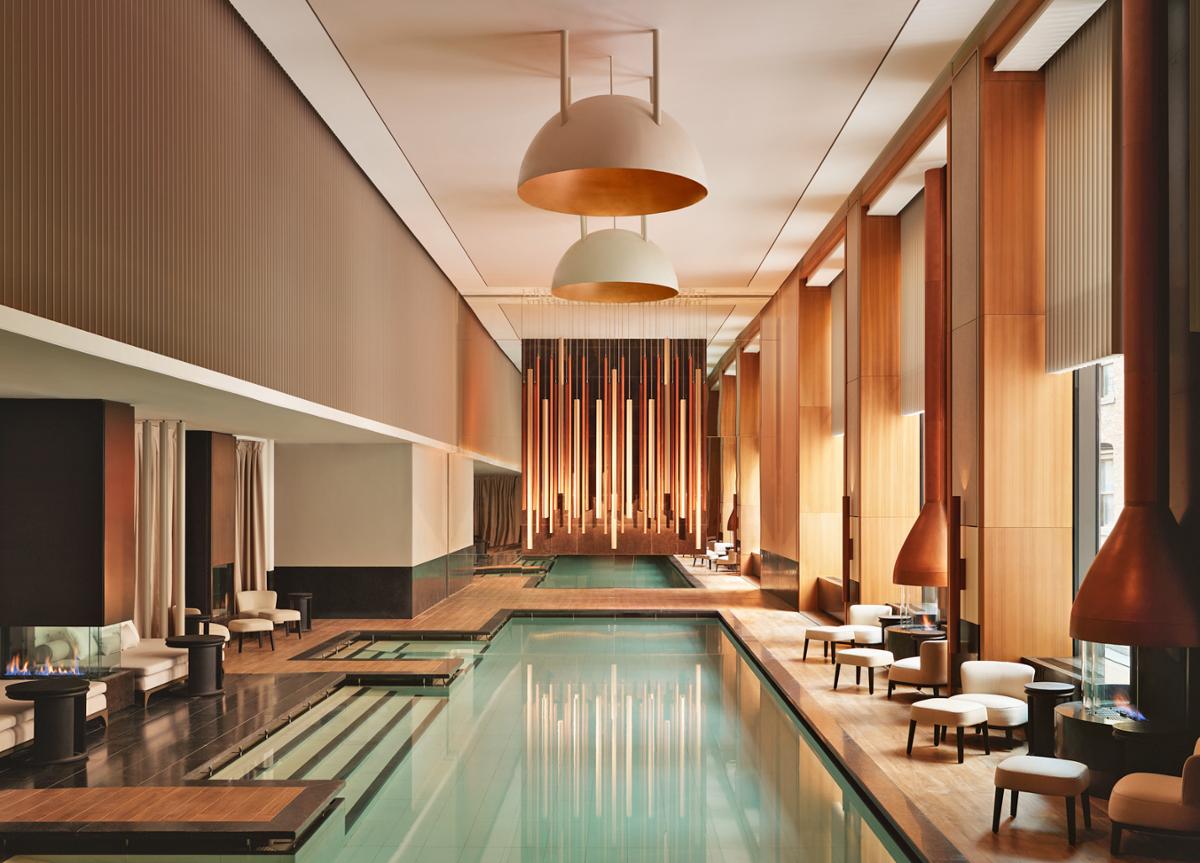
Spa openings have been steady. Aman New York is one of the newest arrivals / photo: Robert Rieger
Last year, the US economy continued to recover from the COVID-19 pandemic, however, simultaneously, the rate of inflation in consumer prices accelerated dramatically. From one crisis to the next, the spa industry has had a dynamic couple of years and has been able to showcase its resilience and adaptability. New research based on data from 2,829 spas in the US shows clear evidence of a swift bounceback in key metrics, but the persistent challenge of staffing continues.
Increase in spending Throughout 2022 the cost of living crisis continued to affect US consumers, leading to less disposable income. Many would have predicted that this would result in a decrease in demand for activities such as spa-going. Yet the 2023 US Spa Industry Study compiled by the country’s International Spa Association (ISPA) and undertaken by PwC Research, shows that industry revenues soared to a landmark US$20.1 billion (€18.3 billion, £15.7 billion), an 11 per cent increase from 2021.
Spa visits recovered by 4 per cent to 181 million, while this is still almost 20 million short of 2019’s record high, it’s encouraging that visits are climbing. To meet this demand, 22 per cent of spas are increasing their weekly hours of operation. This figure increased to 32 per cent when looking at resort/hotel spas, which hoped to increase spa availability to provide a much-improved guest stay.
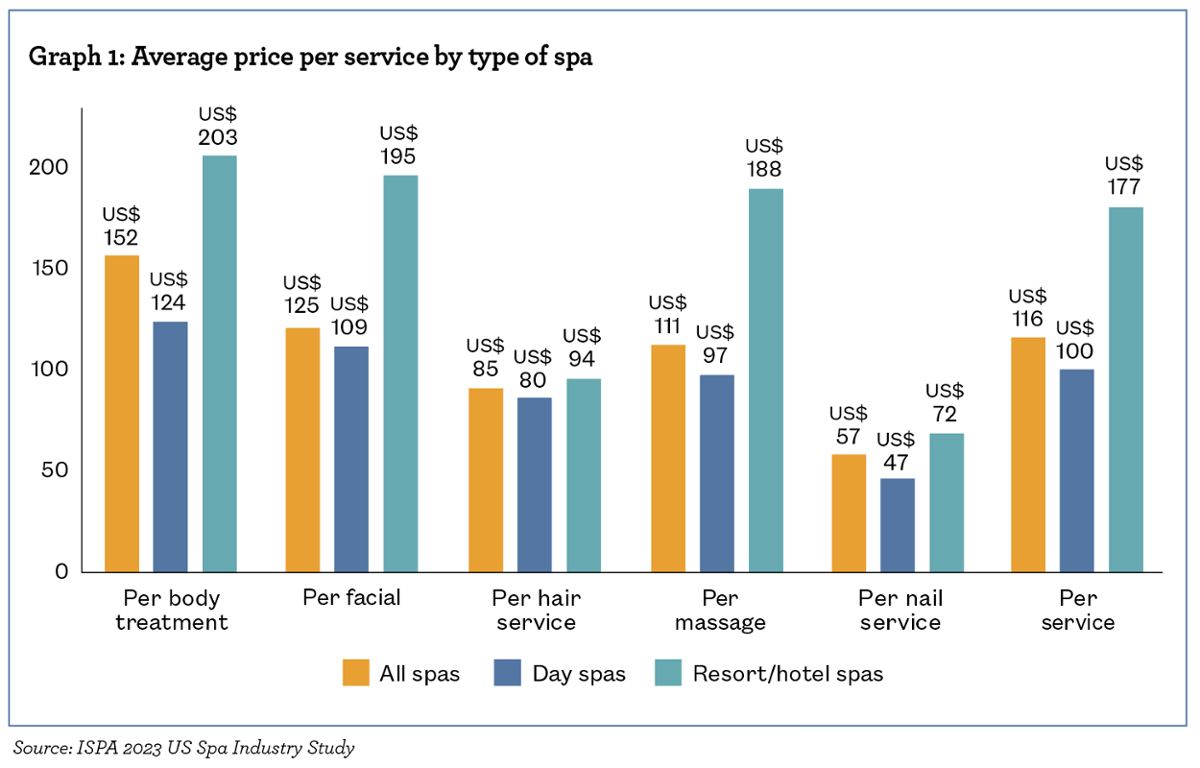
Bringing these two metrics together sees a sharp jump in the ever-important revenue-per-visit metric which, at US$111.50 (€101, £87), now sits at an all-time high. Put simply, those visiting spas in 2022 were spending more. Fifty-four per cent of spas confirmed this when comparing spring (March-May) 2023 figures with the same period a year ago. This increase in spending is no doubt linked to the rise in price per service which now stands at an estimated US$116 (€105, £91), compared to US$108 (€98, £84) last year (see Graph 1). The price for body treatments has gone up the most – from US$124 (€113, £97) in 2021 to US$152 (€138, £119) in 2022 – amounting to a 22 per cent hike.
The staffing challenge For the spa industry, where personal contact is core to its purpose, a highly infectious virus sweeping its way across the world could easily rank among its worst nightmares. Since then, it’s rebounded strongly. Despite the difficult environment, openings and closures appear to have been steady and the number of locations is above 21,750, an increase of 1.3 per cent compared to last year. Nonetheless, that’s still 3 per cent below the pre-pandemic level (22,430 locations in 2019), suggesting further scope for growth.
There’s currently an average of 16.5 workers per spa establishment, bringing the total number of employees in the overall industry to 360,700.
While this is a marginal increase compared to last year, staffing is an area that plagues the spa industry as a whole and is holding it back from reaching its full potential, with 67 per cent of spas stating they have openings that they’re actively trying to fill.
Almost a third (31 per cent) of spas had decreased their number of service provider/shifts per day and when focusing on resort/hotel spas, this figure increased to 46 per cent. The 2023 US Spa Industry Study data suggests the main reasons for this are staffing shortages and staff opting for a better work/life balance. As a reaction to these low levels of staff, 30 per cent of spas hide or adjust services available for booking based on availability.
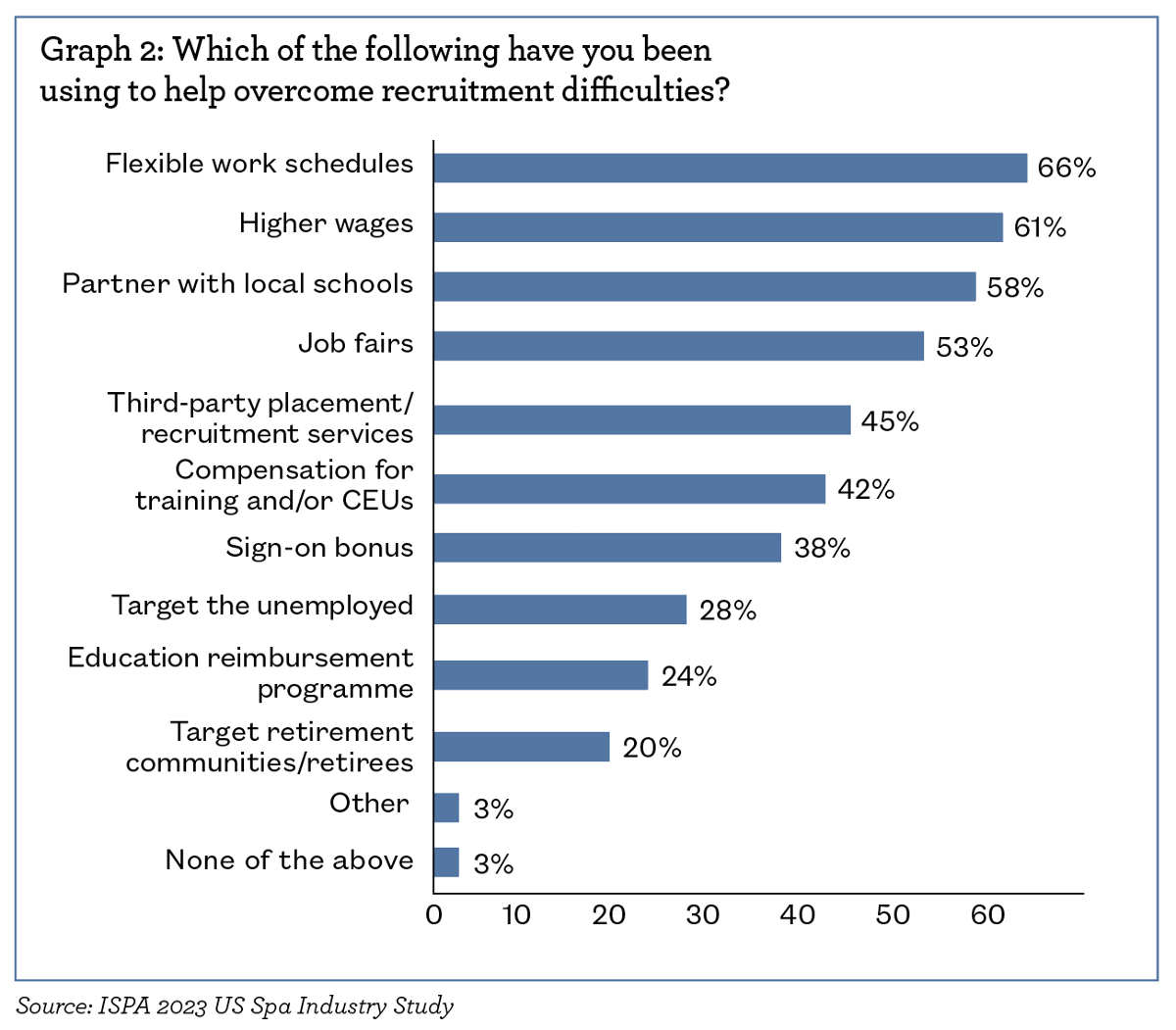
Operators adopted a range of methods to reduce recruitment difficulties, (Graph 2). The most popular being financial incentives, such as higher wages (61 per cent) and/or a signing-on bonus (38 per cent), along with flexible work schedules (66 per cent).
To enhance the supply of skills, some spas have offered ‘carrots’, such as compensation for training and continuing education (42 per cent) and education reimbursement programmes (24 per cent).
Looking ahead With consumers increasingly focused on wellness and the growing demand for experiences over possessions, spas can only benefit. However, the upturn in demand continues to shine a light on the industry’s staffing challenges. An exciting, prosperous, community-driven sector, spa can offer long, successful, enjoyable careers and operators must continue their efforts to counteract recruitment challenges.
Reflecting on this year, it’s fair to say the industry has returned to a strong position and emerged with real momentum to fuel its growth.
Read more from this issue of Spa Business magazine
View contents of Spa Business 2023 issue 3
Editor's letter: Reflection point
As Spa Business celebrates its 20th birthday, Katie Barnes pauses for thought and rejoices in the industry’s evolution
Spa People: 20th anniversary issue: Anna Bjurstam
The strategic senior advisor at Six Senses and Raison d'Etre on being initiated as a shaman, why psychedelics are here to stay and her bigger fear for the global spa industry
Promotion: Klafs: Relax into wellbeing
Klafs and Studio F. A. Porsche have combined their design and wellness expertise to create an oasis for total-body relaxation
News report: Eastern promise
Japan’s spa industry is valued at US$4.2 billion and is part of the world's third highest-performing wellness economy
Jeremy McCarthy: Theory of evolution
From spa to wellness and now leisure – Spa Business’ contributing editor looks at where hospitality experiences are heading
Promotion: Lemi: Built to last
Lemi is committed to leading with innovation to create
cutting-edge treatment room solutions that excel
in terms of performance and eco-credentials
Promotion: G.M. COLLIN: Collagen pioneers
GM Collin’s expertise in collagen research and product formulation has resulted in the creation of a new serum that combats age-related skin degeneration
Promotion: Comfort Zone: A brighter future
Consumers are increasingly interested in reducing dark spots and hyperpigmentation and a new line from Comfort Zone has been launched to address this emerging need
Promotion: Art of Cryo: Life changing experience
Vikki and Robbie are often exhausted after work. A visit to the spa to experience
the Art of Cryo Tech-Spa Module is a chance to re-set and rejuvenate together
Le Atelier by C.O.D.E. doesn't offer a standard bespoke service, it provides a highly
customised approach to designing massage beds and loungers in high-end wellness
environments. [more...]
A deeper analysis of ISPA’s latest study shows that despite record
KPIs, the US spa industry continues to face workforce shortages, as
Eloise Corner from PricewaterhouseCoopers Research reports
Spa openings have been steady. Aman New York is one of the newest arrivals / photo: Robert Rieger
Last year, the US economy continued to recover from the COVID-19 pandemic, however, simultaneously, the rate of inflation in consumer prices accelerated dramatically. From one crisis to the next, the spa industry has had a dynamic couple of years and has been able to showcase its resilience and adaptability. New research based on data from 2,829 spas in the US shows clear evidence of a swift bounceback in key metrics, but the persistent challenge of staffing continues.
Increase in spending Throughout 2022 the cost of living crisis continued to affect US consumers, leading to less disposable income. Many would have predicted that this would result in a decrease in demand for activities such as spa-going. Yet the 2023 US Spa Industry Study compiled by the country’s International Spa Association (ISPA) and undertaken by PwC Research, shows that industry revenues soared to a landmark US$20.1 billion (€18.3 billion, £15.7 billion), an 11 per cent increase from 2021.
Spa visits recovered by 4 per cent to 181 million, while this is still almost 20 million short of 2019’s record high, it’s encouraging that visits are climbing. To meet this demand, 22 per cent of spas are increasing their weekly hours of operation. This figure increased to 32 per cent when looking at resort/hotel spas, which hoped to increase spa availability to provide a much-improved guest stay.
Bringing these two metrics together sees a sharp jump in the ever-important revenue-per-visit metric which, at US$111.50 (€101, £87), now sits at an all-time high. Put simply, those visiting spas in 2022 were spending more. Fifty-four per cent of spas confirmed this when comparing spring (March-May) 2023 figures with the same period a year ago. This increase in spending is no doubt linked to the rise in price per service which now stands at an estimated US$116 (€105, £91), compared to US$108 (€98, £84) last year (see Graph 1). The price for body treatments has gone up the most – from US$124 (€113, £97) in 2021 to US$152 (€138, £119) in 2022 – amounting to a 22 per cent hike.
The staffing challenge For the spa industry, where personal contact is core to its purpose, a highly infectious virus sweeping its way across the world could easily rank among its worst nightmares. Since then, it’s rebounded strongly. Despite the difficult environment, openings and closures appear to have been steady and the number of locations is above 21,750, an increase of 1.3 per cent compared to last year. Nonetheless, that’s still 3 per cent below the pre-pandemic level (22,430 locations in 2019), suggesting further scope for growth.
There’s currently an average of 16.5 workers per spa establishment, bringing the total number of employees in the overall industry to 360,700.
While this is a marginal increase compared to last year, staffing is an area that plagues the spa industry as a whole and is holding it back from reaching its full potential, with 67 per cent of spas stating they have openings that they’re actively trying to fill.
Almost a third (31 per cent) of spas had decreased their number of service provider/shifts per day and when focusing on resort/hotel spas, this figure increased to 46 per cent. The 2023 US Spa Industry Study data suggests the main reasons for this are staffing shortages and staff opting for a better work/life balance. As a reaction to these low levels of staff, 30 per cent of spas hide or adjust services available for booking based on availability.
Operators adopted a range of methods to reduce recruitment difficulties, (Graph 2). The most popular being financial incentives, such as higher wages (61 per cent) and/or a signing-on bonus (38 per cent), along with flexible work schedules (66 per cent).
To enhance the supply of skills, some spas have offered ‘carrots’, such as compensation for training and continuing education (42 per cent) and education reimbursement programmes (24 per cent).
Looking ahead With consumers increasingly focused on wellness and the growing demand for experiences over possessions, spas can only benefit. However, the upturn in demand continues to shine a light on the industry’s staffing challenges. An exciting, prosperous, community-driven sector, spa can offer long, successful, enjoyable careers and operators must continue their efforts to counteract recruitment challenges.
Reflecting on this year, it’s fair to say the industry has returned to a strong position and emerged with real momentum to fuel its growth.
Read more from this issue of Spa Business magazine
View contents of Spa Business 2023 issue 3
Editor's letter: Reflection point
As Spa Business celebrates its 20th birthday, Katie Barnes pauses for thought and rejoices in the industry’s evolution
Spa People: 20th anniversary issue: Anna Bjurstam
The strategic senior advisor at Six Senses and Raison d'Etre on being initiated as a shaman, why psychedelics are here to stay and her bigger fear for the global spa industry
Promotion: Klafs: Relax into wellbeing
Klafs and Studio F. A. Porsche have combined their design and wellness expertise to create an oasis for total-body relaxation
News report: Eastern promise
Japan’s spa industry is valued at US$4.2 billion and is part of the world's third highest-performing wellness economy
Jeremy McCarthy: Theory of evolution
From spa to wellness and now leisure – Spa Business’ contributing editor looks at where hospitality experiences are heading
Promotion: Lemi: Built to last
Lemi is committed to leading with innovation to create
cutting-edge treatment room solutions that excel
in terms of performance and eco-credentials
Promotion: G.M. COLLIN: Collagen pioneers
GM Collin’s expertise in collagen research and product formulation has resulted in the creation of a new serum that combats age-related skin degeneration
Promotion: Comfort Zone: A brighter future
Consumers are increasingly interested in reducing dark spots and hyperpigmentation and a new line from Comfort Zone has been launched to address this emerging need
Promotion: Art of Cryo: Life changing experience
Vikki and Robbie are often exhausted after work. A visit to the spa to experience
the Art of Cryo Tech-Spa Module is a chance to re-set and rejuvenate together
Global Wellness Day (GWD) marked its 15th anniversary on Saturday 13 June 2026, with the
theme: #JoyMagenta – a celebration of the healing qualities of simple gestures and activities
that spark joy.
Global luxury hospitality brand, Six Senses, has partnered with longevity healthcare provider,
HUM2N, to launch a clinic at Six Senses London, at The Whiteley.
As part of its first hotel partnership, Mayrlife – the medical health resort company known for its
site in Altaussee, Austria – has launched a day clinic at the Rosewood Vienna.
Premium London health club, KX Chelsea, will imminently unveil its most significant
redevelopment since its launch in 2002 to create an integrated wellness model combining
training, recovery and relaxation.
Rosewood Le Guanahani St Barth, on the northeast coast of Saint Barthélemy in the French
West Indies, is offering a programme of ocean-inspired yoga classes between 8-14 June to
celebrate Global Wellness Day (GWD).
Hotel de France, located on the British Isle of Jersey, has created a wellness retreat package
that includes a hot yoga session that will take place in Jersey Zoo’s butterfly sanctuary.
The Ritz-Carlton, Langkawi, in Malaysia, has revealed a schedule for Global Wellness Day
(GWD) that includes guided rainforest walks, mindful movement and guided coastal meditation
experiences.
Longevitix, a clinical platform for preventive and longevity medicine, has launched its AI-
powered intelligence system to help physicians deliver continuous, personalised longevity-
focused care at scale.
Atmantan Wellness Centre, an integrative wellness destination in Mulshi, near Pune in India, is
expanding its portfolio by adding a new centre in Hyderabad that will launch between 2028 and
2029.
Le Atelier by C.O.D.E. doesn't offer a standard bespoke service, it provides a highly
customised approach to designing massage beds and loungers in high-end wellness
environments. [more...]